Connect with us

Business

Cisco’s top exec and Amazon’s Andy Jassy share the same hiring red flag

Published

on


It’s not what you know, or even who you know. According to Cisco’s new U.K. chief, your next promotion might hinge on your attitude.

“You cannot teach positive attitudes and engagement and energy,” Sarah Walker tells Fortune. That’s the No. 1 green-flag trait she keeps an eye out for when hiring or looking to promote from within—and she says it outweighs what’s on your resume, especially early in your career. 

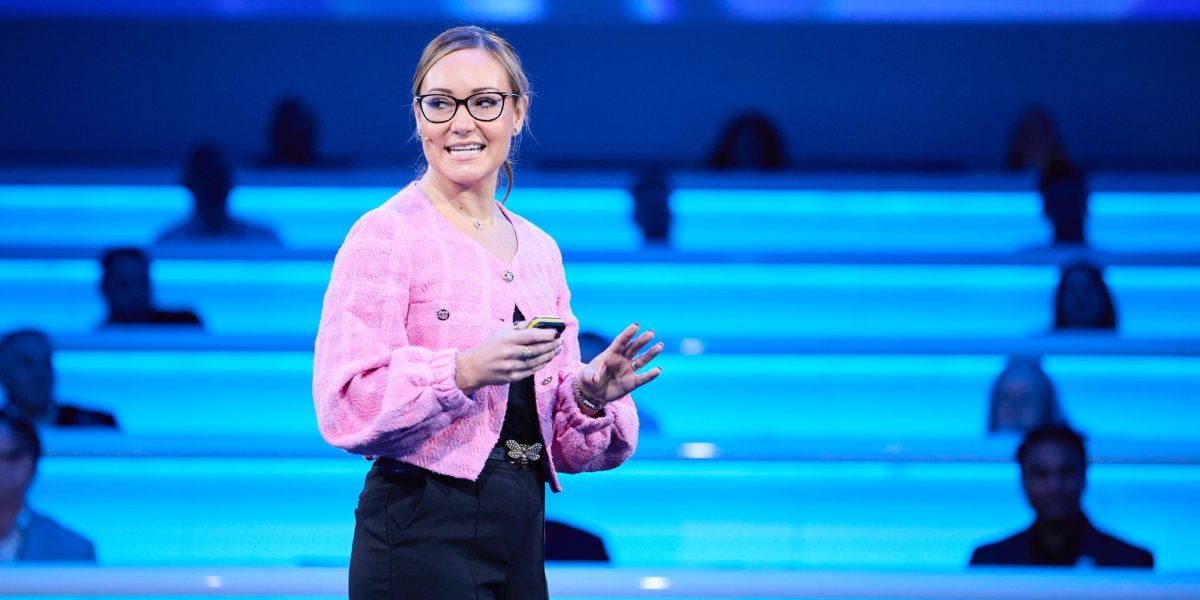
The 45-year-old boss spent 25 years climbing the ranks at the Fortune 500 Europe telecommunications giant BT. In that time, Walker went from joining the sales team at the £14.21 billion British ($17.7 billion) legacy brand to leaving as its director of corporate and public sector. Following a micro-retirement, she joined Cisco as managing director before being promoted to lead its U.K. and Ireland arm just two years later. 

Now that she calls the shots, the CEO’s go-to choice for her team is always the upbeat, eager-to-learn worker.

“It’s more about the person first and foremost than it is about skills or experience,” she adds.

Skills become more important with experience—but it always pays to be positive and humble

“I always try and distinguish between the things that can be taught and learnt and the things that are just inherent in somebody,” Walker says, adding that skills become more important as you climb the ladder and enter more specialist roles.

Even then, she says someone with a great attitude and willingness to learn can still bag a role over someone more experienced if they can be developed into the role. 

 “You don’t need to be the finished article to be promoted, but we need to know that you are in a position where within a reasonable timeframe, you’ll have invested the time to upskill and develop—so I say to people, be very focused on who you are first and foremost, because that’s the bit that makes you stand out, and can’t be taught and will be a differentiator,” she adds.

But no matter how junior—or senior—you are, she still thinks a bad attitude will make you stand out for all the wrong reasons.

“I can’t stand arrogance. Be confident, but have a level of humility,” Walker warns. “You can’t rest on your laurels because you’ve done something well in the past, you need to be thinking about what’s the next great thing that you’ll do?”

“Even at my level, you have to be open to the fact that there’s lots more yet to learn and grow and adapt,” she concludes. “I always know that I’m only as good as the last good thing that I’ve done, and I’ll only continue to be good if I continue to do good things.” 

An ’embarrassing’ amount of your success in your 20s depends on your attitude, Jassy echoes

Walker’s not the only CEO to reveal that it’s not a ritzy college degree or being the best networker that will make you stand out at the start of your career—but a positive attitude. Amazon CEO Andy Jassy has said that an “embarrassing amount of how well you do, particularly in your twenties” depends on it.

Even Walker’s predecessor, David Meads previously echoed to Fortune that “EQ is at least as important as IQ.” The now MEA chief at Cisco stressed that he sees “no difference in terms of the capability” from talent with or without a degree while adding that qualifications hold even less weight in external-facing roles.

“You need that EQ to be able to read the room and understand what’s being said by what’s not being said.”

In the end, numerous leaders, including Pret and Kurt Geiger’s CEOs, have stressed that being nice to their boss and coworkers was one of the biggest determining factors in their success.

As Maya Angelou famously said: “People will forget what you said, people will forget what you did, but people will never forget how you made them feel.” And ultimately, the same is true for hiring managers and those with promotion powers.

A version of this story originally published on Fortune.com on January 30, 2025.


Source link

Continue Reading

Business

Peter Thiel and Larry Page are preparing to flee California in case the state passes a wealth tax

Published

on


Tech billionaires are making plans to bail on California ahead a possible ballot measure that would tax their assets to help pay for healthcare.

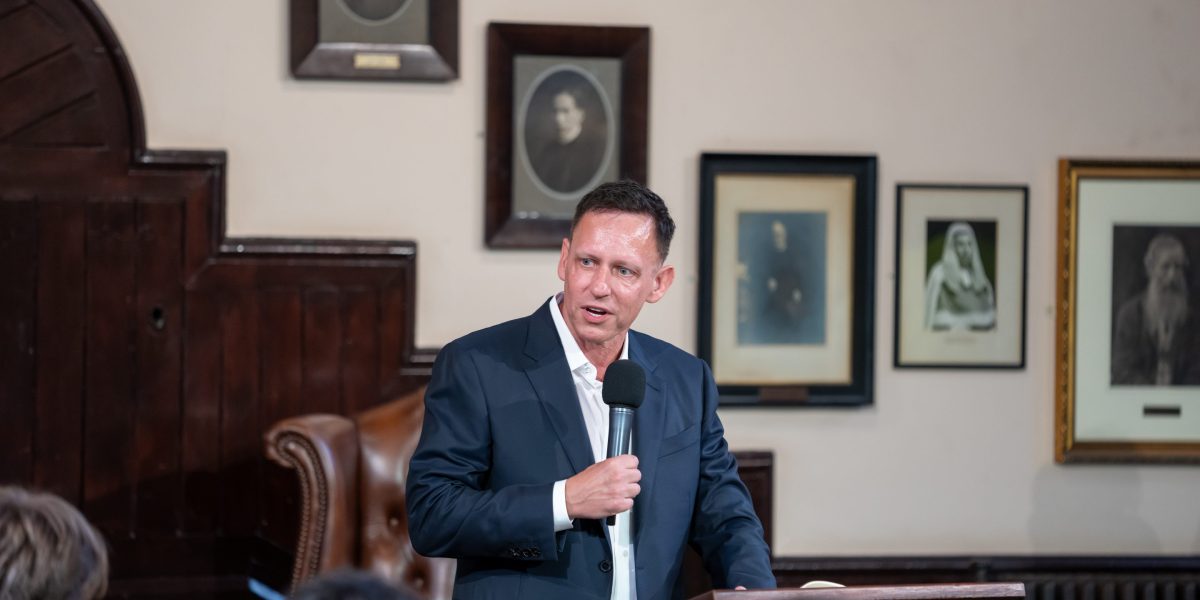
Sources told the New York Times that venture capitalist Peter Thiel has explored spending more time outside California and opening an office for his Los Angeles-based personal investment firm, Thiel Capital, in another state.

Meanwhile, Google cofounder Larry Page has discussed leaving the state by year’s end, sources told the Times, while three limited liability companies associated with him have filed documents to incorporate in Florida.

The Thiel Foundation and Google parent Alphabet didn’t immediately respond to requests for comment. Representatives for Thiel and Page did not respond to the Times.

Tech investor Chamath Palihapitiya has warned on the risk of a wealth tax in California, saying it will eventually bankrupt the state.

“The inevitable outcome will be an exodus of the state’s most talented entrepreneurs who can and will choose to build their companies in less regressive states,” he posted on X on Monday. “All that will be left behind is the middle class. The tax burden, then, will fall to the middle class because after the ‘richest’ choose to leave, the middle class are both (a) the only ones left and (b) are the largest source of state income to extract taxes from.”

On Friday, he posted in a reply to Sen. Ted Cruz, who urged him to move to Texas, that it’s “under serious consideration.”

Backers of the potential wealth tax must still gather enough signatures before it can qualify for the ballot in November 2026.

The proposal calls for California residents worth more than $1 billion to pay a one-time tax equivalent to 5% of their assets. According to the Bloomberg Billionaires Index, Page is worth $270 billion and Thiel is worth $27.2 billion.

The healthcare union pushing the measure, the Service Employees International Union-United Healthcare Workers West, estimated the wealth tax could raise $100 billion in revenue and offset federal cuts.

But California Gov. Gavin Newsom, a Democrat who is also considered a top presidential hopeful, has come out against it.

Companies have already been leaving California for places with lower taxes and less red tape. Elon Musk moved Tesla and SpaceX to Texas.

And while leading AI companies are based in California, new data centers and AI infrastructure are being built outside the state, where land, water and electricity are more available.

New Yorkers aired similar worries about an exodus after democratic socialist Zohran Mamdani was elected the city’s mayor last month. But so far, that has yet to materialized as luxury home sales in Manhattan surged in November.

Democratic Rep. Ro Khanna, who represents part of Silicon Valley, said tax dollars helped build the AI industry and dismissed the idea that tech entrepreneurs wouldn’t start companies in the state due to a 1% tax, adding that innovators are drawn to the area’s talent.

“We cannot have a nation with extreme concentration of wealth in a few places but where 70 percent of Americans believe the American dream is dead and healthcare, childcare, housing, education is unaffordable,” he said on X. “What will stifle American innovation, what will make us fall behind China, is if we see further political dysfunction and social unrest, if we fail to cultivate the talent in every American and in every city and town.”

Still, he acknowledged lack of accountability and fraud concerns over state tax dollars, saying Sacramento needs anti-corruption measures.

Blake Scholl, founder and CEO Boom Supersonic, pointed to the billions spent by California for a high-speed rail project that’s over-budget and behind schedule.

“This is morally wrong and ends poorly for everyone,” he said about the wealth tax in response to Khanna on X.


Source link

Continue Reading

Business

U.S. debt’s ‘easy times’ are now over as hedge funds jump into the bond market

Published

on


The holders of U.S. debt have shifted drastically over the past decade, tilting more toward profit-driven private investors and away from foreign governments that are less sensitive to prices.

That threatens to turn the U.S. financial system more fragile in times of market stress, according to Geng Ngarmboonanant, a managing director at JPMorgan and former deputy chief of staff to Treasury Secretary Janet Yellen.

Foreign governments accounted for more than 40% of Treasury holdings in the early 2010s, up from just over 10% in the mid-1990s, he wrote in a New York Times op-ed on Friday. This reliable bloc of investors allowed the U.S. to borrow vast sums at artificially low rates.

“Those easy times are over,” he warned. “Foreign governments now make up less than 15% of the overall Treasury market.”

While they didn’t dump Treasuries and still hold roughly the same amount as 15 years ago, foreign governments didn’t ratchet up their buying in line with the recent surge in U.S. debt, which now tops $38 trillion.

Private investors have stepped in to absorb the massive supply of Treasury bonds, but they are also more likely to demand higher returns, making rates more volatile, Ngarmboonanant pointed out.

The influence of hedge funds, which doubled their presence in the Treasury market in the last four years, raises particular concern among U.S. officials, he added. In fact, the biggest share of U.S. debt that’s held outside the country is now in the Cayman Islands, where many hedge funds are officially based.

Ngarmboonanant attributed “unusual turbulence” during recent shocks in the Treasury market, which has historically been a safe haven during crises, to hedge fund activity. That includes the sudden selloff in the immediate aftermath of President Donald Trump’s shocking “Liberation Day” tariffs.

Relying on AI-fueled productivity gains, stablecoins, Fed rate cuts or inflation to sustain U.S. debt will eventually backfire, he said.

“Financial engineering and false hopes won’t keep America’s lenders happy,” Ngarmboonanant predicted. “Only a credible plan to restrain deficits and control our debt will ultimately do that.”

The ability of bond investors to force lawmakers to change course has earned them the “bond vigilantes” moniker, which was coined by Wall Street veteran Ed Yardeni in the 1980s.

Indeed, upheaval in the bond market after Trump unveiled his global tariffs in April helped convince him to retreat from his most aggressive rates. That prompted economist Nouriel Roubini to say, “the most powerful people in the world are the bond vigilantes.”

But analysts at Piper Sandler recently dismissed the power that bond vigilantes actually have over politicians. 

In an August note, they pointed out that the bond market didn’t prevent federal deficits from exploding and haven’t steered Trump away from continuing to press his overall tariff agenda.

Still, the U.S. debt outlook has become so dire that even longtime Republican Mitt Romney, a former senator and presidential candidate, has called for increasing taxes on the rich as the Social Security Trust Fund races toward insolvency in 2034.

“Today, all of us, including our grandmas, truly are headed for a cliff,” he warned in a recent New York Times op-ed. “Typically, Democrats insist on higher taxes, and Republicans insist on lower spending. But given the magnitude of our national debt as well as the proximity of the cliff, both are necessary.”


Source link

Continue Reading

Business

Scott Galloway says the key to landing jobs is be as social as possible

Published

on


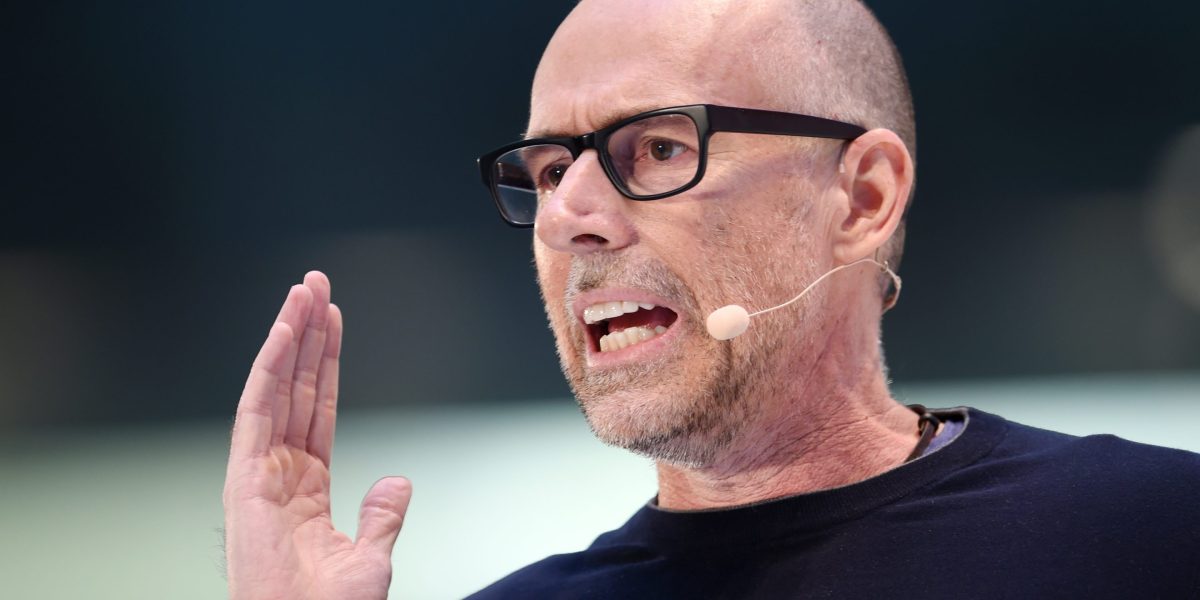
Business professor and entrepreneur Scott Galloway shared some career advice for young people struggling to find a job during a recent appearance on Shane Smith’s Vice News podcast, emphasizing how networking and personal connections remain critical to a long and successful career.

During the interview, Galloway highlighted the stark mathematics of modern job searches. “Google puts out a job opening, they get 200 CVs within like eight minutes. They limit it down to the 20 most qualified. Seventy percent of the time, the person they pick is someone who has an internal advocate,” he said.

The advice from Galloway, a marketing professor from the NYU Stern School of Business, aligns with extensive research on hiring patterns. Studies show employee referrals, while representing only 6% to 7% of job applications, account for 37% to 45% of successful hires across various industries, underscoring the importance of making connections. You never know who might be able to help you get your next gig.

The social imperative

Galloway’s advice seems deceptively simple: If you want a great career, you need to make connections in the real world first. “The way you [achieve professional success] as a young person is you go out, you make friends, you drink, and at every possible opportunity, you help that person out,” he said, also recommending speaking well of others behind their backs and positioning yourself to be remembered when opportunities come up.

“You want to be placed in rooms of opportunities when you’re not physically there,” Galloway said, emphasizing effective networking creates advocates who will recommend you for positions even when you’re not actively job searching.

The professor drew parallels to high school social dynamics to illustrate his point.

“The most successful people in high school aren’t the best looking [or] the best athletes, they’re the ones that like other people the most. The kid who says, ‘Hey, you know, great game, Brett,’ or ‘Wow, way to go on the basketball team, Lisa.’ The person who shows the most goodwill and like toward other people is the most popular, successful person in high school,” he said.

Research backs up Galloway’s assertion. Referred candidates are 40% more likely to be hired than those sourced through other means, and people hired through internal referrals tend to perform 25% better and stay 70% longer than employees hired through traditional job boards.

This advice extends to current workplace trends around working remotely versus returning to the office. As you might expect, people who go into the office have a clear advantage as they’re able to be more social with colleagues. According to a 2021 study from the U.K.’s Office of National Statistics, young professionals working remotely are 38% less likely to receive promotions compared to their office-based counterparts.

You can watch the full interview with Scott Galloway and Shane Smith below.

For this story, Fortune used generative AI to help with an initial draft. An editor verified the accuracy of the information before publishing.

A version of this story originally published on Fortune.com on October 7, 2025.


Source link

Continue Reading

Trending

Copyright © Miami Select.