
Politics
Christina Pushaw’s ‘delete everything’ text to James Fishback triggers public records concerns

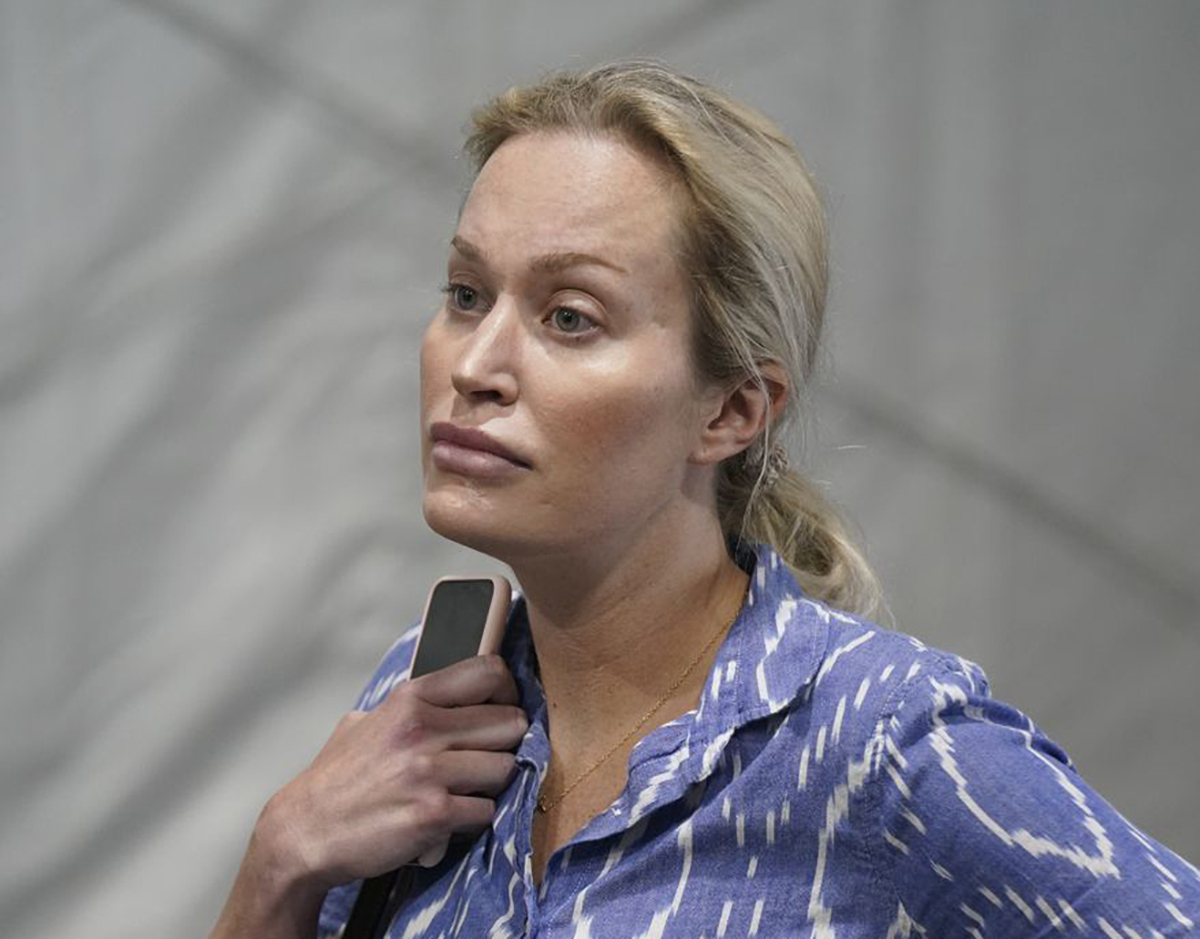
Did Christina Pushaw break the law by asking gubernatorial candidate James Fishback to delete text messages the two exchanged in recent months?
Maybe.
Pushaw, who earns a $179,000 tax-funded salary as a senior management analyst for Gov. Ron DeSantis, all but confirmed the authenticity of texts between her and Fishback in which she appears to have written, “I need you to confirm that you deleted everything with my name on it.”
The exchange has raised questions about whether she solicited the destruction of public records, which would be illegal if the messages involved her government duties, but likely not if they were strictly campaign-related, as she says.
What happened
Fishback posted a screenshot of the exchange following a public blowup between the two after they, according to Pushaw, spoke “frequently” since October about Fishback’s campaign.
On X, Pushaw accused Fishback of deception, writing: “Thanks for proving my point that you have no qualms about lying and revealing private messages. I truly believed that we were friends, and I feel sickened and violated by this betrayal.”
Pushaw, who has worked for DeSantis as both a campaign and government staffer, says she was never paid for advising Fishback and never told the Governor about her communications with Fishback.
In a brief phone interview Monday, she said none of her messages with Fishback touched her state job.
“I never talked to him about government business,” she said. She declined to explicitly confirm the authenticity of Fishback’s screenshots, one of which referenced her government position.
What the law says
Under Florida law, public records include any physical or digital communication made or received “in connection with the transaction of official business by an agency,” a definition courts have applied to texts, emails and other modern forms of correspondence.

Destroying public records is a third-degree felony for a government employee or official, punishable by up to five years in prison and a an up-to-$5,000 fine. Soliciting someone else to do so — a form of conspiracy — is typically punished one level below, making it a first-degree misdemeanor carrying up to one year in jail and up to a $1,000 fine.
Does this apply here?
It depends on what was in the messages Pushaw asked Fishback to delete.
If they contained only “advice on his gubernatorial campaign,” as Pushaw claims, and nothing related to her official duties, then they likely were not public records. Campaign-only communications — including strategy, fundraising and political messaging — generally fall outside the Sunshine Law.
If, however, the texts included discussion of government business, policy, the scheduling of public meetings or actions Pushaw took in her official capacity, they would likely qualify as public records. In that case, if Fishback deleted material at Pushaw’s request, he could also face a first-degree misdemeanor charge.
It’s impossible to determine whether any law was broken without seeing more of the messages. Florida Politics has requested texts and other communications between Pushaw and Fishback from the Governor’s Office.
Still, it is notable that Pushaw asked Fishback to delete “everything with my name on it,” a phrasing that suggests she believed some of the material might be subject to Sunshine Law requirements.
Political fallout
Pensacola Republican Rep. Alex Andrade, a lawyer who previously led a House inquiry into First Lady Casey DeSantis’ Hope Florida charity that has since sprouted a grand jury probe, flagged the issue in a widely viewed X post Monday morning, calling Fishback a “weird little creep.”
Kyle Lamb, a longtime state employee now with the Department of Commerce who briefly worked on DeSantis’ presidential campaign, also weighed in.
“Absolutely nowhere in state laws are state employees expected to maintain private conversations with people who are not state officials discussing things that are not state business, especially who we support in political elections,” he wrote.
Lamb later asked Fishback, “So you didn’t delete everything like you told her? And you posted it here?”
Andrade pointed out that in at least one screenshot Fishback posted, Pushaw mentioned resigning from her job — a reference to her official position that would fall under public records rules.
He told Florida Politics that he views the episode as incompetence rather than malice.
“We have a state employee getting paid $180,000 a year thinking she can just demand that some private individual she’s been texting with for months delete texts and get another state employee to pressure that same person to delete those texts,” he said.
“I have no idea what the content is, but no one is stopping to think, ‘Should these be destroyed? Is it appropriate for us to tell a private citizen that they should be deleting public records?’”
Politics
Tampa Bay Lightning arena agreement worth up to $358.5M heads to Hillsborough County Commission

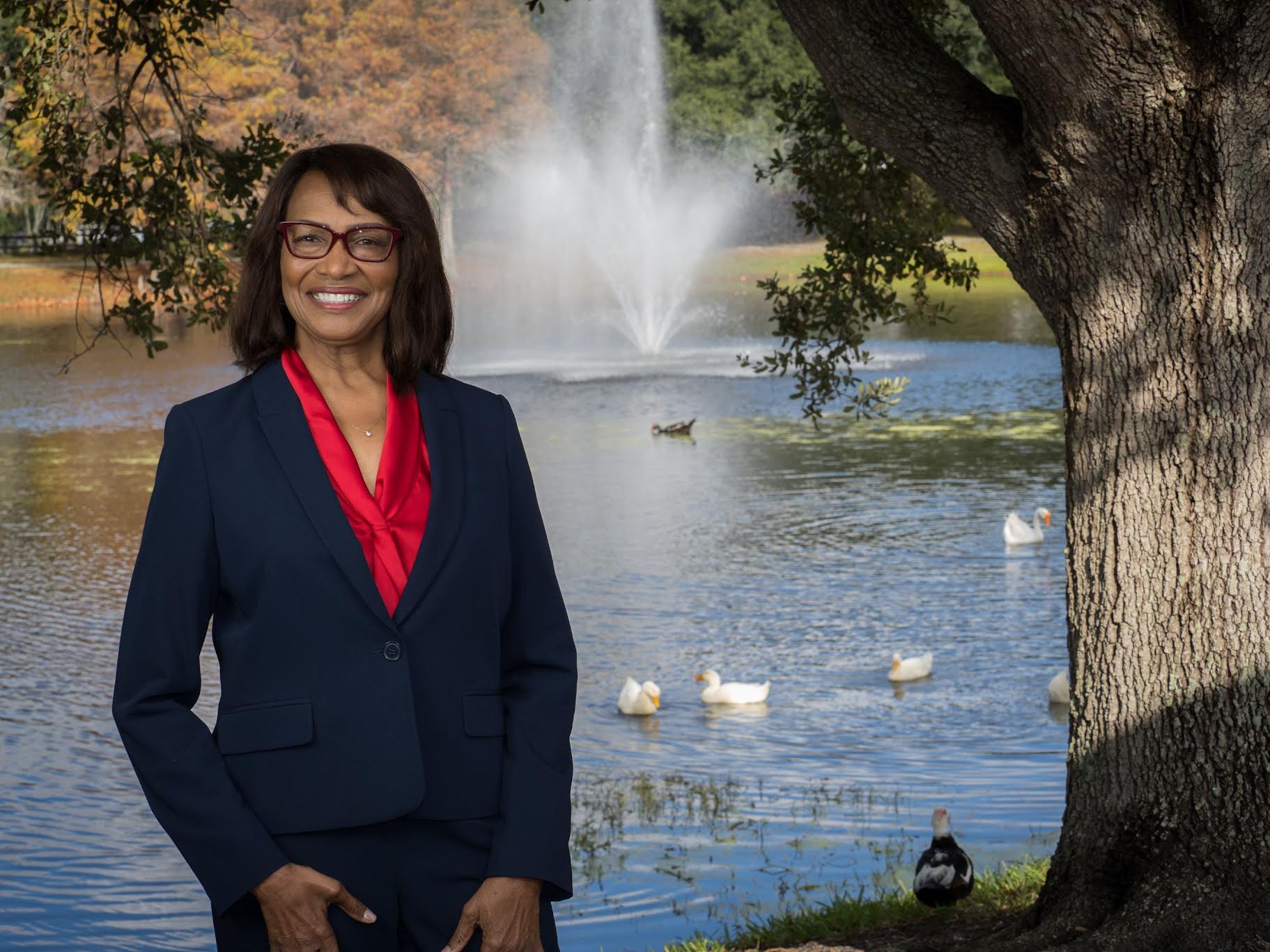
Patricia Rumph, a retired state corrections department employee, is running for Orange County Commission’s District 7 in August.
“I am running for County Commission because service is not something I talk about, it is something I have lived every day of my life,” Rumph said.
Rumph’s campaign priorities are public safety, investing in strong infrastructure, affordability, and environmental stewardship, she said in a statement to announce her candidacy.
Rumph is joining a crowded field for a two-year term representing District 7 in the nonpartisan race. The other candidates are Selina Carter, Eatonville Mayor Angie Gardner, Stacey Gordon-Ali, Framily Support Network co-founder Aaron Lewis, Sonya Shakespeare, and former Orlando City Commissioner Vicki Vargo.
A County Commissioner’s current annual salary is $130,262.
District 7, which covers Maitland, Eatonville, Pine Hills, Orlovista and Fairview Shores in the northern part of Orange County, is one of the two new County Commission seats added after last year’s redistricting.
“As District 7 is formed, this is a moment to build something new and to do it the right way,” Rumph said. “Our residents deserve a commissioner who is present, accountable, and deeply invested in the people who call this district home.”
Rumph’s 30-year career in the Florida Department of Corrections included jobs as Correctional Probation Senior Officer, Human Resources Specialist, and Fiscal Assistant. She retired in 2017.
She received a Bachelor of Science in Business Administration from the University of Central Florida.
“In 2020, Rumph was appointed Orange County’s Inaugural Community Ambassador, a role created to build trust between law enforcement and residents and to lead initiatives focused on reducing gun violence and violent crime,” she said in a press release.

“Prior to that appointment, she served for three years as President of the Pine Hills Community Council and has held leadership roles on numerous county boards and advisory committees.”
She was also named the League of Women Voters of Orange County Grassroots Champion of the Year, noted a press release highlighting her public service.
“From Pine Hills to neighborhoods across District 7, I have worked side by side with residents to make our communities safer, stronger, and more connected,” Rumph said in a statement. “This new district deserves leadership that knows our neighborhoods, listens to our families, and fights for opportunity in every zip code. I am ready to bring proven, community-rooted leadership to the County Commission.”

Several local and state-level Democratic leaders are pushing Disney to investigate allegations being raised about how workers are being treated at Patina Group’s independently-operated restaurants at Disney Springs and Epcot.
“We are sure you would agree that subcontracting should not be an excuse for lower standards or inadequate treatment of workers,” said a letter signed by Sens. LaVon Bracy Davis and Carlos Guillermo Smith, as well as Reps. Jose Alvarez, Anna Eskamani, Rita Harris and Johanna López.
“We wouldn’t allow a company operating on our property, representing our legacy, to violate our own standards — and we would expect to be held accountable. We call on Disney to investigate these issues that may have occurred on your property operating under your name. We know with your high level of excellence, that sets the standard for Central Florida, we are right to have a high level of expectation for what happens on your property.”
Even though Patina workers are not employed by Disney, the state lawmakers asked The Mouse to investigate whether Patina broke the law by surveilling employees’ union activity and threatening employees if they supported the union. The lawmakers also asked to make sure sexual harassment is not happening in Patina’s restaurants.
Orange County Commissioners Kelly Martinez Semrad and Nicole Wilson held a community forum last week at the Orange County Commission building where advocates publicly released the letters signed by the elected officials in Summer and Fall of 2025.
“We encourage transparency in this process and ask that you publicly share the steps being taken to ensure accountability and compliance,” Semrad wrote in her letter to Disney Government Relations.
Patina leases space at Disney World for its Space 220 restaurant in Epcot, as well as Enzo’s Hideaway, Morimoto Asia, the Edison in Disney Springs and others.
Three of Patina’s restaurants, Tutto Italia, Via Napoli and Tutto Gusto in Epcot’s Italy Pavilion, unionized last year and are now represented by Unite Here 737. United Here, which represents Disney restaurant and beverage employees, is fighting to get them better working conditions.
For years, Patina employees have complained they are paid less than other Disney employees and are stuck in part-time status so they miss out on benefits and paid time off, even as they work up to six days a week.
“I was astounded by what they were encountering in the workplace,” Wilson said in a statement. “In District 1, we are in absolute reliance on the success of our hospitality workers. … They are the smiles that make a family vacation meaningful.”

Unite Here has filed several unfair labor practices complaints against Patina which are still pending at the National Labor Relations Board.
During labor talks, Patina union employees were considering going on strike last year until Disney intervened. An independent arbitrator then shut down what would’ve been a historic strike on Disney property, the Orlando Weekly reported.
Disney and Patina did not respond to a request for comment for this story.


Brooklyn Beckham Breaks Silence on Family Drama in Savage IG Posts

Beauty and fashion demand helps Landsec’s Golden Quarter performance to sparkle

Tampa Bay Lightning arena agreement worth up to $358.5M heads to Hillsborough County Commission
-

 Politics8 years ago
Congress rolls out ‘Better Deal,’ new economic agenda
-
Entertainment9 years ago
New Season 8 Walking Dead trailer flashes forward in time
-
Politics9 years ago
Poll: Virginia governor’s race in dead heat
-
Politics8 years ago
Illinois’ financial crisis could bring the state to a halt
-
Entertainment8 years ago
The final 6 ‘Game of Thrones’ episodes might feel like a full season
-
Entertainment9 years ago
Meet Superman’s grandfather in new trailer for Krypton
-
Business9 years ago
6 Stunning new co-working spaces around the globe
-
Tech8 years ago
Hulu hires Google marketing veteran Kelly Campbell as CMO