
Fashion
Christian Dior appoints Michela Kalb as head of haute couture and ready-to-wear


Fashion
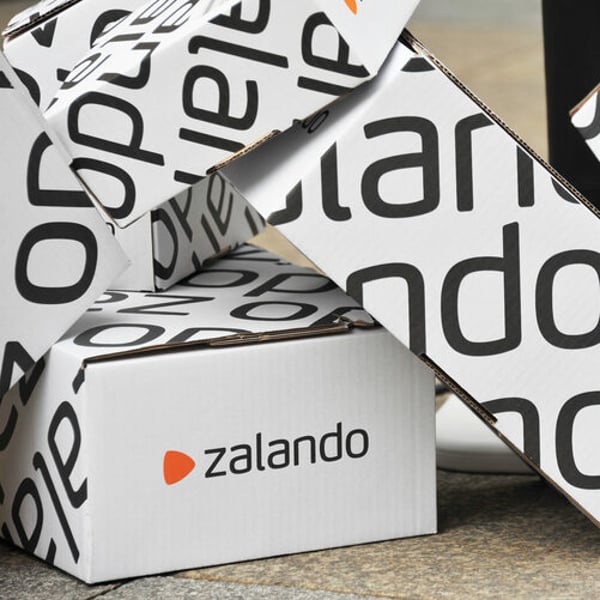
From entering Portugal to launching its beauty category in Spain, Zalando takes stock of 2025
Published
December 10, 2025
In 2025, Zalando has stepped up its pace in the Iberian Peninsula with two key moves: it entered Portugal and expanded its offering in Spain with the launch of its beauty category there. These two developments align with the German platform’s ambition to be more than a purely transactional tool; it aims to be a place of inspiration and entertainment for its customers.
One of Zalando’s milestones on a global- and, of course, Iberian- scale was its entry into Portugal last October, a launch accompanied by its suite of technological tools, such as its AI assistant, available in Portuguese, and partnerships with local brands to help them, in a two-way relationship, reach a European audience.
Portugal is the company’s 26th market, and its activities in southern Europe are grouped within the cluster led by Eloisa Siclari, which includes Portugal, Spain, and Italy. Portuguese customers have access to a catalogue of more than 200,000 items and, although it has been operating in the country for just over two months, the European giant notes Portuguese consumers’ strong propensity to shop the streetwear category.
Zalando’s arrival in Portugal also strengthens the link between the Portuguese and Spanish markets: the platform’s logistics centre in Illescas (Toledo) serves Portuguese customers, cementing the complex’s status as “a key logistics hub in southern Europe.” The same centre has expanded its operations in recent months into the beauty category, supporting the German e-tailer’s expansion into this segment.
New key partnerships in the Spanish market
Zalando describes Spain as “a fundamental market,” both for its potential and because Spanish brands are “a key growth driver” for the platform and a “valuable asset” for its customers. In 2025, the German company signed agreements with Spanish labels such as Bimba y Lola, Hoff, Aristocrazy, Tous, Brownie and, more recently, Unode50.
The company maintains that brands find in it not only another sales channel, but a “gateway” to more than 52 million customers in the continent’s key markets. It illustrates this with the performance of Singularu, a Spanish jewellery brand with 80 stores in Spain and turnover of €30 million in 2024, which is relying on the German giant for its European expansion in e-commerce. According to figures provided by Zalando, the jewellery brand grew 117% year-on-year in 2025 on the platform, with more than 10 million visits (up from 5.7 million a year earlier), and 74% of its sales via the e-tailer coming from Germany, Belgium, Poland, and Italy.

“6% of the audience with brand affinity interacts with Singularu; in other words, the brand already ‘resonates’ on Zalando, but there is still much to capture by expanding coverage to audiences adjacent to trend-led jewellery,” explained the business.
“On a platform it’s difficult to project what your brand is all about, but Zalando allows us to reach audiences we can’t access otherwise. And we can do that with our visual proposition and by deciding what we want to communicate. We are very happy with this relationship, which is increasingly close, and the results back it up,” said Fernando Peris, vice-president of e-commerce and marketplaces at Singularu.
“Why does Zalando choose to collaborate with local brands? In Spain, for example, consumers demand Spanish brands. It is beneficial for them, but also for us as a platform. The fact that local brands have an international clientele is also a success; there are brands with a lot of potential. And there is some national pride there,” said Eloisa Siclari, Zalando’s managing director for southern Europe.
Also in 2025, Zalando marked one year since the launch of its revamped Plus programme in the Spanish market, rolled out in summer 2024. By 2026, it plans to expand the programme and offer customer experiences, “going beyond transactional benefits”.
And beyond Iberia? Next year is shaping up to be one of expansion for the European company: it plans to enter new markets, as well as strengthen its in-house logistics and bolster its operations.
This article is an automatic translation.
Click here to read the original article.
Copyright © 2025 FashionNetwork.com All rights reserved.


Designer Brands Q3 sales dip 3.2%

From entering Portugal to launching its beauty category in Spain, Zalando takes stock of 2025

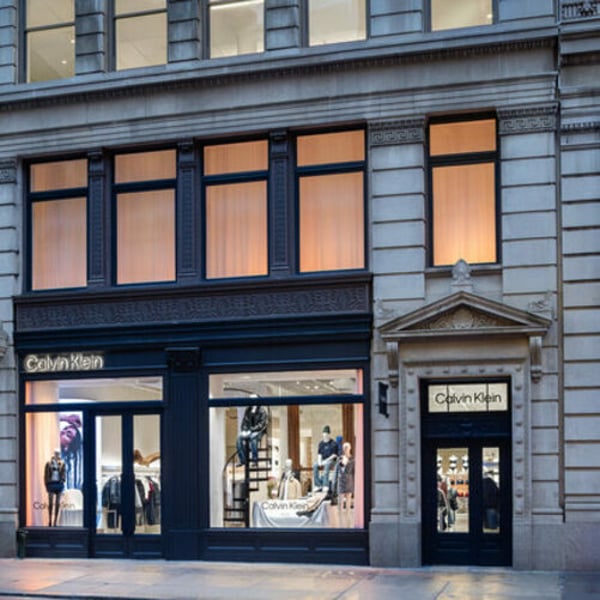
Calvin Klein opens new flagship store in SoHo, New York
-

 Politics8 years ago
Congress rolls out ‘Better Deal,’ new economic agenda
-
Entertainment8 years ago
New Season 8 Walking Dead trailer flashes forward in time
-
Politics8 years ago
Poll: Virginia governor’s race in dead heat
-
Entertainment8 years ago
The final 6 ‘Game of Thrones’ episodes might feel like a full season
-
Entertainment8 years ago
Meet Superman’s grandfather in new trailer for Krypton
-
Politics8 years ago
Illinois’ financial crisis could bring the state to a halt
-
Business8 years ago
6 Stunning new co-working spaces around the globe
-
Tech8 years ago
Hulu hires Google marketing veteran Kelly Campbell as CMO