Connect with us

Business

China posts 5.2% GDP growth as Trump makes tariff demands

Published

on


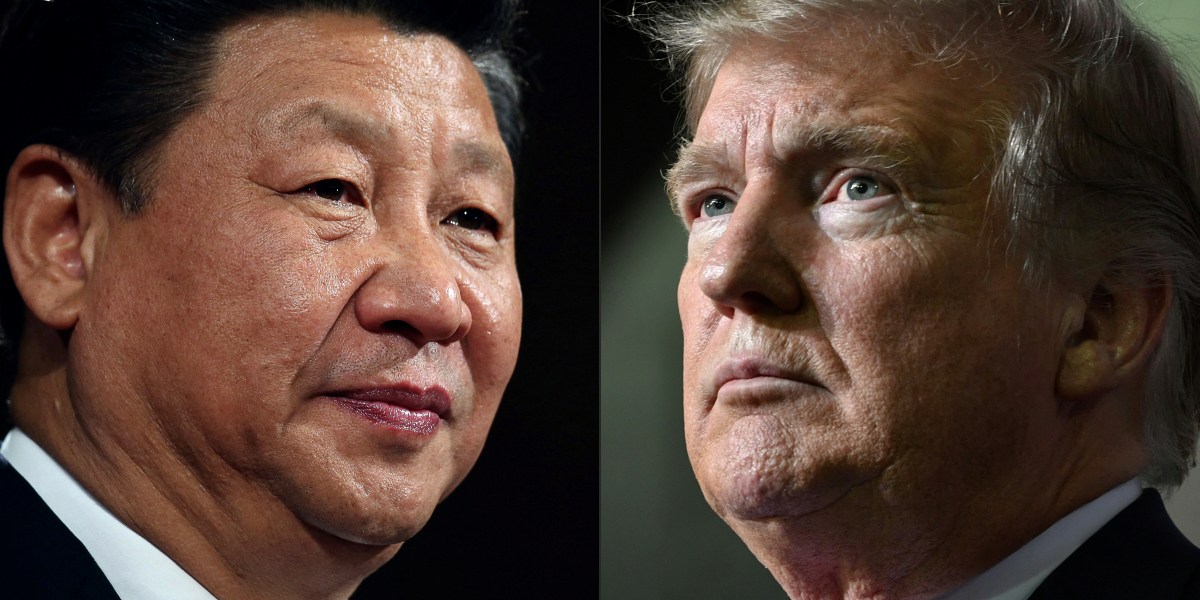
This weekend President Trump laid down the law on what he wants from China in order to ease restrictions in the tit-for-tat tariff war which has been ramping up since he returned to the Oval Office. But for all the president’s demands, his leverage over Beijing is showing cracks as the Chinese economy continues to go from strength to strength.

Next month the pause on reciprocal tariffs between China and the U.S. will run out, with Washington threatening a 100% hike on Chinese exports into the U.S. Yesterday afternoon Trump laid out what he wanted from Chinese officials in order to avert that outcome, telling reporters on Air Force One: “I want to help China, I’m not going to hurt China, but they have to give us things. I want them to buy soybeans, one of the things I want is China’s going to buy soybeans.”

“I want China to stop with the fentanyl, very normal things. I don’t want them to play the rare earth game with us.”

The president also framed his demands within a context of Chinese businesses paying high prices to continue shipping to U.S. consumers. He explained: “I have a very good relationship with President Xi of China, we’re having disputes on things. They’re paying us a lot of money—tremendous amounts of money in tariffs—and they’d probably like it to be less and we’ll work on that, but they have to give us some things.”

He continued: “They’re paying an unbelievable amount of money to the United States, they probably can’t pay that much, and I’m OK with that, we can lower that, but they have to do things for us too, it’s no longer a one-way street.”

President Trump’s tariff plan is indeed generating billions for the U.S. government, with many analysts putting the figure at about $350 billion per year. On the other hand, while economists are largely in agreement the economic sanctions will generate meaningful sums, they are divided on whether foreign businesses will eat the costs or whether the hikes will simply be passed on to U.S. consumers. Data suggests the majority of businesses are planning to pass their costs on.

So while the president can make his priorities for negotiations clear, there is no guarantee that China will listen. Indeed, Beijing officials have been firm in their narrative with the White House so far, a spokesman for the Ministry of Commerce said only last week: “Frequently threatening high tariffs is not the right approach to engaging with China. China’s position on a tariff war is consistent: We do not want one, but we are not afraid of one.” All the while, China maintains a stranglehold on the rare earth minerals that the U.S. doesn’t have.

Data is strong for China

Beijing’s stance is made all the stronger by data piling up in its favor. Instead of growth being hampered by tariffs, China reported this morning its economy is expanding faster than many expected.

The National Bureau of Statistics for China wrote this morning that its gross domestic product (GDP) in the first three quarters was up by 5.2% year on year at constant prices. Growth in Q3 was 4.8%, and although that represented a slowdown it was still greater than expectations. Breaking that down further, its primary industries were up 3.8% year on year, the secondary industry was up by 4.9% and its tertiary industry was up by 5.4%. The CSI 300 was up 0.53% on the news.

“The national economy demonstrated strong resilience and vitality,” the report added.

The U.S., by contrast, reported a contraction in the first quarter of the year but growth of 3.8% in the second quarter, according to the latest estimates. That being said, while measuring GDP is a useful barometer for the health of each economy, the might of America’s economy is evident. Looking at GDP per capita, the amount each person effectively generates, in China, this stood at a little over $13,000 in 2024, while in the U.S., it was nearly $86,000.

President Trump previously claimed China is facing “tremendous difficulties” because of his tariffs. Yet it seems Beijing has simply circumnavigated the U.S. by focusing on increasing its exports to the rest of the world: The diversification has been so successful that China’s export market is actually tracking significant growth despite the trade war.

According to data released by the General Administration of Customs last week, China’s shipments to the U.S. fell 27% in September, the sixth month of double-digit declines to its once most valuable customer. Meanwhile it charted strong growth to areas like the European Union (currently operating under a 15% tariff rate from the White House), leading to export growth to non-U.S. countries of 14.8%. The shift away from the U.S. means exports are actually up 8.3% in September compared with a year ago, raking in $328.6 billion—its highest total for 2025 so far.


Source link

Continue Reading

Business

Powell warns of a ‘very unusual’ economy as inflation remains high amid a weakening job market

Published

on


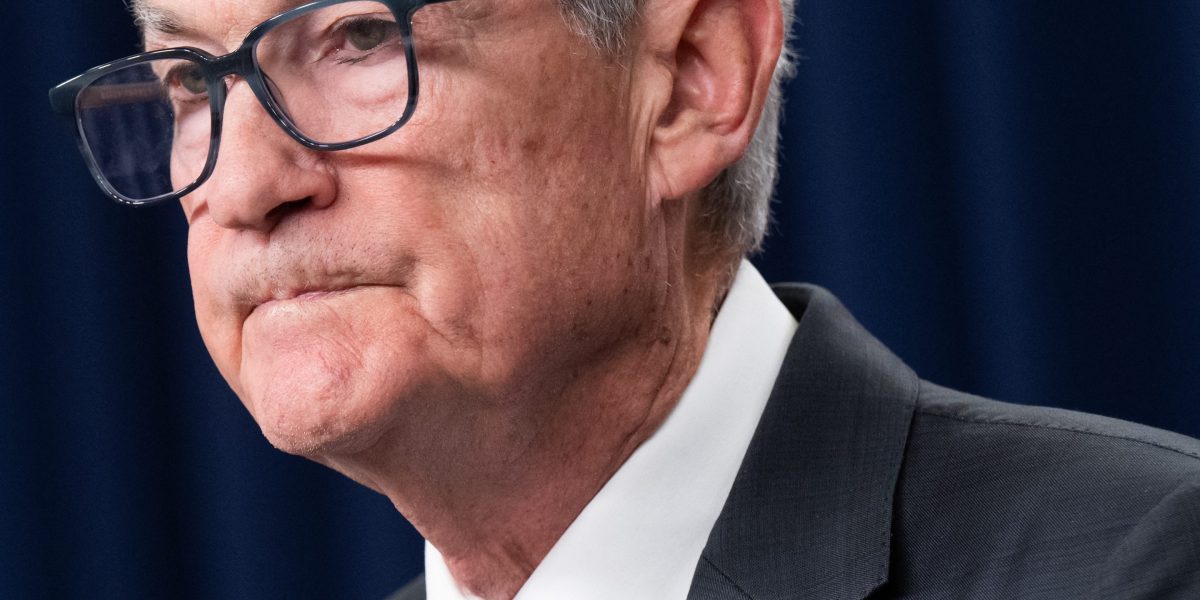
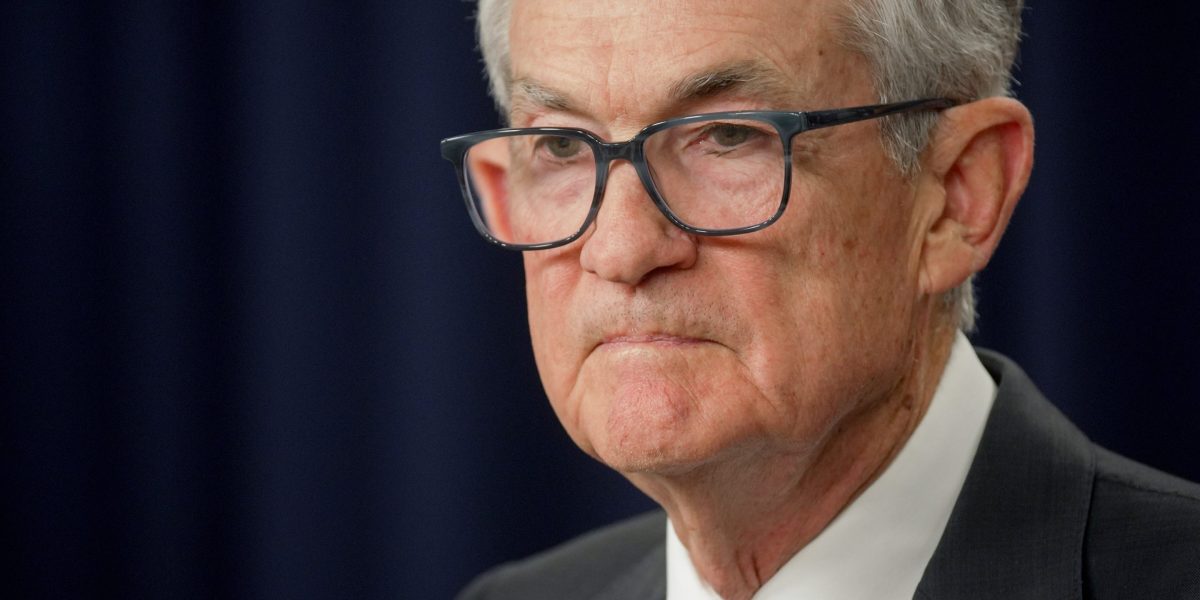
Federal Reserve Chair Jerome Powell on Wednesday described the U.S. economy as “very unusual,” saying policymakers are navigating a rare combination of tariff-driven goods inflation and a labor market that may already be weaker than official data suggests.

The Fed cut interest rates for the third consecutive meeting, a quarter-point reduction Powell framed not as a confident pivot toward easier policy, but as a defensive move meant to keep the labor market from slipping further. He repeatedly emphasized risks to employment have risen “in recent months,” and noted that behind the headline numbers, job creation may already be negative.

Powell made the striking admission the Fed believes the official payroll figures—which have slowed sharply since the summer—are overstating job growth by roughly 60,000 per month. 

“Forty thousand jobs could be negative 20,” he said, adding this dynamic is not well understood by the public because unemployment claims remain historically low—something both economists Mark Zandi and Claudia Sahm recently toldFortune could be giving people a false sense of security about the job market.

“I think a world where job creation is negative… we need to watch that very carefully,” Powell said. 

It is this weakening backdrop Powell said makes the current moment “very unusual”: Inflation remains elevated, but most of the remaining overshoot comes from goods categories directly affected by tariffs, as opposed to domestic economic overheating, which he said the Fed has worked hard to cool since its 2022 highs; inflation excluding tariff-affected goods is “in the low [two percent],” he said. Services inflation is cooling, wage pressures are easing, and neither the labor market nor business surveys suggest a “Phillips-curve” kind of inflation threat, Powell said, referring to the inverse relationship between inflation and unemployment. 

Instead, Powell said, the bulk of the problem is a “one-time price increase” pushing up goods categories as import levies work their way through supply chains. Goods inflation, he noted, should peak around the first quarter of 2026, assuming no additional tariff rounds.

Those crosscurrents have fractured the Fed. Three officials formally dissented from the rate cut on Wednesday, and several others offered what Powell described as “soft dissents,” when an official’s personal projection falls out of what they ultimately voted for. There were six such “soft dissents” this time, during one of the deepest divides inside the FOMC in years, driven by disagreement over how to weigh the risks of lingering inflation against the possibility that job growth is weaker—and much more fragile—than reported.

Powell stressed that policymakers cannot simply choose one mandate to prioritize. 

“There is no risk-free path,” he said, a refrain he’s repeated for months. “When both sides of the mandate are threatened, you should be kind of neutral.” 

He characterized the current stance as being at the “high end” of neutral, allowing the Fed to “wait and see” how the data evolve.


Source link

Continue Reading

Business

Top economist Diane Swonk: Jerome Powell risks losing the Fed’s credibility on a gamble about AI and immigration

Published

on


Federal Reserve Chair Jerome Powell warned Wednesday afternoon that the U.S. labor market may be significantly weaker than the official data suggest. But according to KPMG chief economist Diane Swonk, the Fed may be drawing the wrong conclusion—and in doing so, risks undermining its hard-won credibility on fighting inflation.

In a new analysis shared with Fortune, Swonk argues that Powell is treating the slowdown in hiring as a sign of weakening demand that must be offset with lower interest rates. But if that weakness is being driven instead by structural forces—specifically, AI adoption and sharp declines in immigration—then cutting rates won’t fix the underlying problem and could worsen inflation.

“Powell risks the Fed’s inflation-fighting credibility if the weakness in employment is due more to AI and curbs in immigration than weak demand,” Swonk wrote.

That warning comes after one of the most contentious Federal Open Market Committee meetings in years. The Fed cut rates by a quarter point for the third meeting in a row, taking the federal funds rate down to 3.5%–3.75%, but the vote fractured the committee. Swonk notes it was the first time since 2019 that there were three dissents, and they came “in opposite directions.”

Governor Stephen Miran — currently on leave from the White House Council of Economic Advisers — voted for a half-point cut, while Kansas City Fed President Jeff Schmid and Chicago Fed President Austan Goolsbee voted to hold rates steady.

Swonk highlights that the Fed’s statement resurrected language meant to indicate a pause: “In considering the extent and timing of additional adjustments… the Committee will carefully assess incoming data, the evolving outlook and the balance of risks.” Powell reinforced that stance, saying “We are well positioned to see how the economy evolves” and emphasizing that policymakers would need to “be a bit skeptical” of data distorted by the government shutdown.

But the bigger issue, Swonk argues, is that Powell kept pointing to imminent downward revisions to employment, revisions she warns may not mean what the Fed thinks they do.

If job growth is negative because automation is replacing workers or because the labor force is shrinking due to immigration policy, then monetary policy can’t solve the problem. That’s because rate cuts can stimulate demand, but they cannot create workers or reverse automation decisions already made by firms. 

“The challenge is if that weakness is due to AI and curbs on immigration, then rate cuts will not do much to shore up the labor market. More could show up in inflation,” she wrote.

Powell, during the conference, acknowledged that AI may be “part of the story” behind the cooling labor market, citing major employers like Amazon that have linked hiring freezes and job cuts to automation. But he stressed that it’s “not a big part of the story yet,” and said it’s too early to know whether this wave of technological change will ultimately destroy more jobs than it creates.

He also noted that labor supply has “come down quite sharply” due to a drop in immigration and participation.

A misread could become especially dangerous given the fiscal backdrop. Swonk notes that “expansions to tax cuts last year will show up as a record high tax refunds in early 2026,” warning that the windfall could “further entrench inflation much like we saw in the wake of the pandemic.” 

At the same time, federal debt is projected to surpass GDP for the first time since World War II, marking a level of issuance that is “a lot of debt for bond markets to absorb.”

Swonk also flags mounting risks to credibility inside the Fed itself.

Six participants wanted to hold rates steady, and the market openly dismissed Powell’s attempt at a hawkish spin: investors “priced in more cuts after the meeting,” she notes. Powell now appears to be one of the more dovish voices on the committee, raising questions about the direction of policy if the administration installs a new chair aligned with Miran’s more aggressive easing stance.

Swonk expects the Fed to pause early next year, but warns that if inflation fails to cool as expected, “the bond market could grow more skittish about rate cuts.”


Source link

Continue Reading

Business

TV producer behind ‘I Married a Murderer’ makes FBI Most Wanted list on claim she got a $14.7 million bank loan as a fake heiress

Published

on


The former head of a California company that produced true crime TV shows has been added to the FBI’s Most Wanted list, years after being charged with portraying herself as an heiress to get millions of dollars from lenders.

Mary Carole McDonnell, 73, is believed to be in Dubai, United Arab Emirates, the FBI said on Dec. 5.

McDonnell is the former chief executive at Bellum Entertainment LLC, based in Burbank, California, which produced shows such as “It Takes a Killer” and “I Married a Murderer.”

Bellum was having financial problems in 2017. McDonnell was able to get a $14.7 million loan from a bank after falsely claiming she was related to the founders of McDonnell Douglas, a leading aviation and aerospace company, and had $28 million in a trust account, according to court documents.

“It is alleged that McDonnell also defrauded additional financial institutions in a similar fashion, with an estimated loss of over $15 million,” the FBI said.

A grand jury indicted McDonnell in 2018 on charges of fraud and identity theft. She has not been found. The case is filed in federal court in Santa Ana, California.

Join us at the Fortune Workplace Innovation Summit May 19–20, 2026, in Atlanta. The next era of workplace innovation is here—and the old playbook is being rewritten. At this exclusive, high-energy event, the world’s most innovative leaders will convene to explore how AI, humanity, and strategy converge to redefine, again, the future of work. Register now.


Source link

Continue Reading

Trending

Copyright © Miami Select.