Connect with us

Business

China exempts major EU brandy makers from anti-dumping duty

Published

on


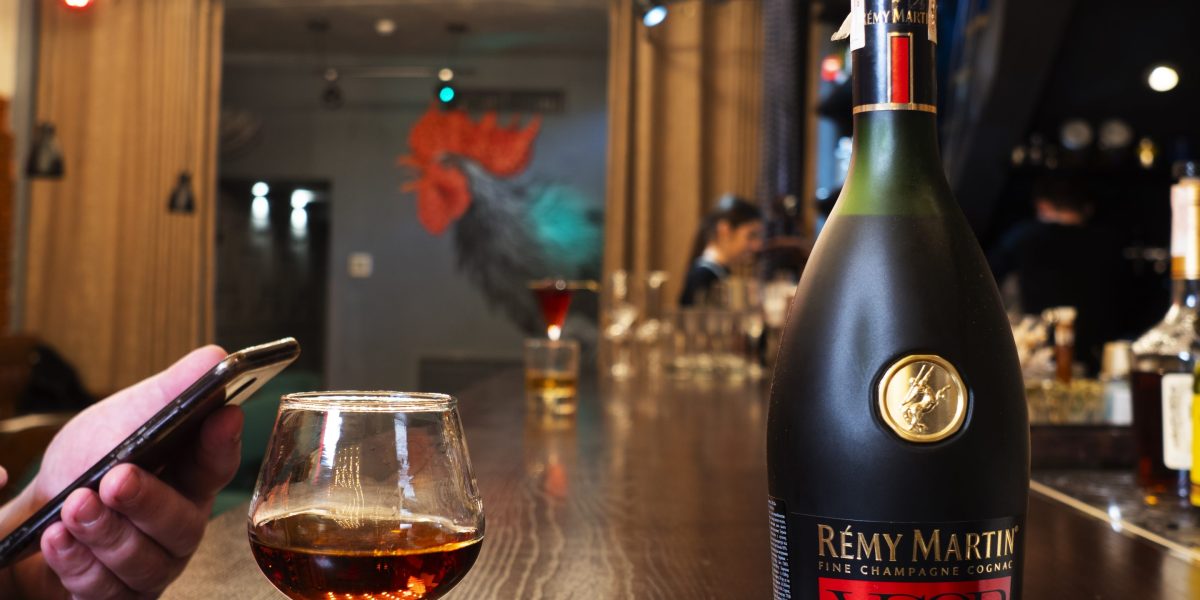
China imposed anti-dumping duties on European brandy for five years, while exempting major cognac makers that committed to keeping their prices above minimum levels.

The duties of as much as 34.9% will be imposed on European brandy shipments from July 5, according to a statement from China’s Ministry of Commerce. Exemptions apply to those that meet the price commitment, the ministry said.

The three big cognac makers — Remy Cointreau SA, Pernod Ricard SA and LVMH’s Hennessy — are among producers that agreed to abide by the pricing accord with China. The arrangement comes as a partial reprieve for the companies, which have seen cognac shipments to China plunge after Beijing imposed preliminary duties last year. 

“The minimum price commitment regime offers more tolerable conditions for our companies than the definitive anti-dumping duties announced, even if the market access they allow remains impaired,” Florent Morillon, president of cognac producers’ association BNIC, said in a statement. The group will keep pushing to regain unhindered access to the Chinese market, he added.

The terms of the price agreement represent a “significantly more favorable outcome, or at the very least, a substantially less punitive alternative,” compared to the anti-dumping duties announced, Remy Cointreau said in a statement. While it’s waiting for further details to assess the effects accurately, the impact is expected to be far less restrictive than what was anticipated when it released results in June. 

The company’s shares erased an early decline of as much as 7.2%, while LVMH and Pernod Ricard shares narrowed losses. 

A Hennessy representative declined to comment on the matter, while Pernod didn’t immediately comment.

Macron Meeting

By accepting minimum pricing, these cognac makers can maintain their presence in the Chinese market without the burden of additional duties. “This was obviously a crucial decision, as China is a key market, accounting for a substantial portion of their global sales,” said Jacques Roizen, managing director of China consulting at Digital Luxury Group.

The tariffs on brandy followed the EU’s decision last year to levy duties as high as 45% on Chinese-made electric vehicles. China had postponed the conclusion of the cognac probe twice, as the two sides tried to resolve the alcohol and EV spats, among others. 

China’s Commerce Minister Wang Wentao had discussed the two issues with the EU Trade Commissioner when he visited France in June. Foreign Minister Wang Yi is scheduled to meet with French President Emmanuel Macron later Friday.

French Industry Minister Marc Ferracci told Bloomberg Television Friday that it’s essential to deescalate tariff battles, over cognac and other goods. “Trade wars only make losers, so we shouldn’t be happy with what was announced today by China — even if some agreements can be found.”

Tensions between the two trading partners are far from easing, with China leaning toward canceling part of a two-day summit with European Union leaders planned for later this month, Bloomberg News reported Friday.


Source link

Continue Reading

Business

JetBlue flight near Venezuela avoids midair collision with U.S. Air Force tanker

Published

on


A JetBlue flight from the small Caribbean nation of Curaçao halted its ascent to avoid colliding with a U.S. Air Force refueling tanker on Friday, and the pilot blamed the military plane for crossing his path.

“We almost had a midair collision up here,” the JetBlue pilot said, according to a recording of his conversation with air traffic control. “They passed directly in our flight path. … They don’t have their transponder turned on, it’s outrageous.”

The incident involved JetBlue Flight 1112 from Curaçao, which is just off the coast of Venezuela, en route to New York City’s JFK airport. It comes as the U.S. military has stepped up its drug interdiction activities in the Caribbean and is also seeking to increase pressure on Venezuela’s government.

“We just had traffic pass directly in front of us within 5 miles of us — maybe 2 or 3 miles — but it was an air-to air-refueler from the United States Air Force and he was at our altitude,” the pilot said. “We had to stop our climb.” The pilot said the Air Force plane then headed into Venezuelan air space.

Derek Dombrowski, a spokesman for JetBlue, said Sunday: “We have reported this incident to federal authorities and will participate in any investigation.” He added, “Our crewmembers are trained on proper procedures for various flight situations, and we appreciate our crew for promptly reporting this situation to our leadership team.”

The Pentagon referred The Associated Press to the Air Force for comment. The Air Force didn’t immediately respond to a request for comment.

The Federal Aviation Administration last month issued a warning to U.S. aircraft urging them to “exercise caution” when in Venezuelan airspace, “due to the worsening security situation and heightened military activity in or around Venezuela.”

According to the air traffic recording, the controller responded to the pilot, “It has been outrageous with the unidentified aircraft within our air.”

Join us at the Fortune Workplace Innovation Summit May 19–20, 2026, in Atlanta. The next era of workplace innovation is here—and the old playbook is being rewritten. At this exclusive, high-energy event, the world’s most innovative leaders will convene to explore how AI, humanity, and strategy converge to redefine, again, the future of work. Register now.


Source link

Continue Reading

Business

Trump admits he can’t tell if the GOP will keep the House despite massive investment pledges

Published

on


President Donald Trump admitted that he’s not sure if his economic policies will pay off for Republicans at the ballot box in 2026.

In an interview with the Wall Street Journal that was published late Saturday, he pointed to massive investment pledges that he’s secured since returning to the White House.

But when asked if Republicans will lose control of the House in next year’s midterm elections, Trump replied, “I can’t tell you. I don’t know when all of this money is going to kick in,” adding that forecasts say the second quarter.

Trump has previously touted as much as $21 trillion of investments pouring into the U.S., though recent commitments don’t come close to adding up to such levels.

Still, under trade deals Trump has negotiated, the European Union has vowed $600 billion in investment, Japan $550 billion, and South Korea $350 billion. Separately, Saudi Arabia has promised $1 trillion. Companies have also announced plans to invest hundreds of billions of dollars, though some of that includes money planned during the Biden administration.

While the timing of all the money is uncertain, not to mention how much will actually be spent, companies have expressed the need to diversify supply chains with more domestic production. Apple has said its $600 billion pledge to build U.S. factories will create a “domino effect” that ignites manufacturing across the country.

At the same time, Wall Street expects Trump’s tax cuts from his One Big Beautiful Bill Act to deliver a significant jolt of fiscal stimulus to the economy next year, potentially reaccelerating GDP growth.

That would come as voters made clear in last month’s off-year elections that affordability is their top priority. Inflation has cooled from its 2022 high, but prices are up sharply from pre-pandemic levels, and consumers are revolting over higher insurance, electricity and grocery bills. Even most Trump voters say the cost of living is bad.

Trump has dismissed the affordability issue as a Democratic “hoax” and insists prices are down. He told the Journal that he will lower prices.

“I think by the time we have to talk about the election, which is in another few months, I think our prices are in good shape,” Trump said.

“I’ve created the greatest economy in history. But it may take people a while to figure all these things out,” he added. “All this money that’s pouring into our country is building things right now—car plants, AI, lots of stuff. I cannot tell you how that’s going to equate to the voter, all I can do is do my job.”

Trump has floated some ideas to appease voters on affordability, including a 50-year mortgage to lower monthly payments and $2,000 “dividend” checks. He also continues to pressure the Federal Reserve to lower rates, even though it could worsen inflation, and rolled back tariffs on some food imports.

In his interview with the Journal, Trump didn’t say if he would cut tariffs on other goods. He also warned that if the Supreme Court strikes down his global tariffs, his alternatives are not as “nimble, not as quick.”

 “I can do other things, but it’s not as fast. It’s not as good for national security,” Trump added. 


Source link

Continue Reading

Business

Nicotine pouches can be a better alternative to cigarettes says CEO

Published

on


Smoking is one of the clearest public-health failures of our time. More than 500,000 Americans still die each year from smoking-related illnesses, and globally the picture is even more alarming. In the United States, anti-smoking campaigns have reduced the number of new cigarette users, but the effectiveness of these measures may be fading. Indeed, the headline of a widely-shared news story notes “Celebrities Are Making Smoking Cigarettes Cool Again”. Yikes. Meanwhile, a quick trip to Mexico, Europe, or Asia is enough to see that cigarettes remain very much in style.

Reducing cigarette use, and preventing a new generation from getting hooked on nicotine, is a noble goal. That is one reason James Monsees and Adam Bowen founded the vape company JUUL Labs, as a potentially less harmful alternative for adult smokers. But a mix of regulatory missteps by a hostile FDA and market loopholes opened the door to a wave of counterfeit and bootleg vapes, often imported from China, sold in local stores, highly addictive, and completely unregulated. Many people became sick from using vapes with unknown ingredients. Teenagers were easily able to access bootleg vapes from China in youth-friendly flavors. What began as an idealistic goal—moving adult smokers off of cigarettes—turned into a new epidemic. 

Now we have two problems: cigarettes and vapes.

I believe science and technology can solve both. I was a tobacco user who became addicted to vaping. I tried everything to quit and cut down my nicotine use. Eventually, I discovered Swedish-style white pouches. That experience led me to create Sesh+, a premium, tobacco-free nicotine pouch made with transparent ingredients. It has been life-changing for me personally: I haven’t picked up a vape since switching to pouches. In Sweden, where oral nicotine products have been widely used for decades, smoking rates are among the lowest in Europe and smoking-related disease is correspondingly lower.

There is growing evidence that nicotine itself, while addictive, is not what primarily causes smoking-related disease; it’s the toxic byproducts of combustion that kill. With vaping, the concern is different: it’s the lack of transparency and quality standards that should alarm us. As a health-conscious consumer, I want to know exactly what I’m putting into my body. That’s why our pouches are independently lab-tested for contaminants like heavy metals and are manufactured in the United States under strict quality controls. 

Fake nicotine pouches are already in the U.S. market. Sofia Hamilton writes for Reason that her favorite convenience store unknowingly sells counterfeit nicotine pouches, and how only someone deeply familiar with FDA nicotine rules could tell the difference. No one should have to be a nicotine policy expert just to know whether a product is safe.

Important questions remain. We do not want to create a product that attracts people who don’t already use nicotine. The average Sesh+ customer is over 35, and I’m very proud of that. Early data is encouraging: a recent Rutgers study found that new nicotine users taking up pouches remains very low. Government has a responsibility to keep black-market and counterfeit pouches out of consumers’ hands. Industry must ensure retailers are educated and know what they’re selling. And we need strong youth prevention laws.

Nicotine pouches will only be effective if industry and government work together to ensure we are not attracting youth or non-nicotine users.

In the U.K., the proposed Tobacco and Vapes Bill would ban people born in or after 2009 from ever purchasing nicotine products. In the United States, we have already raised the legal age to buy tobacco to 21. These are the kinds of measures our industry should support. If the legislation in the U.K. passes, I hope other countries will adopt similar policies to prevent youth from accessing nicotine products. I also hope to see product-verification technology adopted as an industry standard so counterfeit nicotine products never reach consumers. Age verification is not enough; we must ensure a market for counterfeit and bootleg nicotine pouches does not emerge.

If companies in the nicotine pouch space work together, we can learn from JUUL’s experience and avoid repeating the same mistakes. Our responsibility is clear: help adult smokers move to potentially less harmful alternatives, without creating a new generation of nicotine users. If we get this right, a world free from tobacco is not just aspirational. It’s achievable.

Max Cunningham is the CEO of Sesh+, a nicotine pouch company based in Austin, Texas and backed by 8VC. The opinions expressed in Fortune.com commentary pieces are solely the views of their authors and do not necessarily reflect the opinions and beliefs of Fortune.


Source link

Continue Reading

Trending

Copyright © Miami Select.