
Politics
Checking the pulse of Florida health care news and policy


Welcome back to Diagnosis, a vertical focused on the intersection of health care policy and politics.
— First-tier priority —
Florida lawmakers are entering the 2026 Legislative Session with renewed urgency around behavioral health, and Rep. Sam Garrison has made clear that the issue will remain one of his top priorities.
Speaking at the Florida Chamber’s Legislative Fly-In, the Fleming Island Republican framed mental health and substance use disorders as among the most pressing challenges facing Florida, asserting it is a “first-tier” priority.
“This is, to my mind, one of the biggest challenges facing not just Florida, but America, the world, you name it,” said Garrison, who is in line to become House Speaker after November’s elections.
Garrison said behavioral health in 2026 is not a siloed issue, but something that cuts across demographic lines. He pointed to technology and social media as accelerants, particularly for younger generations.
“Phones, technology, and all the things that come with it that you and I and everybody else in this room — unless you’re really successful and vicious young executive — never had to deal with growing up,” he said to an audience of business leaders. “This is the reality of the world that we’re in right now.”
Despite the Legislature’s reputation for partisan clashes, Garrison said mental health is a rare area of broad bipartisan agreement. He credited both House and Senate leaders for engaging on the issue and vowed that it will continue through the end of his speakership in 2028, if not beyond.
“We have a model, a structure, how we handle the government side of the shop that was created in the 1970s and 1980s, and it’s a little bit different than it was back then,” he said,
“ … You’re going to see — especially in the Florida House, but I think the Senate will be there, too — a real focus on, ‘Do we have the right structure set up so that we as a government can do our part to make sure that mental health services, behavioral health services, are being provided in a manner that’s effective and with a 2026 model, not a 1976 model.’”
Recalling his time as a prosecutor, Garrison said mental health or substance use issues were present in the vast majority of serious criminal cases he handled.
“If I had to give you a guess, it may not have been 100%, but it was pretty damn close,” he said, adding that he’s also seen firsthand through his wife’s work as a high school teacher that even students from well-off families are struggling.
“These kids, they lack for very little in life. But even among those kids whose folks love, whose parents are like everybody in this room — parents who have been successful — they’ve got resources. They have mom and dad, mom or dad, or some generation that cares,” he continued.
“Even with those kids, pretty darn close to 100% of them in some form or fashion — because of those phones, because of technology, because of the world we live in — have challenges related to mental health. And if those kids are struggling … extrapolate that out with the kids who are who may not have parental involvement at home, don’t have that oversight, don’t have the resources.”
Garrison said Florida spends billions annually on health care, directly or indirectly tied to behavioral health, yet the state still lacks a cohesive long-term strategy. And even in a year where leadership has signaled budget cuts are coming, he warned that relying on hospitals to provide behavioral health services as “loss leaders” or expecting providers to accept unsustainable reimbursement rates is not a viable path forward.
“We have a lot of tactics for how to attack this, but we don’t necessarily have it as a strategy. There’s a difference between tactics and strategy,” he said, adding that even though “Florida is light-years — I mean light-years — ahead of basically everyone else in the rest of the nation,” the Legislature needs to be “aggressive” and “forward thinking” on the issue.
“If you’re requiring providers to come in and do this job and lose money, that’s not a long-term strategy. The answer to all your questions isn’t always money, but in this case, a lot of it is,” he said.

— Savings for whom? —
A priority health care bill scheduled for its first Committee stop this week includes a prescription drug pricing proposal that is reviving a long-running policy debate over prescription affordability, access, and the role of international markets in setting prices.
HB 697, sponsored by Rep. Jennifer Kincart Johnsson and part of House Speaker Daniel Perez’s broader “Florida’s New Frontier” health care initiative, would establish an international reference pricing framework for certain outpatient prescription drugs.

Often described as a “most favored nation” model, the approach would cap reimbursement rates in Florida based on prices paid in a select group of foreign countries. Under the proposal, drug manufacturers would be required to report international pricing data to the state, and the Agency for Health Care Administration would set a benchmark price based on the lowest price paid in comparable, market-based countries, excluding single-payer systems.
Supporters argue that tying prices to international benchmarks could rein in costs in a system where U.S. consumers routinely pay more for prescription drugs than patients abroad. Critics, however, say that may not be the case because the legislation does not require insurers or pharmacy benefit managers to pass along any savings to patients.
Florida has explored similar concepts before. During the 2024 Session, House committees examined international reference pricing proposals. They heard testimony from national policy experts, prompting bipartisan concerns about relying on foreign health systems that often limit or delay access to new medicines.
Critics, including some lawmakers, also questioned whether such models would discourage investment in pharmaceutical research and development. This industry directly employs about 43,000 Floridians and indirectly supports another 250,000 jobs in the state.
Nationally, the debate remains unsettled. Countries that use centralized price-setting models typically achieve lower prices by restricting coverage or delaying approval of new treatments. At the same time, research consistently shows that U.S. patients gain access to new medicines earlier and at higher rates.

— The doctor is in —
Legislation clarifying when nurse practitioners may use the title “doctor” in clinical settings advanced during the first week of Session.
HB 237, sponsored by Rep. Michelle Salzman, cleared its first hurdle Wednesday with unanimous approval from the House Health Professions & Programs Subcommittee. The measure would allow NPs who have earned doctoral degrees to use the title “doctor” so long as they also clearly disclose that they are nurse practitioners.

“If you’ve earned a doctorate in the medical field, you deserve to say so, just like in any other profession,” said Salzman, a Pensacola Republican. “This bill ensures patients understand the training behind their care while offering fairness and recognition to our nurse practitioners.”
Salzman and the bill’s supporters said the proposal would align Florida with other states where doctoral-level health professionals, such as pharmacists, physical therapists, audiologists and psychologists, may use the title with a similar guardrail. They also say the change could help with recruitment and retention as Florida grapples with an ongoing shortage of health care professionals.
The bill now heads to the Health & Human Services Committee. If ultimately approved by the Legislature, the measure would take effect July 1.

— TGH-LRH partnership —
Tampa General Hospital and Lakeland Regional Hospital announced an agreement linking TGH’s nationally recognized academic health system with the Hollis Cancer Center at LRH.
The two Central Florida hospitals said the agreement will result in expanded subspecialized cancer care across the region, creating new pathways for patients to access advanced cancer research, clinical trials and clinical expertise.

“I am impressed by the innovation and the dedication to the community that I’ve witnessed at Lakeland Regional Health,” said John Couris, president and CEO of Florida Health Sciences Center and Tampa General. “When health care professionals work together to advance research and improve outcomes for cancer patients, everybody wins.”
Through the partnership, cancer patients at the Hollis Cancer Center will gain access to TGH’s subspecialized oncology experts, cutting-edge research and advanced clinical trials, while receiving care in their own community.
“We are very excited to collaborate with the TGH Cancer Institute, which is widely recognized as a national leader in cancer care and research,” said Danielle Drummond, president and CEO of Lakeland Regional Health. “Our goal is always to provide the highest level of care to our patients close to home, and we are confident that combining our resources and expertise will offer tremendous benefits for our patients.”
The TGH Cancer Institute is one of Florida’s few cancer centers backed by academic medicine. The Institute has been ranked among the Top 10% in the nation for cancer care by U.S. News & World Report for 2025-2026. The Hollis Cancer Center has also earned national accolades for excellence in cancer care, including Gold Status Accreditation from the American College of Surgeons’ Commission on Cancer.
The collaboration builds on existing initiatives between Tampa General and Lakeland Regional, including their joint neurosciences program and the innovative Hospital at Home model, which allows patients to receive hospital-level care from the comfort of their homes.
— ROSTER —
Gov. Ron DeSantis appointed Gary Kompothecras and reappointed Howard Baum to the Board of Chiropractic Medicine earlier this month.
Kompothecras is the Manager of Physicians Group, LLC and is a member of the Sarasota Military Academy Foundation Board of Directors. He previously served on the Sarasota Manatee Airport Authority and the Space Florida Board of Directors.

Kompothecras earned his bachelor’s degree in marketing from the University of South Florida and his Doctor of Chiropractic Medicine from Life University.
Baum is a self-employed Licensed Mental Health Counselor and U.S. Army veteran, retiring with the rank of Colonel. He serves as a counseling clinician for the Tampa Bay Regional Critical Incident Team, is a counseling team member for Hope Justice Ministry, and a member of the Association of Former Intelligence Officers.
Baum earned his bachelor’s degree in psychology from Texas Tech University, his master’s degree in systems management from the University of Southern California, and his master’s degree in clinical mental health counseling from Argosy University.

— ICYMI —
“Thousands in Florida to lose coverage for HIV meds because of state cuts” via Ana Goñi-Lessan of USA Today Network — For thousands in Florida who rely on the AIDS Drug Assistance Program (ADAP), the Florida Department of Health is about to change up their medication plans or even get rid of covering them altogether, citing federal cuts as the culprit. Public health advocates warned legislators at the Capitol on Wednesday, Jan. 14, that cutting funds would push people off their meds and separate them from their doctors, causing lower adherence rates. When lifesaving HIV medication isn’t taken daily, viral loads go up, making the virus transmissible again and putting people at risk for opportunistic infections.

“Medical malpractice, doulas, dental care: Health care nitty-gritty in the 2026 Session” via Christine Sexton of the Florida Phoenix — Florida leads the nation in Affordable Care Act enrollment, and, if the enhanced premium tax subsidies people rely on to help purchase the health insurance aren’t extended, the state could see the ranks of the uncovered rise exponentially. What, if anything, the Legislature does in the next two months to make health care more affordable and accessible to Florida residents remains to be seen. Florida legislators are expected to once again look at killing a medical malpractice law that bars adult children of single parents and parents of childless adult children from pursuing negligence lawsuits if a family member has died.
“Trump releases health policy outline” via Cheyenne Haslett of POLITICO — Trump released a health care framework that calls on Congress to codify his efforts to reduce prescription drug prices, send money to Health Savings Accounts instead of insurers via Affordable Care Act subsidies, and force more price transparency from insurance companies, hospitals and physicians. “We’re calling it the Great Health Care Plan. Instead of putting the needs of big corporations and special interests first, our plan finally puts you first and puts more money in your pocket,” Trump said in a video published by the White House on Thursday with little advance notice.
“Trump administration reinstates drug, mental health programs it cut days earlier” via Ryan Gillespie of the Orlando Sentinel — The Trump administration reinstated about $2 billion in mental health and substance abuse funding — two days after it canceled those grants and left Central Florida agencies worried about how they would manage significant cuts to the region’s limited resources. Central Florida’s largest mental health and substance abuse provider had nearly $1.2 million in payments canceled overnight on Tuesday, but by Thursday morning, it learned it would receive its funds. Both notices arrived via email from the federal Department of Health and Human Services, which oversees the Substance Abuse and Mental Health Services Administration. A Kissimmee clinic, Pan-American Behavioral Health Services, also lost funding and had it reinstated within those two days, its CEO, Brendan Ramirez, said.
“Darryl Rouson, Debra Tendrich propose sweeping expansion of youth mental health screenings” via Jesse Scheckner of Florida Politics — St. Petersburg Sen. Rouson and Rep. Tendrich filed companion bills (SB 1302, HB 1133) to require mental and behavioral health screenings for minors and young adults enrolled in Medicaid. The goal is to confront what they describe as a statewide youth mental health emergency. Tendrich told Florida Politics her push for reform was galvanized by personal tragedy. In 2023, her friend, Brian Hiltebeitel, was brutally killed on a Palm Beach County golf course by a 26-year-old man later deemed incompetent for trial due to mental illness and substance abuse concerns.

— RULES —
The Board of Orthotists and Prosthetists’ final rule regarding citations for disciplinary action goes into effect Jan. 26. More here.
The Board of Pharmacy’s final rule regarding the responsibilities of supervising pharmacists and supervision of more than one registered pharmacy technician went into effect on Sunday. More here.

— PENCIL IT IN —
Jan. 20
9:30 a.m. — The Senate Children, Families and Elder Affairs Committee meets to consider legislation affecting child welfare and related health policy. Room 301, Senate Office Building.
10:30 a.m. — The House Health Care Budget Subcommittee meets, including a Department of Children and Families presentation on changes to the Supplemental Nutrition Assistance Program. Room 314, House Office Building.
2 p.m. — The House Human Services Subcommittee meets to consider legislation affecting medical assistance eligibility and foster care records. Room 314, House Office Building.
3:30 p.m. — The Senate Health Policy Committee meets for an OPPAGA review of health care practitioner regulation in Florida and other states. Room 412, Knott Building.

Jan. 21
8 a.m. — The House Health and Human Services Committee meets to consider bills related to nursing practice, social work licensure, and swimming lesson vouchers. Room 17, House Office Building.
10 a.m. — The House Health Professions and Programs Subcommittee meets to consider legislation affecting occupational therapy and nursing education. Room 102, House Office Building.
4 p.m. — The House Health Care Facilities and Systems Subcommittee meets to consider legislation related to drug prices and insurance coverage. Room 404, House Office Building.
Jan. 27
8 a.m. — Florida Dental Association Dentists’ Day on the Hill brings dental professionals to the Capitol to advocate oral health policy. Capitol Complex.
12:30 p.m. — Florida Hospital Association Hospital Days begin with a Board of Trustees meeting and legislative reception focused on hospital and health system priorities. Tallahassee.
1 p.m. — The Senate Children, Families and Elder Affairs Committee meets to consider health and human services legislation. Room 301, Senate Office Building.
Jan. 28
7 a.m. — Florida Hospital Association Hospital Days continue with legislative briefings and member visits focused on hospital policy priorities. Capitol Complex.
8 a.m. — Moffitt Day at the Capitol highlights cancer research and treatment advocacy. Capitol Complex.
1 p.m. — The Senate Appropriations Committee on Health and Human Services meets to consider health-related budget items. Room 412, Knott Building.

Last Call – A prime-time read of what’s going down in Florida politics.
First Shot
Did Christina Pushaw break the law by asking gubernatorial candidate James Fishback to delete text messages the two exchanged in recent months?
Maybe.
Pushaw, who earns a $179,000 tax-funded salary as a senior management analyst for Gov. Ron DeSantis, all but confirmed the authenticity of texts between her and Fishback in which she appears to have written, “I need you to confirm that you deleted everything with my name on it.”
The exchange has raised questions about whether she solicited the destruction of public records, which would be illegal if the messages involved her government duties, but likely not if they were strictly campaign-related, as she says.
Fishback posted a screenshot of the exchange following a public blowup between the two after they, according to Pushaw, spoke “frequently” since October about Fishback’s campaign.
On X, Pushaw accused Fishback of deception, writing: “Thanks for proving my point that you have no qualms about lying and revealing private messages. I truly believed that we were friends, and I feel sickened and violated by this betrayal.”
Pushaw, who has worked for DeSantis as both a campaign and government staffer, says she was never paid for advising Fishback and never told the Governor about her communications with Fishback.
In a brief phone interview on Monday, she said none of her messages with Fishback touched her state job.
“I never talked to him about government business,” she said. She declined to explicitly confirm the authenticity of Fishback’s screenshots, including one that referenced her government position.
Read more on Florida Politics.
Evening Reads
—“Donald Trump ties Greenland takeover bid to Nobel Prize in text to Norway leader” via Ellen Francis and Steve Hendrix of The Washington Post
—”Trump’s letter to Norway should be the last straw” via Anne Applebaum of The Atlantic
—”Trump’s Greenland move is one of the dumbest political decisions I have ever seen” via Chris Cillizza of So What
—”The race to build the DeepSeek of Europe is on” via Joel Khalili of WIRED
—”Three maps tell a tale of the 2026 Midterms.” via Ashley Cai and Shane Goldmacher of The New York Times
—”Orlando Sentinel 150: Remembering MLK’s only visit to Orlando in 1964” via the Orlando Sentinel
—“Jeff Brandes: Six ideas Legislature can’t afford to ignore in 2026” via Jeff Brandes for Florida Politics
—”The Indiana-Miami CFP game is the Hollywood tangle we didn’t know we needed” via Steven Zeitchik of The Hollywood Reporter
—”‘It shaped my DNA’: The very Miami story of Mario Cristobal” via Andrea Adelson of ESPN
—”Two other Hoosiers from Miami are coming home, too — and could play a big role” via David J. Neal and Jordan McPherson of the Miami Herald

Quote of the Day
“I didn’t vote for this weather.”
— Marc Caputo on a frigid morning in Miami.
Put it on the Tab
Look to your left, then look to your right. If you see one of these people at your happy hour haunt, flag down the bartender and put one of these on your tab. Recipes included, just in case the Cocktail Codex fell into the well.
Even though it’s booze-free, the Duval delegation could use a Cortisol Cocktail to calm their nerves after a bomb threat landed in their inboxes.
Disney and Universal are getting an Investigators Rite, courtesy of Central Florida Democrats, who are requesting they look into a company that operates independent restaurants on their properties.
Someone should’ve sent an Out of Office for Attorney General James Uthmeier, because he picked an odd day to drop his latest opinion.


Breakthrough Insights

Tune In
Miami plays for national title at home
The Miami Hurricanes try for the program’s first national championship since 2001 when they face top-seeded Indiana at Hard Rock Stadium tonight (7:30 p.m. ET, ESPN).
Miami entered the College Football Playoff as the 10th seed and knocked off Texas A&M, Ohio State, and Ole Miss to reach the finals. The Hurricanes (13-2) have benefitted from a defense that has limited opponents to 14 points per game this season. Defensive end Rueben Bain Jr. was named the ACC defensive player of the year and is a likely Top 10 pick in the NFL Draft.
Indiana (15-0) has enjoyed the greatest season in program history. In the second season under Curt Cignetti, the Hoosiers have not only won more games than they ever have in a season, but also more than the program ever did in two consecutive seasons combined before Cignetti’s arrival.
The Hoosiers are led by Heisman Trophy-winning quarterback Fernando Mendoza.
The two programs have met twice in history, with Indiana winning the first meeting in 1964 and the Hurricanes taking the return match in 1966. The two programs have not met since.
The last time a college football team won the national championship by winning a game on its home field was the Hurricanes, who won the Orange Bowl following the 1987 season to win the program’s second of five national championships.
___
Last Call is published by Peter Schorsch, assembled and edited by Phil Ammann and Drew Wilson, with contributions from the staff of Florida Politics.
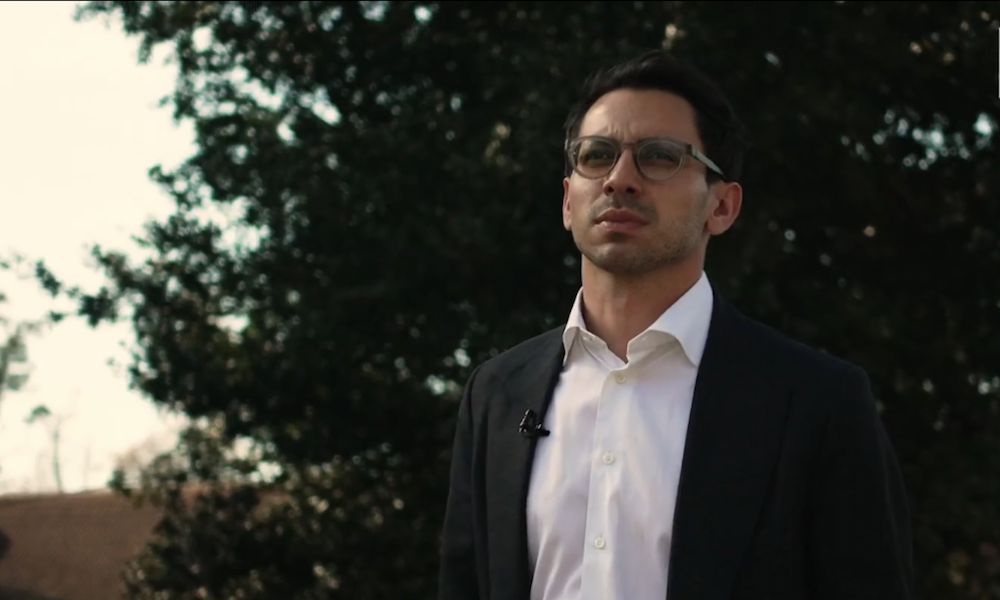
Gubernatorial candidate James Fishback’s legal woes are deepening.
A federal magistrate Judge has ordered Fishback, the founder and CEO of Azoria Capital, to turn over company stock certificates and a slate of luxury purchases to the U.S. Marshals Service by the end of the month as payment on a $229,000 judgment to his former employer, Greenlight Capital.
U.S. Magistrate Judge Martin Fitzpatrick of the Northern District of Florida granted two unopposed motions by Greenlight after Fishback failed to respond by a court-ordered deadline.
It’s the latest escalation in a dispute between Greenlight and Fishback, a former analyst for the hedge fund who has made more headlines recently for his race-baiting rhetoric in the Governor’s race, allegations of grooming, multistate voter registration and public blowup with Gov. Ron DeSantis adviser Christina Pushaw.
Greenlight told the court that Fishback still owes it money under a June 2025 court order. The firm asked the court in late November to compel Fishback to surrender his stock or share certificates in Azoria Capital, Inc., a Delaware corporation Greenlight described as founded by Fishback and controlled by him at “75% or more.”
Because Fishback did not oppose the request, the court granted it and directed him to “locate, obtain, and turn over” all Azoria stock and/or share certificates to the U.S. Marshals Service by Jan. 30.
The Marshals Service, in turn, is ordered to sell the stock for the benefit of Greenlight as the judgment creditor. Fitzpatrick warned Fishback that federal courts have inherent authority to enforce orders and cautioned that ignoring the directive could place him “in danger of being held in contempt of court.”
Fitzpatrick also granted a second motion by Greenlight seeking the turnover of personal property belonging to Fishback. The firm alleged that Fishback claimed he lacked means to pay the $229,000 judgment while making more than $37,000 in debit card purchases over 16 months through a previously undisclosed JPMorgan Chase account.
The court summarized transactions at retailers including eBay, Nordstrom, Burberry, Bucherer and others, but noted it did not know what exactly Fishback purchased. Still, Fitzpatrick described the spending as “extravagant” and found that Fishback, by not responding by the deadline, waived his chance to argue the items were exempt or not personal property.
Under the order, Fishback must turn over 43 items listed in the motion paper, along with a list, to the Marshals Service by Jan. 30. The Marshals must hold the items for 30 days, allowing Greenlight’s lawyers to retrieve and sell them as partial satisfaction of the judgment.

Fishback worked at Greenlight from 2021 to 2023, after which he and the company became embroiled in a very public dispute over how he described his role there. He said he was “head of macro” for Greenlight, while the New York hedge fund insisted no such title ever existed and that the loftiest role Fishback held was as a research analyst.
Greenlight alleged that Fishback misrepresented his position to boost credibility and attract investors for Azoria. Fishback, meanwhile, argued Greenlight’s denial harmed him with potential backers and pointed to internal communications he says support his version of events.
He did, however, admit to sharing confidential Greenlight portfolio information and agreed to pay costs to resolve a separate lawsuit.
Trustees of a white-label exchange-traded fund (ETF) under Tidal Financial Group also voted in October to liquidate two Azoria ETFs — SPXM and TSLV, which together held about $40 million in assets — after Fishback admitted to sharing the information.
Between when he launched his campaign on Nov. 24 and Dec. 31, when fourth-quarter bookkeeping closed, Fishback reported raising less than $19,000 through his campaign account and nothing through an affiliated political committee.
Fishback is seeking the Republican nomination for Governor. The race’s poll-tested front-runner, U.S. Rep. Byron Donalds, amassed $45 million last quarter.
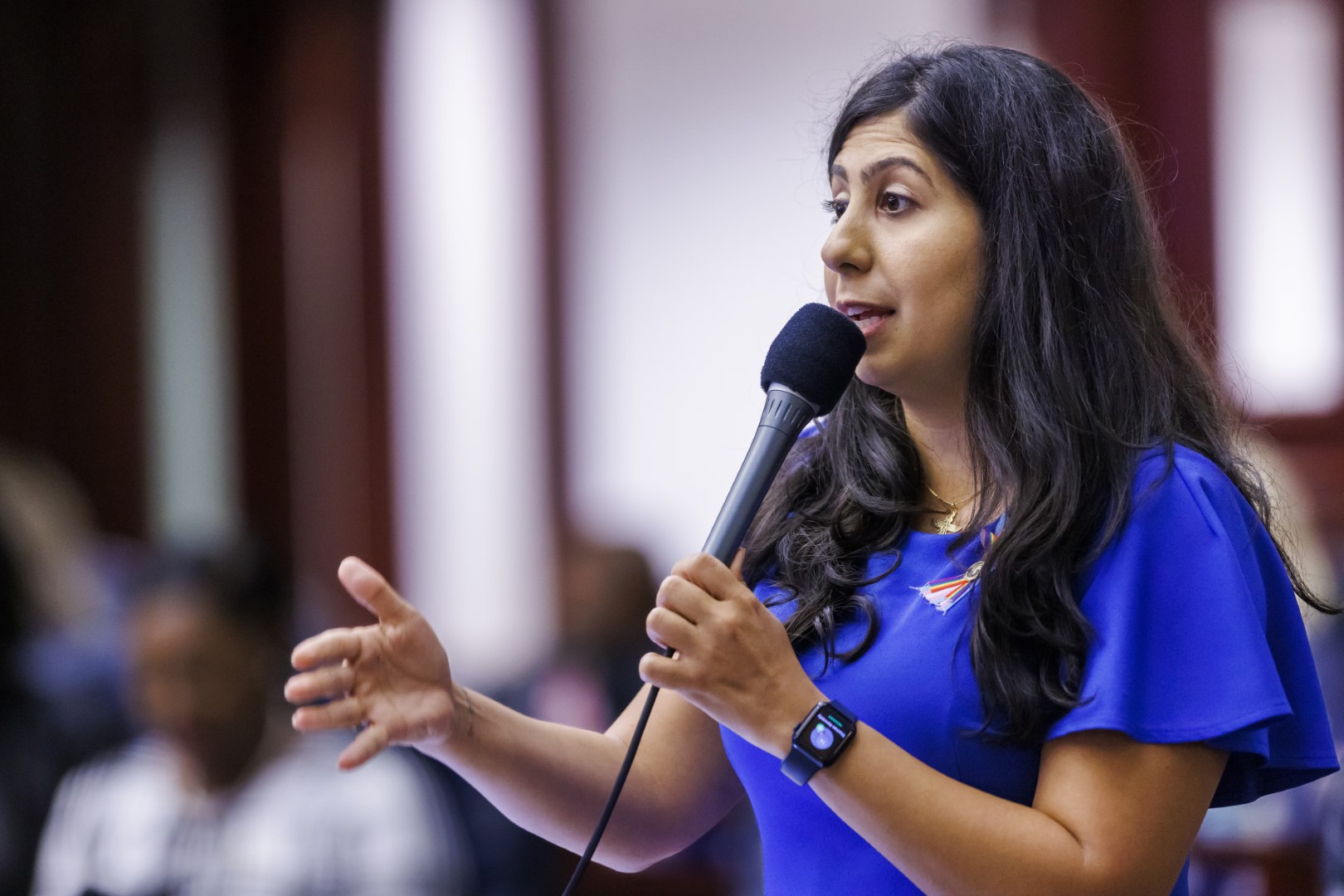
Rep. Anna Eskamani says she has raised more than $1 million so far as she tries to become the next Orlando Mayor.
The Orlando Democrat says she hit the milestone last week as lawmakers returned to Tallahassee for the start of the 2026 Legislative Session.
Term-limited in the House, Eskamani is running in 2027 to replace Orlando Mayor Buddy Dyer, who is not running for re-election.
“This campaign is powered by everyday Orlandoans who believe our city can be more affordable, more connected, and safer for everyone,” Eskamani said in a statement.
“Raising over one million dollars from thousands of grassroots donors sends a clear message: people are ready for leadership that listens, leads with integrity, solves problems, and puts community first. Together, we’re building a movement that reflects the heart of Orlando and delivers real results for working families.”
Her campaign has given out 900 yard signs and knocked on more than 33,000 doors in the city, according to a press release.
So far, no other established candidates have filed to run against Eskamani, although she has drawn her first competitor on the ballot: Abdelnasser Lutfi.
Lutfi, who filed to run for Mayor in late December, was not immediately available when reached for comment Monday afternoon.
Eskamani and Lutfi are running to replace Dyer, the longest-serving Mayor in Orlando’s history. Dyer was first elected in 2003.
Eskamani also said she is launching a podcast called “Twinning with Anna and Ida” with her twin sister.

“Every episode will unpack economic public policy issues that are critically important to everyone, but aren’t always well understood by the vast majority of people — often because they have been made intentionally opaque by politicians and the corporations who fund them to benefit from the complex system,” a press release said.
“But they will also have some fun along the way, from exposing a ‘grift of the month’ in Florida politics to exploring the punk rock scene in Orlando.”


Okkia, Le Béret Français, Aurora: spotlight on accessory brands at Who’s Next

Axel Arigato appoints former Adidas executive as chief executive

Kinji Teramoto brings RMFC and Big Yank to Paris for pop-up
-

 Politics8 years ago
Congress rolls out ‘Better Deal,’ new economic agenda
-
Entertainment9 years ago
New Season 8 Walking Dead trailer flashes forward in time
-
Politics9 years ago
Poll: Virginia governor’s race in dead heat
-
Politics8 years ago
Illinois’ financial crisis could bring the state to a halt
-
Entertainment8 years ago
The final 6 ‘Game of Thrones’ episodes might feel like a full season
-
Entertainment9 years ago
Meet Superman’s grandfather in new trailer for Krypton
-
Business9 years ago
6 Stunning new co-working spaces around the globe
-
Tech8 years ago
Hulu hires Google marketing veteran Kelly Campbell as CMO