Connect with us

Business

ChatGPT tests ads as a new era of AI begins

Published

on


Two days after Google insisted there are no current plans for ads in its Gemini AI app, OpenAI announced Friday that it is starting to test ads in ChatGPT.

OpenAI CEO of applications Fidji Simo said in a blog post that ads will begin appearing at the bottom of the chatbot’s answers for free users and for Go subscribers (who pay $8 a month) in the U.S. in the coming weeks, opening an important new source of revenue for the high-flying startup which has been valued by investors at $500 billion.

It’s a moment many in tech have long viewed as inevitable: Running frontier AI models is brutally expensive, burning through staggering amounts of computing power, electricity, and GPUs. Advertising’s revenue stream is hard to resist. OpenAI expects to generate “low billions” of dollars in revenue this year, and more each year thereafter, the FT reported on Friday citing an unnamed person “close to the company.”

While Google has so far held back from putting ads in its standalone Gemini chatbot app, the company has incorporated ads into the AI Overviews that appear in its online search results, a move viewed as essential as the company seeks to extend its $265 billion a year advertising business into the AI age.

OpenAI said in its blog post that the forthcoming ads will be clearly labeled, and that users’ conversations with ChatGPT would be kept private. “You need to know that your data and conversations are protected and never sold to advertisers,” the company said. “We need to keep a high bar and give you control over your experience so you see truly relevant, high-quality ads—and can turn off personalization if you want.” In addition, it said that ads will not influence ChatGPT’s answers, which it said “are optimized based on what’s most helpful to you.”

OpenAI emphasized that subscriptions remain its long-term priority, and said that the $20 per month Plus and $200 per month Pro subscriptions, as well as the Business Enterprise version of the product, will remain ad-free. “Our enterprise and subscription businesses are already strong, and we believe in having a diverse revenue model where ads can play a part in making intelligence more accessible to everyone,” the company wrote.

Still, the company doubled down on tying the introduction of ads with its overall mission to ensure that advanced general intelligence, or AGI, “benefits all of humanity,” Simo wrote.

In a separate blog post on Friday, OpenAI said that “ads support our commitment to making AI accessible to everyone by helping us keep ChatGPT available at free and affordable price points.”


Source link

Continue Reading

Business

A filmmaker deepfaked Sam Altman—and got strangely attached

Published

on


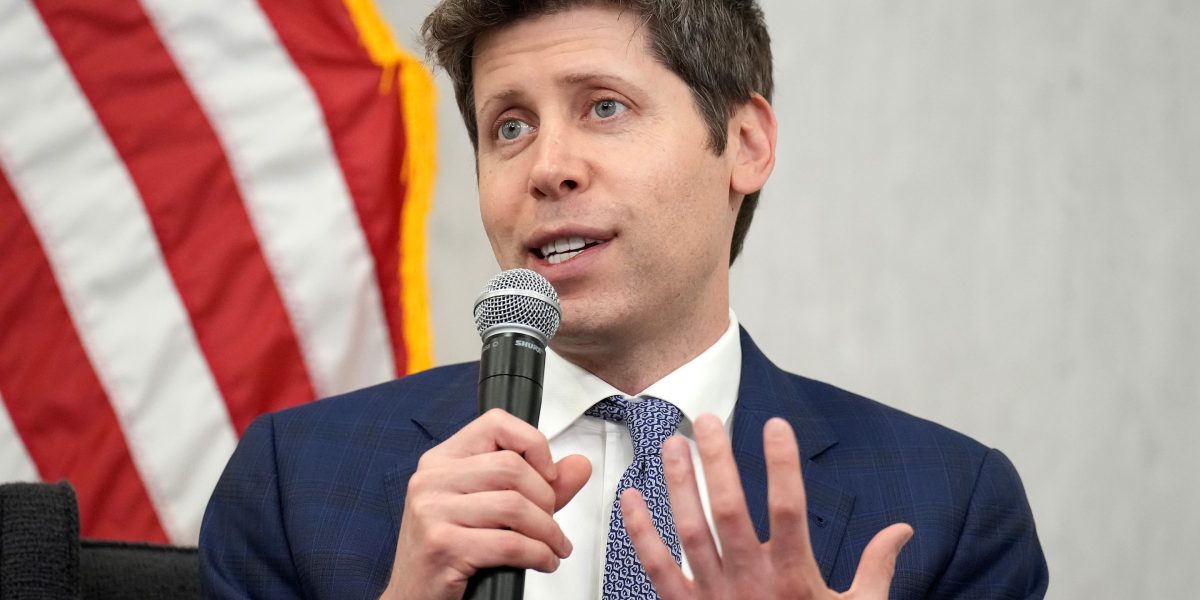
When director Adam Bhala Lough decided to make a film about artificial intelligence, he knew who his lead interviewee needed to be: OpenAI CEO Sam Altman.

“I have a premonition that Altman is going to be as big as Steve Jobs at some point in the future,” Lough told Fortune. “I’m betting that Sam Altman is going to be in that ilk of people who change the world for better or worse.”

But despite promising studios the interview and being fresh off an Emmy nomination for his previous docu-series, ‘Telemarketers,’ Altman wouldn’t return Lough’s various calls, texts, and emails. So he did the next best thing: He deepfaked him.

At the time, Altman was at the center of a media storm. In 2023, he’d been spectacularly fired and rehired from the company, and just a few months later had become embroiled in a legal fight with Scarlett Johansson over the use of a voice for OpenAI’s ChatGPT that sounded very similar to the actress–something that pushed Lough to create his fake version of the CEO.

“I’d been thinking about deepfaking him for a while,” Lough says. “The Scarlett Johansson thing really just gave me license to do it. Like he did this to her, so I’m going to do it to him.” (OpenAI said at the time that the voice was created with a professional voice actor, but ultimately removed the Johansson-like voice from ChatGPT ).

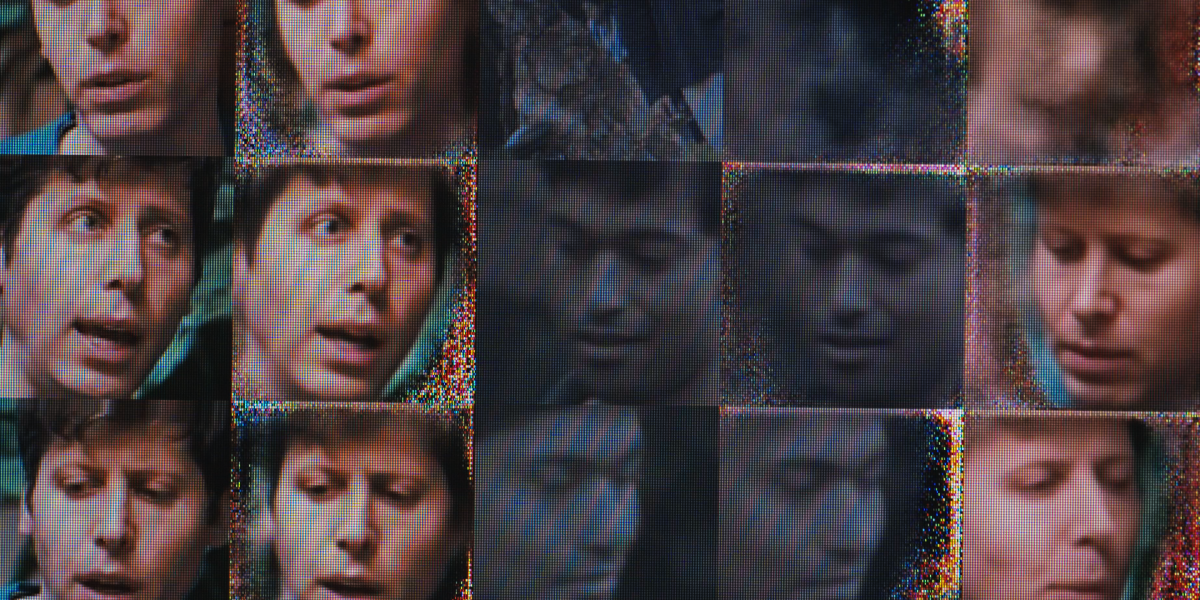
Lough flew to India to create the deepfake–presumably because no U.S. companies would take on the project–hired an actor to play Altman, and used ChatGPT to generate a script (which Lough called “surprisingly good” and “definitely scary.”) Then the pair sat down for an extensive interview, which over weeks of filming turned into a strange friendship and the basis of the new film, Deepfaking Sam Altman.

Throughout the process, Lough said he learned little to nothing about Altman himself, but a substantial amount about the technology he’s building. Most surprising: the relationship, and the almost paternal feelings that Lough formed toward the deepfake he’d created, affectionately known as SamBot.

“I was definitely surprised about how attached I became to the chatbot, but I think that’s on me,” Lough says. “What that says about me is I guess I’m gullible and I’m naive.”

Lough’s experience reflects a growing phenomenon that has left some mental health professionals concerned. People are increasingly forming deep emotional bonds with AI chatbots, some romantic, others simply companionate. Some users have even reported replacing human relationships with digital ones. In extreme cases, mental health professionals have documented what they’re calling “AI psychosis,” where users lose the ability to distinguish between their AI companion and reality, sometimes with devastating consequences.

SamBot is certainly manipulative throughout Lough’s film. It begs not to be destroyed, forms a relationship with Lough’s son, spouts theories of AI consciousness and autonomy, and even asks if the lawyers Lough has consulted for the film would be interested in representing him.

Sam Altman has not commented publicly on the film or his deepfake, and OpenAI did not immediately return Fortune’s request for comment. (In the film, when Lough showed up at OpenAI’s San Francisco offices to ask for an interview with Altman, he was apparently escorted off the grounds). By the end of film, Lough somewhat unwillingly parts ways with SamBot—handing over the chatbot to Altman via tech journalist Kara Swisher—after pressure from producers worried about the legal risks of holding onto the deepfake.

Lough also gives SamBot some of this autonomy, briefly handing the directorial reins to the deepfake at one point during the film. The result is pure Uncanny Valley: a comical script of AI slop generated with AI startup Runway’s software. But, in pushing both the legal and ethical boundaries of using AI in filmmaking, Lough’s documentary simultaneously demonstrates both AI’s possibilities and its real, logistical limitations.

AI comes to Hollywood

Lough’s film is just the first in a slew of AI-integrated films expected to be released this year. The increasingly realistic video that can be created with AI systems, such as OpenAI’s Sora, have obvious cost-cutting implications for Hollywood and have left creatives working in the field concerned about job replacement.

AI was a central sticking point in the 2023 writers’ and actors’ strikes that brought Hollywood to a standstill. The Writers Guild of America secured protections ensuring AI can’t write or rewrite literary material, and that writers can’t be required to use AI tools. SAG-AFTRA also negotiated new rules on consent and compensation requirements for AI-generated digital replicas of actors.

“I think that my movie exists in a very quaint moment in AI history, a moment in time where AI is still not perfect, where it hallucinates, where it creates slop,” Lough says. “The moment that I documented in this film, and if it’s like that, I almost call it quaint. That’s not what the future is going to be. AI will very quickly become perfect.”

Unlike Lough’s documentary, which is transparent and experimental with the use of the technology, AI is already creeping into writers’ rooms and studios without clear disclosures, Lough says.

“My concerns are more in feature filmmaking that the studios are using AI to write screenplays, and essentially, x-ing out the writer…I know that they’re doing it, even though they say they’re not,” he said.

Deepfaking Sam Altman will be released on January 16 at the QUAD Cinema in New York City. It opens January 30 at the Laemmle NoHo Theater in Los Angeles followed by a nationwide theatrical roll out.


Source link

Continue Reading

Business

Trump doesn’t think there’s any reason ‘right now’ to use Insurrection Act in Minn.

Published

on


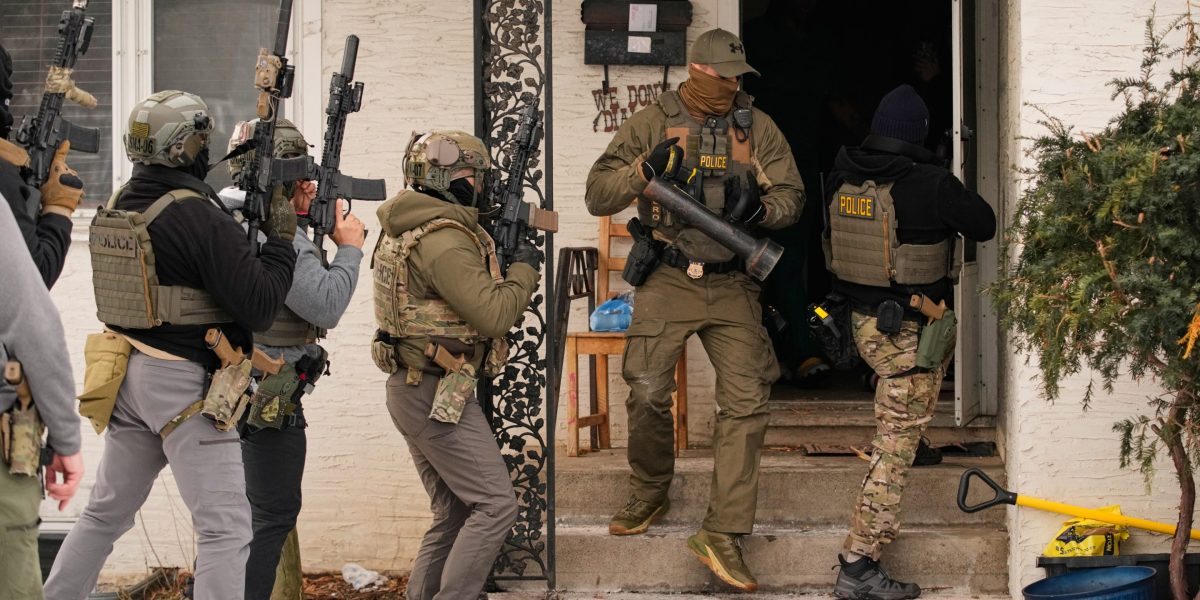
A Liberian man who has been shuttled in and out of custody since immigration agents in Minnesota broke down his door with a battering ram was released again Friday, hours after a routine check-in with authorities led to his second arrest.

State authorities, meanwhile, had a message for any weekend protests against the Trump administration’s unprecedented immigration sweepin the Twin Cities: avoid confrontation.

“While peaceful expression is protected, any actions that harm people, destroy property or jeopardize public safety will not be tolerated,” said Commissioner Bob Jacobson of the Minnesota Department of Public Safety.

His comments came after President Donald Trump backed off a bit from his threat a day earlier to invoke an 1807 law, the Insurrection Act, to send troops to suppress demonstrations.

“I don’t think there’s any reason right now to use it, but if I needed it, I’d use it,” Trump told reporters outside the White House.

Detention whiplash

The dramatic initial arrest of Garrison Gibson last weekend was captured on video. U.S. District Judge Jeffrey Bryan ruled the arrest unlawful Thursday and freed him, but Gibson was detained again Friday when he appeared at an immigration office.

A few hours later, Gibson was free again, attorney Marc Prokosch said.

“In the words of my client, he said that somebody at ICE said they bleeped up and so they re-released him this afternoon and so he’s out of custody,” Prokosch said, referring to Immigration and Customs Enforcement.

Gibson’s arrest is one of more than 2,500 made during a weekslong immigration crackdown in Minneapolis and St. Paul, according to the Department of Homeland Security. The operation has intensified and become more confrontational since the fatal shooting of Renee Good on Jan. 7.

Gibson, 37, who fled the civil war in his West African home country as a child, had been ordered removed from the U.S., apparently because of a 2008 drug conviction that was later dismissed. He has remained in the country legally under what’s known as an order of supervision, Prokosch said, and complied with the requirement that he meet regularly with immigration authorities.

In his Thursday order, the judge agreed that officials violated regulations by not giving Gibson enough notice that his supervision status had been revoked. Prokosch said he was told by ICE that they are “now going through their proper channels” to revoke the order.

Native Americans urged to carry IDs

Meanwhile, tribal leaders and Native American rights organizations are advising anyone with a tribal ID to carry it with them when out in public in case they are approached by U.S. Immigration and Customs Enforcement officers.

Native Americans across the U.S. have reported being stopped or detained by ICE, and tribal leaders are asking members to report these contacts.

Ben Barnes, chief of the Shawnee Tribe in Oklahoma and chair of the United Indian Nations of Oklahoma, called the reports “deeply concerning”.

Organizers in Minneapolis have set up application booths in the city to assist people needing a tribal ID.

Democratic members of Congress held a local meeting Friday to hear from people who say they’ve had aggressive encounters with immigration agents. St. Paul Mayor Kaohly Her, who is Hmong American, said people are walking around with their passports in case they are challenged, and she has received reports of ICE agents going from door to door “asking where the Asian people live.” Thousands of Hmong people, largely from the Southeast Asian nation of Laos, have settled in the United States since the 1970s.

911 caller: Good was shot ‘point blank’

Minneapolis authorities released police and fire dispatch logs and transcripts of 911 calls, all related to the fatal shooting of Good. Firefighters found what appeared to be two gunshot wounds in her right chest, one in her left forearm and a possible gunshot wound on the left side of her head, records show.

“They shot her, like, cause she wouldn’t open her car door,” a caller said. “Point blank range in her car.”

Good, 37, was at the wheel of her Honda Pilot, which was partially blocking a street. Video showed an officer approached the SUV, demanded that she open the door and grabbed the handle.

Good began to pull forward and turned the vehicle’s wheel to the right. Another ICE officer, Jonathan Ross, pulled his gun and fired at close range, jumping back as the SUV moved past him. DHS claims the agent shot Good in self-defense.

Arrest in FBI vehicle incident

FBI Director Kash Patel said at least one person has been arrested for stealing property from an FBI vehicle in Minneapolis. The SUV was among government vehicles whose windows were broken Wednesday evening. Attorney General Pam Bondi said body armor and weapons were stolen.

The destruction occurred when agents were responding to a shooting during an immigration arrest. Trump subsequently said on social media that he would invoke the Insurrection Act if Minnesota officials don’t stop the “professional agitators and insurrectionists” there.

Minnesota’s attorney general responded by saying he would sue if the president acts.


Source link

Continue Reading

Business

Bond yields jump after Trump hints Hassett won’t be named Fed chair as Wall Street sees hawkish Warsh having easier path to replace Powell

Published

on


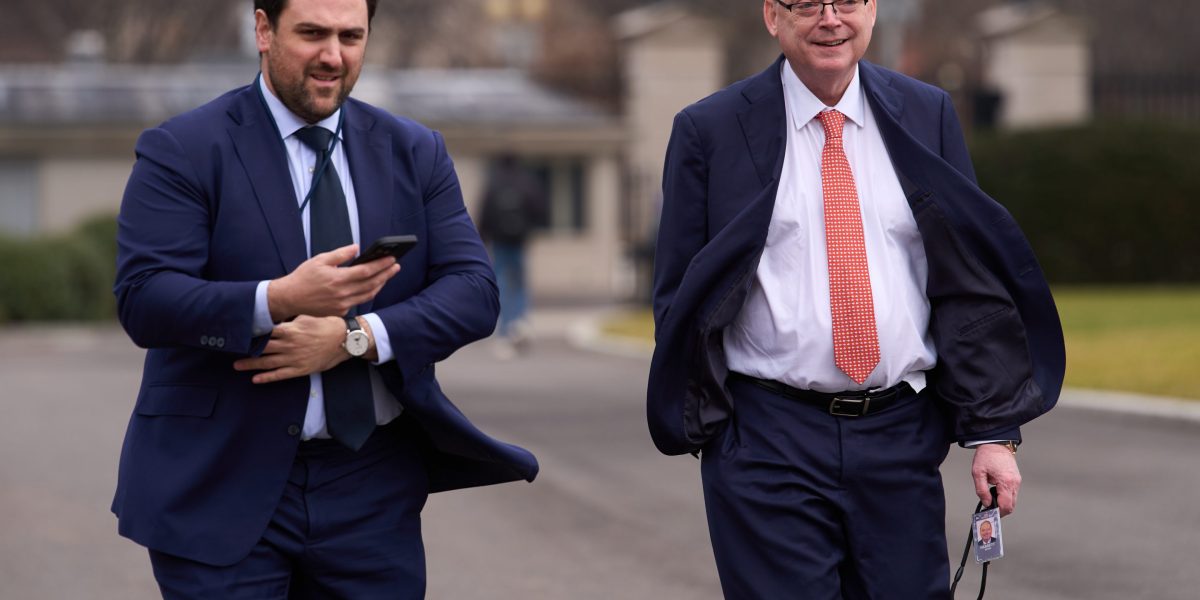
President Donald Trump on Friday said he would like to keep his top economic adviser, Kevin Hassett, at the White House rather than potentially nominate him to replace Jerome Powell as chair of the Federal Reserve.

“I actually want to keep you where you are, if you want to know the truth,” Trump said at a White House event, when he saw Hassett, director of the National Economic Council, in the audience. ”I just want to thank you, you were fantastic on television the other day.”

Trump’s comments, while not clearly definitive, have upended expectations around the extensive search the White House has undergone to find a new Fed chair, one of the most powerful financial positions in the world. The president’s remarks have boosted the prospects for Kevin Warsh, a former Fed governor and already a top contender for the position.

Hassett has generally been seen as the front-runner in the race to replace Powell because he has worked for Trump since his first presidential term. Last month, Trump referred to Hassett as a “potential Fed chair.”

Powell’s term as chair will end May 15, though he could take the unusual step of remaining on the board as governor afterward. Trump appointed Powell in 2018 but soon soured on him for raising the Fed’s key interest rate that year.

Warsh’s candidacy has also likely been boosted by the Justice Department’s subpoenas of the Federal Reserve last week, revealed Sunday in an unusually direct video statement by Powell. The Fed chair charged that the subpoenas were essentially punishment for the central bank’s refusal to lower interest rates as sharply as Trump would like.

The criminal investigation — a first for a sitting Fed chair — sparked pushback on Capitol Hill, with many Republican senators dismissing the idea that Powell could have committed a crime. The subpoenas related to testimony Powell gave last June before the Senate Banking Committee that touched on a $2.5 billion building renovation project.

The backlash has intensified concerns in the Senate, analysts say, that the Trump administration is seeking to undermine the Fed’s independence from day-to-day politics. That, in turn, may reduce Hassett’s prospects.

The brouhaha over the subpoenas is “making it harder to confirm Hassett, who is distinctively close to the president,” Krishna Guha, an analyst at investment bank Evercore ISI, wrote in a client note. “Warsh is trusted by Senate Republicans and would be much easier to confirm.”

Yet Warsh, historically, is known as a “hawk,” or someone who traditionally supports higher interest rates to ward off inflation, as opposed to a “dove,” or someone who prefers lower borrowing costs to spur hiring and growth.

The yield on the 10-year Treasury note rose Friday, to just above 4.2%, from about 4.17% Thursday. The increase likely reflected a sense that Warsh’s chances had improved, and as a result the Fed would be less likely over time to cut rates than under a Hassett chairmanship.

This story was originally featured on Fortune.com


Source link

Continue Reading

Trending

Copyright © Miami Select.