
Politics
Charlie Kirk lecture lands Valencia College adjunct on paid 2-week suspension

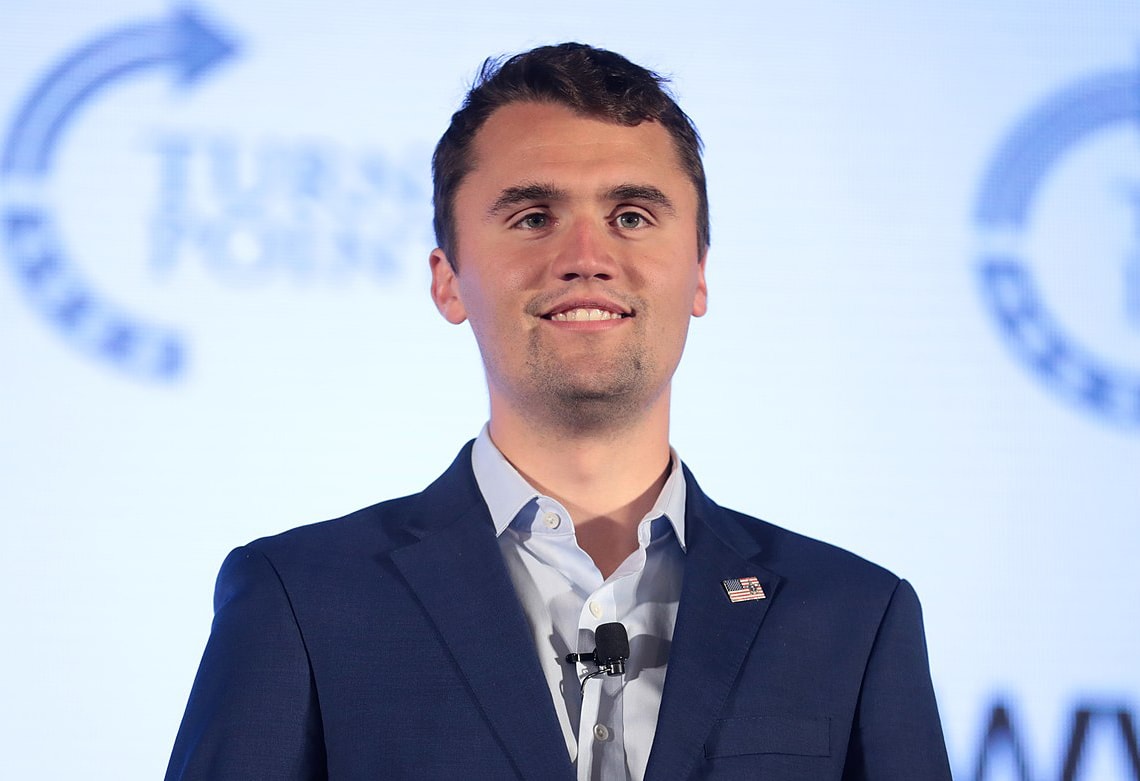
A Valencia College adjunct political science professor has returned from a two-week paid leave after he led a fiery discussion on Charlie Kirk’s death that was loud enough for the school’s security to be called, records show.
After Valencia College Security knocked on the door, the adjunct, William Edmonds, proclaimed to his students, “You see, freedom of speech!”
Edmonds was put on administrative leave after the Sept. 15 incident and returned to work Monday.
“We want to emphasize that Mr. Edmonds was not put on leave for the content of his statements or for expressing his personal opinions, but because he was using inappropriate language, shouting so loudly that he disrupted operations in nearby offices, and exhibiting behavior that negatively impacted the learning environment in his classroom,” Valencia spokeswoman Linda Shrieves said.
Edmonds, who did not respond to a request for comment, has taught at Valencia since 2016. He is paid $2,331 for a 3-credit class. He is currently teaching four classes this semester.
The situation at the Orlando state college unfolded as health and fitness professor Jen Katz held office hours and began to feel increasingly uncomfortable and nervous.
Around 10:15 a.m., she heard yelling and a man yell, “What the f***!” That’s according to a written statement from Katz to the school.
“I cracked open the door and heard the yelling louder. I could not make out all of the statements, but some of what I heard was ‘being shot for having an opinion’ and mocking someone crying about ‘now I lost my job’ and it became clear it was a professor lecturing his students,” Katz said in a statement.
“I was surprised to see that the door to the classroom was closed, because he was so loud that I had assumed the door must have been propped open.”
About 15 minutes later, the boisterous voice continued on and Katz asked permission from her boss to move to another office.

As she left, she heard the professor “still yelling” and saying something about “trans people five years ago.”
Her associate dean told her to call campus security because “it did not sound like a normal situation.”
When campus security knocked on Edmonds’ door, they said he was clearly lecturing about Kirk’s death “and appeared visibly upset by the topic,” according to the security incident report.
Valencia’s security told Edmonds about the noise complaint and asked him to tone it down. Edmonds promised to lower his voice. Once inside his classroom, he said, “You see, freedom of speech” in a “loud voice,” according to school records
During an administrative review, Valencia College Humanities and Foreign Language Dean Eric Wallman asked security to return to Edmonds’ room a few minutes later and tell the students class was officially canceled, the security report said.
Katz then questioned whether she did the right thing to report the disruption.
“I would never want to infringe on another professor’s class and it is understood that is not my intent here. This was just abnormal and in my five years of being in that office, I’ve never had anything disruptive like to the point of preventing me from concentrating on my work,” Katz said in her statement.
“I have no idea who the professor is and hope this causes no animosity.”
Valencia interviewed students afterward. One said Edmonds did swear but then corrected himself to say, “frick.”
“While one student did not feel the behavior disrupted their learning, others shared that it made them hesitant to participate in the class further. Several students clarified that their concern was not with the content of your message, but with the delivery and how it aligned with the classroom environment,” according to the notice of disciplinary action in Edmonds’ personnel file from human resources.
“Some students described the class as unstructured and unpredictable, which contributed to their discomfort.”
Edmonds acknowledged that his tone wasn’t appropriate for class, the HR notice said. The report reminded Edmonds that his job is to foster a “respectful and structured learning environment where all students are able to engage in thoughtful discussion.”
Edmonds’ suspension comes after more than 145 people around the country have been fired or disciplined for their comments after the conservative activist’s death, according to The New York Times.
The full content of Edmonds’ lecture is unclear, though the HR notice said Edmonds admitted it was “a passionate discussion about the First Amendment and recent current events.”
One security official overheard Edmonds say, “We need to understand our rights and responsibilities from both the Democratic and Republican parties, especially in light of the political climate regarding the events that happened last week.”
Edmonds has mixed reviews from anonymous students online over the years. Several wrote that he could be very passionate and had strong convictions. “Is very … ‘opinionated’ to say the least,” one student wrote.
If problems persist, Edmonds could be at risk of losing his job, according to the written reprimand in his personnel file.
The list of Floridians facing backlash from their Kirk comments include teachers and a biologist at the Florida Fish and Wildlife Conservation Commission. Valencia has said no college employees have been fired since Kirk’s death following an earlier Florida Politics question.
Meanwhile, a Valencia College leader and Gov. Ron DeSantis have both warned about speaking out against Kirk’s death. Kirk was shot and killed Sept. 10 at a Utah campus. Tyler Robinson, 22, has been charged with aggravated murder.
Kirk, a divisive figure in a polarized political climate, ran Turning Point USA, which published a Professor Watchlist of educators accused of liberal bias. Some of those names on the list said their careers were ruined and they received death threats afterward.
“People who are on the Professor Watchlist say it has eroded their academic freedom and chilled their speech. Some have compared it to the McCarthy-era blacklist,” according to a Daytona News-Journal report.
DeSantis has called the reaction to Kirk’s death “troubling” and said “it’s taking political disagreements and really creating a toxic atmosphere.”
“To have teachers reveling this across the country, to have nurses reveling this, to have people that are in major arteries of our society expressing glee … that was really a gut punch,” DeSantis said at a Sept. 29 press conference.
“Now, you’re not going to get put in jail on the First Amendment. But can we as a society and me as a Governor can look and say, ‘You know what? I’ve got young kids. Do I want a teacher in the classroom whose response to that is to glorify it and celebrate it? No, I don’t want that person teaching our kids.’ And we have a right to make that clear.”
Two days before Edmonds’ fiery class, Valencia College sent a statement on social media from its politically connected Board Chair Michael Sasso, a DeSantis ally.
“It has been brought to my attention that a former employee of Valencia College made abhorrent public remarks about the murder of Charlie Kirk,” the school wrote on X, quoting Sasso.
“That individual does not work for Valencia College, but you can rest assured that if she did work in the Free State of Florida, immediate action would be taken. This type of behavior is abhorrent and will not be tolerated.”
The statement came after a person’s Facebook comment attracted attention for saying, “Unfortunately, non violence does not end fascism.”

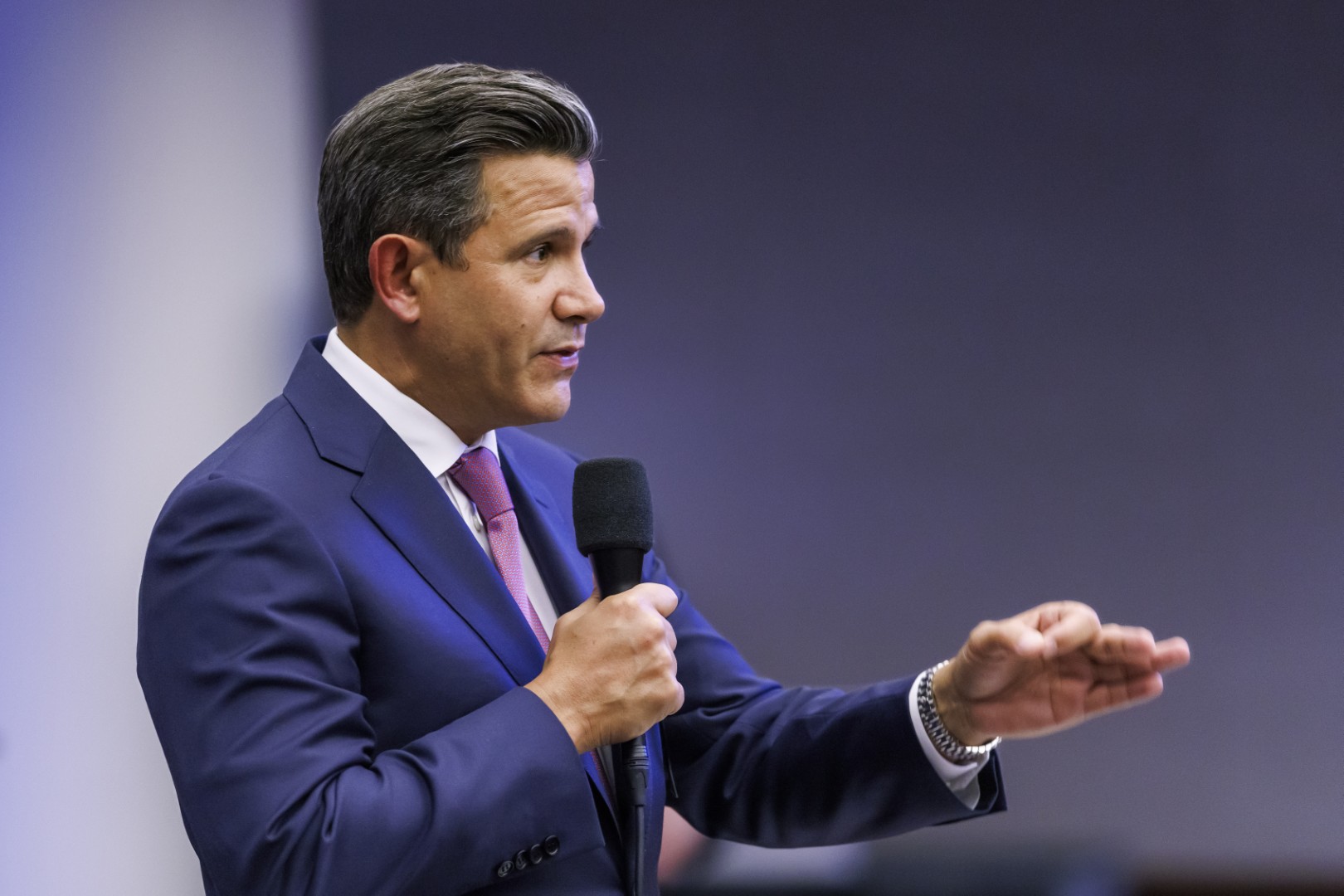
Legislation that would narrowly recategorize 911 dispatchers as first responders so they can receive workers’ compensation for work-related psychological injuries is one step closer to passing in the Legislature’s upper chamber.
Members of the Government Oversight and Accountability Committee voted unanimously to advance the bill (SB 774), which would eliminate a barrier that today denies aid to people who are often the first to respond to a crime.
The measure’s sponsor, Hollywood Sen. Jason Pizzo, noted that during his time as a prosecutor, playing a 911 call would often be the most effective thing to do to sway a jury.
“911, what’s your emergency? He’s going to kill me! He’s going to kill me! Now, imagine hearing that 12 times a day, 15 times a day,” he said.
“Two years ago, you all voted to require these 911 operators to be proficient in CPR so they could administer (it) over the phone. And they’re not considered first responders? They are first responders, and they’ve been grossly overlooked and screwed, and this brings some remedy.”
SB 774 would add 911 dispatchers to the group of “first responders” covered by Florida’s special workers’-compensation rules for employment-related mental or nervous injuries. It would apply the same framework to them as other first responders for mental health claims.
Essentially, if you’re a 911 dispatcher and develop post-traumatic stress disorder, anxiety or similar mental health injuries from traumatic calls, SB 774 would make it so you can get workers’ comp-covered treatment and that your claim is handled under the same special rules lawmakers already set for other first responders — without certain time-limit restrictions that typically apply to mental injury benefits.
Several dispatchers signaled or spoke in favor of the bill, as did representatives from the Florida Police Chiefs Association, Florida Sheriffs Association and Consolidated Dispatch Agency.
Jennifer Dana, a dispatcher with the Palm Beach Sheriff’s Office, noted that in a Senate analysis of SB 774, there’s a list of disturbing things first responders see and do on the job, from seeing dead children and witnessing murders to helping severely injured people, including those who commit suicide.
What it doesn’t include, she said, is that 911 dispatchers also witness those things.

“We’re seeing and hearing it,” she said. “We have the technology for people to livestream it now, so it’s a double-whammy for us, and we want to make sure we have the protections.”
Kim Powell, a licensed and clinical mental health counselor who oversees an employee behavioral health program at a 911 communications center in Leon County, detailed several examples of what dispatchers experience: a woman struggling to breathe while dying from a gunshot wound inflicted by her child’s father; an officer’s final words moments before his murder; the sound of a mother discovering her deceased infant; the 800 or so calls received in the wake of the Florida State University shooting last April.
“These are not isolated events; they are part of the job,” she said. “The trauma compounds over time with repeat exposure.”
St. Petersburg Republican Sen. Nick DiCeglie thanked Pizzo for carrying the bill and expressed gratitude to the “3,500 dispatchers” across Florida for their work.
“For me personally, (this) could be one of the most important bills that we have this Session because of the importance there is for your well-being and your quality of life,” he said.
Melbourne Republican Sen. Debbie Mayfield, who chairs the committee, echoed DiCeglie’s remarks.
Pizzo reminded the panel that four years ago, during COVID, a $280 million set-aside for payments to first responders and front-line workers did not extend to 911 dispatchers.
“They never stopped working,” he said, adding that Mayfield at the time acknowledged the oversight and pledged that the Legislature would get it right in the future. “So, it’s serendipitous that you were kind and gracious enough to put us on the agenda.”
SB 774 will next go to the Senate Appropriations Committee on Agriculture, Environment and General Government, after which it has one more stop before reaching a floor vote.
An identical bill (HB 451) by Republican Rep. Jeff Holcomb of Spring Hill awaits its first hearing in the House.

The Tampa Bay Rays’ search for a new home took a tangible step forward as the Hillsborough College Board of Trustees approved a nonbinding agreement that could ultimately shift the franchise away from St. Petersburg under its new ownership.
The Board voted to approve a memorandum of understanding (MOU) authorizing staff to negotiate with the Tampa Bay Rays over a potential stadium and mixed-use redevelopment at the college’s Dale Mabry Campus.
The agreement does not commit the college to the project and can be terminated by the Board at any time. Instead, it outlines key terms the parties would like to see in any future binding agreements, which would require separate Board approval at a later public meeting.
College officials characterized the MOU as the beginning of negotiations. Under the document, staff would begin drafting potential project agreements for Trustees to consider in the future, with an anticipated negotiation timeline of up to 180 days.
Rays CEO Ken Babby addressed Trustees during the meeting, calling the proposal an early milestone. He emphasized that the effort involves the college, the team, the state and local governments. Babby said the Rays are exploring a roughly 130-acre redevelopment anchored by a new stadium and an integrated college campus, alongside residential, commercial and entertainment uses.
“As we envision this development, together in cooperation and partnership with the community and the college, we’ve been calling the campus portion of this work ‘Innovation Edge’ featuring Hillsborough College,” Babby said.
“It’ll be neighbored by, of course, what we envision to be ‘Champions Corridor,’ which we hope will be the mentioned home of the Tampa Bay Rays. Of course, this will be a mixed-use with residential, with commercial, and, as we’ve said, billions of dollars of economic impact to the region. … This is an incredible moment for our community.”
Public input was split. Supporters recognized the economic impact the project could have, while critics worried about the effect on housing affordability, in particular for college students.
Following the vote, Trustees acknowledged uncertainty among students, faculty and staff, particularly those based at the Dale Mabry campus, but stressed that the approval did not determine final outcomes.
“This is a major decision, and I truly hope that it leads Hillsborough College towards growth and advancement,” Student Trustee Nicolas Castellanos said.

Trustee Michael Garcia echoed the sentiment.
“It’s a tremendous day for the future of Hillsborough College and for the future of Major League Baseball in the area and also for the future of the city of Tampa,” Garcia said.
Gov. Ron DeSantis publicly expressed support for the concept ahead of Tuesday’s meeting, saying it could benefit both the college and the region, while cautioning that details still need to be resolved.
“It could be very good for HCC, and I’ve met with the President about it. I think he’s excited about the possibility,” DeSantis said in Pinellas Park.
“Obviously, they’ve got to iron out details. But basically, we’re supportive of them pursuing that partnership because I think it could be good for them. I think it could be good for the state. But I definitely think it could be really good for this region.”
Also ahead of Tuesday’s meeting, Tampa Mayor Jane Castor told Florida Politics the city and Hillsborough County have been in ongoing discussions with the Tampa Bay Rays as the team explores long-term stadium options — including the potential Hillsborough College site. She emphasized that any future stadium proposal would require coordination among multiple governments and would be evaluated alongside existing contractual obligations related to other major sports facilities.
No timeline for construction, campus relocation or final land disposition was discussed Tuesday. College officials emphasized that any binding agreements would return to the Board of Trustees for approval at a future public meeting.
___
A.G. Gancarski and Janelle Irwin Taylor of Florida Politics contributed to this report.


Gates Foundation, OpenAI unveil $50 million ‘Horizon1000’ initiative to boost healthcare in Africa through AI

Djimon Hounsou’s Baby Mama Arrested For Allegedly Assaulting Him

Swarovski appoints new North America general manager
-

 Politics8 years ago
Congress rolls out ‘Better Deal,’ new economic agenda
-
Entertainment9 years ago
New Season 8 Walking Dead trailer flashes forward in time
-
Politics9 years ago
Poll: Virginia governor’s race in dead heat
-
Politics8 years ago
Illinois’ financial crisis could bring the state to a halt
-
Entertainment9 years ago
The final 6 ‘Game of Thrones’ episodes might feel like a full season
-
Entertainment9 years ago
Meet Superman’s grandfather in new trailer for Krypton
-
Business9 years ago
6 Stunning new co-working spaces around the globe
-
Tech8 years ago
Hulu hires Google marketing veteran Kelly Campbell as CMO