Connect with us

Business

CEOs of the world, unite!

Published

on


I was a business reporter for almost 30 years, specializing in CEOs – the great, the mediocre, and the really, really bad (sometimes all in one person). From the early 1990s to the late 2010s, I rode shotgun, watching in awe as the Corner Office point of view – ever Alpha – left the political, the academic, and basically every other perspective in the dust. 

Shareholder-driven capitalism meant what was good for business was good for, well, everyone. (“everyone” wasn’t supposed to mean income inequality hitting historical highs). That belief, in turn, elevated industry titans from Jamie Dimon and Mark Zuckerberg to Jack Welch and Warren Buffett as the most powerful voices on the planet. The real decisions were made at Davos or in Sun Valley, not DC or Brussels. Politics were an inconvenience. For decades – until companies like Microsoft and Google became well-acquainted with antitrust law – tech companies ignored Washington and didn’t even lobby. Why bother? 

As trust dropped for institutions overall but rose for corporate leaders, even social change movements were pushed forward by CEOs. Leaders like former Levi’s CEO Chip Bergh and Dick’s Sporting Goods CEO Lauren Hobart spoke in favor of topics such as gun safety or equity

Other organizations, political groups, and communities followed corporations’ lead – and it seemed to work for business: Less than five years ago, at the height of the pandemic and the Black Lives Matter protests, The Edelman Trust Barometer showed that employees of all generations were 7.0 to 9.5 times more likely to be attracted to a company that takes a stand on key issues. Even if you didn’t agree with the policies, the point is that executives knew they were fully empowered to make these decisions independently. 

Fast forward to today. As the rich get richer and stock market valuations increasingly are tied to a tiny group of corporate behemoths, the leaders of those companies have more economic power than ever. And yet, they have willingly and shockingly lost their ability to use it (except, of course, when they actually join the administration, like good old Elon). 

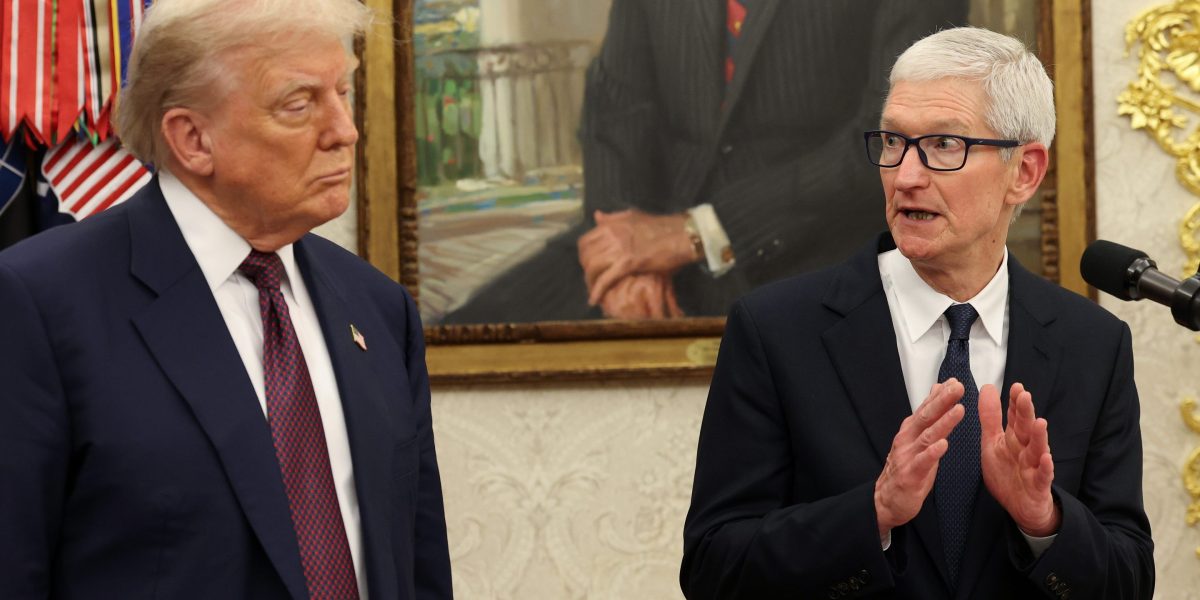
It would be hilarious if it wasn’t so terrifying: The daily parade of CEOs bearing literal golden gifts — Hello Tim Cook! — as they bow and scrape to the President of the United States, horse-trading “investments” in the USA that have little chance of materializing in return for not being taxed or publicly humiliated in a given month. Unlike other organizations that have limited leverage — nonprofits, universities, and, now, they’d like you to think, Congress — these guys actually DO have the clout to resist. But they don’t – or won’t – even as one of their own (Intel CEO Lip-Bu Tan) has his job directly threatened by the President, and along with another, Nvidia CEO Jensen Huang, may soon be signing up to pay a regular vig to Uncle Sam. 

Many leaders undoubtedly see this kissing up as a tactic. Be nice, stay under the radar, and all will be good one day soon. Then we can return to our regularly scheduled capitalism. But this is not how corporate leaders have EVER acted in the U.S. They have flexed at will, for better or for worse, because they could. 

If CEOs actually united, they could use that market power to pressure the President and his team to move from their chaotic, arbitrary approach to managing the economy to one that at least incorporates rational thinking. 

So what could these CEOs do, instead of flattery and humiliation? They could work together instead of letting their power be fragmented.

They could use their voices collectively – just as they have done many times before in times of trouble. Just last year (before the election), JPMorgan Chase CEO Jamie Dimon spoke publicly on income inequality. Last April, when tariffs were threatened, The Business Roundtable spoke up– and had impact. But now that the tariffs are real… crickets. 

They could say – loudly and to the world as a group –  that firing the nonpartisan analyst responsible for the nation’s financial data will make it impossible for anyone to trust that anything business people say is true. 

They could say that businesspeople are better at business than politicians (even if those politicians are also running a business at the same time) and that boards and shareholders already have a fiduciary duty to do the right thing. 

They could talk about how this chaotic tariff cycle makes it impossible to budget, plan or hire when they have no idea what their costs are and that as a result, many of their financial projections are no longer sound. 

They could lean into their power instead of giving it away. 

They could try cooperating – so that they don’t lose the power to compete.

After all, as one famous author once said, they have nothing to lose but their chains.

The opinions expressed in Fortune.com commentary pieces are solely the views of their authors and do not necessarily reflect the opinions and beliefs of Fortune.

Introducing the 2025 Fortune Global 500, the definitive ranking of the biggest companies in the world. Explore this year’s list.


Source link

Continue Reading

Business

Kushner suddenly enters the Paramount–Netflix fight with Saudi billions and a fresh mega-deal

Published

on


Jared Kushner has quietly reemerged as a player in one of the biggest takeover fights in modern Hollywood. Paramount’s audacious, all-cash $108 billion hostile bid for Warner Bros. Discovery, announced Monday, names Kushner’s fully owned private equity firm, Affinity Partners, as one of four outside financing partners backing the offer, alongside the sovereign wealth funds of Saudi Arabia, Abu Dhabi, and Qatar.

Axios first reported the involvement of Saudi and Gulf investment.

The detail is buried in Paramount’s tender offer, with Paramount listing “the Public Investment Fund (Kingdom of Saudi Arabia), L’imad Holding Company PJSC (Abu Dhabi), Qatar Investment Authority (Qatar) and Affinity Partners (Jared Kushner)” as investors who would, under a successful deal scenario, hold non-voting equity and forgo governance rights, including board seats. 

The filing also states that because these investors are structured without such rights, “the Transaction will not be within CFIUS’s jurisdiction,” referring to the Committee on Foreign Investment in the United States. Reports have suggested that WBD’s board opted for Netflix’s deal as it lacked any foreign financing components and therefore faced no issues with CFIUS, a notably opaque and powerful antitrust tool that the government can employ to block controversial mergers.

Both Paramount and Netflix are likely to increase their offers. David Ellison said on CNBC that he told the CEO of Warner Bro’s, David Zaslav, that $30 per share wasn’t the company’s best and final offer.

Kushner’s Middle Eastern ties

Kushner’s inclusion reflects a broader fact pattern: since leaving government, his firm has raised several billion dollars from Gulf investors and has participated in large private transactions involving capital from the same region. In September, his firm joined Silver Lake and Saudi Arabia’s Public Investment Fund in the $55 billion agreement to take Electronic Arts private, the largest private-equity buyout in history. 

WSJ reporting shows Kushner helped connect Silver Lake with PIF leadership earlier in the year as discussions around an EA buyout accelerated. Affinity Partners ultimately took a roughly 5% stake in the transaction, alongside Silver Lake and PIF, which financed the majority of the equity. The EA deal marked the first time Kushner’s fund appeared in a major global technology buyout of that scale, and it involved the same Gulf investors who now appear in Paramount’s financing package.

Kushner has also remained active in Middle East political diplomacy, not just financial. He played a meaningful role in the administration’s recent Israel-Gaza peace effort, brought in because of his involvement in negotiating the Abraham Accords during Trump’s first term, which established diplomatic ties between Israel and several Gulf states including Saudi Arabia. The Gulf state is increasingly opening up, especially with regard to western businesses, as highlighted by Barclays’ confirmation in late October at the Fortune Global Forum in Riyadh that it was relocating its regional headquarters there. Separately at the Fortune Global Forum, Saudi Investment Minister Khalid A. Al-Falih described the breakthroughs occurring under Vision 2030, the kingdom’s economic transformation plan that is roughly nine years old. He said he saw 2025 as a “pivotal moment,” when “the very foundations of global business are being shaken, in a way, and being rewritten before our own eyes.”

The deal took on new political dimensions over the weekend, with President Donald Trump publicly weighing in on Netflix’s agreement to acquire WBD’s studio and streaming assets. Speaking to reporters on Sunday, Trump said the Netflix–WBD deal “could be a problem” because of the combined businesses’ market share, and noted that he expects to be involved in the review process. He also confirmed meeting with Netflix co-CEO Ted Sarandos in the Oval Office shortly before the deal was announced by Netflix, saying Sarandos had made “no guarantees” about the transaction. 

Trump did not confirm the scoop by Bloomberg’s Lucas Shaw, who wrote in his influential entertainment newsletter that Sarandos has been wooing Trump since late November, when he visited Mar-A-Lago. Trump did indicate, however, that he has a good relationship with the Netflix leader, calling Sarandos a “fantastic man” who had played a major role in building Netflix into such a great company. Netflix executives expressed great confidence in regulatory approval on Friday’s call with analysts about their deal, worth $72 billion in equity and about $83 billion including the assumption of debt.

The political plot thickens

The political overtones of the wrangling here are at least worth noting. Paramount was recently acquired by David Ellison, son of longtime Republican donor Larry Ellison, who Trump named as one of several U.S. billionaires to take control of the U.S. assets of TikTok. (Bloomberg’s Shaw reported that Sarandos was interested in the Paramount studio before Ellison acquired it.) Meanwhile, Sarandos is married to Nicole Avant, who was ambassador to the Bahamas during the Obama administration. Netflix co-founder Reed Hastings is a prominent and longtime Democratic donor, although Hastings is now non-executive chairman at Netflix and has been focused on his Powder Mountain resort in Utah, acquired shortly after Fortune’s profile of the resort in 2023.

Paramount explicitly argued that its own proposal carries fewer regulatory risks than Netflix’s. In its filing, the company contends that the Netflix agreement faces significant antitrust hurdles, including a long potential review timeline. Paramount also emphasizes that its outside financing—because it is non-voting—does not trigger CFIUS review, eliminating one additional hurdle of national-security scrutiny.

Trump’s posture toward Paramount, however, has been mixed. Roughly 20 minutes after Paramount launched its hostile offer, Trump explicitly criticized Paramount management over a 60 Minutes segment featuring Rep. Marjorie Taylor Greene, writing on Truth Social that it was “NO BETTER THAN THE OLD OWNERSHIP.” Trump added that “since they [Paramount] bought it, 60 Minutes has actually gotten WORSE!” CBS News and 60 Minutes, as is customary with news organizations, maintain that they have editorial independence from their ownership. Paramount settled a lawsuit brought by Trump over a certain 60 Minutes episode during the 2024 election, paying $16 million in July 2025, shortly before Ellison’s takeover won regulator approval.

Separately on Monday, Larry Ellisontold CNBC that he has had “great conversations” with Trump about the WBD bid, without elaborating. 

Nidhi Hegde, executive director of the American Economic Liberties Project, wrote on X in response to Ellison’s remarks that “the correct option is neither Paramount nor Netflix buy Warner.”

“The president inserting himself in the deal is obviously problematic, regardless of the parties involved,” said Hegde. 

[Disclosure: one of the author’s worked at Netflix from June 2024 through July 2025.]


Source link

Continue Reading

Business

Baby boomers have ‘gobbled up’ the wealth share, leaving Gen Z to wait for Great Wealth Transfer

Published

on


Older Americans may be trading in hustling for retirement, but that hasn’t stopped them from getting richer.

Baby boomers now hold a record high of the United States’ wealth, Apollo chief economist Torsten Slok noted in a Sunday blog post, citing Federal Reserve data. Compared to 1989, when those over 70 years old held 19% of the wealth in the household sector, older Americans now own 31% of the wealth.

That chunk of change is an outsized share compared to other generations. Baby boomers, who make up about 20% of the U.S. population, hold more than $85 trillion in assets, according to Fed data. By comparison, millennials, who make up about the same percentage of Americans, hold just about $18 trillion, roughly one-fifth that of baby boomers. 

Older Americans’ financial success is in especially stark comparison to that of Gen Z, a generation with deep skepticism about the economic future, who feel shut out from entry-level jobs amid the rise of AI, with many sinking into credit card debt as they struggle to repay student loans. As of last year, the young generation had only $6 trillion in wealth, despite making up the same percentage of the population as their baby boomer and millennial counterparts.

“The baby [boomer] generation has really gobbled up a huge share of household wealth, so it’s left a lot less for other age cohorts,” Edward Wolff, professor of economics at New York University, told Fortune.

Baby boomers’ good timing

America’s septuagenarians were raised by parents who came of age during the Great Depression and learned the hard way the lessons of frugality and the importance of saving money. But the baby boomer generation owes a great deal of their financial security to the stars aligning during their formative years.

In the 1970s when many baby boomers entered the housing market, inflation surged, making buying a home an appealing investment. As home values soared in the following decades, so, too, did the generation’s equity. The older generation has also been boosted by stock ownership, with baby boomers holding 54% of stocks worth more than $25 trillion, according to an early 2025 analysis of Fed data by The Motley Fool. Millennials owned about 8% of stocks worth $3.9 trillion.

But Gen Z, who may be following baby boomers’ lead in stock market investments, have not shared the same good fortune in the housing market. Housing supply has been low since the 2008 recession, exacerbated by sky-high mortgage rates, which disincentivized home sales and contributed to exorbitant home prices.

As a result, 2025 saw a 21% drop in the share of first-time homebuyers, and the age of those buyers reached a record high of 40 years, according to November data from the National Association of Realtors, leaving Gen Z to wait a little longer for the keys to their first homes. A March Redfin report found today, just 33% of 27-year-olds own their homes compared to 40% of baby boomers who owned their homes when they were the same age.

“They weren’t able to enjoy the big appreciation of house prices to the same extent as baby boomers,” Wolff said.

Gen Z’s silver lining

Gen Z may be facing generation-defining economic challenges, but there’s hope for them yet. Pew Research Center data from 2024 indicates Gen Z may actually be in better financial shape than young people in past generations: In 2023, Zoomers made a median pay of about $20,000, adjusted for inflation. In 1993, 18-to-24-year-olds made about $15,000. Income growth finally outpacing home price growth may also be a silver lining for prospective home buyers.

But part of the equation of Gen Z’s relatively paltry share of wealth is simply because they haven’t had as much time to acquire it, Michael Walden, professor emeritus of economics at North Carolina State University, told Fortune.

“It makes logical sense that older people will accumulate greater percentages of wealth at any point in time because they’ve had more years to invest and reap the returns of their investments,” Walden said.

Beyond just more time, Gen Z will indirectly benefit from the investments made by their parents and grandparents as they await the Great Wealth Transfer that promises to distribute, by some estimations, $124 trillion in inheritance to the younger generations. Just this year, 91 heirs inherited a record $297.8 billion, according to the UBS Billionaire Ambitions Report, a 36% increase from last year.

Walden said the Great Wealth Transfer is coming, but Gen Z and millennials shouldn’t rely on the death of a loved one to begin their wealth acquisition journey in earnest.

“It’s hard to target when that’s going to come, so I would argue to any young person that I would be talking to, have a plan, be consistent with the plan,” he said.


Source link

Continue Reading

Business

Paramount, Netflix spur Wall Street race to win jumbo loan deals

Published

on


In the space of less than a week, the bidding war for Warner Bros. Discovery Inc. has unleashed two multi-billion debt deals that rank among the largest in the past decade.

The latest came from Paramount Skydance Corp. as it lined up as much as $54 billion of financing from Wall Street’s biggest firms to help support its $108 billion hostile bid for Warner Bros., just days after the company agreed to a deal with Netflix Inc.

Loans of this size have been few and far between over the past couple of years amid subdued acquisition activity. But that’s all changed recently amid a frenzy to fund data-center build outs in the race for artificial intelligence expansion, as well as a pick up in M&A.

Bank of America Corp., Citigroup Inc. and Apollo Global Management Inc. are providing the debt commitment to Paramount, according to a statement Monday. Each one of the trio has signed up for about $18 billion, or a third, of the total commitment, according to a filing.

Just late last week, Netflix lined up $59 billion of unsecured financing from Wells Fargo & Co., BNP Paribas SA and HSBC Plc in another bridge loan for its own bid for part of Warner Bros. Such bridge loans, a type of facility that’s usually replaced with permanent financing like bonds, are a crucial step for banks in building relationships with companies to win higher-paying mandates down the road.

Paramount’s bid at $30 a share in cash comes after Netflix agreed to buy Warner Bros. for $27.75 in cash and stock in a $72 billion deal. Paramount’s bid is for the entirety of Warner Bros., while Netflix is only interested in the Hollywood studios and streaming business. Paramount — which is backed by Larry Ellison, one of the world’s richest people — said its offer gives shareholders $18 billion more in cash than the Netflix bid would.

The Ellison family and RedBird Capital Partners are backstopping the $40.7 billion equity financing for the Paramount bid. Affinity Partners, the private equity firm founded by President Donald Trump’s son-in-law Jared Kushner, Saudi Arabia’s Public Investment Fund, Abu Dhabi’s L’imad Holding Company PJSC and the Qatar Investment Authority are also financing partners. China’s Tencent Holdings Ltd., which had originally been listed as providing a $1 billion commitment, is no longer involved as a financing partner, according to the filing.

Ratings Game

While sizable, the financings for Netflix and Paramount don’t quite match the $75 billion of loans Anheuser-Busch InBev SA obtained to back its acquisition of SABMiller Plc in 2015, which amounted to the largest ever bridge loan, according to data compiled by Bloomberg.

Even so, Wall Street is looking to earn lucrative fees tied to a long-awaited revival in acquisitions. One or a small group of banks typically provide the initial bridge loan, and then bring in other banks to spread the risk once the acquisition is publicly announced. After a time, those loans are replaced with bonds sold to institutional investors.

One key difference with Paramount’s bridge loan is that it will be secured by the company’s assets. Netflix’s bridge is unsecured, meaning it’s not backed by specific collateral. That’s likely due to the different credit ratings each company has. 

Netflix, which is rated investment grade, is expected to replace its bridge loan with up to $25 billion of bonds, plus $20 billion of delayed-draw term loans and a $5 billion revolving credit facility, both of which are typically held by banks. Paramount has lower credit scores of a BB+ rating by S&P Global Ratings, which is one level below investment grade, and BBB- by Fitch Ratings, or on the cusp of junk.

The high-grade market typically has a deeper pool of investors and offers cheaper financing, and would be more easily able to absorb a large financing of this size.


Source link

Continue Reading

Trending

Copyright © Miami Select.