Connect with us

Business

CEOs are increasingly worried about an economic downturn, inflation, and an asset bubble bust

Published

on


Good morning. The World Economic Forum published its 2026 Global Risks Report this morning, ahead of its annual meeting in Davos, Switzerland next week. This annual survey of more than 1,300 global leaders and experts shows a fascinating divide in perceptions of short-term and longer-term risks. Most are anxious about physical conflict in the short term, ranking ‘geoeconomic confrontation’ as the most pressing global risk over the next two years. Misinformation and disinformation came second, with societal polarization coming third. Collectively, economic risks showed the largest jump, with more concerns about an economic downturn, inflation and an asset bubble burst

When asked to rank the impact of global risks over the next decade, though, the physical environment came first, with extreme weather events, biodiversity loss and a ‘critical change to Earth systems’ topping the list. The specter of adverse outcomes from AI technologies is seen as a longer-term threat. You can read the full report here.

Why does it matter? For one thing, this is not a public opinion poll but rather a survey of global elites: the political leaders, CEOs, and experts charged with shaping policy in their countries and setting strategy for their companies. Their job is to identify, prioritize and deal with the risks of today and tomorrow. It’s also a global survey, which illustrates how perceived risks like climate change are playing out in different parts of the world.

WEF’s main value, in my view, is in creating a place for leaders with diverse backgrounds and points of view to learn from each other, to talk about the big problems and partner on the big opportunities. It can also be a place of more talking than listening, with too little focus on those who can’t afford to gather at a Swiss ski resort. But I’ve found it’s a place where leaders are often more reflective, relaxed and ready to debate. 

This year, Fortune will create even more opportunities to foster those discussions through expanded programming and coverage. I’ll be joined on the ground by a team that includes editor in chief Alyson Shontell, AI editor Jeremy Kahn, and Kamal Ahmed, executive editorial director for the U.K. and Europe. We’ll bring you dispatches and insights in CEO Daily all week, along with videos, vodcasts and articles. In addition to C-suite lunches, partner events and annual gatherings like Fortune’s Most Powerful Women reception and the Global Leadership dinner, we’re creating Fortune @USA House, a special afternoon program of newsmaker conversations and analysis at USA House, followed by a VIP reception on Jan. 21, when President Trump is expected to speak in Davos. 

Curious to know what global risks are on your radar and what you’d like to ask the leaders we meet next week.

Contact CEO Daily via Diane Brady at diane.brady@fortune.com

Top news

Saks Global files for bankruptcy 

The parent company of Saks Fifth Avenue, Neiman Marcus, and Bergdorf Goodman has filed for bankruptcy roughly a year after an ill-fated merger put the high-end department stores under one roof. Saks Global executive chairman Richard Baker, who briefly served as its CEO, orchestrated the deal, which flopped due to the company’s debt load and slumping luxury sales. Former Neiman CEO Geoffroy van Raemdonck will lead Saks through its bankruptcy

China’s record trade surplus

China recorded the largest trade surplus ever in 2025—$1.19 trillion, up 20% from the year prior—as it flooded the world with goods and services, despite U.S. tariffs intended to stifle China’s exporting power. (China’s trade surplus with the U.S. shrank 22%.) Another big driver of the surplus is China’s relatively low imports as Beijing pushes for an economy that’s self-reliant. 

Dimon v. Trump

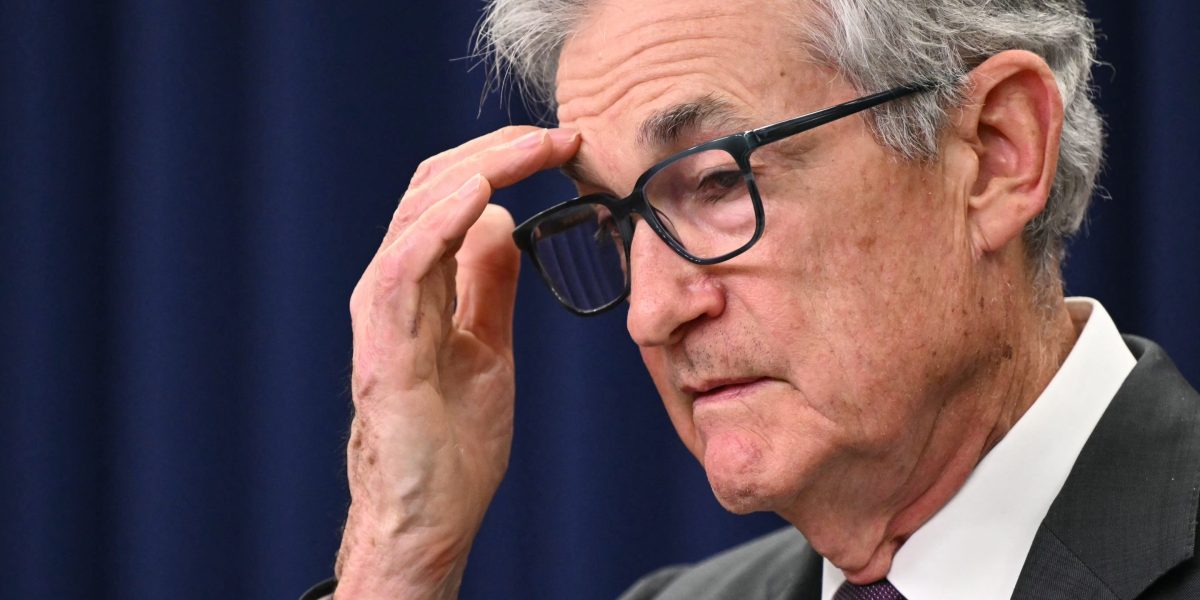
President Donald Trump said JPMorgan CEO Jamie Dimon was “wrong” to criticize the DOJ’s crimination investigation of Fed Chair Jerome Powell. “I think it’s fine what I’m doing,” Trump said. “We have a bad Fed person.” Dimon has expressed concern that the probe “chips away” at Fed independence. 

Delta’s K-shaped earnings

Delta Airlines reported earnings on Tuesday, posting $58.3 billion in full-year revenue on the back of strong demand for its premium offerings. On the earnings call, CEO Ed Bastian said demand for more price-sensitive offerings is “struggling greatly,” with the airline only logging gains among more affluent customers.

What Apple and Google’s partnership means

Earlier this week, Apple announced a partnership with Google to integrate the latter’s AI technology into the iPhone, including an upgrade to the Siri digital assistant. The deal is a significant endorsement of Google’s AI capabilities, and likely spells bad news for competitor OpenAI.

McKinsey’s new AI test for job candidates

McKinsey is asking graduate candidates to use its in-house AI assistant to complete tests that are part of its notoriously tough screening process. The pilot is intended to replicate how the top-tier consulting firm expects its new hires to get work done. 

Meta’s new performance review platform

Meta is joining the likes of Amazon and X in debuting a new performance review platform that values employee output over effort, according to internal documents obtained by Business Insider. “While our employees have always been held to a high-performance, impact-based culture, this new direction allows for more frequent feedback and recognition in a more efficient way,” a Meta spokesperson told Fortune.

The markets

Around the watercooler

Watercooler

U.S workers just took home their smallest share of capital since 1947, at least by Sasha Rogelberg

Why the $38 trillion national debt doomed Fed independence regardless of the Trump/Powell drama, top economist says by Eva Roytburg

Carhartt CEO says they always focused on blue-collar workers—but hipsters came anyway: ‘We welcome anyone … that wants to celebrate hard work’ by Nick Lichtenberg

Gen X CEO uses AI versions of Steve Jobs and Warren Buffett as a ‘fantasy board of directors’ to help him prepare for meetings and performance reviews by Preston Fore

CEO Daily is compiled and edited by Joey Abrams, Claire Zillman and Lee Clifford.


Source link

Continue Reading

Business

Forget the K-Shape: We have a barbell economy—and the middle class is buckling under the weight

Published

on


If you look at the aggregate numbers, the U.S. economy in early 2026 appears resilient. GDP is humming and the soft landing engineered by the Federal Reserve seems to have held. But aggregates are often optical illusions. As a gender economist who analyzes disaggregated data, I do not see a resilient system. I see a dangerously brittle one.

We have transitioned from a K-shaped recovery into a Barbell Economy, a system heavily weighted at the extremes of wealth and precarity, connected by a middle class that is rapidly snapping.

By concentrating wealth, assets, and leverage in a specific, homogenous demographic while hollowing out the economic stabilizers traditionally provided by women and people of color, we have engineered a single point of failure. We have built an economy with a massive engine and insufficient braking mechanisms.

Here is the anatomy of that fracture, and why the next recession won’t be caused by a labor collapse, but by a demographic margin call.

The Risk of the Fragile Top

The prevailing wisdom in corporate boardrooms for the last three years has been simple: Pivot to the premium consumer. As inflation eroded the purchasing power of the middle class, companies shifted strategies to chase the resilient top 20%.

This was a strategic error based on a misunderstanding of risk.

The prosperity of this top cohort is not driven by wage growth. While their wages have risen, they have stagnated relative to the explosive returns on capital. Instead, their consumption is driven by the “Wealth Effect.” New analysis shows that 70% of recent economic growth is now driven by just 20% of earners. These consumers aren’t spending wages; they are spending paper gains tethered to a market bubble.

This makes U.S. GDP effectively a leveraged bet on the sentiment of a single cohort. With the CAPE ratio (Cyclical Adjusted Price-to-Earnings) at its highest level since the Dot-Com bubble, the market they rely on is dangerously extended. Furthermore, the engine is tiny: the top 10 companies now comprise 40% of the S&P 500’s value, a historic concentration risk.

When the market corrects, this group doesn’t just taper spending; they freeze it.

We are already seeing the cracks. The aspirational consumer, the wage-earning professional in the 80th to 95th percentile, has retreated. They are the bridge between the middle class and the wealthy. Yet, in 2025, they reduced luxury spending by roughly 35%.

This retreat exposes the structural flaw. It leaves the economy dependent on the 95th to 99th percentile, the asset-rich households. While wealthy, this cohort is not immune; their consumption is psychologically tethered to their portfolio balance. When the S&P 500 drops, they feel significantly poorer and freeze discretionary spending. In a healthy economy, the middle and working classes provide a floor of stable demand that cushions this volatility.

In 2026, there is no one there to catch it.

The Missing Floor: A Failure of Redundancy

In portfolio theory, redundancy is safety. You hedge volatile assets with stable ones. In an economy, women and people of color have historically acted as that hedge, providing the inelastic demand for care, food, and community services that keeps an economy moving when financial markets seize up.

But we have stripped that floor away. While the top 20% spends paper gains, the bottom 80% is currently financing groceries with shadow debt, having fully depleted their pandemic-era savings buffers.

My analysis of 2020–2025 data shows that the handle of the barbell, the shock absorbers of the economy, has been decimated.

This is not a social justice issue; it is a liquidity crisis.

The subprime auto loan market is currently flashing red, with delinquency rates surpassing 2008 levels. But the risk isn’t contained to car lots; it is moving upstream into asset-backed securities (ABS) held by pension funds and insurers. We are learning the hard way that you cannot build a AAA-rated financial system on the back of a subprime workforce.

The Corporate “Premium Trap”

For the Fortune 500, this demographic concentration has created a premium trap.

By chasing the top of the barbell, companies like Starbucks and Target have exposed their earnings to the specific volatility of the affluent consumer. We are seeing a gentrification by basket, where Walmart reports that its primary growth is coming from households earning over $100,000.

This is not a sign of health; it is a sign of distress. Analysis shows that 80% of luxury sector growth since 2019 was driven by price hikes rather than sales volume. Companies are priced for perfection in an economy that is running on fumes.

Diversity is a Hedge

It is time to stop viewing equity as a moral preference or a CSR initiative. In 2026, equity is structural risk management.

An economy that relies on the asset-derived spending of a homogenous top 10% is inherently unstable. It is subject to groupthink, correlated panic, and rapid contraction. This dependency on the wealth effect accounts for 0.3% of annualized consumption growth, growth we cannot afford to lose in a low-margin world.

To stabilize the U.S. economy, we must diversify our shareholder base. We need to capitalize the real economy,  Black and Latina women who are currently the most under-utilized assets in the nation. By clearing the capital bottlenecks for Latina entrepreneurs and closing the wage arbitrage that drains Black and Native households, we unlock $3.1 trillion in economic growth. Closing the wealth gap is not charity; it is the only way to build a floor under the stock market.

We do not diversify our economy to be nice. We diversify so that when the top weight of the barbell slips, the whole system doesn’t collapse.

The opinions expressed in Fortune.com commentary pieces are solely the views of their authors and do not necessarily reflect the opinions and beliefs of Fortune.

This story was originally featured on Fortune.com


Source link

Continue Reading

Business

Down Arrow Button Icon

Published

on


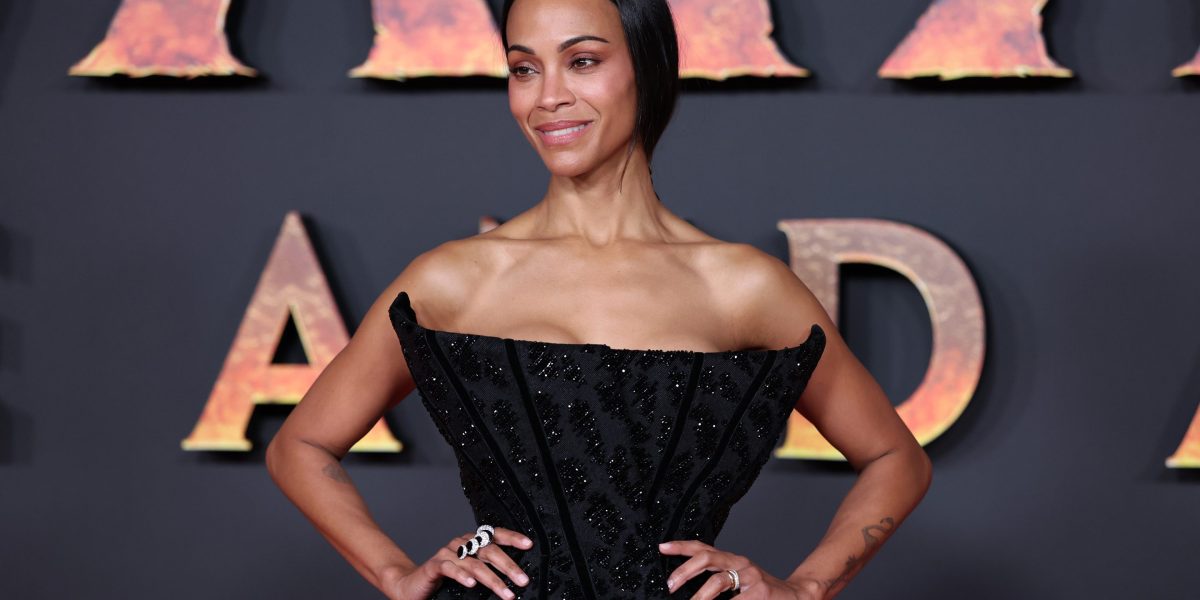
Hollywood has a new queen bee, and the money made from her movie portfolio outmatches the market caps of billion-dollar companies like Alaska Airlines and H&R Block. Academy Award-winning star Zoe Saldaña was just crowned the highest-grossing actor in Hollywood, surpassing Scarlett Johansson and Samuel L. Jackson after a breakout year of entertainment

The movies Saldaña has starred in as a leading actress have earned a staggering $15.47 billion—ranking her above every other actor in the world—according to recent data from The Numbers. Following the immense $1.08 billion global success of Avatar: Fire and Ash, she finally overtook her Marvel peer Johansson ($15.4 billion) and Hollywood icon Jackson ($14.6 billion), who ranked above her in 2024.

The 47-year-old is also the first woman in Hollywood to have starred in four projects that have amassed more than $2 billion globally. And 2025 was her year—aside from the success of Fire and Ash, she won the best supporting actress Oscar for her role in Emilia Pérez, becoming the first Dominican American to win an Academy Award. 

Saldaña took to the internet to celebrate her most recent milestone. “I just want to express my sincerest gratitude for the extraordinary journey that has led me to become the highest-grossing film actor of all time today,” Saldaña said in an Instagram video. “An achievement made possible entirely, entirely by the incredible franchises and the collaborators that I have been fortunate enough to be a part of, to every director who placed their trust in me.”

She also credited the directors of some of her biggest franchise hits—from Star Trek and Guardians of the Galaxy, to Avengers and Avatar—in challenging her and shaping her as an artist. But it’s her mom who gave her the biggest career advice, Saldaña has previously admitted.

Leaning on this critical advice while breaking barriers in Hollywood

Throughout her 27-year career starring in billion-dollar franchises and indie flicks, Saldaña has made her mark on Hollywood despite the challenges. As a woman and Latina in the movie industry, the actress has faced barriers and felt the pressure to work “twice as hard, because I’m a woman,” she told CNBC Make It. 

In those tough moments, Saldaña leaned on the advice her mother gave her earlier on—which she “didn’t know how powerful that [advice] was going to be” until she had to navigate her own unique obstacles in entertainment. 

“She was always reminding me that I mattered,” Saldana told CNBC Make It in 2019. 

“She was like, ‘Don’t forget about you…Don’t forget about your happiness. Don’t forget about your beauty. Don’t forget about your opinion.’”

Hollywood’s top-grossing actresses and actors 

The five top-grossing actresses and actors in leading roles at the worldwide box office, according to recent data from The Numbers

  1. Zoe Saldaña: $15.5 billion
  2. Scarlett Johansson: $15.4 billion 
  3. Emma Watson: $9.3 million
  4. Karen Gillan: $8.4 billion
  5. Elizabeth Olsen: $8.4 billion 
  1. Samuel L. Jackson: $14.6 billion 
  2. Robert Downey Jr.: $14.3 billion
  3. Chris Pratt: $14.1 billion
  4. Tom Cruise: $12.7 billion
  5. Chris Hemsworth: $12.2 billion


Source link

Continue Reading

Business

Down Arrow Button Icon

Published

on


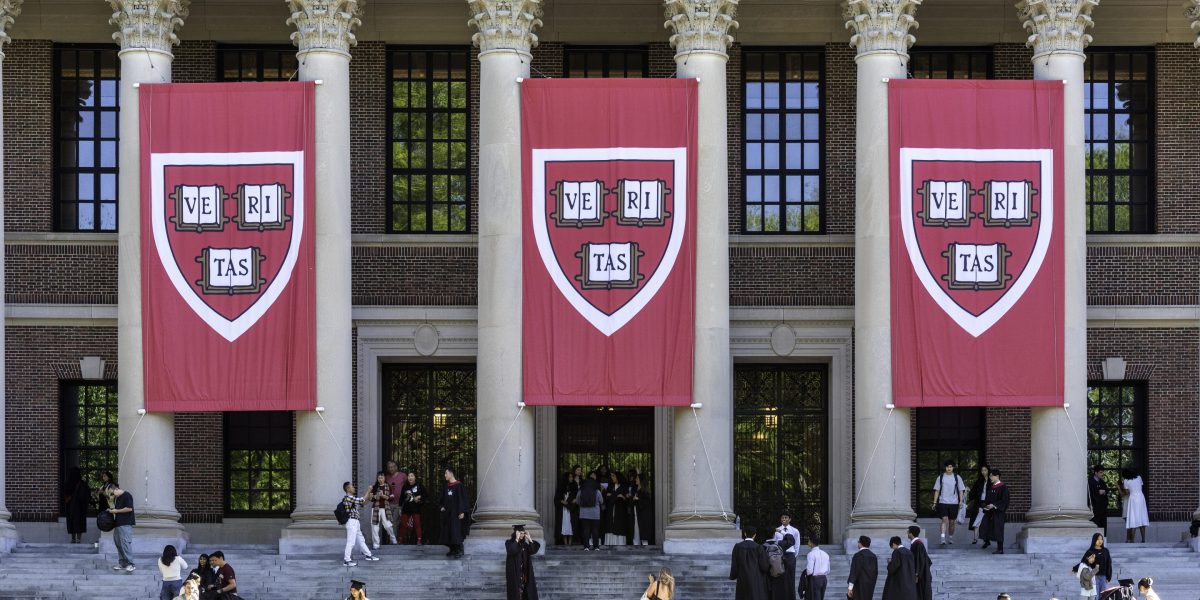
College is expensive, and a growing number of skeptics have questioned its value proposition. Palantir CEO Alex Karp has said it doesn’t really matter where his employees went to college, and Apple CEO Tim Cook has said a four-year degree isn’t even required to work at the company. The rise of AI has only added to doubts of a degree’s value. But some economists say college still holds some implicit value, like teaching students things AI could never learn how to do.

Carl Benedikt Frey is an economist at the University of Oxford and the author of a famous 2013 paper that estimated automation could put nearly half of U.S. jobs at risk. He paints a troubling picture for the future of white-collar US jobs, saying as AI advances, high-skilled work is more likely to be offshored.

“If AI makes these jobs easier, you will see more activities shifting towards places where labor is cheaper, whether that’s India or the Philippines,” Frey told Fortune. “I think that’s going to put a lot of pressure on people’s wages doing knowledge work.”

Despite his estimation, Frey says earning a college degree is still worthwhile, as it imparts three core skills in which humans hold a competitive edge over AI: complex social interactions, creativity, and navigating complex environments. 

Complex social interactions

AI has made leaps in communication advancements during the past decade. Despite that, Frey says those improvements actually make human-to-human interaction more valuable. 

“The value of social skills have gone up over the past decade, whereas the value of math skills has been trending downwards,” Frey said.

That’s because AI can’t hold a meeting as well as it can solve long division. Communication and emotional intelligence are things AI models cannot replicate—at least for now—maintaining their value in the workplace. A Stanford University study evaluating how AI will shift valued skills in the workplace found communication skills will grow in importance, while high-wage skills like data analysis and accounting will diminish in value.

Creativity

Sure, you can ask ChatGPT to read the Rolling Stones’ “Sympathy for the Devil” in the manner of William Shakespeare, or even train an algorithm in impressionist art and ask it to turn your wedding photos into Monet paintings. But human creativity extends beyond memorizing knowledge and regurgitating it in different formats. It takes the ability to think differently and push boundaries.

“If you had asked an LLM in 1900, ‘would humans ever be able to fly?’” Frey said, “it would have concluded that there’s no bird that weighs more than 30 pounds that’s able to get off the ground.”

That is why creativity is becoming a critical trait for workers to have. The World Economic Forum’s Future of Jobs Report 2025 also says creative thinking is becoming more important amid AI’s rise. Frey says active discussion and debate—a cornerstone of a college education—is a critical activity to enhance creative thinking.

Resilience

Frey says AI doesn’t quite possess the resiliency to function like a human. It can provide—with the click of a button—a wide range of information, from a slew of complex legal cases to optimized travel itineraries. But it doesn’t do well in environments that are in constant flux, as is the real world. 

“An undergraduate textbook will not have changed that much in recent decades,” Frey said. “AI thrives as a tutor in those relatively static environments.”

That means flexibility will hold more currency as AI continues to enhance. The WEF’s 2025 Future of Jobs Report also named resiliency a skill that is rising in importance. And business leaders note its importance in the age of AI, saying it is a required trait to navigate the many changes a business faces amid AI adoption. While AI can help “democratize” basic information, such as what is found in a typical 101 course textbook, college prepares students to interpret that information for complex environments, according to Frey.

“In professions where you have more volatility where your job changes more day to day, [those jobs] are less likely to be exposed or automated,” Frey said.


Source link

Continue Reading

Trending

Copyright © Miami Select.