Connect with us

Business

CEO left each employee at his family-owned company a $443,000 gift—but there’s a catch

Published

on


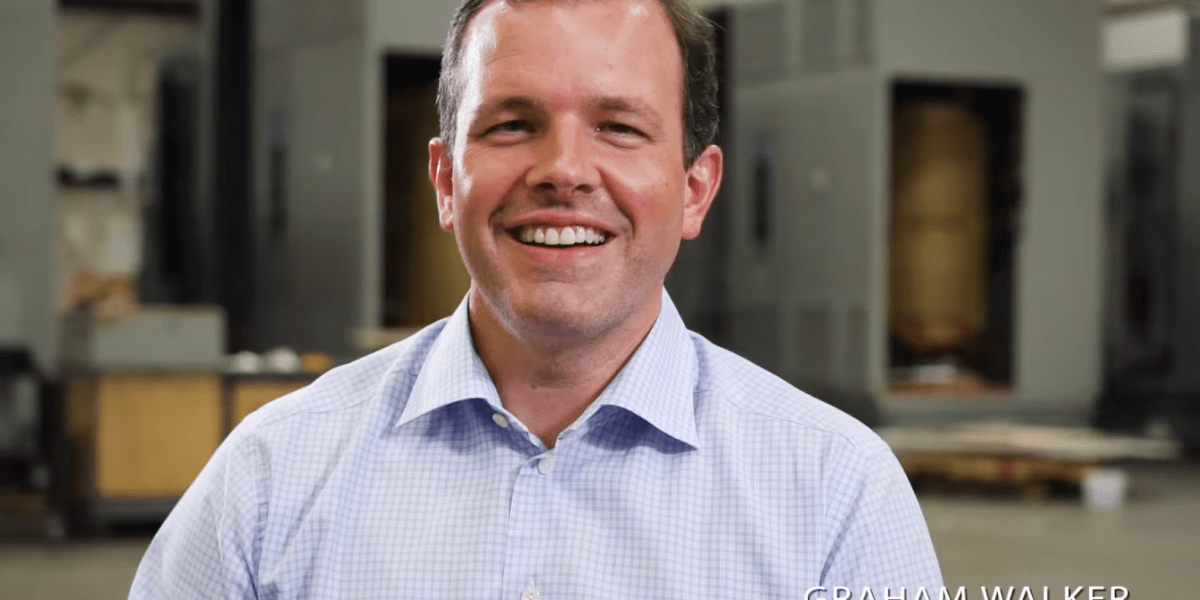
When Graham Walker agreed to sell Fibrebond Corp., the Louisiana manufacturing company his father founded, he made sure the deal would transform the lives of its 540 full-time employees as much as his own. As reported by the Wall Street Journal, the 46-year-old CEO carved out a roughly $240 million bonus pool from the $1.7 billion sale to power-management giant Eaton, an amount that works out to an average of $443,000 per worker.

Walker insisted that 15% of the sale proceeds be reserved for employees, even though they owned no stock, making the condition nonnegotiable for any buyer. Eaton ultimately agreed, with a spokesperson later saying the purchase “honors their commitments to both their employees and the community.” The bonuses, which began rolling out in mid‑2025, don’t all vest at once, though.

To ensure employees collect every dollar, Walker structured the deal so they would have to stay on the job for five more years, turning the windfall into one of the largest—and stickiest—retention packages in recent memory. The Fibrebond surprise echoes a broader pattern of founders cutting employees into big exits, a trend that goes some way toward countering the increasingly extreme CEO pay gaps that persist in the 21st century.

Without the condition requiring staff to stay, Walker believed the factory would have emptied out immediately. “I don’t think we’d have many employees on day two,” Walker told the Journal. He wanted to ensure a smooth transition to Eaton, protecting the business that had been the economic engine of Minden, a small city of roughly 12,000 people.

Life-changing checks—and tax shocks

When envelopes detailing the surprise payouts landed, reactions on the factory floor ranged from disbelief to tears, with some workers initially assuming it was a prank or a camera trick. Longtime employee Lesia Key, who started at Fibrebond in 1995 at $5.35 an hour, told the Journal that she used her bonus to pay off her mortgage and open a clothing boutique after years of living paycheck to paycheck. Others cleared credit-card balances, paid college tuition, or boosted retirement savings, even as many were startled to see taxes claim close to a third of their checks and to realize that quitting early would mean walking away from hundreds of thousands of dollars.

However, the five-year requirement did spark some friction. A few employees “grumbled” that the annual payout structure made it difficult to quit if they wished, and others were surprised by the heavy tax burden that claimed nearly a third of their checks. Walker carved out a crucial exception to the five-year rule: Employees over 65 were exempt.

​The CEOs who gave back

Giving in this fashion isn’t totally unheard-of. In one widely reported case, a 65‑year‑old tech founder, Jay Chaudhry, turned the vast majority of his staff into millionaires after a sale. Unlike Silicon Valley IPO riches, however, Fibrebond’s workers are cashing in without having ever owned equity, underscoring how unusual it is for a private, family-owned manufacturer to share nearly a quarter‑billion dollars with rank‑and‑file staff purely as a loyalty reward.

​It has some similarities to ESOP deals, or employee stock ownership plans, in which exiting CEOs leave the company behind to their workers. Bob Moore, a former gas station owner and J.C. Penney manager who became CEO of food company Bob’s Red Mill, left his company to his employees several years before he died at age 94 in 2024. This move was framed as a way to preserve the company’s values and reward longtime staff for building the business. Barbara Fagan-Smith of ROI Communication also left her company in the hands of its workers, saying she could tell they were much more invested afterward, both literally and figuratively. ​

Other executives’ parting gifts show just how exceptional Walker’s employee bonuses truly are. Henry Engelhardt, CEO of Welsh insurance firm Admiral Group, personally funded a £7 million pool so each qualifying employee received around £1,000 as a parting gift.​ Staff with less than one year of service still received a smaller gift of £500, explicitly framed as a thank‑you for their contribution. When Blackstone announced a majority stake in Spanx, founder Sara Blakely gifted $10,000 to each employee (plus two first-class airplane tickets).​ Gravity Payments CEO Dan Price made headlines during the pandemic by slashing his own salary and raising the minimum to $70,000 for all employees, but he resigned from the company in 2022 amid legal issues, including assault and reckless driving charges.

​Fibrebond’s Walker framed the payout as a thank‑you to employees who stuck with the company through a devastating 1998 factory fire, mass layoffs during the dotcom bust, and years of frozen salaries before a bet on data center infrastructure sent sales soaring. He told the Journal he was pleased with the deal that he struck: “Close to a quarter-billion dollars in employees’ hands felt fair.”


Source link

Continue Reading

Business

See the face of ICE’s crackdown on normal Americans: a 21-year-old college student permanently blind in one eye

Published

on


A 21-year-old college student who said he was blinded in one eye by a projectile fired by a federal officer during a Southern California protest said he faces a drastically different life now.

Kaden Rummler said in an interview that he was in agonizing pain and underwent an extensive six-hour surgery to his left eye after he was injured at a Jan. 9 protest over the fatal shooting of a woman by an Immigration and Customs Enforcement officer in Minneapolis. Rummler said he has no depth perception and can no longer drive. Shards of metal and a nickel-sized piece of plastic remain lodged in his skull, his attorney said, and he is considering suing.

“It’s going to affect every aspect of my life,” said Rummler, who hopes to pursue a career in forestry.

A second demonstrator at the same protest outside a federal immigration building in Orange County told the Los Angeles Times he was also blinded in one eye by a projectile fired by federal agents. Britain Rodriguez, 31, said he was standing on steps outside the immigration building when he was struck in the face.

“I remember hitting the ground and feeling like my eye exploded in my head,” Rodriguez told the newspaper.

The Department of Homeland Security didn’t respond to questions from The Associated Press about what type of projectile was used. Tricia McLaughlin, assistant secretary for the agency, said in an emailed statement this week that the protesters were violent and that two officers were injured but didn’t specify the extent of their injuries. DHS said one demonstrator was taken to the hospital with a cut. McLaughlin confirmed to the Times that was a reference to Rummler and called his injury claims “absurd.”

Rummler has been charged with a misdemeanor count of disorderly conduct. One of his fellow protesters was jailed for several days and has been charged with assaulting, resisting or impeding a federal officer.

Rummler’s attorney John Washington said doctors want to know whether the materials in the projectile could be toxic but have been unable to get answers from DHS. Washington said based on their preliminary investigation they believe it was a capsule made from metal and plastic containing pepper spray.

The injuries in California are the latest in a growing number of violent encounters between federal agents and community members during protests over the Trump administration’s immigration crackdown.

Federal immigration agents deployed to Minneapolis have used aggressive crowd-control tactics that have become a dominant concern after the deadly shooting of Renee Good.

In Santa Ana, California, hundreds of people marched in the streets on Jan. 9 to protest Good’s killing. A smaller group later congregated outside the federal immigration building, shouting expletives through megaphones about ICE, according to video taken by OC Hawk, a group that films breaking news in Orange County.

The video shows a handful of officers in riot gear standing guard and urging demonstrators to move back. An orange cone is later seen rolling onto a plaza outside the building, and authorities begin firing crowd-control projectiles as they walk toward the crowd.

In the video, an officer is seen grabbing a protester by the arm and Rummler and a few others are seen stepping forward shouting in response. An officer then fires a crowd-control weapon, striking Rummler from several feet away. Rummler grabs his face and falls to the ground, and an officer grabs him by the shirt and drags him backward across the ground toward the building, the video shows. Later, video appears to show him face down on the ground being handcuffed.

Rummler said he joined the protest against immigration authorities because he can’t stand seeing families torn from their homes. Despite his injuries, he said he would do it again.

“I refuse to sit around idly and watch that happen, and in 50 years, I would absolutely regret not trying to make a change,” he said.

Washington, a civil rights lawyer, said his client could have been killed.

“Any officers with just the most basic training would know you don’t shoot someone ever in the face with this, but let alone at point-blank range, and that’s because it is a lethal weapon when used like that, and it very nearly was,” Washington said.

Geoffrey Alpert, a professor of criminology and criminal justice at University of South Carolina, said a thorough investigation is needed into the reason for using a high level of force in that situation.

“I don’t know of any projectile where you train to shoot at that close range,” Alpert said.


Source link

Continue Reading

Business

Fortune Article | Fortune

Published

on


The eight European countries targeted by U.S. President Donald Trump for a 10% tariff for opposing American control of Greenland blasted the move Sunday, warning that the American leader’s threats “undermine transatlantic relations and risk a dangerous downward spiral.”

In an unusual and very strong joint statement coming from major U.S. allies, Denmark, Norway, Sweden, France, Germany, the United Kingdom, the Netherlands and Finland on Sunday said troops sent to Greenland for the Danish military training exercise “Arctic Endurance” pose “no threat to anyone.”

Trump’s Saturday announcement sets up a potentially dangerous test of U.S. partnerships in Europe. The Republican president appeared to indicate that he was using the tariffs as leverage to force talks over the status of Greenland, a semiautonomous territory of NATO ally Denmark that he regards as critical to U.S. national security.

“We stand in full solidarity with the Kingdom of Denmark and the people of Greenland,” the group said. “Building on the process begun last week, we stand ready to engage in a dialogue based on the principles of sovereignty and territorial integrity that we stand firmly behind. Tariff threats undermine transatlantic relations and risk a dangerous downward spiral.”

There are immediate questions about how the White House could try to implement the tariffs because the EU is a single economic zone in terms of trading. It was unclear, too, how Trump could act under U.S. law, though he could cite emergency economic powers that are currently subject to a U.S. Supreme Court challenge.

European Union foreign policy chief Kaja Kallas said China and Russia will benefit from the divisions between the U.S. and Europe. She added in a post on social media: “If Greenland’s security is at risk, we can address this inside NATO. Tariffs risk making Europe and the United States poorer and undermine our shared prosperity.”

Trump’s move was also panned domestically.

U.S. Sen. Mark Kelly, a former U.S. Navy pilot and Democrat who represents Arizona, posted that Trump’s threatened tariffs on U.S. allies would make Americans “pay more to try to get territory we don’t need.”

“Troops from European countries are arriving in Greenland to defend the territory from us. Let that sink in,” he wrote on social media. “The damage this President is doing to our reputation and our relationships is growing, making us less safe. If something doesn’t change we will be on our own with adversaries and enemies in every direction.”

‘These tariffs will hurt us’

Six of the countries targeted are part of the 27-member EU, which operates as a single economic zone in terms of trading. It was not immediately clear if Trump’s tariffs would impact the entire bloc. EU envoys scheduled emergency talks for Sunday evening to determine a potential response.

The tariff announcement even drew blowback from Trump’s populist allies in Europe.

Italy’s right-wing premier, Giorgia Meloni, considered one of Trump’s closest allies on the continent, said Sunday she had spoken to him about the tariffs, which she described as “a mistake.”

The deployment to Greenland of small numbers of troops by some European countries was misunderstood by Washington, Meloni told reporters. She said the deployment was not a move against the U.S. but aimed to provide security against “other actors” that she didn’t name.

French President Emmanuel Macron wrote on social media that “no intimidation or threats will influence us, whether in Ukraine, Greenland or anywhere else in the world when we are faced with such situations.” He added that “tariff threats are unacceptable and have no place in this context.”

Jordan Bardella, president of Marine Le Pen’s far-right National Rally party in France and also a European Parliament lawmaker, posted that the EU should suspend last year’s tariff deal with the U.S., describing Trump’s threats as “commercial blackmail.”

Trump also achieved the rare feat of uniting Britain’s main political parties — including the hard-right Reform UK party — all of whom criticized the tariff threat.

“We don’t always agree with the U.S. government and in this case we certainly don’t. These tariffs will hurt us,” Reform UK leader Nigel Farage, a longtime champion and ally of Trump, wrote on social media. He stopped short of criticizing Trump’s designs on Greenland.

Meanwhile, U.K. Prime Minister Keir Starmer, who leads the center-left Labour Party, said the tariffs announcement was “completely wrong” and his government would “be pursuing this directly with the U.S. administration.”

The foreign ministers of Denmark and Norway are also expected to address the crisis Sunday in Oslo during a news conference.

__

Leicester reported from Paris and Cook from Brussels. Associated Press writers Jill Lawless in London, Barry Hatton in Lisbon, Portugal, Aamer Madhani in Washington and Josh Boak in West Palm Beach, Florida, contributed to this report.


Source link

Continue Reading

Business

Ford CEO Jim Farley: Blue-collar labor shortages are hampering AI data center expansion, reshoring

Published

on


The United States can’t actualize its moonshot AI goals if it’s lacking key workers to bolster the infrastructure to build the technology, according to Ford CEO Jim Farley.

With AI predicted to balloon to a $4.8 trillion market by 2033, Farley warned the U.S. has overlooked the labor needed to build and sustain data centers and manufacturing facilities. While President Donald Trump imposed sweeping tariffs to revive factory jobs, there continues to be recruitment and retention problems in U.S. manufacturing.

“I think the intent is there, but there’s nothing to backfill the ambition,” Farley told Axios in September 2025. “How can we reshore all this stuff if we don’t have people to work there?”

Farley’s concern about staffing AI data centers and factories is part of what he identifies as a crisis affecting the “essential economy” of blue-collar workers making up $12 trillion in U.S. GDP, per the Aspen Institute. The Ford CEO has said that AI could wipe out half of white-collar jobs, while creating mass demand for skilled trades.

But the labor force to fill this growing clamor for workers isn’t there, Farley said. The country is short 600,000 factory workers and 500,000 construction workers right now, and will need 400,000 auto technicians over the next three years, he wrote in a LinkedIn post in June 2025.

Analysts have attributed this shortage to an aging domestic workforce, as well as restrictive immigration policies limiting population growth. Farley blames a lack of awareness surrounding the shortage.

For its part, Ford announced last month it would scrap the rollout of some of its larger EV models and repurpose a Kentucky battery factory to manufacture batteries for data centers and large-scale industrial customers.

“We all sense that America can do better than we are doing,” Farley said at the Aspen Ideas Festival last June. “We need a new mindset, one that recognizes the success, the importance of this essential economy and the importance to our vibrancy and sustainability as a country.”

AI infrastructure labor shortage

This labor shortage is already being felt in the AI sector. Dame Dawn Childs, CEO of Pure Data Centres Group, a U.K.-based data center operator, said while data center demand is booming, a shortage of construction workers is hampering expansion plans.

“There’s just not enough skilled construction workers to go around,” she told the BBC last year.

In addition, data centers are also struggling to carry out specialized functions because of shortages in skilled labor. Uptime Institute, IT service management firm, found in a 2020 survey of data center operators that half were experiencing challenges finding candidates for open positions, compared to 38% in 2018. An April 2025 Deloitte report found this problem has persisted, with 51% of 120 surveyed U.S.-based power company and data center executives saying a shortage of data center related skilled labor was a “core challenge.” More than 60% of respondents said it was their top challenge.

The scarcity is beginning to hit even the largest tech companies. Oracle has delayed the completion dates of some of the data centers its developing for OpenAI from 2027 to 2028 due to labor shortages, as well as a lack of materials, Bloomberg reported in December, citing anonymous sources. Meanwhile, demand for computational data centers continues to skyrocket, projected to require $6.7 trillion in global capital expenditure between now and 2030, according to McKinsey. Large cloud service providers called hyperscalers are expected to spend $300 billion in 2025 alone.

“On the surface, this looks like a people problem, and most are,” Farley told Axios. “But it’s actually not that simple. It’s an awareness problem. It’s a societal problem.”

Farley said solving the labor shortage will also require policy changes. He has advocated for increased investment in vocational training and apprenticeship opportunities, as well as pro-trade policies and capacity-building regulatory reform.

“If we are successful—when we are successful—we’ll take on bigger, higher-class problems,” he said. “Right now, the problems we’re trying to solve are pretty practical. I need 6,000 technicians in my dealerships on Monday morning.”

A version of this story originally published on Fortune.com on September 29, 2025.

More on Ford CEO Jim Farley:

Join us at the Fortune Workplace Innovation Summit May 19–20, 2026, in Atlanta. The next era of workplace innovation is here—and the old playbook is being rewritten. At this exclusive, high-energy event, the world’s most innovative leaders will convene to explore how AI, humanity, and strategy converge to redefine, again, the future of work. Register now.


Source link

Continue Reading

Trending

Copyright © Miami Select.