Connect with us

Business

CellVoyant debuts AI platform that could slash the cost of CAR-T and other cell-based treatments

Published

on


CellVoyant, a U.K.-based startup, has launched an AI platform that allows scientists to predict the future health and performance of human cells based on their appearance in microscope images—a breakthrough that could sharply reduce the cost of cell-based medical therapies.

A growing number of treatments for diseases ranging from cancer to Parkinson’s to diabetes depend on modified human cells as the core component of the treatment. These include CAR-T, where a patient’s own immune cells are extracted, genetically reprogrammed outside the body so that they can recognize and destroy cancer cells, and then reinjected into the patient. The category also includes various stem cell-based therapies.

Currently, these cell-based therapies are among the most expensive medications available. CAR-T treatments, for example, often cost hundreds of thousands of dollars per dose.

Part of the reason they are so costly is due to the labor-intensive, highly sensitive, and relatively wasteful process that is required to produce them. Scientists have to culture a lot more cells than they need, because some of the cells will not be healthy enough or exhibit the right properties to make a good treatment dose. Although it is possible to determine some aspects of cell health simply by “eyeballing” the living cells under a microscope, scientists usually cannot gauge which cells are best without performing tests on samples, usually killing those cells being tested in the process. Then they have to hope that the cells they tested are actually representative of the other cells in the culture, which is not always the case. And while tests assess a cell’s current condition, they can’t predict how the cell will develop in the future. Sometimes entire cell lines fail to perform and have to be discarded. Sometimes an entire treatment dose winds up being ineffective. All of this adds to the cost of the treatments.

CellVoyant’s new product, a platform called FateView, aims to significantly reduce the waste in this process by using AI models it has trained to classify cells by their current qualities and, critically, predict which cells will possess the right qualities in the future, simply by analyzing microscope-based imagery of the cells that use regular, white light. Currently the platform can do this for 10 different cell types—including stem cells, T-cells, cardiac cells, and blood cells—and the company is planning on training its models to work with more in the future.

Predicting cells’ behavior

The company’s platform can, according to CellVoyant, instantly identify which cells are currently exhibiting certain biomarkers, predict how well individual cells will express certain genes in the future, and forecast how well stem cells will differentiate into specific cell types—all from white light microscope images, without having to perform chemical tests that are time-consuming and can destroy cells in the process.

“We can see, understand and predict how cells behave without having to destroy them,” Rafael Carazo Salas, CellVoyant’s founder and CEO, said. He said FateView could predict a cell’s quality hours, days, or even weeks out from its present state. That should allow scientists and the companies producing cell lines for therapy to be much more selective in deciding which cells should progress, eliminating waste, improving the chances of success, and ultimately, lowering costs.

Carazo Salas gives the example of scientists who produce specific cell-types from stem cells—which has the potential to revolutionize the treatment of everything from Type 1 Diabetes to heart disease. This complex process can take weeks and the yields of usable cells tend to be low, he said. But he said CellVoyant had been able to reduce the costs of what’s called cell derivation—making those specific cell types from stem cells—by up to 80% simply by better predicting at each stage of the process which cells are most likely to progress well. Because some of these cell therapies currently have price tags approaching $1 million, that cost savings is game-changing, meaning that many more people (or their insurance companies) will be able to pay for these treatments, he said.

Photo courtesy of CellVoyant

And it’s not just cell-based therapies that depend on healthy cells. The challenge of predicting cell health is also relevant for many “biologic” drugs, which are usually proteins produced by bacteria or other kinds of cells that are then harvested, and even in the case of cells needed to test the effects of the small molecules that make up the majority of pharmaceuticals. “Whether using cells to discover drugs, as a measuring device, or using cells as a factory to produce biologics, or cells as a drug, as in case of cell therapy, the unit economics is defined by cells,” Carazo Salas told Fortune. “The cost is defined by cells, batch to batch. Variation is what accounts for a lot of the cost in the industry.”

CellVoyant is making its FateView system available through a simple online interface that lets scientists upload microscope images of cells to be analyzed, as well as through an API (application programming interface) for companies that need to analyze high volumes of samples, possibly as part of a robotic laboratory workflow. Academic users will be able to access the platform for a nominal fee, while biotech and pharmaceutical companies are charged  an annual subscription, which gives them the right to store their data securely, as well as a relatively low per-use charge. 

Carazo Salas, who is also a professor of cellular and molecular medicine at the University of Bristol, in England, said CellVoyant was able to train AI models to characterize cells and predict their behavior because it had access to a large database of microscope images of the same cells taken over time, as well as the results of traditional chemical assays on cells taken at different stages of development. This time-series data allows the models to learn how the shape and visual characteristics of a cell at any point relate to its current function, as well as how it relates to its future appearance and function. The company trains a specific model for each cell type it works on—for instance, a separate model for cardiac cells and one for metabolic cells—although it is possible that in the future a single foundation model might be able to learn how to make predictions about any cell type, Carazo Salas said.

CellVoyant, whose name is a portmanteau derived from the words “cell” and “clairvoyant,” was spun out of the University of Bristol in 2021. In 2023, it received £7.6 million ($10.1 million) in seed funding from Octopus Ventures, Horizon Ventures, Verve Ventures, and Air Street Capital. 

FateView marks CellVoyant’s first major commercial product release. Previously, the company has worked with specific biotech and pharma partners, only some of which it can name, Carazo Salas said.

One of its early customers is Rinri Therapeutics, a biotech company in Sheffield, England, that is working on a cell-based regenerative therapy for hearing loss. Terri Gaskell, the chief technology officer at Rinri Therapeutics, said in a statement that CellVoyant’s platform had enabled it to predict “cell behavior in ways that haven’t been possible before.” Gaskell said that with help from CellVoyant, the company “hope[s] it will be possible to scale production [of cells] more efficiently and make it significantly more cost effective, [and] ultimately bring restorative cell therapies closer to those with hearing loss that need them most.”


Source link

Continue Reading

Business

Down Arrow Button Icon

Published

on


A 911 call about a man resembling “the CEO shooter.” Body-camera footage of police arresting Luigi Mangione and pulling items from his backpack, including a gun that prosecutors say matches the one used to kill UnitedHealthcare CEO Brian Thompson, and a notebook they have described as a “manifesto.” Notes about a “survival kit” and “intel checkin,” and testimony about his statements behind bars.

A three-week pretrial hearing on Mangione’s fight to exclude evidence from his New York murder case revealed new details about his December 2024 arrest in Altoona, Pennsylvania, steps prosecutors say he took to elude authorities for five days, and what he may have revealed about himself after he was taken into custody.

The hearing ended Thursday. Mangione watched from the defense table as prosecutors called 17 witnesses, many of them police officers and other personnel involved in his arrest. Mangione’s lawyers called none. Judge Gregory Carro said he won’t rule until May 18, “but that could change.”

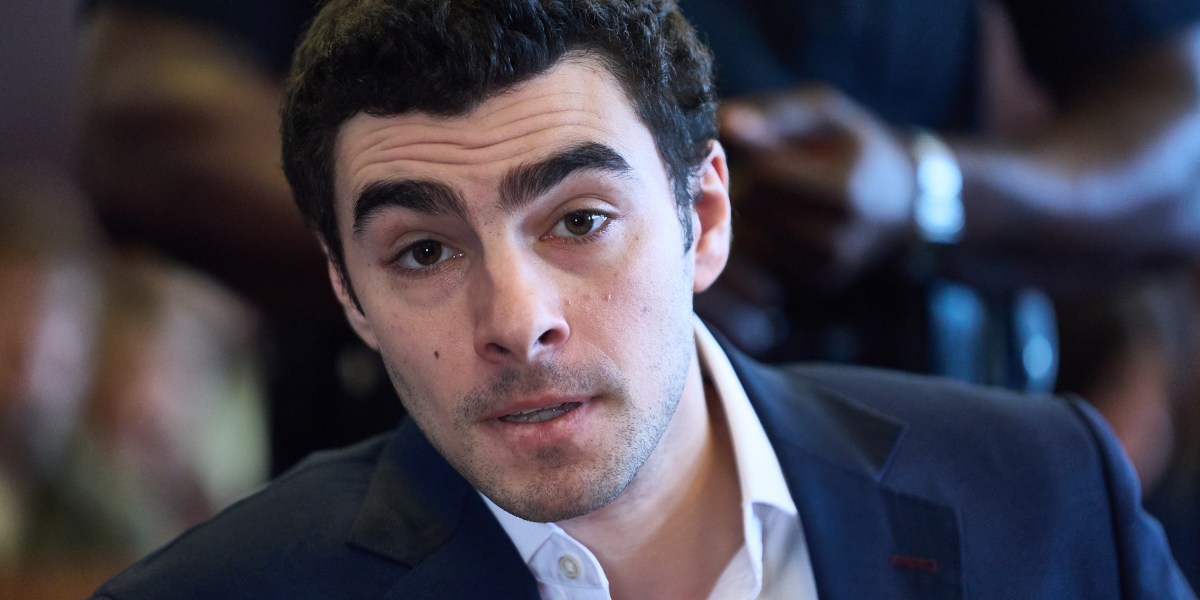
Mangione, 27, an Ivy League graduate from a wealthy Maryland family, has pleaded not guilty to state and federal murder charges. The pretrial hearing was in the state case, where he faces the possibility of life in prison, but his lawyers are trying to exclude evidence from both cases. Federal prosecutors are seeking the death penalty. He is due back in court for a hearing in that case on Jan. 9. Neither trial has been scheduled.

Here are some of the things we learned from Mangione’s pretrial hearing:

Body cameras give a close-up look at Mangione’s arrest

The public got an extensive, even exhaustive view of how police in Altoona, about 230 miles (370 kilometers) west of Manhattan, conducted Mangione’s arrest and searched his backpack after he was spotted eating breakfast at McDonald’s.

While there were quirky moments and asides — about holiday music, a hoagie and more — the point of the hearing was to help the judge assess whether Mangione voluntarily spoke to police and whether the officers were justified in searching his property before getting a warrant.

For the first time, body-worn camera video of Mangione‘s arrest was played in court and excerpts from one were made public. Previously, only still images had been released. Taken from multiple officers’ cameras, the footage put ears and eyes on the critical moments surrounding his arrest, along with an incongruously cheerful soundtrack: “Jingle Bell Rock” and other Christmas tunes on the restaurant’s sound system.

Officers on the witness stand were quizzed about what they said and did as Mangione went from noshing on a hash brown to being led away in handcuffs, as well as what they perceived, where they were standing and how they handled evidence after bringing him to a police station.

Mangione’s lawyers argue that none of the results of the search nor statements he made to police should be mentioned at his trial, which has yet to be scheduled. Prosecutors disagree. Carro didn’t hint at his conclusion. He invited both sides to submit written arguments and said he planned to study the body-camera video before issuing a written decision.

Differing views of Mangione’s statements and bag search

Mangione’s lawyers noted that one officer said “we’ll probably need a search warrant” for the backpack, but his colleagues had already rifled through it and later searched the bag again before getting a warrant.

Prosecutors emphasized an Altoona police policy, which they said is rooted in Pennsylvania law, that calls for searching the property of anyone who is being arrested. The two sides also amplified some contrasting signals, in officers’ words and actions, about their level of concern about whether the backpack contained something dangerous that could justify a warrantless search.

The officer searching the bag, Christy Wasser, testified that she was checking for a bomb. But Mangione’s lawyers pointed out that police didn’t clear the restaurant of customers — some were seen on body-camera footage walking to a bathroom a few feet away — and that she stopped her initial search almost immediately after finding a loaded gun magazine wrapped in a pair of underwear.

The find appeared to confirm officers’ suspicions that Mangione was the man wanted for Thompson’s killing.

“It’s him, dude. It’s him, 100%,” officer Stephen Fox was heard saying on body-worn camera video, punctuating the remark with expletives as Wasser held up the magazine.

Mangione gave police a fake name and a reason to arrest him

Mangione’s statements to police prior to his arrest matter mainly because, as shown on body-worn camera video, he initially gave officers a fake name — Mark Rosario — and a phony New Jersey driver’s license bearing that name. He eventually acknowledged the ruse and gave his real name after police ran the ID through a computer system and couldn’t get a match.

The fake name promptly gave Altoona police a reason to arrest him and hold him for New York City police. “If he had provided us with his actual name, he would not have committed a crime,” Fox testified. An NYPD lieutenant testified that the Rosario name matched one the suspected shooter used to purchase a bus ticket to New York and gave at a Manhattan hostel.

Mangione told police early on he didn’t want to talk, but officers engaged him for almost 20 minutes before a supervisor urged Fox to inform him of his right to remain silent. It happened after Mangione had admitted to lying about his name and said he “clearly shouldn’t have.”

An important factor in whether suspects have to be informed of their right to stay silent — known as a Miranda warning — is whether they are in police custody.

Prosecutors elicited testimony from officers suggesting Mangione could have believed he was free to leave when he gave the false name. But one of the first officers to encounter Mangione testified that he “was not free to leave until I identified who he was” — though Mangione wasn’t told that, and body camera video showed multiple officers standing between him and the restaurant door.

911 caller: Customers concerned ‘he looks like the CEO shooter’

For the first time, the public heard the 911 call that drew police to the Altoona McDonald’s, ultimately leading to Mangione’s arrest.

The restaurant’s manager told a dispatcher: “I have a customer here that some other customers were suspicious of that he looks like the CEO shooter from New York. They’re just really upset and they’re like coming to me and I was like, ‘Well, I can’t approach them, you know.’ ”

The woman, whose name was edited out of the recording played in court and omitted from the version released to the public, said she first tried calling a non-emergency number, but no one answered. Then she called 911.

“It’s not really an emergency,” she told the dispatcher at the start of the call.

The manager said Mangione was wearing a medical mask and a beanie pulled down on his forehead, leaving only his eyes and eyebrows visible. She said she searched online for a photo of the suspect for comparison.

A hoagie reward and getting ‘the ball rolling’ with the NYPD

At first, Altoona police officers were skeptical that Thompson’s killer might be in their city, a community of about 44,000 people about midway between Pittsburgh and Harrisburg.

Patrolman Joseph Detwiler, the first officer to arrive at McDonald’s, sarcastically responded “10-4” when a dispatcher asked him to check on the manager’s 911 call, a police supervisor testified.

The supervisor, Lt. Tom Hanelly Jr., testified that he texted Detwiler a reminder to take the call seriously and offered to buy the officer his favorite hoagie — a large turkey from local sandwich shop Luigetta’s — if he nabbed “the New York City shooter.”

Though, Hanelly acknowledged on the witness stand, “it seemed preposterous on its face.”

Hanelly said he read up on the shooting as he drove to McDonald’s and searched for a direct line “to get the ball rolling” with NYPD investigators. He ended up calling a New York City 911 call taker.

“We’re acting off a tip from a local business here, we might have the shooter,” Hanelly said in a recording played in court.

The call taker asked what shooter he was talking about. Hanelly then clarified, “the UHC shooter” and said he “matches the photos that your department put out.”

Hanelly said an NYPD detective called him back about 45 minutes later.

Mangione in court: Pumping his fist and scribbling notes

Mangione stayed active throughout the hearing, taking notes, reading documents, conferring with his lawyers and occasionally looking back toward his two-dozen or so supporters in the courtroom gallery.

He watched intently as prosecutors played a surveillance video of the killing and security and body-worn camera footage of his interactions with Altoona police. He pressed a finger to his lips and a thumb to his chin as he watched footage of two police officers approaching him at the McDonald’s.

He gripped a pen in his right hand, making a fist at times, as prosecutors played the 911 call.

Mangione arrived to court each morning from a federal jail in Brooklyn, where he has been held since shortly after his arrest. He was given permission to wear regular clothes — a gray or dark blue suit and various button-down shirts — instead of jail garb and had his hands uncuffed throughout the proceedings.

One day, he pumped his fist for photographers. Another day, he shooed away a photographer he felt had gotten too close to him.

A backpack full of ‘goodies,’ including to-do lists and travel plans

Along with the gun and notebook, police officers said Mangione’s backpack was stuffed with food, electronics and notes including to-do lists, a hand-drawn map and tactics for surviving on the lam — items Altoona Police Sgt. Eric Heuston described as “goodies” that might link him to the killing.

‘Keep momentum, FBI slower overnight,’ said one note. ‘Change hat, shoes, pluck eyebrows,’ said another.

One note said to check for “red eyes” from Pittsburgh to Columbus, Ohio or Cincinnati (“get off early,” it reads). The map showed lines linking those cities, and noted other possible destinations, including Detroit and St. Louis.

Other items found on Mangione or in his bag included a pocketknife, driver’s license, passport, credit cards, AirPods, protein bar, travel toothpaste and flash drives.

Mangione talked behind bars, prison officers say

Before he was moved to New York City, Mangione was held under close watch in a special housing unit at a Pennsylvania state prison, SCI Huntingdon, about 19 miles (31 kilometers) west of Altoona.

Correctional officer Matthew Henry testified that Mangione made an unprompted comment to him that he had a backpack with a 3D-printed pistol and foreign currency when he was arrested.

Correctional officer Tomas Rivers testified that Mangione asked him whether the news media was focused on him as a person or on the crime of Thompson’s killing. He said Mangione told him he wanted to make a public statement.

Rivers said Mangione was in the special housing unit in part because the facility’s superintendent had said he “did not want an Epstein-style situation,” referring to Jeffrey Epstein’s suicide at a Manhattan federal jail in 2019.


Source link

Continue Reading

Business

The Kennedy Center is now the Trump Kennedy Center, White House says

Published

on


President Donald Trump’s handpicked board voted Thursday to rename Washington’s leading performing arts center as the Trump Kennedy Center, the White House said, in a move that made Democrats fume, saying the board had overstepped its legal authority.

Congress named the center after President John F. Kennedy in 1964, after his assassination. Donald A. Ritchie, who served as Senate historian from 2009-2015, said that because Congress had first named the center it would be up to Congress to “amend the law.”

Richie said that while Trump and others can “informally” refer to the center by a different name, they couldn’t do it in a way “that would (legally) stick.”

But the board did not wait for that debate to play out, immediately changing the branding on its website to reflect the new name.

House Democratic leader Hakeem Jeffries told reporters that legislative action was needed, “and we’re going to make that clear.” The New York Democrat is an ex officio member of the board because of his position in Congress.

Trump has teased the name change for some time

Press secretary Karoline Leavitt announced the vote on social media, attributing it to the “unbelievable work President Trump has done over the last year in saving the building. Not only from the standpoint of its reconstruction, but also financially, and its reputation.”

Trump, a Republican who’s chairman of the board, said at the White House that he was “surprised” and “honored” by the vote.

“The board is a very distinguished board, most distinguished people in the country and I was surprised by it and I was honored by it,” he said.

Trump had already been referring to the center as the “Trump Kennedy Center.” Asked Dec. 7 as he walked the red carpet for the Kennedy Center Honors program whether he would rename the venue after himself, Trump said such a decision would be up to the board.

Earlier this month, Trump talked about a “big event” happening at the “Trump Kennedy Center” before saying, “excuse me, at the Kennedy Center,” as his audience laughed. He was referring to the FIFA World Cup soccer draw for 2026, in which he participated.

A name change won’t sit well with some Kennedy family members.

Maria Shriver, a niece of John F. Kennedy, referred to the legislation introduced in Congress to rebrand the Kennedy Center as the Donald J. Trump Center for the Performing Arts as “insane” in a social media post in July.

“It makes my blood boil. It’s so ridiculous, so petty, so small minded,” she wrote. “Truly, what is this about? It’s always about something. ‘Let’s get rid of the Rose Garden. Let’s rename the Kennedy Center.’ What’s next?”

Trump earlier this year turned the Kennedy-era Rose Garden at the White House into a patio by removing the lawn and laying down paving stones.

Another Kennedy family member, Robert F. Kennedy Jr., serves in Trump’s Cabinet as secretary of the Department of Health and Human Services.

Trump showed scant interest in the Kennedy Center during his first term as president, but since returning to office in January he has replaced board members appointed by Democratic presidents with some of his most ardent supporters, who then elected him as board chairman.

He also has criticized the center’s programming and its physical appearance and has vowed to overhaul both.

Trump secured more than $250 million from the Republican-controlled Congress for renovations of the building.

He attended opening night of the musical “Les Misérables,” and last week he served as host of the Kennedy Center Honors program after not attending the show during his first term as president. The awards program is scheduled to be broadcast by CBS and Paramount+ on Dec. 23.

Sales of subscription packages are said to have declined since Trump’s takeover of the center, and several touring productions, including “Hamilton,” have canceled planned runs there. Rows upon rows of empty seats have been seen in the Concert Hall during performances by the National Symphony Orchestra.

Some performers, including actor Issa Rae and musician Rhiannon Giddens, have scrapped scheduled appearances, and Kennedy Center consultants including musician Ben Folds and singer Renée Fleming have resigned.

___

AP writer Hillel Italie contributed to this story from New York.


Source link

Continue Reading

Business

Jelly Roll, country-rap superstar who found music while serving prison time, pardoned by Tennessee governor in front of Christmas Tree

Published

on


Tennessee’s governor pardoned country star Jelly Roll on Thursday for his criminal past in the state, acknowledging the Nashville native’s long road back from drugs and prison through soul-searching, songwriting and advocacy for second chances.

The rapper-turned-singer whose legal name is Jason Deford has spoken for years about his redemption arc before diverse audiences, from people serving time in correctional centers to concert crowds and even in testimony before Congress.

Republican Gov. Bill Lee issued the pardon after friends and civic leaders of the Grammy-nominated musician joined in an outpouring of support.

Jelly Roll’s convictions include robbery and drug felonies. He has said a pardon would make it easier for him to travel internationally for concert tours and to perform Christian missionary work without filling out burdensome paperwork.

He was one of 33 people to receive pardons Thursday from Lee, who for years has issued clemency decisions around the Christmas season. Lee said Jelly Roll’s application underwent the same monthslong thorough review as other applicants. The state parole board gave a nonbinding, unanimous recommendation for Jelly Roll’s pardon in April.

“His story is remarkable, and it’s a redemptive, powerful story, which is what you look for and what you hope for,” Lee told reporters.

Jelly Roll and Lee meet at the governor’s mansion

Lee said he never met Jelly Roll until Thursday, when the musician visited the governor’s mansion over the pardon news. The two hugged in front of a lit Christmas tree and a fireplace decorated with holiday garlands.

Unlike recent high-profile federal pardons, which let people off the hook for prison, a Tennessee pardon serves as a statement of forgiveness for someone who has already completed a prison sentence. Pardons offer a path to restoring certain civil rights such as the right to vote, although there are some legal limitations, and the governor can specify the terms.

Jelly Roll broke into country music with the 2023 album “Whitsitt Chapel” and crossover songs like “Need a Favor.” He has won multiple CMT Awards, a CMA Award and also picked up seven career Grammy nominations.

Much of his music deals with overcoming adversity, like the song “Winning Streak” about someone’s first day sober. Or the direct-and-to-the-point, “I Am Not Okay.”

“When I first started doing this, I was just telling my story of my broken self,” he told The Associated Press in an interview. “By the time I got through it, I realized that my story was the story of many. So now I’m not telling my story anymore. I’m getting to pull it right from the crevices of the people whose story’s never been told.”

Jelly Roll: ‘‘I was a part of the problem’

Before the parole board, Jelly Roll said he first fell in love with songwriting while in custody, calling music a therapeutic passion project that “would end up changing my life in ways that I never dreamed imaginable.”

Outside of sold-out shows, he’s testified before the U.S. Senate about the dangers of fentanyl, describing his drug-dealing younger self as “the uneducated man in the kitchen playing chemist with drugs I knew absolutely nothing about.”

“I was a part of the problem,” he told lawmakers at the time. “I am here now standing as a man that wants to be a part of the solution.”

Jelly Roll’s most serious convictions include a robbery at 17 and drug charges at 23. In the first case, a female acquaintance helped Jelly Roll and two armed accomplices steal $350 from people in a home in 2002. Because the victims knew the female acquaintance, she and Jelly Roll were quickly arrested. Jelly Roll was unarmed, and was sentenced to one year in prison plus probation.

In another run-in 2008, police found marijuana and crack cocaine in his car, leading to eight years of court-ordered supervision.

Sheriff whose jail held Jelly Roll urged a pardon

Friends and civic leaders cited his transformation in backing a pardon.

Davidson County Sheriff Daron Hall, who runs Nashville’s jail, wrote that Jelly Roll had an awakening in one of the jails he managed. Live Nation Entertainment CEO and President Michael Rapino cited Jelly Roll’s donations from his performances to charities for at-risk youth.

“I think he has a chance and is in the process of rehabilitating a generation, and that’s not just words,” Hall said in a phone interview Thursday. “I’m talking about what I see we need in our country, is people who accept responsibility, accept the fact that they make mistakes and accept the fact that they need help.”

The parole board began considering Jelly Roll’s pardon application in October 2024, which marks the state’s five-year timeline for eligibility after his sentence expired. Prominent Nashville attorney David Raybin represented Jelly Roll in the pardon case.

Lee’s office said no one was pardoned Thursday who had a homicide or a sex-related conviction, or for any crime committed as an adult against a minor.


Source link

Continue Reading

Trending

Copyright © Miami Select.