
Politics
Candidates consider legal challenge to rule disqualifying petitions signed by ‘inactive’ voters
An administrative change that has kept a measure to legalize pot off Florida’s statewide ballot could cripple congressional candidates qualifying by petition.
Now, some candidates, including Republicans, could be ready to legally challenge a rule tossing signatures from “inactive” voters.
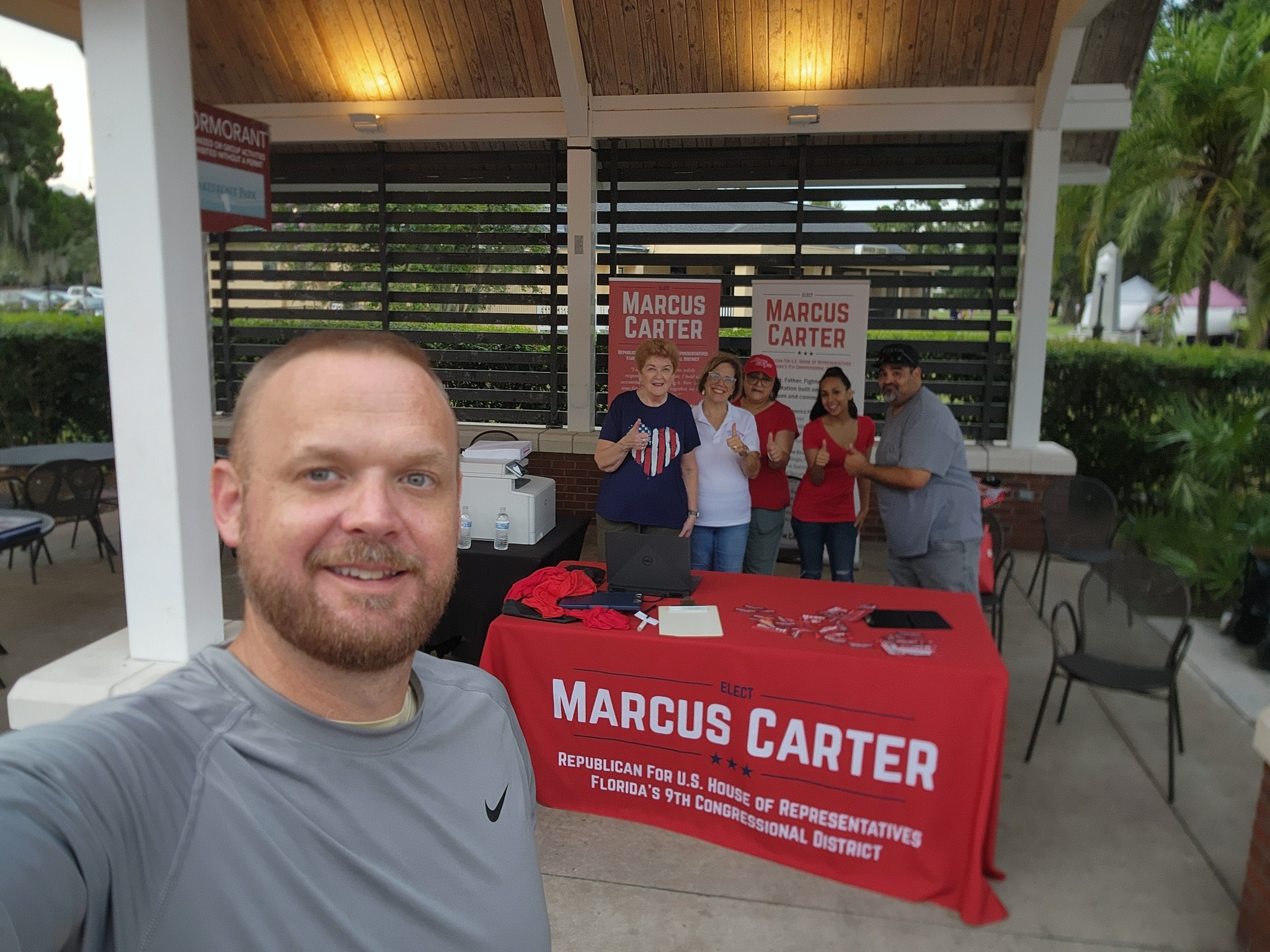
Marcus Carter, a Kissimmee Republican challenging Democratic U.S. Rep. Darren Soto, will meet Friday with several Central Florida candidates flustered by a new change in the counting of signatures.
Carter plans to qualify for the ballot by petition. For a congressional race, that requires submitting 2,564 signatures from registered voters in Florida’s 9th Congressional District. But a state decision handed down in January means signatures from voters deemed inactive, meaning those still registered but who had not voted in years, would no longer be accepted
Carter only learned of the change this week, after he brought in 90 petitions on top of nearly 1,600 already submitted. But he learned that even with his new batch of submissions, the total number of submissions had been reduced to 1,538 signatures.
“If you’re not really paying attention, nobody’s ever going to notice this type of stuff is happening and how detrimental it becomes to us in the long run,” Carter said.
The Osceola County Supervisor of Elections confirms it acted based on direction from the state.
“This is not something that we decided,” said Kari Ewalt, administrative services director for the Osceola Supervisor’s Office. “This is something from the Division of Elections, which is under the Department of State.”
Secretary of State Cord Byrd did not respond when asked about the ruling.
But while the issue has started to impact candidates for public office now, the rule change actually came down in January and originally impacted citizen initiated campaigns to place issue referendums on the statewide ballot.

On Feb. 1, the Division of Elections announced no initiatives would appear before all Florida voters this year. That included a measure sought by Smart & Safe Florida to put a constitutional amendment decriminalizing recreational marijuana for adults up for a vote.
State law requires 880,062 signatures from valid Florida voters to put a measure on the statewide ballot, and the highest number ever reported as valid for the pot campaign was 783,592.
But that was after various legal battles with the state over how many petitions were disqualified, including about 42,000 tossed because they came from “inactive” voters.
Attorneys for Smart & Safe said that made little sense, as those voters could still show up at the next election and cast legal ballots. But a lawsuit filed by the campaign failed at Florida’s 1st District Court of Appeal. Plaintiffs have since petitioned the Florida Supreme Court to take up the case and expect to hear back Monday about whether that will happen.
In the meantime, Carter hopes to bring together a bipartisan group of candidates to challenge the rule.
He has faced resistance. Barbie Harden Hall, a Democrat challenging Republican U.S. Rep. Dan Webster, said she would not be part of the legal challenge because Carter has employed Republican attorney and Lake County Commissioner Anthony Sabatini to handle the case.
But Carter hopes candidates see past partisan differences to address an issue that at its core blocks regular citizens from challenging establishment figures.
He suggested the State Department was acting on legitimate concerns citizens have about voter fraud to put in place a barrier to the participation of regular citizens. If Carter cannot qualify by petition, the fee to qualify as a congressional candidate this year would be $10,440 for a partisan candidate.
“This is our responsibility to do it. So it doesn’t matter right now, party affiliation aside,” Carter said. “I’ve spoken to some of my Primary folks who expressed interest in this as well. This is about doing what’s right versus doing what’s wrong.”