Connect with us

Business

Can Macy’s win back America? How CEO Tony Spring is moving past denial and embracing change

Published

on


Respected retail analyst Neil Saunders had for years regularly posted pictures on social media showing extreme messiness at Macy’s stores—mounds of unfolded sweaters strewn on the floor or shelving that had fallen into disrepair—on social media. Now he was getting an individual tour from the department store’s new CEO, Tony Spring.

At the well-appointed Macy’s in the upscale Topanga Westfield mall in Los Angeles in June 2024, Spring walked the brand’s former bête noire through the improvements he was starting to roll out at 125 “priority” stores: elegantly styled mannequins and more staffers in key areas; double the staffing in the women’s shoe department; and three times as many in the dresses area. There were even live human beings manning the fitting rooms.

Saunders had to admit, he was impressed. “Their merchandising is sharper,” Saunders told Fortune. “There is greater neatness on the shop floor. They’re starting to elevate the shopping experience.”

But perhaps the biggest change Saunders saw, he told Fortune, was Spring’s openness to criticism—as shown by his willingness to engage with one of the brand’s harshest critics. “This was a really big sea change,” Saunders said.

It’s an attitude the CEO himself sees as essential for the 167-year-old retailer to carve out a new place for itself in today’s retail world.

“Neil didn’t take pictures of things that didn’t exist,” Spring told Fortune in an interview at Macy’s headquarters in New York. The venerable department store had long been in denial about the depth of its problems, said Spring, who took the reins of Macy’s Inc in early 2024 after a successful decade-long stint as CEO of its Bloomingdale’s division.

“We had to have a moment of reflection and say, ‘We’re not as good as we think we are,’” Spring said. “We can be proud of Macy’s history, but we can’t be proud of Macy’s current performance.”

Indeed, the brand’s performance was awful for years. Customer service scores dropped year after year, contributing to sales falling from an all-time high in 2014 of $28.1 billion to just above $22.3 billion a decade later. The company has closed hundreds of stores because customers took their business elsewhere amid the “retail apocalypse” set off by the rise of Amazon and the soaring popularity of cheaper retailers such as Target. Meanwhile, brands trying to elevate their own images were tiring of the subpar presentation their products had at many Macy’s stores: Ralph Lauren, Coach, Nike, and Levi’s, among others, took their products off the shelves.

Spring’s plan is simple in its essence: Go back to retail fundamentals. That means sufficient staffing to ensure the customer service that justifies shopping at a department store instead of online or at a discounter; well-maintained stores with more visually appealing product presentation; and newer brands rather than the same-old, same-old, over and over again—all while keeping costs down. Ultimately, his strategy aims for a Macy’s with fewer but more appealing stores, complemented by e-commerce. The goal is to go to from the current 449 locations, to 350 or so, including the 125 priority stores that will get disproportionately higher investment for things like more staffing and new lighting.

There are promising signs that, at very long last, Macy’s has found a turnaround plan that is taking. Last quarter, Macy’s reported its best comparable sales performance in 12 quarters. Sales only rose 1.1% year-over-year but that’s a victory at a time shoppers are hamstrung by economic anxiety—and an encouraging sign that Spring might be onto something.

Attitude adjustment

To have any hope of a successful turnaround, Spring felt that Macy’s needed a cultural reset first, to inspire a workforce battered by years of falling revenue, store closings, and staff reductions, and get buy-in to his strategy. “The big impact we’re finally seeing comes from the fact that we’re all singing from the same hymnal,” said the 57-year-old Spring.

Macy’s, founded in New York City in 1858, benefits from a huge reservoir of goodwill among its 40 million annual customers, many of whom remember trips to the department store as kids, to get outfits for their graduations or to sit on Santa’s knee. The Macy’s Thanksgiving Day parade in Manhattan, watched by millions around the country on TV every year, has cemented the brand’s place in American culture.

But while many associate the brand with its Manhattan flagship and its famously elaborate window displays during the holiday season, Macy’s has for decades been primarily a mall-based department store chain with hundreds of large emporia in suburbs across the country. It’s a shopping format consumer have been shifting away from since the 1990’s—and Macy’s is no exception.

At its peak just over a decade ago, Macy’s had more than 773 namesake stores. The company, which also owns Bloomingdale’s and the beauty chain Bluemercury, became a Frankenstein behemoth after a $11 billion mega-merger in 2006 in which it absorbed several regional chains, including Filene’s, Marshall Field’s, Foley’s, Hecht’s, and Kaufmann’s and slapped the name “Macy’s” on all the stores. That mega deal also led to a massive challenge for Macy’s: Too many of the brand’s stores were clustered together, cannibalizing each other’s customer base.

Over that period, Macy’s bureaucracy swelled, and the individuality of the regional department store chains it had absorbed faded.

“They didn’t ever manage to create one unifying culture from all these parts they mushed together,” said Kathy Gersch, president of the consulting firm Kotter International.

In addition to the “priority” stores, Macy’s will keep open another 225 stores or so once it is done closing a few dozen more locations in the next few years.

In the 2010’s, Macy’s continued to grow, aided by the implosions of long-time rivals Sears and JCPenney. But those gains masked Macy’s problems. Amazon, with its low prices and fast delivery, took market share, but so too did T.J. Maxx where shoppers could snag designer clothes for much less, and Ulta Beauty, which poached many of the beauty customers who were among the most frequent visitors to Macy’s.

The more Macy’s business was squeezed, the more it cut back on spending, creating a vicious cycle that undermined the service standards and pleasant atmosphere needed to justify higher department store prices.

Case in point: A decade ago, Macy’s tried to save on staffing by turning its footwear section into self-service “open-sell” areas, a short-lived but disastrous move. “If you want open sell, you can go to TJ Maxx,” said Saunders.

Macy’s, like many other retailers, fell into the trap of putting more merchandise on the selling floor to reduce how many times workers would have to re-stock shelves. But that created a messy, cluttered look more reminiscent of a clearance store.

The overly dense selling floors also made it hard to do storytelling—called “visual merchandising” in retail—with mannequins. More staffing was also an obvious need for the jewelry and handbag sections, where customers want to be shown the higher-priced items from cases.  “It’s not rocket science,” said Spring “It’s back to the standards of retail.” And it’s something customers told Macy’s directly: In Spring’s first months, the company surveyed 60,000 current and former customers to get a deep understanding of what they want.

Spring pointed to the company’s missteps last decade, as investors grew impatient with Macy’s and its middling performance. So desperate was Macy’s to mollify Wall Street that in 2015 it announced that it would install “smart mirrors” in fitting rooms. (They often didn’t work properly, and were seen as an expensive flop.) “We became enamored with shiny objects and feeling we needed to keep up with everyone instead of playing our playbook,” said Spring, who as an executive at Bloomingdale’s was on Macy’s leadership team and saw firsthand the chain’s problems.

In 2015 an activist campaign by Starboard Capital, which saw little value in Macy’s retail business, sought to pressure the company to spin off its best real estate. It was the first of four activist campaigns by various firms targeting Macy’s in the past decade.

The pressure to keep costs under control became more urgent during the pandemic when Macy’s was fighting to stave off bankruptcy. And Wall Street is still keeping Macy’s on a tight leash over its expenses.

One anecdote Spring likes to tell is from a decade ago, when as director of stores for Bloomingdale’s, he conducted a store visit with other executives. He and “the suits” were intercepted by a shopper who told him that everywhere she went, staff would ask her how she was doing. Anticipating a compliment, Spring recalled, he heard a complaint instead: “Nobody could even wait for the answer,” she told him. The reproach was like a punch in the gut, Spring said.

“It was a good reminder that we were so focused on training people to say the line, that we forgot to explain to people why,” Spring said. The ‘why’ is that it makes a chat feel less transactional, even as it gives a store worker insights into what else a customer might need or want to buy.

Spring’s training is in hospitality: He studied hotel and restaurant management before starting at Bloomingdale’s as a management trainee in 1987, and his first ever job was in the service industry, at a Burger King in the 1980s. He wants that hospitality mindset to take hold and for store workers to feel their job is about more than folding clothes and manning cash registers. It is also about injecting the shopper experience with romance and theater, an endeavor that he argues can make the job more fun and fulfilling: “We’re all driven by psychic reward.”

Still mid?

Armed with some promising results, Spring has been working to attract new brands to Macy’s and bring back others. In July, he landed a coup when Abercrombie & Fitch’s children’s business started selling its products at Macy’s. Other brands Macy’s has recently added include Reiss, Good American, and Theory. Spring is also betting he can get important partners to come back to many of the Macy’s stores they abandoned.

Spring is quick to acknowledge that Macy’s still has much to prove. But his early results have sparked hope that at long last, it is turning a corner.

And even if critics such as Saunders are mollified by the moves Spring has made, they also say there’s more to be done. “Macy’s is still middle-of-the-road,” Saunders said. “They need to keep elevating the experience.”

And that is exactly what Spring intends to do, tapping into the cherished associations many Americans have with Macy’s.“There is so much love for this brand,” he said. “If we put our best on the table, we have the chance to win their business back.”




Source link

Continue Reading

Business

Australia will start banning kids from social media this week

Published

on


Starting this Wednesday, many Australian teens will find it near impossible to access social media. That’s because, as of Dec. 10, social media platforms like TikTok and Instagram must bar those under the age of 16, or face significant fines. Australian Prime Minister Anthony Albanese called the pending ban “one of the biggest social and cultural changes our nation has faced” in a statement.

Much is riding on this ban—and not just in Australia. Other countries in the region are watching Canberra’s ban closely. Malaysia, for example, said that it also plans to bar under-16s from accessing social media platforms starting next year. 

Other countries are considering less drastic ways to control teenagers’ social media use. On Nov. 30, Singapore said it would ban the use of smartphones on secondary school campuses. 

Yet, governments in Australia and Malaysia argue a full social media ban is necessary to protect youth from online harms such as cyberbullying, sexual exploitation and financial scams.

Tech companies have had varied responses to the social media ban. 

Some, like Meta, have been compliant, starting to remove Australian under-16s from Instagram, Threads and Facebook from Dec. 4, a week before the national ban kicks in. The social media giant reaffirmed their commitment to adhere to Australian law, but called for app stores to instead be held accountable for age verification.

“The government should require app stores to verify age and obtain parental approval whenever teens under 16 download apps, eliminating the need for teens to verify their age multiple times across different apps,” a Meta spokesperson said.

Others, like YouTube, sought to be excluded from the ban, with parent company Google even threatening to sue the Australian federal government in July 2025—to no avail.

However, experts told Fortune that these bans may, in fact, be harmful, denying young people the place to develop their own identities and the space to learn healthy digital habits.

“A healthy part of the development process and grappling with the human condition is the process of finding oneself. Consuming cultural material, connecting with others, and finding your community and identity is part of that human experience,” says Andrew Yee, an assistant professor at the Nanyang Technological University (NTU)’s Wee Kim Wee School of Communication and Information.

Social media “allows young people to derive information, gain affirmation and build community,” says Sun Sun Lim, a professor in communications and technology at the Singapore Management University (SMU), who also calls bans “a very rough tool.”

Yee, from NTU, also points out that young people can turn to platforms like YouTube to learn about hobbies that may not be available in their local communities. 

Forcing kids to go “cold turkey” off social media could also make for a difficult transition to the digital world once they are of age, argues Chew Han Ei, a senior research fellow at the Lee Kuan Yew School of Public Policy in the National University of Singapore (NUS).

“The sensible way is to slowly scaffold [social media use], since it’s not that healthy social media usage can be cultivated immediately,” Chew says.

Enforcement

Australia plans to enforce its social media ban by imposing a fine of 49.5 million Australian dollars (US$32.9 million) on social media companies which fail to take steps to ban those under 16 from having accounts on their platforms.

Malaysia has yet to explain how it might enforce its own social media ban, but communications minister Fahmi Fadzil suggested that social media platforms could verify users through government-issued documents like passports. 

Though young people may soon figure out how to maintain their access to social media. “Youths are savvy, and I am sure they will find ways to circumvent these,” says Yee of NTU. He also adds that young may migrate to platforms that aren’t traditionally defined as social media, such as gaming sites like Roblox. Other social media platforms, like YouTube, also don’t require accounts, thus limiting the efficacy of these bans, he adds.

Forcing social media platforms to collect huge amounts of personal data and government-issued identity documents could also lead to data privacy issues. “It’s very intimate personally identifiable information that’s being collected to verify age—from passports to digital IDs,” Chew, from NUS, says. “Somewhere along the line, a breach will happen.”

Moving towards healthy social media use

Ironically, some experts argue that a ban may absolve social media platforms of responsibility towards their younger users. 

“Social media bans impose an unfair burden on parents to closely supervise their children’s media use,” says Lim of SMU. “As for the tech platform, they can reduce child safety safeguards that make their platforms safer, since now the assumption is that young people are banned from them, and should not have been venturing [onto them] and opening themselves up to risks.”

And rather than allow digital harms to proliferate, social media platforms should be held responsible for ensuring they “contribute to intentional and purposeful use”, argues Yee.

This could mean regulating companies’ use of user interface features like auto-play and infinite scroll, or ensuring algorithmic recommendations are not pushing harmful content to users.

“Platforms profit—lucratively, if I may add—from people’s use, so they have a responsibility to ensure that the product is safe and beneficial for its users,” Yee explains. 

Finally, conversations on safe social media use should center the voices of young people, Yee adds.

“I think we need to come to a consensus as to what a safe and rights-respecting online space is,” he says. “This must include young people’s voices, as policy design should be done in consultation with the people the policy is affecting.”


Source link

Continue Reading

Business

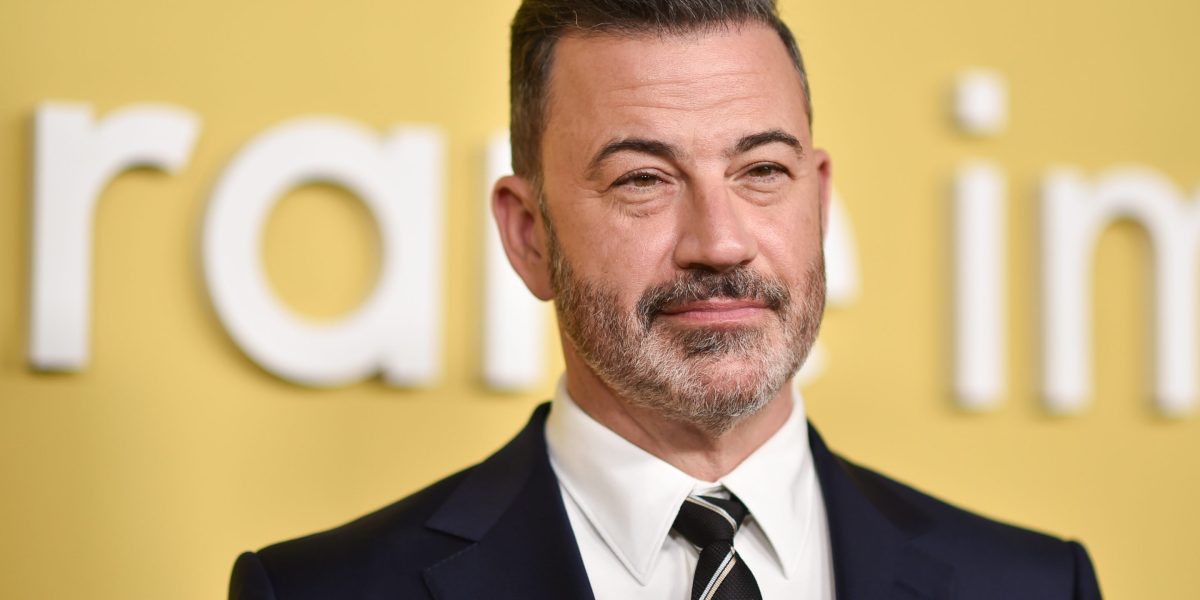
Jimmy Kimmel signs ABC extension through 2027

Published

on


Kimmel’s previous, multiyear contract had been set to expire next May, so the extension will keep him on the air until at least May 2027.

Kimmel’s future looked questionable in September, when ABC suspended “Jimmy Kimmel Live!” for remarks made following the assassination of conservative activist Charlie Kirk. Following a public outcry, ABC lifted the suspension, and Kimmel returned to the air with much stronger ratings than he had before.

He continued his relentless joking at the president’s expense, leading Trump to urge the network to “get the bum off the air” in a social media post last month. The post followed Kimmel’s nearly 10-minute monologue on Trump and the Jeffrey Epstein files.

Kimmel was even on Trump’s mind Sunday as the president hosted the Kennedy Center Honors in Washington.

“I’ve watched some of the people that host,” Trump said. “I’ve watched some of the people that host. Jimmy Kimmel was horrible, and some of these people, if I can’t beat out Jimmy Kimmel in terms of talent, then I don’t think I should be president.”

Kimmel has hosted the Oscars four times, but he’s never hosted the Kennedy Center show.

Just last week, Kimmel was needling Trump on the president’s approval ratings. “There are gas stations on Yelp with higher approval ratings than Trump right now,” he said.

Kimmel will be staying longer than late-night colleague Stephen Colbert at CBS. The network announced this summer it was ending Colbert’s show next May for economic reasons, even though it is the top-rated network show in late-night television.

ABC has aired Kimmel’s late-night show since 2003, during a time of upheaval in the industry. Like much of broadcast television, late-night ratings are down. Viewers increasingly turn to watching monologues online the day after they appear.

Most of Kimmel’s recent renewals have been multiyear extensions. There was no immediate word on whose choice it was to extend his current contract by one year.

Bill Carter, author of “The Late Shift” and veteran chronicler of late-night TV, cautioned against reading too much into the length of the extension. Kimmel, at age 58, knows he’s getting close to the end of the line, Carter said, but when he leaves, he doesn’t want it to appear under pressure from Trump or anyone.

“He wants to make sure that it’s on his terms,” Carter said.

Kimmel has become one of the leading voices resisting Trump. “I think it’s important for him and for ABC that they are standing up for him,” Carter said.

Following Kirk’s killing, Kimmel was criticized for saying that “the MAGA gang” was “desperately trying to characterize this kid who murdered Charlie Kirk as anything other than one of them and doing everything they can to score political points from it.” The Nexstar and Sinclair television ownership groups said it would take Kimmel off the air, leading to ABC’s suspension.

When he returned to the air, Kimmel did not apologize for his remarks, but he said he did not intend to blame any specific group for Kirk’s assassination. He said “it was never my intention to make the light of the murder of a young man.”


Source link

Continue Reading

Business

Trump says he’ll allow Nvidia to sell advanced chips to ‘approved customers’ in China

Published

on


President Donald Trump said Monday that he would allow Nvidia to sell an advanced type of computer chip used in the development of artificial intelligence to “approved customers” in China.

There have been concerns about allowing advanced computer chips to be sold to China as it could help the country better compete against the U.S. in building out AI capabilities, but there has also been a desire to develop the AI ecosystem with American companies such as chipmaker Nvidia.

The chip, known as the H200, is not Nvidia’s most advanced product. Those chips, called Blackwell and the upcoming Rubin, were not part of what Trump approved.

Trump said on social media that he had informed China’s leader Xi Jinping about his decision and “President Xi responded positively!”

“This policy will support American Jobs, strengthen U.S. Manufacturing, and benefit American Taxpayers,” Trump said in his post.

Nvidia said in a statement that it applauded Trump’s decision, saying the choice would support domestic manufacturing and that by allowing the Commerce Department to vet commercial customers it would “strike a thoughtful balance” on economic and national security priorities.

Trump said the Commerce Department was “finalizing the details” for other chipmakers such as AMD and Intel to sell their technologies abroad.

The approval of the licenses to sell Nvidia H200 chips reflects the increasing power and close relationship that the company’s founder and CEO, Jensen Huang, enjoys with the president. But there have been concerns that China will find ways to use the chips to develop its own AI products in ways that could pose national security risks for the U.S., a primary concern of the Biden administration that sought to limit exports.

Nvidia has a market cap of $4.5 trillion and Trump’s announcement appeared to drive the stock slightly higher in after hours trading.


Source link

Continue Reading

Trending

Copyright © Miami Select.