Connect with us

Business

Building corporate resilience in a fragmenting world

Published

on


Global businesses are entering an era of destabilization, defined by trade friction, shifting geopolitical alliances, and mounting pressure to redesign supply chains. The old assumptions of seamless globalization are giving way to a fragmented reality where tariffs, sanctions, and export controls can upend operations overnight. Geopolitical uncertainty – from regional conflicts to strategic derisking between major economies – forces companies to rethink sourcing, manufacturing, and market access. Supply chains, once optimized for efficiency, now require carefully planned safeguards against political risk, regulatory volatility, and sudden disruptions. This shift is structural, not temporary. 

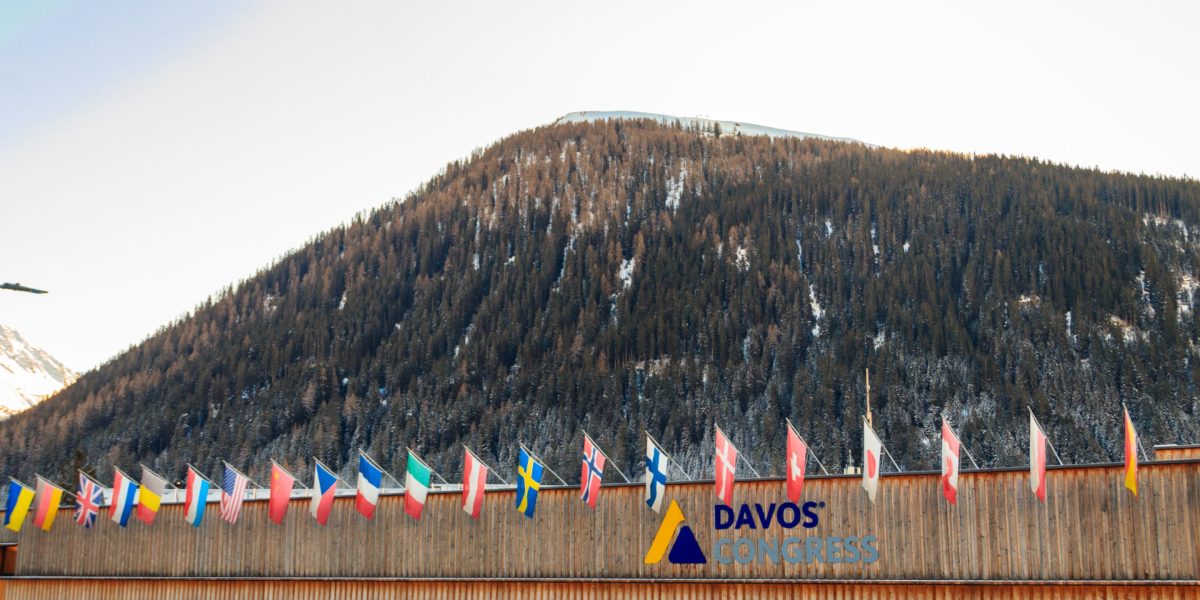
As world leaders convene in Davos, CEOs face the realities of this geo-economic fragmentation – where resilience, not efficiency, will define competitiveness.

The new normal: geopolitics and growth are inseparable

As the World Economic Forum commences on January 19  2026, the message for global business is simple: the old playbook is obsolete. Geopolitics and trade have become inseparable, with sanctions, tariffs, and export controls shaping market access as much as consumer demand. In this environment, risk management is not a back-office function; it is a strategic directive at the board level. 

The WEF’s theme “A Spirit of Dialogue” is organized around five imperatives: cooperating in a contested world; unlocking growth; investing in people; deploying innovation responsibly; and building prosperity within planetary boundaries. That framing mirrors what executives already feel in their P&L and risk registers: trade, regulation, technology, and climate have fused into a single operating system for corporate strategy.

Trade is fragmenting, but competition for growth is intensifying

Davos 2026 will center on a singular key question: how to achieve growth in an era defined by fragmentation and shifting rules. 

Recent indicators capture the two-speed reality. The WTO’s 2025 outlook warns of turbulence: tariff spikes and policy uncertainty have darkened the near-term horizon, with scenarios ranging from fractional declines in merchandise trade to only modest recovery. 

Yet, paradoxically, UNCTAD reports global trade values reaching a record $35 trillion in 2025, powered by East Asia and South-South corridors. This is not globalization’s collapse but its reconfiguration. Commerce is adapting, not retreating; shifting toward regional clusters and politically aligned bilateral partners.

McKinsey’s latest analysis reveals the underlying architecture: trade is tilting toward proximity and trust. U.S. flows increasingly favor Mexico and Vietnam; Europe continues to pivot away from Russia; ASEAN, India, and Brazil are weaving cross-bloc ties. These patterns signal that growth remains attainable – but through different lanes and under different rules, where resilience and strategic alignment matter as much as efficiency.

Sanctions and tariffs are converging into one regulatory front dominated by national security

In line with this overarching shift, boards can no longer treat sanctions, export controls, tariffs and trade defense as discrete issues. Regulators themselves are coordinating more closely than at any time in recent memory and this integration blurs traditional boundaries between trade compliance and geopolitical risk management, creating a complex environment where businesses must navigate overlapping restrictions.

2025 – 26 brings tighter U.S. and EU scrutiny on advanced technologies, China moving toward tighter customs and export controls on strategic resources, evolving controls on inbound and outbound investments, and sustained pressure tied to Russia, Iran, and China. At the same time, tariffs have shifted from a secondary tool to a primary driver of trade outcomes – suppressing volumes and forcing companies to front-load shipments or reroute flows, as seen in the first half of 2025 where cross-border trade figures reflected companies front-loading imports ahead of the expected impact of escalating tariffs. A tariff adjustment may trigger sanctions exposure, and vice versa. The result is a unified, high-stakes framework where proactive monitoring and strategic foresight are essential to maintain competitiveness and avoid costly disruptions. 

Supply chains: resilience with measurable value at risk

Additionally, expect 2026 to elevate supply-chain resilience further from a defensive measure to a core growth lever. Resilience now underpins agility, market access, and investor confidence in a world where disruption is structural, not cyclical. As such, industry analysts point to three converging pressures: geopolitical intervention, regulatory complexity – including cross-jurisdictional human rights and due diligence regimes – and climate-driven shocks. Taken together, these trends make resilience a strategic differentiator: companies that invest in adaptive, compliant, and transparent supply chains will not only mitigate risk but unlock sustainable performance gains.

CEOs need a new resilience playbook

Many companies are not yet equipped for integrated legal-operational-geopolitical risks. Here’s a pragmatic, board-level playbook we see high performers adopting:

  • It starts with building the right team and equipping them for a world where traditional silos no longer suffice: resilience requires cross-functional collaboration. The Davos 2026 imperative of investing in people reflects this necessity of equipping teams with cross-disciplinary expertise: Legal teams must grasp geopolitical risk; compliance officers need fluency in sanctions regimes; procurement specialists should be versed in export controls and ESG dynamics; and teams must prepare for cyber threats.  And the C-Suite must have oversight of all of these.
  • Secondly, a culture of operational continuity is the heartbeat of resilience, and it thrives on adaptability. In a world where global shocks and policy rifts can disrupt supply chains, digital systems, and workforce stability, organizations that embed continuity into their culture stand apart. This means considering strategically building delays into critical processes, requiring rigorous risk assessment and the agility to adjust plans quickly through established governance frameworks as conditions shift – whether due to market volatility, geopolitical tensions, or unexpected operational challenges. For leading enterprises, continuity is proactive – one that ensures not only operational stability but also compliance adaptability, and preserves trust, sustains performance, and turns unpredictability into an expected and manageable constant.
  • Thirdly, a robust internal compliance program (ICP) is essential – not as a static checklist, but as a living framework that evolves with geopolitical and regulatory shifts. This means continuous monitoring of sanctions, export controls, and trade restrictions, paired with clear communication channels across legal, procurement, and operations teams. A strong ICP should anticipate risk rather than merely react: scenario planning, early-warning systems, and regular cross-functional briefings help organizations stay ahead of sudden policy changes. Embedding compliance into strategic decision-making ensures that resilience is not an after-thought but a core business capability, and one which is designed to grease, rather than gum up, the wheels of productivity
  • Finally, documentation, though often overlooked, is the cornerstone of accountability.  CEOs should ensure that documentation is not treated as a formality but as a strategic tool: it creates internal accountability, demonstrates diligence to regulators, and serves as the first line of defense in audits or investigations. 

In a fragmented global environment and an era of uncertainty, disciplined preparation is both the most reliable shield and the most effective weapon.

The opinions expressed in Fortune.com commentary pieces are solely the views of their authors and do not necessarily reflect the opinions and beliefs of Fortune.


Source link

Continue Reading

Business

Europe can wield a $8 trillion ‘sell America’ weapon as Trump reignites a trade war over Greenland

Published

on


As the European Union weighs options to retaliate against President Donald Trump’s latest tariffs, its most potent weapon may be in financial markets.

France is already urging the EU to deploy its “anti-coercion instrument,” which can target foreign direct investment and finance as well as trade. That’s after Trump announced new U.S. tariffs on NATO countries that sent troops to Greenland amid his plans to take over the semi-autonomous Danish territory.

At face value, a 10% tariff rising to 25% would have minimal economic consequences, Capital Economics chief economist Neil Shearing said in a note Sunday, estimating they would reduce GDP in the targeted NATO economies by 0.1-0.3 percentage points and add 0.1-0.2 points to U.S. inflation.

“The political ramifications would be far greater than the economic ones,” he warned, with any attempt by the U.S. to seize Greenland by force or coercion potentially leading to irreparable harm to NATO. 

So far, European officials have signaled Greenland’s sovereignty is a red line that’s not up for compromise, while the Trump administration isn’t budging either on its stance.

But the U.S. has a key vulnerability the EU can exploit, according to George Saravelos, head of FX research at Deutsche Bank.

“Europe owns Greenland, it also owns a lot of Treasuries,” he wrote in a note on Sunday.

Holding those bonds helps balance America’s massive external deficits, and Europe is the world’s biggest lender to the U.S.

For example, offsetting the U.S. trade imbalance requires heavy inflows of capital from abroad. Meanwhile, the Treasury Department must also finance budget gaps by issuing more debt, often to foreign investors.

“European countries own $8 trillion of US bonds and equities, almost twice as much as the rest of the world combined,” Saravelos pointed out. “In an environment where the geoeconomic stability of the western alliance is being disrupted existentially, it is not clear why Europeans would be as willing to play this part.”

As Trump threatened to upend global trade and finance last year, Danish pension funds led the charge in reducing their dollar exposure and repatriating money back home, he said.

Such moves represented the “sell America” trade that saw investors dump dollar-denominated assets amid doubts that they would continue serving as safe havens or still deliver attractive returns.

“With USD exposure still very elevated across Europe, developments over the last few days have potential to further encourage dollar rebalancing,” Saravelos added.

At the same time, the euro and Danish krone may see minimal impact from the fallout of Trump’s tariffs on NATO and any subsequent retaliation, he predicted.

That’s as European political cohesion stands to solidify in the face of Trump’s threats, with even right-wing officials previously sympathetic to him now rejecting his heavy-handed approach.

Saravelos sees additional leverage for Europe ahead of U.S. midterm elections with the Trump administration focused on affordability issues. On that front, the EU could influence inflation and Treasury yields, which affect borrowing costs.

“With the US net international investment position at record negative extremes, the mutual inter-dependence of European-US financial markets has never been higher,” he said. “It is a weaponization of capital rather than trade flows that would by far be the most disruptive to markets.”


Source link

Continue Reading

Business

Down Arrow Button Icon

Published

on


Rows of businesses stood shuttered inside a sprawling complex of Somali businesses on a recent afternoon.

Karmel Mall in south Minneapolis contains more than a hundred small businesses in suites offering everything from clothing and food to insurance and accounting services. On Thursday, the noisy hallways inside lay quiet, save for occasional chatter between neighboring vendors. The smell of fried food still wafted from the bakeries, the central heating hummed and the sound of Quran recitation flowed quietly from some shops.

But many sellers sat alone in their clothing stores, waiting for the occasional customer to walk by. Everyone is afraid of federal immigration agents, business owners said. Sellers and customers, citizens and noncitizens. Some don’t bother opening shop because they aren’t expecting any customers.

“It’s been like this for three weeks now,” said Abdi Wahid, who works at his mom’s convenience store in the mall. “Everywhere it’s all been closed up, all the stores.”

Karmel Mall is an economic hub for the area’s Somali population, which is the largest in the U.S. But it also features housing, a mosque and Quran classes, serving as a robust community center for the area.

The economic impact of the Trump administration’s “Operation Metro Surge” stretches beyond the Somali community: many immigrants are on edge, afraid to go to work or leave their homes amid the immigration crackdown.

But President Donald Trump has made the Somali community a special target of his deportation rhetoric after a recent government fraud case in Minnesota included a number of Somali defendants. Since December, Trump has made numerous jabs at the community, calling them “garbage” and saying “they contribute nothing.”

Wahid said early afternoons at the family business once meant 15 to 20 customers. These days, it’s tough to get one.

Wahid is a citizen, but he said the fear extends beyond just immigrants. Citizens are also scared of coming in, especially following the killing of Renee Good and the ICE raid at Roosevelt High School in south Minneapolis.

“I think that caused a lot of people to not even want to come,” he said, because they could be targeted “just because of their race.”

Homeland Security assistant secretary Tricia McLaughlin said in a statement that law enforcement uses “reasonable suspicion” to make arrests under the fourth amendment.

“A person’s immigration status makes them a target for enforcement, not their skin color, race or ethnicity,” she said.

Upstairs, Bashir Garad runs Safari Travel & Accounting Services. Not only has the crackdown in Minneapolis meant he’s lost almost all his customers, but his existing clients are cancelling upcoming trips because they’re worried they won’t be let back into the country.

“They see a lot of unlawful things going on in the city,” he said. “They look at something bad, and then they think some bad things may happen to them.” The majority of his clients are East African, and nearly all are U.S. citizens. They still hesitate to travel.

“The government is not doing the right thing,” he said. “If there’s a criminal, there’s a criminal. Regardless, there are ways to find the criminal, but to marginalize the community’s name, and a whole people, that is unlawful.”

Ibrahim Dahiye, who sells electronics, said winter always used to be slow, “but now it’s totally different. No one comes here. All the stores are closed, few are open.”

Since the crackdown began, Dahiye said his business is down $20,000 monthly, and he’s now pooling funds to make rent.

He said he’s lost most of his customers. His employees are too scared to come to work. He tapped his jacket pocket, saying he keeps his passport on him at all times.

“I don’t know what we can do,” Dahiye said. “We believe in Allah, but we can’t do anything.”


Source link

Continue Reading

Business

Electricity as the new eggs: Affordability concerns will swing the midterms just like the 2024 election, Bill McKibben says

Published

on


That sun has provided him cheap power for 25 years, and this month he installed his fourth iteration of solar panels on his Vermont home. In an interview after he set up the new system, he said President Donald Trump’s stance against solar and other cheap green energy will hurt the GOP in this year’s elections as electricity bills rise.

After the Biden and Obama administrations subsidized and championed solar, wind and other green power as answers to fight climate change, Trump has tried to dampen those and turn to older and dirtier fossil fuels. The Trump administration froze five big offshore wind projects last month but judges this week allowed three of the projects to resume. Federal clean energy tax incentives expired on Dec. 31 that include installing home solar panels.

Meanwhile, electricity prices are rising in the United States, and McKibben is counting on that to trigger political change.

“I think you’re starting to see that have a big political impact in the U.S. right now. My prediction would be that electric prices are going to be to the 2026 election what egg prices were to the 2024 election,” said McKibben, an author and founder of multiple environmental and activist groups. Everyday inflation hurt Democrats in the last presidential race, analysts said.

The Trump administration and a bipartisan group of governors on Friday tried to step up pressure on the operator of the nation’s largest electric grid to take urgent steps to boost power supplies in the mid-Atlantic and keep electricity bills from rising even higher.

“Ensuring the American people have reliable and affordable electricity is one of President Trump’s top priorities,” said White House spokesperson Taylor Rogers.

Renewable energy prices drop around the world

Globally, the price of wind and solar power is plummeting to the point that they are cheaper than fossil fuels, the United Nations found. And China leads the world in renewable energy technology, with one of its electric car companies passing Tesla in annual sales.

“We can’t economically compete in a world where China gets a lot of cheap energy and we have to pay for really expensive energy,” McKibben told The Associated Press, just after he installed a new type of solar panels that can hang on balconies with little fuss.

When Trump took office in January 2025, the national average electricity cost was 15.94 cents per kilowatt-hour. By September it was up to 18.07 cents and then down slightly to 17.98 cents in October, according to the U.S. Energy Information Administration.

That’s a 12.8% increase in 10 months. It rose more in 10 months than the previous two years. People in Maryland, New Jersey and Maine have seen electricity prices rise at a rate three times higher than the national average since October 2024.

At 900 kilowatt-hours per month, that means the average monthly electricity bill is about $18 more than in January 2025.

Democrats blame Trump for rising electric bills

This week, Democrats on Capitol Hill blamed rising electric bills on Trump and his dislike of renewable energy.

“From his first day in office, he’s made it his mission to limit American’s access to cheap energy, all in the name of increasing profits for his friends in the fossil fuel industry. As a result, energy bills across the country have skyrocketed,” Illinois Rep. Sean Casten said at a Wednesday news conference.

“Donald Trump is the first president to intentionally raise the price of something that we all need,” Hawaii Sen. Brian Schatz, also a Democrat, said Wednesday on the Senate floor. “Nobody should be enthused about paying more for electricity, and this national solar ban is making everybody pay more. Clean is cheap and cheap is clean.”

Solar panels on McKibben’s Vermont home

McKibben has been sending excess electricity from his solar panels to the Vermont grid for years. Now he’s sending more.

As his dog, Birke, stood watch, McKibben, who refers to his home nestled in the Green Mountains of Vermont as a “museum of solar technology” got his new panels up and running in about 10 minutes. This type of panel from the California-based firm Bright Saver is often referred to as plug-in solar. Though it’s not yet widely available in the U.S., McKibben pointed to the style’s popularity in Europe and Australia.

“Americans spend three or four times as much money as Australians or Europeans to put solar panels on the roof. We have an absurdly overcomplicated permitting system that’s unlike anything else on the rest of the planet,” McKibben said.

McKibben said Australians can obtain three hours of free electricity each day through a government program because the country has built so many solar panels.

“And I’m almost certain that that’s an argument that every single person in America would understand,” he said. “I don’t know anyone who wouldn’t say: ‘I’d like three free hours of electricity.’”

__

Swinhart reported from Vermont. Borenstein reported from Washington. Matthew Daly contributed to this report from Washington.

__

The Associated Press’ climate and environmental coverage receives financial support from multiple private foundations. AP is solely responsible for all content. Find AP’s standards for working with philanthropies, a list of supporters and funded coverage areas at AP.org.


Source link

Continue Reading

Trending

Copyright © Miami Select.