Connect with us

Business

Brutal year for stock picking spurs trillion-dollar fund exodus

Published

on


The last thing a diversified fund manager wants is to run a portfolio dominated by just seven technology companies — all American, all megacap, clustered in the same corner of the economy. Yet as the S&P 500 pushed to fresh records this week, investors were again forced to confront a painful reality: Keeping pace with the market has largely meant owning little else.

A small, tightly linked group of tech super stocks accounted for an outsize share of returns in 2025, extending a pattern in place for the better part of a decade. What stood out wasn’t simply that the winners remained largely the same, but the degree to which the gap started to seriously strain investor patience.

Frustration dictated how money moved. Around $1 trillion was pulled from active equity mutual funds over the year, according to estimates from Bloomberg Intelligence using ICI data, marking an 11th year of net outflows and, by some measures, the steepest of the cycle. By contrast, passive equity exchange-traded funds got more than $600 billion.

The exits happened gradually as the year progressed, with investors reassessing whether to pay for portfolios that looked meaningfully different from the index, only to be forced to live with the consequences when that difference didn’t pay off.

“The concentration makes it harder for active managers to do well,” said Dave Mazza, chief executive officer of Roundhill Investments. “If you do not benchmark weight the Magnificent Seven, then you’re likely taking risk of underperformance.”

Contrary to pundits who thought they saw an environment where stock picking could shine, it was a year in which the cost of deviating from the benchmark remained stubbornly high. 

Narrow Participation

On many days in the first half of the year, fewer than one in five stocks rose alongside the broader market, according to data compiled by BNY Investments. Narrow participation isn’t unusual in itself, but its persistence matters. When gains are repeatedly driven by a tiny few, spreading bets more widely stops helping and starts hurting relative performance.

The same dynamic was visible at the index level. Throughout the year, the S&P 500 outperformed its equal-weighted version, which assigns the same importance to a smallish retailer as it does to Apple Inc. 

For investors assessing active strategies, that translated into a simple arithmetic problem: Choose one that is underweight the largest stocks and risk falling behind, or go with another that holds them in close proportion to the index, and struggle to justify paying for an approach that is little different than a passive fund.

In the US, 73% of equity mutual funds have trailed their benchmarks this year, according BI’s Athanasios Psarofagis, the fourth most in data going back to 2007. The underperformance worsened after the recovery from April’s tariff scare as enthusiasm over artificial intelligence cemented leadership for the tech cohort.

There were exceptions, but they required investors to accept very different risks. One of the most striking came from Dimensional Fund Advisors LP, whose $14 billion International Small Cap Value Portfolio returned just over 50% this year, outpacing not only its benchmark but also the S&P 500 and the Nasdaq 100.

The structure of that portfolio is telling. It holds roughly 1,800 stocks, almost all outside the US, with heavy exposure to financials, industrials and materials. Rather than trying to navigate around the US large-cap index, it largely stepped outside it.

“This year provides a really good lesson,” said Joel Schneider, the firm’s deputy head of portfolio management for North America. “Everyone knows that global diversification makes sense, but it’s really hard to stay disciplined and actually maintain that. Choosing yesterday’s winners is not the right approach.”

Sticking With Winners

One manager who stuck with her convictions was Margie Patel of the Allspring Diversified Capital Builder Fund, which has returned some 20% this year thanks to bets on chipmakers Micron Technology Inc. and Advanced Micro Devices Inc.

“A lot of people like to be closet or quasi indexers. They like to have some exposure in all sectors even if they’re not convinced that they are going to outperform,” Patel said on Bloomberg TV. In contrast, her view is that “the winners are going to stay winners.”

The propensity of big stocks to get bigger made 2025 a banner year for would-be bubble hunters. The Nasdaq 100 trades at more than 30 times earnings and around six times sales, at or near historical highs. Dan Ives, the Wedbush Securities analyst who started an AI-focused ETF (IVES) in 2025 and saw it swell to nearly $1 billion, says valuations like those may test nerves, but are no reason to bail on the theme. 

“There are going to be white-knuckle moments. That just creates the opportunities,” he said in an interview. “We believe this tech bull market goes for another two years. To us, it’s about trying to find who the derivative beneficiaries are, and that’s how we’re going to continue to navigate this fourth industrial revolution from an investing perspective.”

Thematic Investing

Other successes leaned into concentration of a different kind. VanEck’s Global Resources Fundreturned almost 40% this year, benefiting from demand linked to alternative energy, agriculture and base metals. The fund, launched in 2006, owns companies such as Shell Plc, Exxon Mobil Corp. and Barrick Mining Corp., and is run by teams that include geologists and engineers alongside financial analysts. 

“When you are an active manager, it allows you to pursue big themes,” said Shawn Reynolds, who has managed the fund for 15 years, a geologist himself. But that approach, too, demands conviction and tolerance for volatility — qualities that many investors have shown less appetite for after several years of uneven results.

By the end of 2025, the lesson for investors was not that active management had stopped working, nor that the index had solved the market. It was simpler, and more uncomfortable. After another year of concentrated gains, the price of being different remained high, and for many, the willingness to keep paying it had worn thin.

Still, Osman Ali of Goldman Sachs Asset Management believes there is “alpha” to be found not just in Big Tech. The global co-head of quantitative investment strategies relies on the firm’s proprietary model, which ranks and analyzes roughly 15,000 stocks worldwide on a daily basis. The system, built around the team’s investment philosophy, has helped deliver gains of some 40% across its international large-cap, international small-cap and tax-managed funds on a total return basis.

“The markets will always give you something,” he said, “You just have to look in a very dispassionate, data-driven way.”


Source link

Continue Reading

Business

Jeffrey R. Holland, next in line to lead Church of Latter-day Saints, dies at 85

Published

on


Jeffrey R. Holland, a high-ranking official in the Church of Jesus Christ of Latter-day Saints who was next in line to become the faith’s president, has died. He was 85.

Holland died early Saturday morning from complications associated with kidney disease, the church announced on its website.

Holland, who died in Salt Lake City, led a governing body called the Quorum of the Twelve Apostles, which helps set church policy while overseeing the many business interests of what is known widely as the Mormon church.

He was the longest-tenured member of the Quorum of the Twelve after President Dallin H. Oaks, making him next in line to lead the church under a long-established succession plan. Oaks, 93, became president of the church and its more than 17 million-strong global membership in October.

Henry B. Eyring, who is 92 and one of Oaks’ two top counselors, is now next in line for the presidency.

Holland had been hospitalized during the Christmas holiday for ongoing health complications, the church said. Experts on the faith pointed to his declining health in October when Oaks did not select Holland as a counselor.

His death leaves a vacancy in the Quorum of the Twelve that Oaks will fill in coming months, likely by calling a new apostle from a lower-tier leadership council. Apostles are all men in accordance with the church’s all-male priesthood.

Holland grew up in St. George, Utah, and worked for many years in education administration before his call to join the ranks of church leadership. He served as the ninth president of Brigham Young University, the Utah-based faith’s flagship school, from 1980 to 1989 and was a commissioner of the church’s global education system.

Under his leadership, the Provo university worked to improve interfaith relations and established a satellite campus in Jerusalem. The Anti-Defamation League later honored Holland with its “Torch of Liberty” award for helping foster greater understanding between Christian and Jewish communities.

Oaks, also a former BYU president, reflected Saturday on his more than 50 years of friendship and service with Holland, calling their relationship “long and loving.”

“Over the last three decades as a member of the Quorum of the Twelve Apostles, he lifted the weary, encouraged the faithful and bore a powerful witness of the Savior — even through seasons of significant personal trials,” Oaks said.

Holland was known as a dynamic orator whose sermons combined scholarship with tenderness. In 2013 he spoke to church members about supporting loved ones with depression and other mental illnesses, sharing openly about times when he felt “like a broken vessel.”

Holland is widely remembered for a 2021 speech in which he called on church members to take up metaphorical muskets in defense of the faith’s teachings against same-sex marriage. The talk, known colloquially as “the musket fire speech,” became required reading for BYU freshmen in 2024, raising concern among LGBTQ+ students and advocates.

Holland was preceded in death by his wife, Patricia Terry Holland. He is survived by their three children, 13 grandchildren and several great-grandchildren.


Source link

Continue Reading

Business

Bolsonaro undergoes medical procedure to treat severe hiccups

Published

on


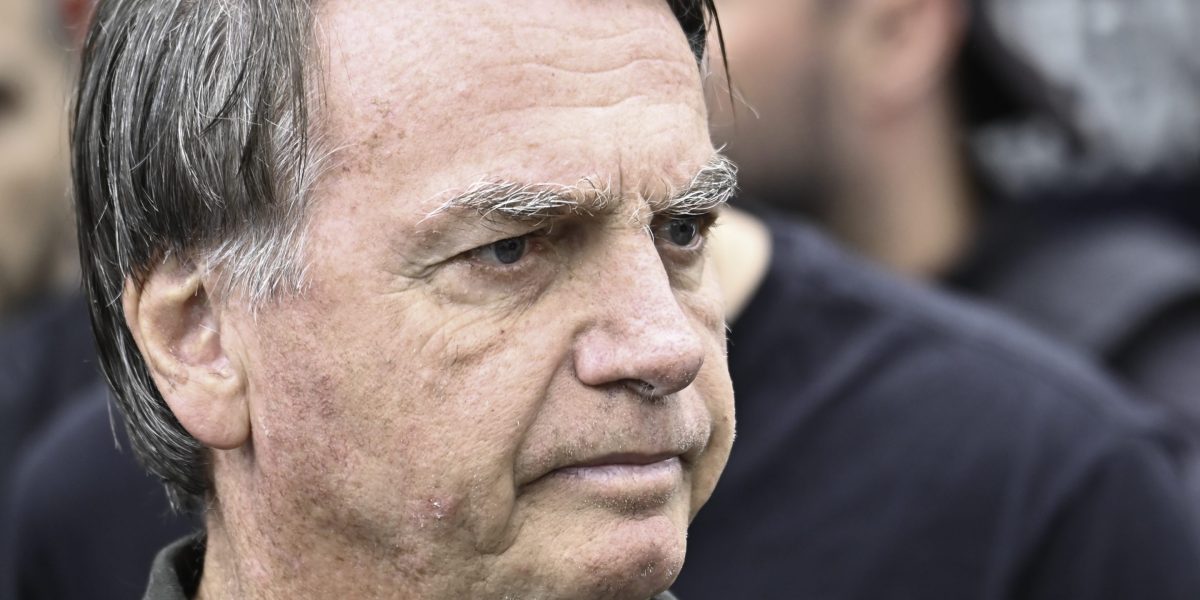
Brazil’s former president, Jair Bolsonaro, underwent a medical procedure on Saturday afternoon at a hospital in Brasília to treat a bout of persistent hiccups.

The intervention, described as successful by his medical team in a Saturday press conference, involved blocking the phrenic nerve, which runs from the neck to the diaphragm. Saturday’s procedure was on Bolsonaro’s right side. A second procedure is scheduled for Monday to block the same nerve on the opposite side.

On Thursday, Bolsonaro also underwent surgery to repair a hernia, a consequence of the abdominal stabbing he suffered during the 2018 presidential campaign. The procedure was carried out without complications, according to his medical team. He endorsed his son Flavio’s 2026 presidential bid in a statement ahead of his surgery Thursday.

Bolsonaro is currently in prison after being convicted by the Supreme Court of attempting to carry out a coup following his electoral defeat in 2022.

Join us at the Fortune Workplace Innovation Summit May 19–20, 2026, in Atlanta. The next era of workplace innovation is here—and the old playbook is being rewritten. At this exclusive, high-energy event, the world’s most innovative leaders will convene to explore how AI, humanity, and strategy converge to redefine, again, the future of work. Register now.


Source link

Continue Reading

Business

Peter Thiel and Larry Page are preparing to flee California in case the state passes a wealth tax

Published

on


Tech billionaires are making plans to bail on California ahead a possible ballot measure that would tax their assets to help pay for healthcare.

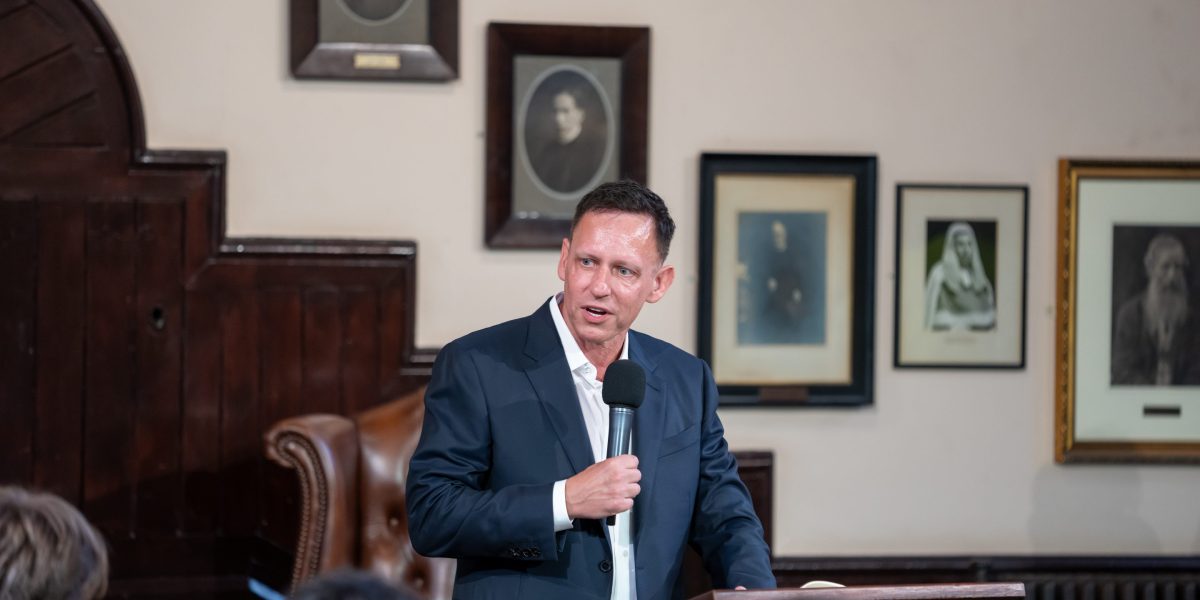
Sources told the New York Times that venture capitalist Peter Thiel has explored spending more time outside California and opening an office for his Los Angeles-based personal investment firm, Thiel Capital, in another state.

Meanwhile, Google cofounder Larry Page has discussed leaving the state by year’s end, sources told the Times, while three limited liability companies associated with him have filed documents to incorporate in Florida.

The Thiel Foundation and Google parent Alphabet didn’t immediately respond to requests for comment. Representatives for Thiel and Page did not respond to the Times.

Tech investor Chamath Palihapitiya has warned on the risk of a wealth tax in California, saying it will eventually bankrupt the state.

“The inevitable outcome will be an exodus of the state’s most talented entrepreneurs who can and will choose to build their companies in less regressive states,” he posted on X on Monday. “All that will be left behind is the middle class. The tax burden, then, will fall to the middle class because after the ‘richest’ choose to leave, the middle class are both (a) the only ones left and (b) are the largest source of state income to extract taxes from.”

On Friday, he posted in a reply to Sen. Ted Cruz, who urged him to move to Texas, that it’s “under serious consideration.”

Backers of the potential wealth tax must still gather enough signatures before it can qualify for the ballot in November 2026.

The proposal calls for California residents worth more than $1 billion to pay a one-time tax equivalent to 5% of their assets. According to the Bloomberg Billionaires Index, Page is worth $270 billion and Thiel is worth $27.2 billion.

The healthcare union pushing the measure, the Service Employees International Union-United Healthcare Workers West, estimated the wealth tax could raise $100 billion in revenue and offset federal cuts.

But California Gov. Gavin Newsom, a Democrat who is also considered a top presidential hopeful, has come out against it.

Companies have already been leaving California for places with lower taxes and less red tape. Elon Musk moved Tesla and SpaceX to Texas.

And while leading AI companies are based in California, new data centers and AI infrastructure are being built outside the state, where land, water and electricity are more available.

New Yorkers aired similar worries about an exodus after democratic socialist Zohran Mamdani was elected the city’s mayor last month. But so far, that has yet to materialized as luxury home sales in Manhattan surged in November.

Democratic Rep. Ro Khanna, who represents part of Silicon Valley, said tax dollars helped build the AI industry and dismissed the idea that tech entrepreneurs wouldn’t start companies in the state due to a 1% tax, adding that innovators are drawn to the area’s talent.

“We cannot have a nation with extreme concentration of wealth in a few places but where 70 percent of Americans believe the American dream is dead and healthcare, childcare, housing, education is unaffordable,” he said on X. “What will stifle American innovation, what will make us fall behind China, is if we see further political dysfunction and social unrest, if we fail to cultivate the talent in every American and in every city and town.”

Still, he acknowledged lack of accountability and fraud concerns over state tax dollars, saying Sacramento needs anti-corruption measures.

Blake Scholl, founder and CEO Boom Supersonic, pointed to the billions spent by California for a high-speed rail project that’s over-budget and behind schedule.

“This is morally wrong and ends poorly for everyone,” he said about the wealth tax in response to Khanna on X.


Source link

Continue Reading

Trending

Copyright © Miami Select.