
Fashion
Brunello Cucinelli says multi-brand retailers are special and inspiring, but must remain consistent across physical and digital channels

Published
December 17, 2025
In 2025, South Korean fashion takes another step up on the global stage. In a sector where technological innovations are redefining production processes, South Korea stands out for its ability to turn these developments into drivers of growth and global appeal, according to a Spherical Insights study published in November.
According to the South Korean Ministry of Trade, Industry and Energy (MOTIE), almost $27 million is set to be invested in 2025 to strengthen the national textile value chain.
This policy forms part of a broader strategy that provides more than $19 billion in support for firms operating in industrial textiles, the creation of an Industrial Textile Alliance, and a certification centre for technical products. The aim is to lift digital transformation across the sector from 35% to 60% and increase South Korea’s share of the global markets for industrial and sustainable textiles from 2-3% to 10% by 2030.
A dynamic domestic market
These ambitions are underpinned by an already robust industry. In 2024, South Korea imported $12.37 billion worth of clothing, including $5.08 billion in menswear. Exports totalled almost $2 billion, of which $1.7 billion comprised synthetic textiles and crocheted fabrics. This momentum reinforces a domestic market characterised by diverse demand, rapid trend adoption and strong cultural influence.

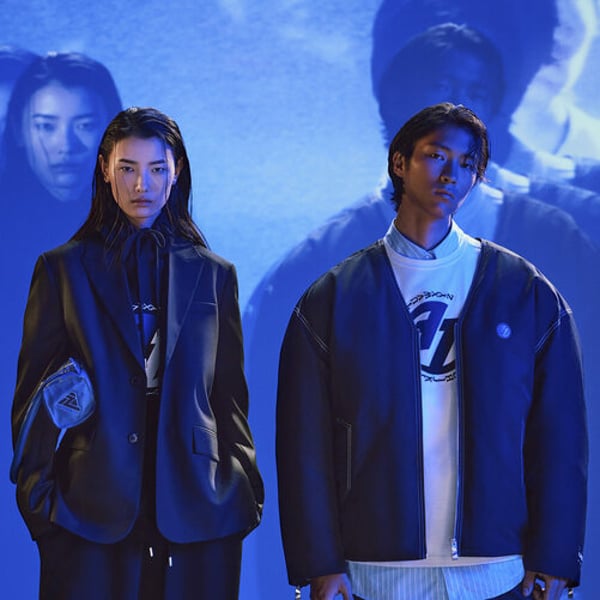
At the heart of this evolution lies the global rise of Korean menswear. Korean brands stand out for their attention to detail, mastery of cut and tailoring, and a strong appetite for exploring experimental materials, bold silhouettes and assertive colours. This stylistic approach, oscillating between minimalism and exuberance, meets a growing demand for pieces capable of expressing individual identity, according to the study.
Exports to be developed
The trends for 2025 confirm this direction: oversized cuts, unique patterns, bright colours, sustainable materials, a fusion of traditional and contemporary styles, as well as layering, athleisure and gender-fluid fashion, are at the forefront. From oversized kimono-polos to two-tone pink shirts, the Korean aesthetic offers a balance of comfort, experimentation and sophistication.

This creative ecosystem is supported by a myriad of ‘flagship’ brands. Names already recognised worldwide such as Gentle Monster, Andersson Bell, Kusikohc, Hyein Seo and We11done fuel the country’s international aura through their distinct worlds, blending art, streetwear, craftsmanship and conceptual design. In 2025, other labels are taking centre stage: Ader Error and its deconstructivist streetwear, Wooyoungmi and its modern tailoring, ThisIsNeverThat and its distinctly Korean take on streetwear, as well as 87MM, Recto, Amomento, PushButton and Minjukim, whose gender-fluid offerings are gaining visibility.
By combining massive public investment, a capacity for innovation, cultural richness and creative power, South Korea is putting its fashion industry on an upward trajectory in 2025. It can be seen not only as an exporter of aesthetics, but also as a key player in technical and sustainable textiles, with the ambition of playing a central role in contemporary global fashion.
This article is an automatic translation.
Copyright © 2025 FashionNetwork.com All rights reserved.


Brown University Person of Interest Captured in New Enhanced Video

Flourishing South Korean menswear aims to strengthen international standing

ACA — spendthrift — badge bounties — 404 — moon mining
-

 Politics8 years ago
Congress rolls out ‘Better Deal,’ new economic agenda
-
Entertainment8 years ago
New Season 8 Walking Dead trailer flashes forward in time
-
Politics8 years ago
Poll: Virginia governor’s race in dead heat
-
Entertainment8 years ago
The final 6 ‘Game of Thrones’ episodes might feel like a full season
-
Entertainment8 years ago
Meet Superman’s grandfather in new trailer for Krypton
-
Politics8 years ago
Illinois’ financial crisis could bring the state to a halt
-
Business8 years ago
6 Stunning new co-working spaces around the globe
-
Tech8 years ago
Hulu hires Google marketing veteran Kelly Campbell as CMO