Connect with us

Politics

Broward Schools COO turns in resignation letter amid uproar over District management

Published

on


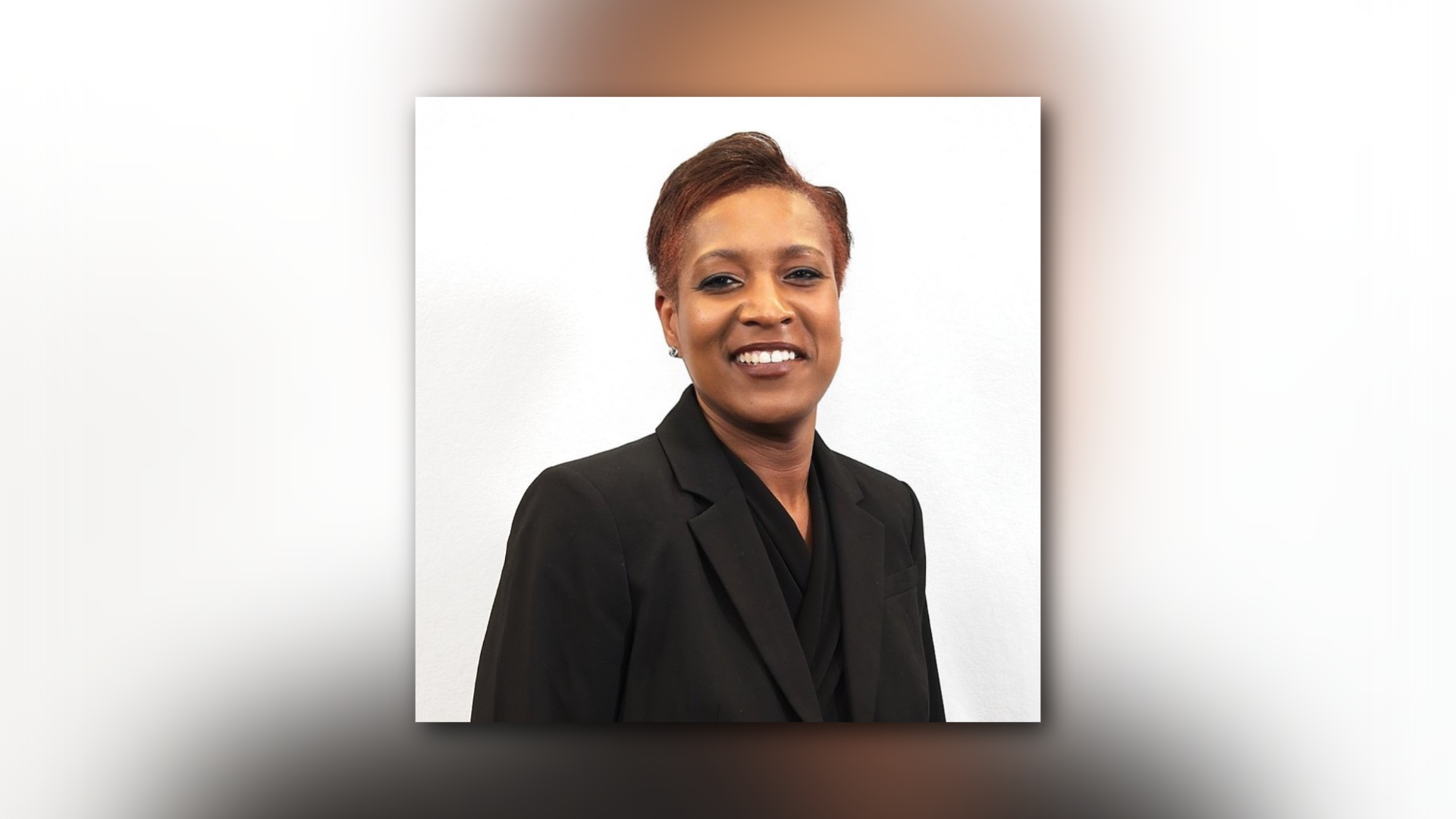
One day after a School Board member called for her to step down amid mounting District turmoil, Broward Public Schools Chief Operations Officer Wanda Paul has tendered her resignation.

She’s officially leaving June 5. But she plans for her last day in office to be on April 3 “to allow for an orderly transition and continuity of operations.”

“I believe it is time for me to transition to the next chapter of my life,” Paul said in a short letter to Superintendent Howard Hepburn that included a list of projects she said were completed under her leadership.

Since Paul came on as Broward COO in early 2024, she said, the District completed 199 projects, “strengthened processes and advanced key initiatives that support safe, efficient, and high-quality learning environments.”

“While there is no doubt that important work remains, I am confident the District is on a stronger path because of the dedication and professionalism of this team,” she said.

Events that led to Paul’s pending departure suggest otherwise. In recent weeks, audits and media reports have detailed breakdowns in how staff under Paul mishandled a major construction oversight procurement tied to the District’s $125 million capital program. An audit found procedures were bypassed, required evaluations were skipped and the School Board was not properly informed, leading to a rushed and legally questionable process now facing collapse.

The controversy followed an earlier firestorm over a since-terminated $2.6 million office lease that drew a lawsuit from the District’s former landlord.

Hepburn, who took office last year amid lingering fallout from past Broward Schools debacles, has acknowledged the District’s struggles but largely urged patience as reviews continue.

Enrollment has dropped by roughly 10,000 students in the past year, contributing to an $85 million budget shortfall. District leaders are also weighing 34 school closures, staff reductions and program cuts.

Citing those quandaries, the lease issue and the construction procurement fiasco — described by Board members Jeff Holness and Allen Zeman, respectively, as an “existential threat” and “five-alarm fire” — Board member Adam Cervera publicly demanded that Paul step down on Sunday.

“This is not about politics or blame,” said Cervera, whom Gov. Ron DeSantis appointed to the Board in April. “It is about restoring trust.”

Paul acquiesced Monday, promising to support “a smooth transition in any way that is helpful.”

A University of St. Thomas graduate with a master’s degree in business administration, Paul took over in May 2024 as Broward Public Schools COO, a post in which she earns an annual salary of about $221,500.

She came to the job following COO positions from May 2017 to January 2024 at the Palm Beach County School District and the Houston Independent School District Foundation. She resigned from the latter job after the Texas Education Agency took over the District due to what the Texas Tribune described as “years of poor academic outcomes at a single campus and allegations of leadership misconduct” that led to “extraordinary staff turnover and plummeting enrollment.”

According to the Houston Chronicle, which first reported on the takeover, Paul announced on LinkedIn that after her resignation from the Houston Independent School District Foundation became effective, she planned to work as an education consultant at Paul Consulting Group LLC.

Paul registered an identically named company with the Florida Division of Corporations in March 2021. It was administratively dissolved in September 2022. Whether she resurrects it remains to be seen.

Florida Politics contacted Paul for comment but received no response.


Source link

Continue Reading

Politics

In Apopka, 3 well-known candidates qualify for mayoral race

Published

on


Three candidates have qualified to run for Apopka Mayor, setting up a competitive 2026 race that carries bigger implications for the rest of Orange County.

The Apopka City Clerk’s Office confirmed that incumbent Mayor Bryan Nelson, Apopka City Commissioner Nicholas Nesta and Orange County Commissioner Christine Moore, who lives in Apopka, have all qualified for the race ahead of the deadline earlier this month.

The Apopka municipal elections are set for March 10.

Moore has said she is planning to resign from the Orange County Commission “win or lose,” which could set up Gov. Ron DeSantis to appoint her replacement. She previously said she plans to resign from the Orange County Commission effective April 27, before the new Apopka Mayor is sworn in April 28.

DeSantis has been at odds with the Orange County Commission and Orange County Mayor Jerry Demings, a Democrat who is running for Governor. DeSantis’ appointments have caused problems for Orange County Commissioners before.

DeSantis appointed Glen Gilzean to the Orange County Elections Supervisor job in 2024, which led to a lawsuit and back-and-forth allegations within months. Demings accused Gilzean of overspending after Gilzean tried to create a scholarship in his own honor at Valencia College and made other questionable spending choices.

Gilzean fired back, suing county officials when they refused to give him additional money and arguing that as an independent constitutional officer, he had control of his own budget.

Gilzean lives in Ocoee, which is in Moore’s district on the County Commission.

In addition to deciding its city races, Apopka voters will also choose whether to change their structure of city government. An amendment on the ballot would change the strong Mayor position currently in place and instead move the day-to-day operations under a City Manager who would follow the guidance of the City Council, the Orlando Sentinel reported.

“The mayor’s post, now a full-time job paying $133,350 annually, would become largely ceremonial and pay $17,400, the same as other city council members,” the recent Sentinel story said.

Incorporated in 1919, Apopka has a long history in Orange County.

“As the only incorporated town in the northwest part of the county, it is today, the center for schools, churches, businesses, banking and medical facilities serving the communities of Plymouth, Zellwood, Piedmont, and Lake Apopka,” the Apopka Historical Society’s website said.


Source link

Continue Reading

Politics

Sam Garrison expects AI ‘tension’ to drive 2026 Session

Published

on


House Speaker-designate Sam Garrison believes artificial intelligence will dominate next year’s Legislative Session, spurring unusual coalitions amid Gov. Ron DeSantis’ call for regulation.

“I think this year, outside of property tax, I think AI policy is going to be probably the biggest area of tension that we’re going to see because it doesn’t fall on traditional partisan lines. You can have very conservative Republicans and very liberal Democrats who might find common cause,” the Clay County Republican said on “First Coast Connect.”

DeSantis has proposed a “far-reaching artificial intelligence bill of rights” during next year’s Legislative Session. That’s an effort to counter what he says could be an “age of darkness and deceit” without action against deepfakes, subversion of parental controls, malign foreign influence, data security, insurance companies’ reliance on the technology, and regulating data centers.

Garrison agreed that some checks are needed on data centers while acknowledging the importance of private property rights.

“If you’re going to have a data center, it has got to be extraordinarily regulated to make sure that you’re not adversely impacting the quality of life for Floridians,” Garrison said.

“I’m not a big proponent of telling people what they can and can’t do on their land. So if … Amazon wants to come to town and say we want to build a data center, sure, go for it. But you’re going to have to be regulated like heck to make sure that nothing on that property is going to adversely affect the residents of a community — whether it’s from electrical use, whether it’s from water, things of that nature.”

Florida’s policy considerations are moving forward despite President Donald Trump pleading for national uniformity in AI guidance. DeSantis has said he’s not worried about a recent Trump executive order as it “doesn’t/can’t preempt state legislative action.”

A bill from Republican Sen. Tom Leek (SB 482) would ban governmental agencies from contracting with AI companies controlled, owned or governed by countries of concern.

Leek’s legislation would also ban children from communicating with chatbots without parental authorization. Chatbots would also have to disclose being artificial intelligence, and programmers would have to ensure that adult materials are not accessed by children.

The measure would confer other rights, including warning people when they are communicating with AI chatbots rather than human beings, and whether identifying data or biometric data is being exposed.

Additionally, the proposal would ban using AI to appropriate name, image and likeness of nonconsenting people for commercial purposes, as well as for fraud, identity theft and cyberbullying.

While Leek’s bill seems to satisfy the Governor’s requirements, a House companion has yet to manifest.


Source link

Continue Reading

Politics

Gov. DeSantis pushes back on effort to build AI data centers in Florida

Published

on


While President Donald Trump is pushing for rapid development of data centers to help the nation dominate AI technology, Gov. Ron DeSantis is taking a cautious approach as concerns rise about the effect the massive centers have on communities.

There are few who doubt the massive data centers have become a necessity along the lines of electricity and gasoline, but at what cost? The topic is sure to be a priority during Session as the industry eyes Florida as a prime spot for data centers and policymakers try to balance community concerns.

“A lot of people have a lot of concerns about some of the things that are on the horizon,” DeSantis said during a roundtable discussion on AI.

While Trump is trying to make it easier for technology companies to create new data centers, DeSantis said he is thinking about Floridians first — not the nation’s most powerful technology companies.

“We want to approach this in the state of Florida in a very intelligent way,” DeSantis said. “Ultimately, we’ve got to care about the well-being of our people, not worry about the profits of the Magnificent Seven. They’re doing just fine and they will do just fine.”

The centers store massive amounts of digital information, from banking records to social media data to the information AI taps to create its products. Industry supporters tout not just the need for the centers, but say they provide high-paying jobs and property taxes for communities that welcome them.

Loudoun County, Virginia, is a data center hub, with nearly 50 million square feet of centers built or in development, according to the Loudoun County Economic Development’s website.

The county receives about $1.2 billion in revenue from data centers, said Buddy Rizer, Executive Director of Loudoun Economic Development. He said the county’s property tax revenue split has gone from 19% commercial and 81% residential to about an even split.

Data centers make up 39% of the county’s revenue, but only take up 3% of the county’s land.

“We’ve been able to lower the tax rate 48 cents on the dollar,” Rizer said. “That’s a pretty awesome statistic.”

Rizer, University of Georgia engineering professor David Gattie and Jacksonville-based lobbyist Kevin Doyle were recently in Tallahassee to meet with policymakers to promote data centers.

They also talked with Florida Politics about what a typical center would look like in Florida. An average facility would be about 250,000 square feet — the equivalent to nearly 7 acres or five football fields. It would have a professional looking front office and the remainder of the facility would look like a giant warehouse. It would require 300 megawatts of electricity, or roughly the same amount needed to keep the entire city of Tallahassee powered.

The power supply would have to be at a constant level, 24 hours a day, instead of peaks and dips that come with normal business and residential demands. It would also employ 570 people once construction is completed, with most being paid more than $100,000, including electricians and cooling and heating technicians.

But watchdogs say the enormous amount of power and water needed to keep the facility cool could harm the environment and communities, especially if residents share a burden of the cost to generate more power. They also aren’t the most scenic of facilities, and while some people agree the nation needs them, they don’t want them in their backyards.

“These centers are incredibly unpopular right now, and the concerns are valid,” said Democratic Rep. Anna Eskamani. “It’s one of those rare areas of agreement when it comes to Gov. DeSantis.”

DeSantis is proposing a consumer “bill of rights” regarding AI and data centers, saying communities should be able to say no if they don’t want them. He also wants guarantees that data centers won’t drive up electricity costs for residents and that major data companies won’t be given tax incentives to build.

At his roundtable discussion, DeSantis downplayed the economic boom promised by data centers.

“The thing about the data centers, there’s not really a big economic impact” after their initial construction, DeSantis said. “Once it’s done, it employs like a half-dozen people, and these tech companies will likely bring in foreigners to that on some visa. They’re not going to hire from your local community. That’s just not what they do.”

He said regardless of political party, more and more people are opposing them.

“Is this something that’s going to benefit the community?” he said. “By and large, and this is across party lines, I think people are saying no dice on that.”


Source link

Continue Reading

Trending

Copyright © Miami Select.