Connect with us

Politics

Brian Nathan raises five figures in 48 hours to run for Jay Collins’ Senate seat

Published

on


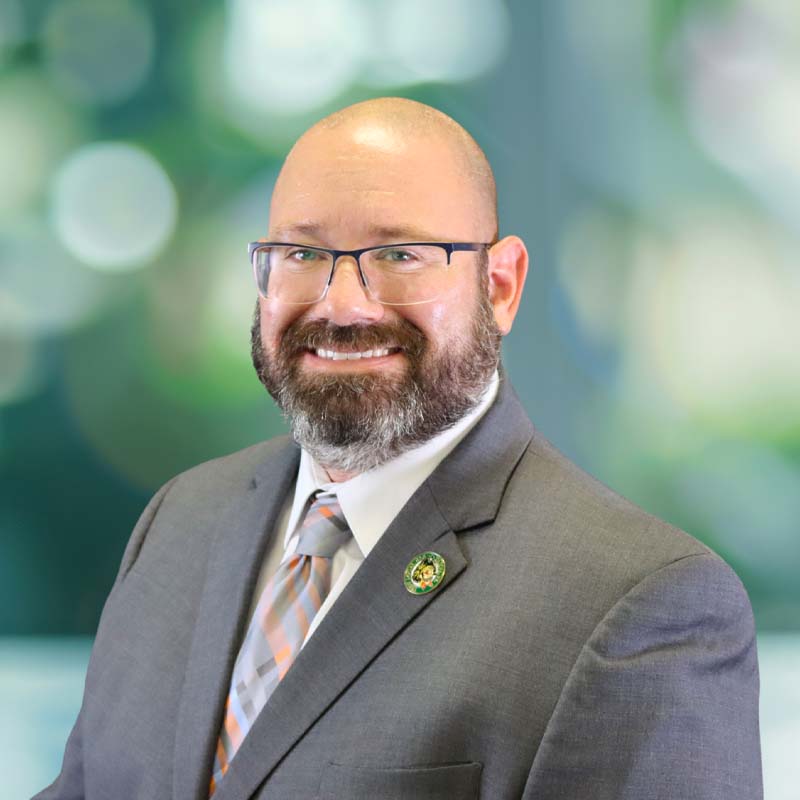
Brian Nathan, the first Democrat in the running for now-Lt. Gov. Jay Collins’ old Senate seat, is rapidly raising cash.

The Tampa Democrat says he has collected “five figures” — more than $10,000 — for his run in Senate District 14. He did so within 48 hours of announcing his candidacy days after Collins’ appointment to statewide office.

“We’re building a people-powered campaign,” Nathan said. “Every donation, every social share, and every volunteer signup sends a strong message: working families are ready for a voice in Tallahassee that fights for them.”

While the campaign did not release details on the donations, and won’t need to do so until after September, an announcement from the campaign said the funds come primarily from small-dollar donations and “shares from union members, veterans and working families.”

Nathan currently serves as Vice President of the International Brotherhood of Electrical Workers local 915, a powerful force in Democratic politics. Nick Biscardi, Nathan’s Campaign Manager, said the existing leadership roles the candidate already holds in the community fueled the successful drive for donations out of the gate.

“The response to Brian’s announcement has been nothing short of incredible,” Biscardi said. “In just the first 48 hours, we’ve seen an outpouring of energy, momentum, and support that shows people are ready for change. This launch has set the tone for the campaign ahead, and we couldn’t be more excited to keep building on it.”

A Special Election has not yet been called to fill Collins’ seat but is expected to be called soon. The Legislative Session begins in January.

Nathan has already filed to run for the seat in 2026, when it was scheduled to be up for election.

So far, the only other candidate in the race is Republican Amaro Lionheart, who had filed to challenge Collins in a Primary nearly a year ago. Lionheart hasn’t reported any outside fundraising, but before the end of June reported more than $50,000 in candidate loans.


Post Views: 0


Source link

Continue Reading

Politics

Kim Daniels questions Duval County proposal to close more schools

Published

on


Jacksonville Democratic Rep. Kim Daniels wants answers about why the Duval County School Board is exploring closing more schools.

In a letter to Board Chair Charlotte Joyce, Daniels questions proposed closures of Long Branch Elementary School and Anchor Academy in Mayport.

The closures are not imminent, with Long Branch Elementary set to consolidate into R.L. Brown Academy in 2027–28 and Anchor Elementary to consolidate into Mayport Elementary in 2028–29 Board members are using that time to seek “additional community input,” which Daniels provides.

“Under the district’s consolidation plan, students from Long Branch would be assigned to R.L. Brown Elementary School, a route that requires crossing a major roadway. This presents significant concerns regarding student safety and transportation access, particularly for younger children,” the legislator wrote.

“Families deserve to know how this plan was evaluated and whether the district fully considered the safety implications of requiring children to travel across such a roadway to attend school.

Daniels also objects to the Long Branch closure, saying “a school serving military connected families warrants a clear and thorough explanation given the broader impact such a decision would have on those who serve our country.”

She also questions the District’s reserves and spending in light of claims of a $140 million deficit, saying they are “materially higher than what would typically indicate a budget crisis,” and took issue with $13 million in raises for teachers and administrators.

“These actions have left many families questioning the district’s true financial condition and the justification for decisions that directly impact their communities,” Daniels wrote.

“How could the district approve more than $13 million in salary increases during the same months it claimed that school closures were financially necessary due to budget strain?”

Daniels is seeking summaries for Fiscal Years 2024-25 and 2025-26, studies supporting school consolidation, details on the $140 million shortfall the district trumpeted, and “additional consolidations, closures, or property disposition plans that have been discussed, evaluated, or projected by the district beyond those currently identified.”


Source link

Continue Reading

Politics

Democrats unveil ‘Affordability Agenda’ to lower housing costs, reduce government waste

Published

on


Senate and House Democrats unveiled what they described as the first three bills of a growing ‘Affordability Agenda’ they promise will lower housing costs for Floridians while cracking down on wasteful government spending.

More are on the way, according to Senate Democratic Leader Lori Berman, who introduced the legislation alongside House Democratic Leader Fentrice Driskell and nine others Tuesday.

“We constantly hear from people back home that affordability is the No. 1 issue facing Floridians right now. Costs are skyrocketing, and it’s getting harder to make ends meet,” Driskell said.

“That’s why Democrats are focused on real solutions that will improve the lives of Florida’s working families and our seniors. The ideas in our ‘Affordability Agenda’ would lower the cost of living, put money back in the pockets of working families and seniors who need it most, and give young people a real chance at some day owning a home.

The first proposal (SB 366, HB 319), which Florida Politics first detailed in November, would lay the foundation for a potential multistate insurance compact the Sunshine State could enter with other states.

Under the proposal, Florida and other participant states could share catastrophe risk, increase bargaining power with global reinsurers and, ultimately, stabilize their respective insurance markets, effectively spreading a collective safety net to spread the rising cost of disaster losses.

The legislation would compel Florida’s Office of Insurance Regulation to develop the compact with at least 14 other states by Dec. 31, 2027.

Boca Raton Rep. Kelly Skidmore, who is carrying the legislation with Palm Beach Sen. Mack Bernard, said policymakers in several states — including California, North Carolina and South Carolina — have expressed interest in joining.

The benefits could be substantial, Skidmore said, adding that Floridians already pay some of the highest premiums in the nation, and costs are expected to keep rising.

“The proposed legislation recognizes that no single state can bear these growing risks alone,” she said. “Families are struggling. Some can’t afford the cost of homeownership anymore. If we don’t tackle the risk that is driving this crisis, we will threaten that homeownership, economic growth and the stability of our entire insurance system.”

Another pair of twin bills (SB 756, HB 675) would augment the updated Live Local Act, which lawmakers first enacted in 2023 with unanimous support to ramp up affordable housing development and conversion.

Driskell and Tampa Sen. Tracie Davis, the Senate Democratic Leader-designate, are sponsoring the new measures, dubbed the “H.O.M.E. Act.” Among other things, it would require all incentives under Live Local to be used to build affordable housing, lower the price point for what can be considered affordable in a given area and eliminate documentary stamp taxes for first-time homebuyers who use the property as their primary residence.

On that last feature, there may be an opportunity for cross-aisle collaboration; St. Petersburg Republican Sen. Nick DiCeglie has filed a bill (SB 752) that would also enable first-time homesteaded homebuyers to skip the stamp tax.

“We’re hearing it everywhere — young people with new families, folks starting out in their careers — they’re getting squeezed out of the housing market,” Davis said, noting that just 1 in 5 people who buy a house, townhome or condo in Florida are first-time homeowners, according to Florida Realtors.

The national rate is 32%.

“For many, the biggest obstacle isn’t the monthly mortgage; it’s the money they have to pay up front, and the documentary stamp taxes can add nearly $4,300 at closing. For someone just starting out, that dollar amount is excessive and feels like it’s impossible,” Davis said. “The H.O.M.E. Act gives these buyers a real chance.”

Last and newest on the “Affordability Agenda” is SB 780 by Berman, which would require a sweeping review of state spending to identify fraud, waste, abuse of authority, mismanagement or misconduct.

The measure, effective July 1, 2026, would direct the Office of Program Policy Analysis and Government Accountability, the Auditor General and the Government Efficiency Task Force to jointly examine a wide range of state programs — from Hope Florida contracts, litigation costs, education materials and college expenditures like high per-student spending at New College of Florida to migration-related spending, like the Governor’s relocation flights and Alligator Alcatraz — and issue a findings report.

If the review uncovers misuse, the Attorney General must pursue recovery, and any recouped or “at-risk” funds must be transferred to the General Revenue Fund to create a new “Working Floridians” tax rebate program for households that receive the federal earned income tax credit.

“The biggest stories in Florida this year have all been about wasteful spending — a quarter of a billion dollars in no-bid contracts to Alligator Alcatraz, exorbitant per-student costs at New College of Florida, shady land deals that enrich political donors and, of course, the ongoing investigation into Hope Florida,” Berman said.

“Floridians shouldn’t be paying taxes to fund political stunts, sweetheart deals and high-paying jobs for politically connected friends.”

Skidmore called Republicans’ efforts to eliminate local property taxes or severely hamper the ability of localities to levy them a “fool’s gold narrative,” since all actual proposals so far exempt the elimination of taxes for police and schools.

“What (they’re) offering people is not the savings that they think they’re getting when you tell them you’re going to eliminate property taxes,” she said. “What we’re talking about is actual savings — money in your pocket, a reduction of your insurance, the ability to buy a house.”

Others participating in the presser included Sen. Barbara Sharief, House Democratic Leader-designate Christine Hunschofsky, and Reps. Rita Harris, Leonard Spencer, Allison Tant, Marie Woodson and RaShon Young.


Source link

Continue Reading

Politics

SBA urges Florida businesses and nonprofits hit by April drought to apply for loan assistance

Published

on


Small businesses and private nonprofit organizations impacted by Florida’s seasonal drought in April are being urged to apply for low-interest federal disaster loans to help deal with losses.

The U.S. Small Business Administration (SBA) has set Jan. 5 as the deadline for the drought relief applications. The drought was so severe in April that there was a federal disaster declaration in more than a dozen Florida counties, including, Alachua, Brevard, Flagler, Hernando, Lake, Levy, Marion, Orange, Osceola, Pasco, Polk, Putnam, Seminole, Sumter and Volusia.

The Florida Climate Center at Florida State University found that 17% of the state was in “extreme drought” in April. Another 30% of the state was in “severe drought” at the time.

“Many locations in the Peninsula saw one of their top 5 driest Aprils on record, including Gainesville (3rd-driest), Daytona Beach (2nd-driest), Titusville (2nd-driest), Melbourne (2nd-driest), Venice (2nd-driest), Vero Beach (4th-driest), Naples (3rd-driest), and West Palm Beach (4th-driest),” concluded the Climate Center report on April’s drought conditions.

The SBA Economic Injury Disaster Loan (EIDL) program is being made available to businesses, nonprofits, small agricultural cooperatives and nurseries that can show direct financial loss caused by that event. The SBA points out that the agency is unable to provide disaster loans to agricultural producers, farmers and ranchers, with the exception of aquaculture businesses.

“Through a declaration by the U.S. Secretary of Agriculture, SBA provides critical financial assistance to help communities recover,” said Chris Stallings, Associate Administrator of the Office of Disaster Recovery and Resilience at the SBA. “We’re pleased to offer loans to small businesses and private nonprofits impacted by these disasters.”

The EIDLs are available for working capital needs caused by the disaster. Even if there was no physical damage, some of the loans are still accessible. The loans are designed to help small-business owners pay debts, payroll, accounts payable and other debt accrued during the disaster.


Source link

Continue Reading

Trending

Copyright © Miami Select.