
Politics
Brian Caper, a leader on St. Pete’s canceled Rays stadium deal, resigns amid verified sexual harassment allegations


St. Petersburg Managing Director of Economic and Workforce Development Brian Caper, one of the city leaders behind work to redevelop the Historic Gas Plant District and on the canceled deal with the Tampa Bay Rays, has resigned his position after findings that he subjected a subordinate in his department to “sexual harassment and other inappropriate behavior.”
Caper’s resignation, dated Oct. 22 and effective immediately, did not reference the sexual harassment findings. Instead, Caper wrote that it is “the right time” for him “to pursue new career opportunities outside the public sector” in his home state of Illinois.
But documents obtained by Florida Politics outline a troubling history of allegations against Caper by Economic Development Coordinator Veronika Slep, who officially filed a complaint against Caper on Aug. 29.
A City Investigation Panel reviewed text messages Slep provided showing evidence of inappropriate comments and content and interviewed witnesses, including Slep and Caper, finding that claims of sexual harassment were substantiated as defined in city policy.
Slep, who began working under Caper in the Economic and Workforce Development department in February of 2023, told investigators she began feeling uncomfortable in October of 2023 when Caper “began sharing sexually explicit images” with her, according to the investigation’s final report, issued on Oct. 20, 2025.
The investigation outlines an evolving relationship that began as friendly, but soon turned inappropriate, with eventual declarations of love from Caper to Slep and an invitation to attend an out-of-state conference for which Slep declined because she was uncomfortable.
“You have been and will always be so much more than a work friend,” one text message from June 3, 2024, reads. Caper was responding to a text from Slep explaining that she had “only recently learned how close you consider me when you told me you had to have a chat with Sarah (Caper’s wife).”
Caper, at that time, added that he did “have feelings for you,” but said they were “not in a romantic/crush way, but in a very deep emotional way that I don’t have with most people.”
On July 2, 2024, Caper told Slep that “his wife asked him if he was in love with Slep, but he could not answer the question,” according to the investigation report.
On Aug. 19, 2024, the report shows that Caper texted “believe it or not I do love you,” to Slep.

The report also outlines how, when Slep first began working with Caper, he “shared his cell phone tracker” with her “so she could see when he was out of the office.” She told the investigation panel that she “was uncomfortable accepting, but relented at Caper’s insistence.”
She then said she “felt obligated” to also share her cellphone information “after further pressure from Caper. Then, he “occasionally referenced her after-hours activities,” which the report said made Slep “very uncomfortable.”
In December 2024, Caper responded to Slep’s attempt to address ongoing workplace tension “by apologizing for not reciprocating Caper’s feelings,” according to the report. Caper responded by text that “I love you but I’m not in love with you,” saying “there’s no way it could ever work” because he is married and she was dating someone else. But he added that “I’m very much attracted to you,” a statement the report says “disturbed” Slep.
By March 5, 2025, Slep’s discomfort escalated to fear, as evidenced by a text message from Caper stating that “he saw her shaking with fear the last two times they interacted.”
The city’s human resources department instructed Caper to cease personal contact with Slep. But on April 1, Caper sent her an Instagram message at 10:33 p.m. “asking her when the standoff was going to end,” according to the report. In all, the report says Caper tried to contact Slep nine times on April 15 from 10:17 p.m. until 11:34 p.m.
The report further highlights text message evidence showing Caper making “derogatory, unprofessional, and inappropriate comments” about his department and its employees.
In one, Caper wrote that “whenever I cheat on Sarah it’s with the bull dyke kind of woman,” in reference to one of his female staff members.
In reference to another, Caper wrote about “her f***ing bulls**t about how her heart isn’t into and she doesn’t know what’s next when she already accepted a position with Ray Jay. F**k you. She’s a lying c**t.”
Another text referenced Caper’s boss, Community and Neighborhood Affairs Administrator James Corbett, saying that “If I was gay, I’d be most interested in James.”
The texts included profanity, complaints about city workers’ public speaking skills, educational attainment, and other various unprofessional complaints.
Caper earned a salary of $125,000 per year, according to city documents.
Florida Politics has requested comment from Mayor Ken Welch regarding the allegations and evidence presented against Caper and his subsequent resignation. This post will be updated if a statement is provided.
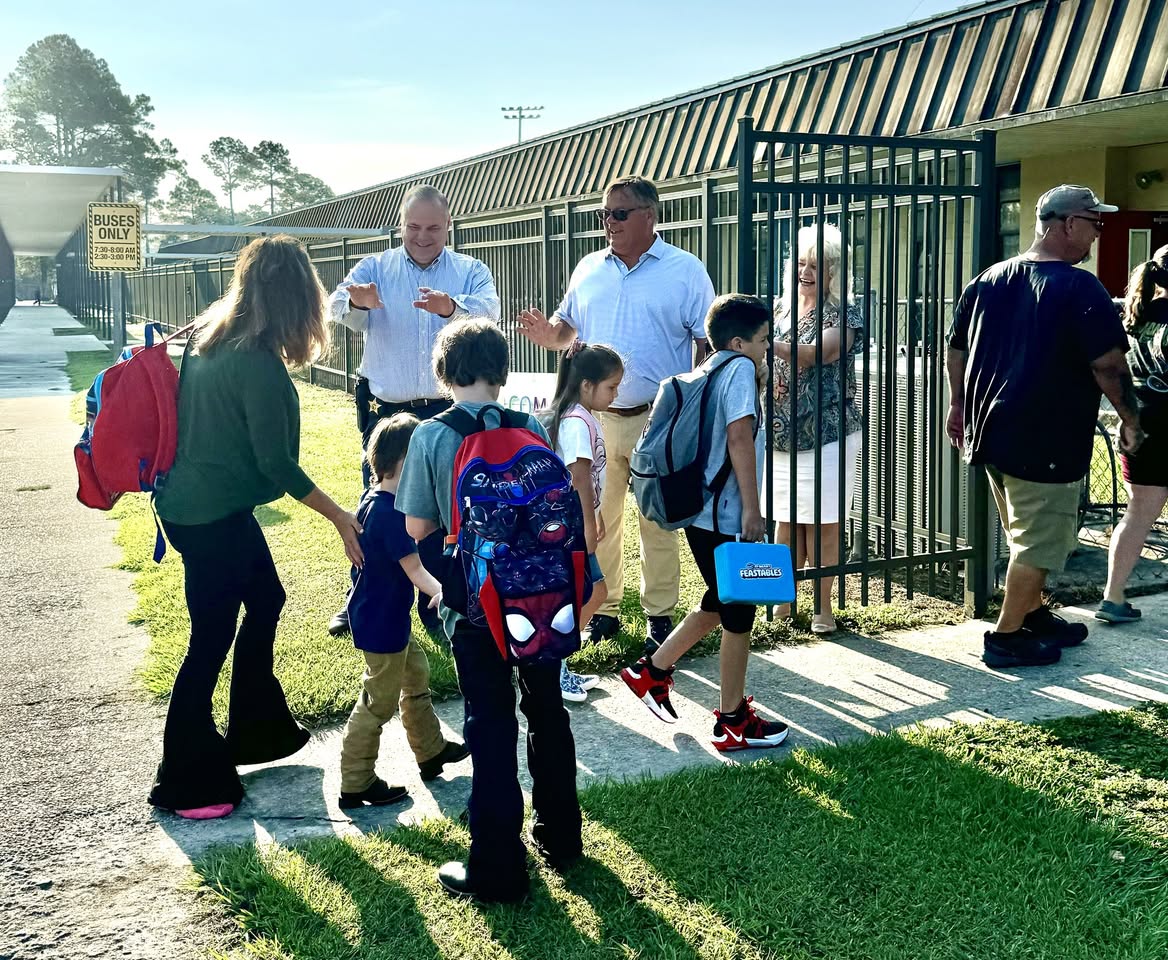

Tampa Bay Lightning fans, rejoice. Your home team will stay in Tampa until at least 2043 under a deal Hillsborough County Commissioners approved to extend by six years the team’s lease to play at Benchmark International Arena.
Under the agreement, the county is committing $250 million to pay for arena renovations, an amount that could increase and that will come from a portion of the county’s tourist development tax. The deal does not require any general fund revenue, Community Investment Tax proceeds or property tax revenue.
In return, the agreement calls for Lightning ownership to spend at least $75 million on renovations.
The agreement protects the county by requiring millions in repayment penalties should the team breach its contract by leaving early.
The deal increases the amount of county funds committed under the original agreement in 2008 for arena renovations from $108.5 million to $358.5 million, and the amount the Lightning spend on such renovations from $38.4 million to $113.4 million, which is where the $250 million and $75 million spend split comes from.
The Lightning, under the agreement, can spend its portion incrementally, but the expenditures must be made before the county’s portion of the split is required.
To date, the county has spent about $91 million under the original agreement.
Prior to this deal, the Lightning had been obligated to play hockey in Tampa at Benchmark International Arena (formerly Amalie Arena) until June 30, 2037. Now, they must remain in the arena until at least June 30, 2043.
The Tampa Sports Authority, which serves as the landlord for the arena, previously approved the deal on a 7-3 vote.
Commissioners made clear Wednesday that the new deal with the Lightning could set a tough precedent as the Tampa Bay Rays seek a new stadium at Hillsborough College’s Dale Mabry campus and the Tampa Bay Buccaneers work toward major upgrades to Raymond James Stadium directly across the street.

One Commissioner, Republican Chris Boles, said that would be “like comparing apples to rocks.”
Despite a failed amendment to the deal from Commissioner Joshua Wostal that would have increased the Lightning’s share of the cost split, which was seconded by Donna Cameron Cepeda, the new agreement cleared with unanimous support.
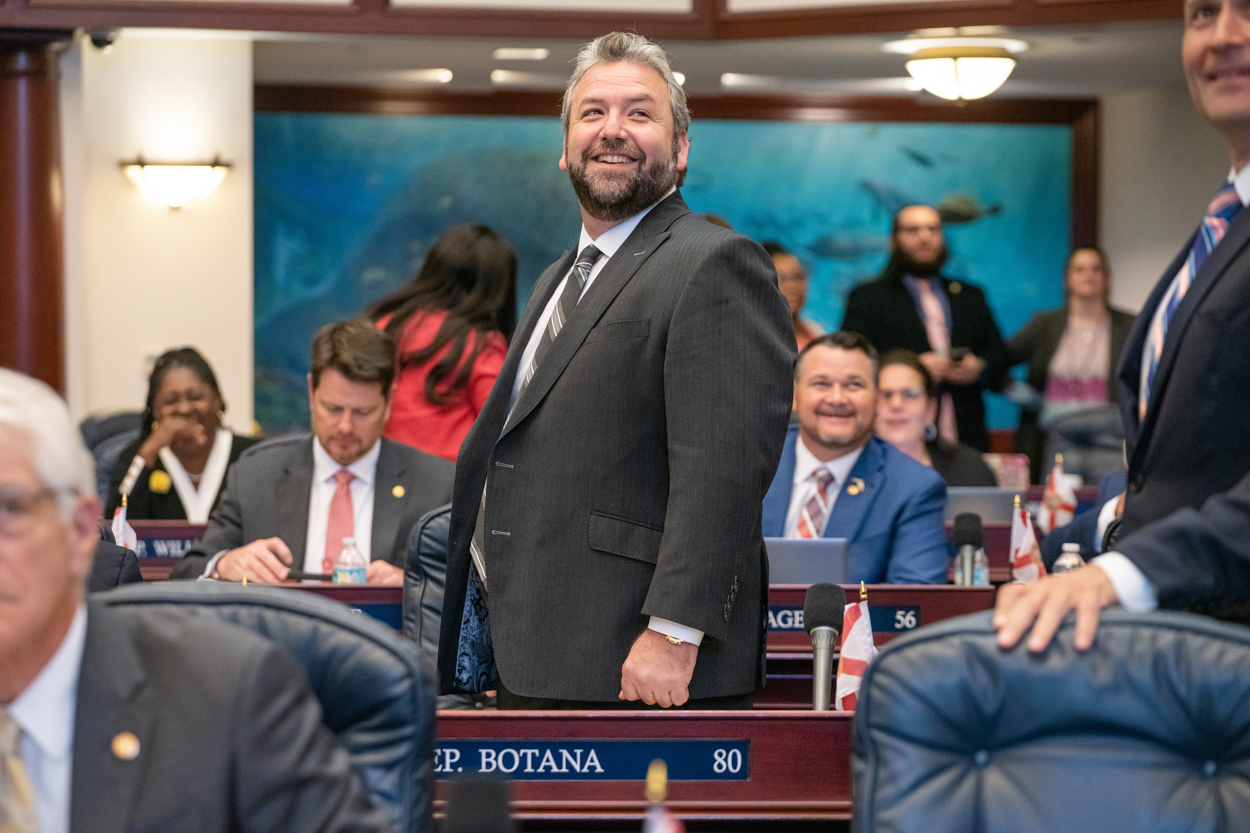
A proposal to turn the Naples Airport Authority into a board elected by voters, rather than appointed by the City Council, has advanced through its second House committee stop.
HB 4005, sponsored by Naples Republican Rep. Adam Botana, would transition the Airport Authority board away from appointments made by the Naples City Council to elections by Collier County voters beginning in the November election. If approved, the bill would cut short the terms of current board members unless they are elected.
The House Government Operations Subcommittee reported HB 4005 favorably after adopting an amendment that broadens eligibility requirements for Airport Authority board candidates.
The bill’s advance comes amid a clash between Naples city officials and members of the Collier County legislative delegation over the Naples Airport. Disagreements over board appointments, oversight authority and the airport’s future have strained relations between City Hall and the delegation — even leading into a heated email exchange between Naples Vice Mayor Terry Hutchison and Rep. Yvette Benarroch.
Botana told committee members Wednesday that the measure shifts decision-making power away from the City Council toward voters countywide, arguing the airport serves a regional function beyond city limits.
“We were having some discomfort with the City Council trying to move the airport,” Botana said. “This has been a fight a long time in the city of Naples. So we’re saying OK, instead of just having it appointed by the City Council we’re going to make these folks elected and give the power back to the people.”
The committee also adopted an amendment that revises candidate qualification requirements. The bill originally required candidates to have at least five years of experience in the aerospace industry, but the amendment expands that standard to allow candidates with backgrounds in financial management or small-business operations to qualify.
Opponents warned the revised bill still raises concerns. Jason Unger, speaking in opposition, said countywide elections could dilute the influence of Naples residents despite the airport being located within city boundaries.
“All of the seats will be controlled by votes coming from outside of the city of Naples,” Unger said.
The measure advanced without debate and cleared the subcommittee on a unanimous vote. HB 4005 now heads to its final of three House committee stops with the State Affairs Committee.



Trump finds a ‘solution’ to Greenland crisis, backs off on 10% tariff threats

Nicki Minaj Admits She Came to U.S. as ‘Illegal Immigrant’ in Facebook Post

Education consortium leaders will bring concerns of Florida’s rural schools to Tallahassee
-

 Politics9 years ago
Congress rolls out ‘Better Deal,’ new economic agenda
-
Entertainment9 years ago
New Season 8 Walking Dead trailer flashes forward in time
-
Politics9 years ago
Poll: Virginia governor’s race in dead heat
-
Politics9 years ago
Illinois’ financial crisis could bring the state to a halt
-
Entertainment9 years ago
The final 6 ‘Game of Thrones’ episodes might feel like a full season
-
Entertainment9 years ago
Meet Superman’s grandfather in new trailer for Krypton
-
Business9 years ago
6 Stunning new co-working spaces around the globe
-
Tech9 years ago
Hulu hires Google marketing veteran Kelly Campbell as CMO