Consumer companies can cope with the baby bust. They just have to pivot to baby boomers. Birth rates falling to historic lows across the developed world, combined with people living longer, are reshaping the global market for the things we eat, wear and put on our skin.
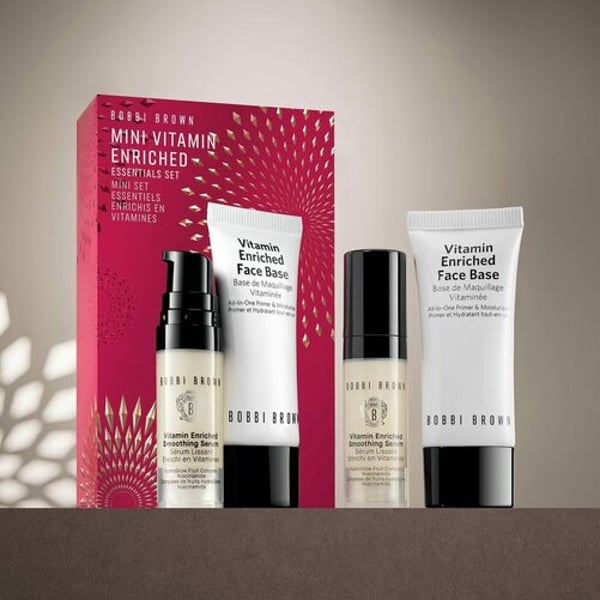
An ageing population will have an impact on fashion, beauty, and wellness trends – BobbiBrownIndia- Facebook
Yet despite the fact that older people have more purchasing power, the consumer goods world is still far more obsessed with catering to the young. It’s time for manufacturers to pay more attention to the silver economy — where there’s a market for everything from food and personal care items to toys and fashion.
Japan has long been the epicentre for catering to an aging population, from having dedicated malls for seniors to employing robotic carers. But populations are also aging in Europe and the US.
Although children still outnumber older adults in the US, the gap is narrowing, according to the Vintage 2024 Population Estimates, released in June by the US Census Bureau.
Despite older adults spending more on travel and meals out, elderly fashion is often neglected. There is a market for clothing that is stylish yet suitable for silver fashionistas. And given that many older people have accumulated assets over their lifetimes, it’s a potentially lucrative market at a time when demand elsewhere is fragile.
Higher necklines, more pockets and looser sleeves could easily be incorporated into designs. We get shorter as we age, so more length options in dresses and men’s pants would be a relatively simple easy win, too.
For the very old, dexterity becomes more of an issue, making elasticated waists and front-fastenings necessary. Learnings from children’s wear could be valuable here. British retailer Marks & Spencer Group Plc has created a range for children with disabilities or limited mobility, including hidden openings for feeding tubes, softer fabrics and replacing buttons on shirts with Velcro fastenings. It’s not hard to see such features applied to items for the elderly. If technology — such as fabrics that help cool the body — could be incorporated, garments would be even more effective.
But perhaps the biggest opportunity for consumer companies is what trend forecaster WGSN has described as “living for longevity,” in other words preparing for our many later years throughout our lives.
The wellness and beauty industries are most obvious beneficiaries. Collagen production is already a focus for skincare brands and vitamin makers. Nestle is also working on addressing cell decline, which begins in a person’s 40s and starts to accelerate in their 60s. Creatine, which supplies energy to muscles and can also support brain health, is also coming into the longevity picture.
The consumer sector is fascinated with Gen Z and Gen Alpha. Thinking about their later years at the same time as selling them the latest frippery won’t exactly make demographic change child’s play, but it should make companies more resilient.
Birks announced on Friday a 16.2% uptick in half-year sales to $93.1 million, on the back of the Canadian jeweller’s acquisition of European Boutique, and a strong retail performance.
Birks
The Montreal-based company also logged an increase in third-party branded timepieces across multiple brands for the 26 weeks ending September 27, in addition to gains in sales of Birks branded jewelry and third-party branded jewelry.
Meanwhile, comparable store sales rose 6.3%, attributable to strong sales in all product categories, particularly in third-party branded timepieces, but also in Birks branded jewelry and third-party branded jewelry, the company added.
In light of the strong sales performance, Birks narrowed its earnings loss during the six months to an operating loss of $0.2 million, compared to a reported operating loss of $0.3 million in the prior-year period.
“Our net sales, gross profit and comparable store sales for the first half of Fiscal 2026 are higher than the corresponding period in Fiscal 2025 due in part to the acquisition of the European business but also due to our strong retail performance, which speaks to the strength of our product offerings, both in terms of our Birks branded products and our third-party branded watches and jewelry,” said Niccolò Rossi di Montelera, executive chairman of the board and interim CEO.
“I would like to thank our teams for their dedication and hard work. The growth achieved in the first half of Fiscal 2026 is a testament of our commitment to our customers and I am grateful for the unwavering efforts of all our employees which contributed to these results and the successful integration of the European stores.”
In July, Birks acquired the luxury watch and jewellery business of European Boutique from its founders, the Sutkiewicz family, for a purchase price of $9 million.
NYC-based footwear brand Koio is relaunching The Primo, the high-top sneaker that debuted the brand in 2015, in a limited-edition collaboration with leatherworker and YouTube creator Rose Anvil for its tenth anniversary.
Koio relaunches the Primo with Rose Anvil. – Koio
The updated Primo maintains Koio’s original Italian build standards, with internal upgrades including a full leather Strobel board, leather toe cap and counter, and a gum outsole. The upper is crafted from vegetable-tanned, untreated Vachetta calf leather sourced from Italian tannery Conceria Annarita, allowing the sneaker to naturally darken and develop a unique patina with wear.
“Reintroducing the Primo for our ten-year anniversary is incredibly meaningful,” said Johannes Quodt, co-founder of Koio. “It was the shoe that launched the brand, so bringing it back with Rose Anvil’s technical rigor felt like the right way to honor its legacy. The Vachetta leather will age beautifully, making this one of the most personal and character-rich versions we’ve ever created.”
The Primo first debuted in February 2015 at Koio’s Bowery pop-up, created by the founders as their ideal high-top sneaker. The silhouette remained a core style for five years before the brand shifted focus as its range expanded. Koio continued to receive requests from collectors and longtime customers to bring back the original design, prompting the reissue as part of the brand’s tenth-anniversary celebrations.
“The Primo was already a well-built sneaker, but replacing every internal synthetic component with leather significantly elevates the craftsmanship,” said Weston Kay, Rose Anvil. “Using untreated Vachetta leather means the shoe doesn’t just look good out of the box but it continues to improve over time.”
Koio’s work with Rose Anvil follows the success of their first collaboration—the Koio x Rose Anvil Capri Triple White—which sold out in less than 24 hours.
The limited-edition Primo is priced at $325 and is now available exclusively online.
Victoria’s Secret & Co. on Friday reported better-than-expected sales in the third quarter, prompting the U.S. lingerie giant to raise its full year outlook.
Victoria’s Secret raises full-year outlook on strong Q3. – Victoria’s Secret
The Ohio-based company said sales for the three months ending November 1 totalled $1.472 billion, up 9% from the third quarter of 2024 and above its previously communicated guidance range of $1.390 billion to $1.420 billion. Meanwhile, total comparable sales for the third quarter of 2025 increased 8%.
Victoria’s Secret recouped its earnings, reporting a net loss of $37 million, or $0.46 per diluted share, compared to net loss of $56 million, or $0.71 per diluted share, for the third quarter of 2024.
“With two iconic brands, Victoria’s Secret and Pink, a curated product assortment, high-emotion marketing and a relentless customer focus, we are reinforcing our leadership in global intimates and beauty,” said Victoria’s Secret & Co. CEO, Hillary Super.
“As we continue to advance our Path to Potential strategy, we are accelerating global growth, elevating brand distinctiveness, and unlocking greater value across our ecosystem to drive long-term profitable growth.”
Looking ahead, the company is now forecasting full-year net sales in the range of $6.450 billion to $6.480 billion, compared to prior guidance of $6.330 billion to $6.410 billion for the full year 2025. Adjusted net income per diluted share is estimated to be in the range of $2.40 to $2.65, compared to prior guidance of $1.80 to $2.20.
For the fourth quarter, the company is forecasting net sales to be in the range of $2.170 billion to $2.200 billion compared to last year’s fourth quarter net sales of $2.106 billion.