Connect with us

Business

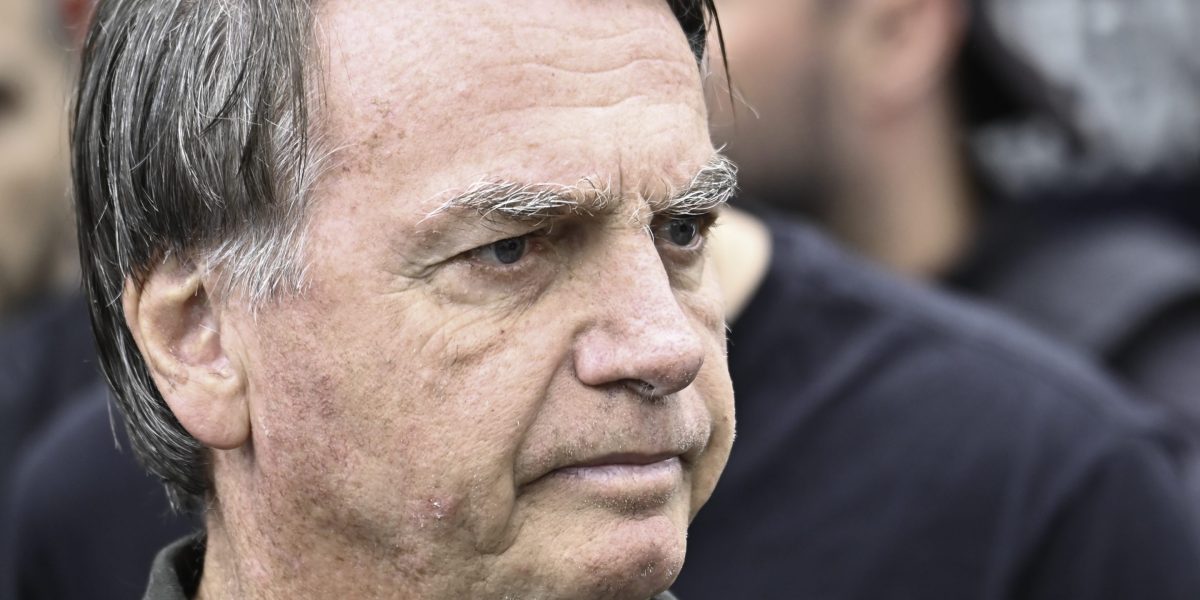
Bolsonaro undergoes medical procedure to treat severe hiccups

Published

on


Brazil’s former president, Jair Bolsonaro, underwent a medical procedure on Saturday afternoon at a hospital in Brasília to treat a bout of persistent hiccups.

The intervention, described as successful by his medical team in a Saturday press conference, involved blocking the phrenic nerve, which runs from the neck to the diaphragm. Saturday’s procedure was on Bolsonaro’s right side. A second procedure is scheduled for Monday to block the same nerve on the opposite side.

On Thursday, Bolsonaro also underwent surgery to repair a hernia, a consequence of the abdominal stabbing he suffered during the 2018 presidential campaign. The procedure was carried out without complications, according to his medical team. He endorsed his son Flavio’s 2026 presidential bid in a statement ahead of his surgery Thursday.

Bolsonaro is currently in prison after being convicted by the Supreme Court of attempting to carry out a coup following his electoral defeat in 2022.

Join us at the Fortune Workplace Innovation Summit May 19–20, 2026, in Atlanta. The next era of workplace innovation is here—and the old playbook is being rewritten. At this exclusive, high-energy event, the world’s most innovative leaders will convene to explore how AI, humanity, and strategy converge to redefine, again, the future of work. Register now.


Source link

Continue Reading

Business

Russian official warns a banking crisis is possible amid nonpayments. ‘I don’t want to think about a continuation of the war or an escalation’
Published

on


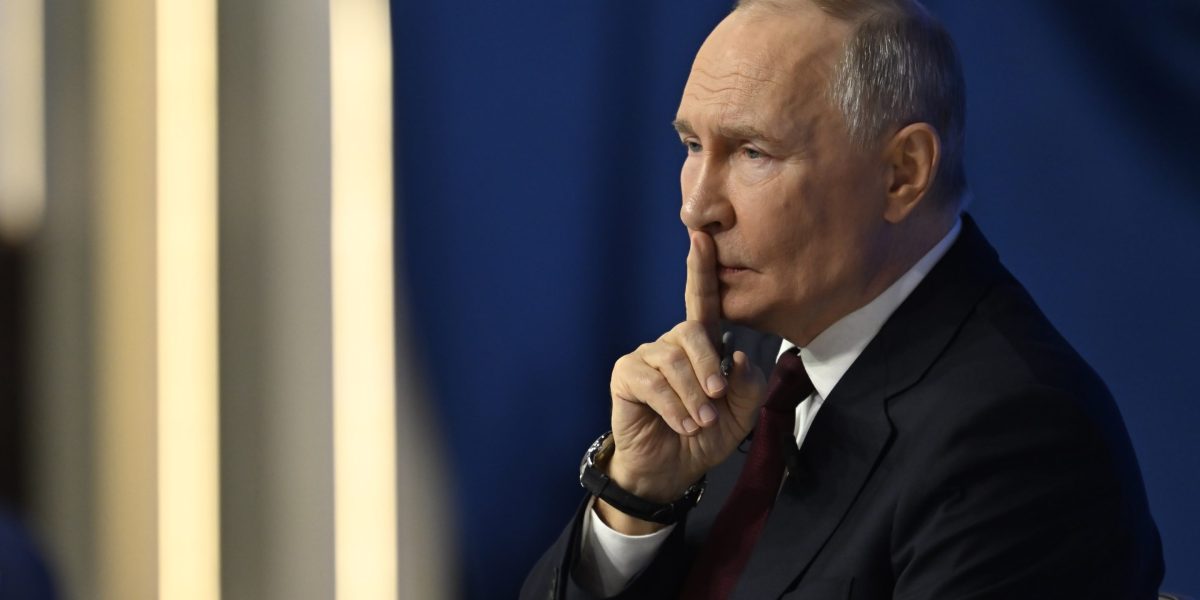
Russia’s financial system is reportedly coming under more strain as Moscow’s war on Ukraine nears the end of its fourth full year.

The White House is seeking to revive peace talks this weekend with Ukrainian President Volodymyr Zelensky due to meet President Donald Trump in Florida on Sunday. Russian forces stepped up their bombardment of Ukraine ahead of the meeting, but prolonged fighting presents risks for the economy.

“A banking crisis is possible,” a Russian official told the Washington Post recently on condition of anonymity. “A nonpayments crisis is possible. I don’t want to think about a continuation of the war or an escalation.”

Russia’s economy was surprisingly resilient in the face of severe Western sanctions after President Vladimir Putin launched his invasion of Ukraine in early 2022. That’s as China and India were eager to snap up cheap Russian oil, keeping the Kremlin’s coffers full and providing revenue for its military.

But more recently, energy prices have slumped while Europe and the U.S. have tightened sanctions. Oil and gas revenue has tumbled 22% in the first 11 months of the year, and Reuters estimated that December proceeds are on pace to sink nearly 50%.

To cover the shortfall in energy revenue, Moscow has tapped its sovereign wealth fund. But that is running out now too, so the government has resorted to raising more revenue via tax hikes.

Meanwhile, a tight labor market and high inflation have forced the central bank to keep interest rates high, and recent easing has failed to prevent spending declines in several consumer categories.

With companies feeling the squeeze of high rates and weaker consumption, Russian data show unpaid wages nearly tripled in October from a year ago to more than $27 million, with the Post adding that furloughs and shorter workweeks are also becoming more common.

As a result, more consumers are having trouble servicing their loans. Given the headwinds, the Russian official warning of a banking or nonpayment crisis isn’t the first of its kind.

In June, Russian banks raised red flags on a potential debt crisis as high interest rates weigh on borrowers’ ability to service loans. Also that month, the head of the Russian Union of Industrialists and Entrepreneurs warned many companies were in “a pre-default situation.”

And in September, Sberbank CEO German Gref, one of Russia’s top banking chiefs, said the economy was in “technical stagnation,” following his warnings in July and August that growth was close to zero.

The Center for Macroeconomic Analysis and Short-Term Forecasting, a state-backed Russian think tank, said this month the country could face a banking crisis by next October if loan troubles worsen and depositors pull out their funds, according to the Post.

“The situation in the Russian economy has deteriorated markedly,” wrote Dmitry Belousov, head of the think tank, in a note seen by the Financial Times. “The economy has entered the brink of stagflation for the first time since early 2023.”

This story was originally featured on Fortune.com


Source link

Continue Reading

Business

Blue Origin names Tory Bruno to new national security group

Published

on


Tory Bruno, the former chief executive officer and president of United Launch Alliance, will become the president of the new national security group at Blue Origin, the Jeff Bezos-founded space venture that is one of ULA’s biggest suppliers and rivals.

The company announced the move in a post on X

As head of the group, Bruno will oversee “the development of cutting-edge products, services, and technologies aimed at enhancing national security missions,” according to an internal email from Blue Origin CEO Dave Limp, seen by Bloomberg.

“We share a deep belief in supporting our nation with the best technology we can build,” Limp said in a statement. “Tory brings unmatched experience, and I’m confident he’ll accelerate our ability to deliver on that mission.”

Bruno’s hiring and the creation of the new team indicates Blue Origin is placing further emphasis on national security applications for its various rockets and space projects. Both ULA and Blue Origin are part of an elite group of rocket launch providers, including SpaceX, that are allowed to loft the most sensitive national security satellites for the US military.

Bruno’s resignation from ULA, a joint rocket venture between Boeing Co. and Lockheed Martin Corp., was announced on Dec. 22. He served in the role for nearly 12 years.

During his tenure leading ULA, Bruno oversaw the retirement and phasing out of the company’s older Delta and Atlas rockets, while spearheading the development of a new rocket called Vulcan. The new rocket, however, suffered from numerous delays and has struggled to ramp up its launch cadence after debuting in January 2024.

Blue Origin provides the main engines for Vulcan, while also serving as a competitor to ULA with its own New Glenn orbital rocket. While at ULA, Bruno led a joint partnership with Blue Origin in 2014 to develop the company’s BE-4 engines to be used in the Vulcan rocket.

New Glenn, which will eventually be used for national security missions, launched its second mission in November. During that flight, the rocket’s main booster successfully landed on a floating barge in the ocean after takeoff.

Blue Origin is also transitioning its in-space systems business unit into the new national security group, according to Limp’s internal memo. The current head of the unit, Paul Ebertz, will now report to Bruno. 

The in-space systems group includes projects like Blue Ring, which aims to develop a versatile satellite that can do a diverse range of tasks in space, and the company’s efforts to build a new communications spacecraft that could orbit Mars.


Source link

Continue Reading

Business

Jeffrey R. Holland, next in line to lead Church of Latter-day Saints, dies at 85

Published

on


Jeffrey R. Holland, a high-ranking official in the Church of Jesus Christ of Latter-day Saints who was next in line to become the faith’s president, has died. He was 85.

Holland died early Saturday morning from complications associated with kidney disease, the church announced on its website.

Holland, who died in Salt Lake City, led a governing body called the Quorum of the Twelve Apostles, which helps set church policy while overseeing the many business interests of what is known widely as the Mormon church.

He was the longest-tenured member of the Quorum of the Twelve after President Dallin H. Oaks, making him next in line to lead the church under a long-established succession plan. Oaks, 93, became president of the church and its more than 17 million-strong global membership in October.

Henry B. Eyring, who is 92 and one of Oaks’ two top counselors, is now next in line for the presidency.

Holland had been hospitalized during the Christmas holiday for ongoing health complications, the church said. Experts on the faith pointed to his declining health in October when Oaks did not select Holland as a counselor.

His death leaves a vacancy in the Quorum of the Twelve that Oaks will fill in coming months, likely by calling a new apostle from a lower-tier leadership council. Apostles are all men in accordance with the church’s all-male priesthood.

Holland grew up in St. George, Utah, and worked for many years in education administration before his call to join the ranks of church leadership. He served as the ninth president of Brigham Young University, the Utah-based faith’s flagship school, from 1980 to 1989 and was a commissioner of the church’s global education system.

Under his leadership, the Provo university worked to improve interfaith relations and established a satellite campus in Jerusalem. The Anti-Defamation League later honored Holland with its “Torch of Liberty” award for helping foster greater understanding between Christian and Jewish communities.

Oaks, also a former BYU president, reflected Saturday on his more than 50 years of friendship and service with Holland, calling their relationship “long and loving.”

“Over the last three decades as a member of the Quorum of the Twelve Apostles, he lifted the weary, encouraged the faithful and bore a powerful witness of the Savior — even through seasons of significant personal trials,” Oaks said.

Holland was known as a dynamic orator whose sermons combined scholarship with tenderness. In 2013 he spoke to church members about supporting loved ones with depression and other mental illnesses, sharing openly about times when he felt “like a broken vessel.”

Holland is widely remembered for a 2021 speech in which he called on church members to take up metaphorical muskets in defense of the faith’s teachings against same-sex marriage. The talk, known colloquially as “the musket fire speech,” became required reading for BYU freshmen in 2024, raising concern among LGBTQ+ students and advocates.

Holland was preceded in death by his wife, Patricia Terry Holland. He is survived by their three children, 13 grandchildren and several great-grandchildren.


Source link

Continue Reading

Trending

Copyright © Miami Select.