Connect with us

Business

BNY unveils updated Eliza platform, says 98% of employees are trained on AI

Published

on


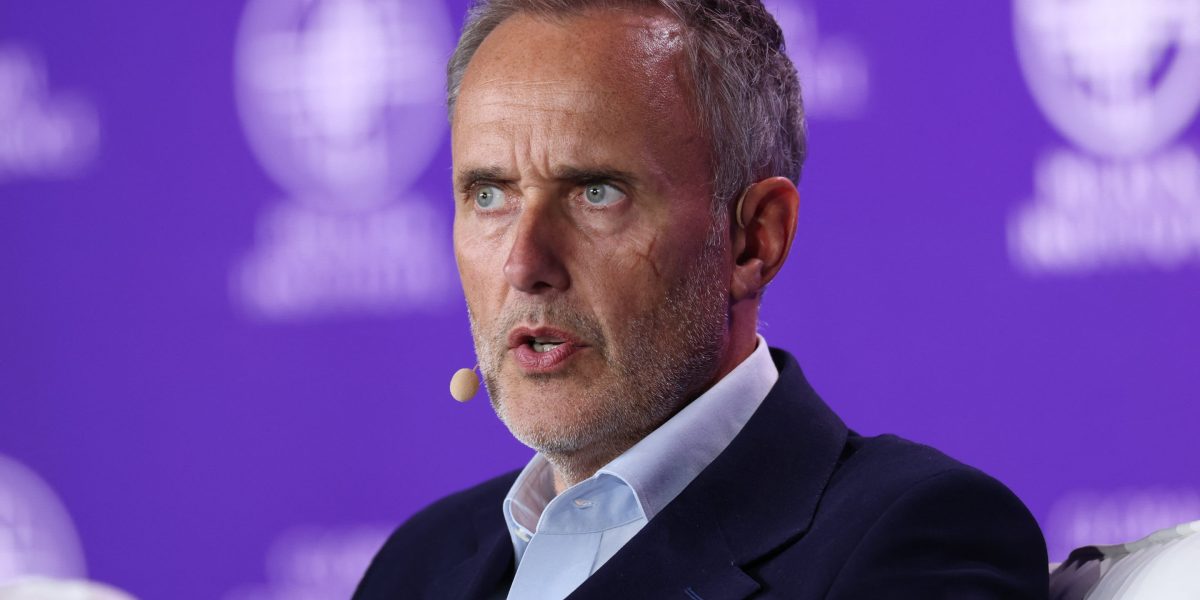
The oldest continuously operating bank in the U.S. is getting an upgrade. On Thursday at an internal town hall, BNY CEO Robin Vince unveiled the next-generation version of Eliza, its AI platform that allows employees to create bespoke agents and carry out tasks such as accelerated check processing built on reams of company data. 

“We think of AI as generating capacity for us,” Vince said at the town hall. According to a BNY spokesperson, 98% of the company’s employees are trained on generative AI, with the majority using Eliza daily.

The announcement comes as the broader banking industry embraces AI, often through internally-developed products such as BNY’s Eliza. Research firm Evident tracks the 50 top banks and, according to its October 2024 report, every firm on the index have referenced AI in at least one investor relations document. Evident ranked BNY as 14th in terms of AI adoption, with JPMorgan Chase and Capital One in the lead, though BNY’s standing is likely to change given its recent push. 

The AI financial future

Named after the wife of Alexander Hamilton, who founded BNY’s corporate predecessor, Eliza has stood as the flagship AI product of the 240-year-old bank. The new update for Eliza, which first launched in 2024, will focus on allowing employees to access data across different sources, from different hubs within BNY to live market data, with the goal of increasing speeds for responding to clients. 

In an email sent to employees and shared with Fortune, chief people officer Shannon Hobbs and chief information officer & global head of engineering Leigh-Ann Russell wrote that the upgrade would allow them to develop client briefings in minutes rather than hours. 

The broader question for banks, which are constrained by compliance requirements and red tape, is whether AI tools will evolve beyond pilot programs and transform core functions. According to the Evident report, just six of its tracked banks reported that AI had a financial impact. 

BNY chief data and AI officer Sarthak Pattanaik previously told Fortune that the bank uses a “walled garden” approach to train its systems, though it uses external models from companies like Anthropic, Google’s Gemini, and OpenAI, and conducts red team testing to simulate cyberattacks. 

In their email, Hobbs and Russell referenced different use cases already adopted by bank employees for Eliza, including reconciling weekly transactions, which has increased automatic processing, repairing payments, and writing code. “Fluency in AI is no longer optional, it’s critical,” they wrote. 

Fortune Global Forum returns Oct. 26–27, 2025 in Riyadh. CEOs and global leaders will gather for a dynamic, invitation-only event shaping the future of business. Apply for an invitation.


Source link

Continue Reading

Business

Jamie Dimon on AI: ‘maybe one day we’ll be working less hard but having wonderful lives’

Published

on


JPMorgan Chase CEO Jamie Dimon reiterated a nuanced and overall upbeat view about the effect of artificial intelligence on the economy.

In an interview with Fox News’ Sunday Morning Futures, the head of the world’s biggest bank acknowledged businesses have been cautious about hiring lately but said it’s not related to AI and doubted that the technology will dramatically reduce jobs in the next year.

“For the most part, AI is going to do great stuff for mankind, like tractors did, like fertilizers did, like vaccines did,” he said. “You know maybe one day we’ll be working less hard but having wonderful lives.”

Dimon added that AI still needs proper regulation to mitigate the downside risks, just like other innovations throughout history.

He also repeated his earlier warning that AI will eliminate jobs, but urged people to focus on uniquely human skills like critical thinking, emotional intelligence, and communication.

If AI sweeps through the economy so quickly that workers can’t adapt to new roles in time, Dimon suggested the public sector and private sector have roles to play.

“We—government and we the companies, society—should look at how do we phase it in a way that we don’t damage a lot of people,” he explained. “We should have done a little bit more on trade assistance years ago when you had a town that got damaged by the closure of a plant. And that you can do: you can retrain people, relocate people, income assistance, early retirement.”

Meanwhile, AI is also creating jobs in the near term as new infrastructure requires more construction and fiber optics, he pointed out.

The comments were his latest on AI in recent months. In November, Dimon predicted AI will help the developed world transition to a shorter workweek of just three and a half days sometime in the next 20-40 years.

And at the Fortune Most Powerful Women Summit in October, he said governments and companies must plan for an AI future to avoid a social backlash.

“It will eliminate jobs. People should stop sticking their heads in the sand,” he warned.


Source link

Continue Reading

Business

This pastor fills up arenas by not sugarcoating the Bible

Published

on


After Atlanta pastor Philip Anthony Mitchell stopped dwelling on growing his congregation about three years ago, its attendance surged. Now, lines packed with young adults snake outside 2819 Church, some arriving as early as 5:30 a.m. to secure a spot for Sunday worship.

Christian rap and contemporary music blast like a block party as volunteers cheer into megaphones for around 6,000 weekly churchgoers — up from less than 200 in 2023, the church reports. Inside the sanctuary, the atmosphere turns serious. Many drawn to 2819’s riveting worship are hungry for Mitchell’s animated intensity and signature preaching: No sugarcoating the Bible.

After spirited prayers and songs leave many crying, Mitchell ambles onstage in his all-black uniform, sometimes in quiet contemplation or tears, before launching into a fiery sermon. His messages, unpolished and laden with challenges to revere God and live better, often spread quickly online. A recent prayer event drew far more people than State Farm Arena could handle, with many flying in.

Crying, shouting, storming across the platform and punching the air, Mitchell preaches with his whole body — and an urgency to bring people to faith before they die or what he calls Jesus’ impending return to Earth.

“It is life or death for me,” Mitchell told The Associated Press, comparing preaching to the front lines of war. “There are souls that are hanging in the balance. … I think about the fact that in that room somebody might hear the Gospel, and that might be their last opportunity.”

The church — whose name references Matthew 28:19, a Bible verse commanding believers to go “make disciples of all the nations” — is nondenominational and theologically conservative, with beliefs opposing abortion and in support of marriage only between a man and a woman.

The congregation’s growth has attracted people of many races and ages, but it’s predominantly young Black adults. Their youth is notable since Americans ages 18 to 24 are less likely than older adults to identify as Christian or attend religious services regularly, according to Pew Research Center.

Sharp sermons and moving worship

Warren Bird, an expert on fast-growing churches, believes the right leader is key to a church’s growth — along with God’s help — and described Mitchell as “speaking a language” that connects with young people who other pastors haven’t reached.

Churchgoers say Mitchell’s message resonates because he carefully walks them through scripture and talks candidly about his spiritual transformation, including his past dealing drugs, paying for abortions and attempting suicide.

“I’m still a little rough around the edges, right? I still got a little hood in me,” said Mitchell, who still speaks with a regional New York accent.

Many at 2819 want more than motivational speeches and say Mitchell’s sermons are counterweights to the feel-good American preaching he criticizes.

“I’m preaching without watering that down, without filtering out things that we think might be too controversial,” said Mitchell, who wants people to mature spiritually and insists they can’t deal with sin and its consequences without Jesus.

“I think that there is a generation that is gravitating towards that authenticity and truth,” he said. “As a result of that, we are seeing lives being radically transformed.”

Christian podcaster Megan Ashley said she brought a friend to 2819 who had stepped away from her faith, and Mitchell had an impact. The friend told Ashley, “When he speaks, I believe him.”

The tougher messages might hurt some people’s feelings, said Donovan Logan, 23.

“But that’s what it’s supposed to do. If you don’t come to church and want to change, then that’s not the church you’re supposed to be going to,” Logan said.

Elijah McCord, 22, said Mitchell’s sermons about sin touch on what’s happening around him in Atlanta, and Mitchell’s story shows that “there’s life in what God has commanded.” He also values Mitchell’s pleadings to wait until marriage to have sex.

“He biblically talks about sin and repentance and how there’s actually hope in the Gospel,” McCord said.

Churchgoers say 2819’s draw goes beyond Mitchell. It’s the entire worship experience.

Passing the dancing greeters, the Sunday crowd enters the dark auditorium. It’s permeated with prayer and bold instrumental music before the service, which 2819 calls a gathering, officially begins, with hands already lifted amid shouts of praise. Tissue boxes sit at the end of aisles, ready to aid those moved to tears.

“The worship is crazy. The Holy Spirit is just there. Like, tangible presence. You feel it!” said Desirae Dominguez, 24.

Mitchell feels ‘ill-equipped’ to lead 2819

Mitchell spent 10 years preaching, racking up unfruitful notes from church growth conferences, and eventually started struggling with depression. During that time, he took a transformative trip to Israel where he said encounters with God and other Christians changed him. Then, in 2023, he changed the church’s name to 2819.

Mitchell, who has spent three years preaching just from the Book of Matthew alone, said God told him to preach without bringing prepared notes onstage. Although he attended Bible college, he sometimes doubts himself because of his past.

“I shed a lot of tears because I feel often ill-equipped, undeserving,” said Mitchell. “I would not have called me if I was God to steward something like this, and sometimes I don’t know why my preaching is reaching (people). … I’m still shocked myself.”

When preparing to preach, “I’m thinking about the brokenness of the people in the room, the troubled marriages, the one who is suicidal. I’m thinking about the young lady who’s battling crippling insecurities and don’t know that she has a father up there that loves her more than any man she’s going to find down here.”

When not preaching, Mitchell’s demeanor is quieter. He and his staff are “here to serve,” he often says.

His large online platform exposes him and sometimes his family to public critique, pushback, and even threats. Some accuse him of self-righteousness or say he’s too harsh. He also issued a public apology earlier this year for comments in a sermon about obeying authority that were seen as dismissive of police brutality.

At times, he says he is deeply affected by criticism and said he repents for some of what critics decried. But Mitchell also finds solace in better understanding Jesus by enduring it.

Staff constantly adjusts for growth

The church recently moved into its own building, having outgrown the charter school where they held the services, and added a third one. On the first two Sundays at the new location, they added an impromptu fourth gathering because so many people came.

The staff faced similar conundrums at Access, the church’s October prayer event that drew an estimated 40,000 people. State Farm Arena was filled to capacity, as was an overflow space in a nearby convention center, leaving thousands outside, the church reported.

“We’re constantly tinkering. We’re constantly fixing things,” said Tatjuana Phillips, 2819’s ministries director.

Logistical challenges, such as packed parking lots and swamped staff, are common at fast-growing churches, said Bird, the church growth expert.

Despite its size, the church encourages community through its small groups, called “squads,” that give about 1,700 people a place to discuss sermons and support each other’s personal growth. Staff also engage with about 75,000 people weekly who watch gatherings online.

The long lines also yield friendships. Ashley Grimes, 35, said that’s where she’s “met so many brothers and sisters in Christ that I now get to do life with.”

Many of those new friends can be found shuffling into the church’s auditorium on Sundays while volunteers, called servant leaders, pray over each seat before Mitchell preaches.

On a recent Sunday, Mitchell told the crowd that they can turn to Jesus regardless of what they’ve done. It worked for him. God, he said, “used failure to transform my life.”


Source link

Continue Reading

Business

GOP lawmakers in Indiana face ‘dangerous and intimidating process’ as Trump pushes redistricting

Published

on


Spencer Deery’s son was getting ready for school when someone tried to provoke police into swarming his home by reporting a fake emergency.

Linda Rogers said there were threats at her home and the golf course that her family has run for generations.

Jean Leising faced a pipe bomb scare that was emailed to local law enforcement.

The three are among roughly a dozen Republicans in the Indiana Senate who have seen their lives turned upside down while President Donald Trump pushes to redraw the state’s congressional map to expand the party’s power in the 2026 midterm elections.

It’s a bewildering and frightening experience for lawmakers who consider themselves loyal party members and never imagined they would be doing their jobs under the same shadow of violence that has darkened American political life in recent years. Leising described it as “a very dangerous and intimidating process.”

Redistricting is normally done once a decade after a new national census. Trump wants to accelerate the process in hopes of protecting the Republicans’ thin majority in the U.S. House next year. His allies in Texas, Missouri, Ohio and North Carolina have already gone along with his plans for new political lines.

Now Trump’s campaign faces its greatest test yet in a stubborn pocket of Midwestern conservatism. Although Indiana Gov. Mike Braun and the House of Representatives are on board, the proposal may fall short with senators who value their civic traditions and independence over what they fear would be short-term partisan gain.

“When you have the president of the United States and your governor sending signals, you want to listen to them,” said Rogers, who has not declared her position on the redistricting push. “But it doesn’t mean you’ll compromise your values.”

On Friday, Trump posted a list of senators who “need encouragement to make the right decision,” and he took to social media Saturday to say that if legislators “stupidly say no, vote them out of Office – They are not worthy – And I will be there to help!” Meanwhile, the conservative campaign organization Turning Point Action said it would spend heavily to unseat anyone who voted “no.”

Senators are scheduled to convene Monday to consider the proposal after months of turmoil. Resistance could signal the limits of Trump’s otherwise undisputed dominance of the Republican Party.

Threats shadow redistricting session

Deery considers himself lucky. The police in his hometown of West Lafayette knew the senator was a potential target for “swatting,” a dangerous type of hoax when someone reports a fake emergency to provoke an aggressive response from law enforcement.

So when Deery was targeted last month while his son and others were waiting for their daily bus ride to school, officers did not rush to the scene.

“You could have had SWAT teams driving in with guns out while there were kids in the area,” he said.

Deery was one of the first senators to publicly oppose the mid-decade redistricting, arguing it interferes with voters’ right to hold lawmakers accountable through elections.

“The country would be an uglier place for it,” he said just days after Vice President JD Vance visited the state in August, the first of two trips to talk with lawmakers about approving new maps.

Republican leaders in the Indiana Senate said in mid-November that they would not hold a vote on the matter because there was not enough support for it. Trump lashed out on social media, calling the senators weak and pathetic.

“Any Republican that votes against this important redistricting, potentially having an impact on America itself, should be PRIMARIED,” he wrote.

The threats against senators began shortly after that.

Sen. Sue Glick, a Republican who was first elected in 2010 and previously served as a local prosecutor, said she has never seen “this kind of rancor” in politics in her lifetime. She opposes redistricting, saying “it has the taint of cheating.”

Not even the plan’s supporters are immune to threats.

Republican Sen. Andy Zay said his vehicle-leasing business was targeted with a pipe bomb scare on the same day he learned that he would face a primary challenger who accuses Zay of being insufficiently conservative.

Zay, who has spent a decade in the Senate, believes the threat was related to his criticism of Trump’s effort to pressure lawmakers. But the White House has not heeded his suggestions to build public support for redistricting through a media campaign.

“When you push us around and into a corner, we’re not going to change because you hound us and threaten us,” Zay said. “For those who have made a decision to stand up for history and tradition, the tactics of persuasion do not embolden them to change their viewpoint.”

The White House did not respond to messages seeking a reaction to Zay’s comments.

Trump sees mixed support from Indiana

Trump easily won Indiana in all his presidential campaigns, and its leaders are unquestionably conservative. For example, the state was the first to restrict abortion after the U.S. Supreme Court overturned Roe v. Wade.

But Indiana’s political culture never became saturated with the sensibilities of Trump’s “Make America Great Again” movement. Some 21% of Republican voters backed Nikki Haley over Trump in last year’s presidential primary, even though the former South Carolina governor had already suspended her campaign two months earlier.

Trump also holds a grudge against Indiana’s Mike Pence, who served the state as a congressman and governor before becoming Trump’s first vice president. A devout evangelical, Pence loyally accommodated Trump’s indiscretions and scandals but refused to go along with Trump’s attempt on Jan. 6, 2021, to overturn Democrat Joe Biden’s victory.

“Mike Pence didn’t have the courage to do what was necessary,” Trump posted online after an angry crowd of his supporters breached the U.S. Capitol.

Pence has not taken a public stance on his home state’s redistricting effort. But the governor before him, Republican Mitch Daniels, recently said it was “clearly wrong.”

The proposed map, which was released Monday and approved by the state House on Friday, attempts to dilute the influence of Democratic voters in Indianapolis by splitting up the city. Parts of the capital would be grafted onto four different Republican-leaning districts, one of which would stretch all the way south to the border with Kentucky.

Rogers, the senator whose family owns the golf course, declined to discuss her feelings about the redistricting. A soft-spoken business leader from the suburbs of South Bend, she said she was “very disappointed” about the threats.

On Monday, Rogers will be front and center as a member of the Senate Elections Committee, the first one in that chamber to consider the redistricting bill.

“We need to do things in a civil manner and have polite discourse,” she said.


Source link

Continue Reading

Trending

Copyright © Miami Select.