
Politics
Blaise Ingoglia says Miami exceeds appropriate spending by $94M per year, calls budget bulge worst in state

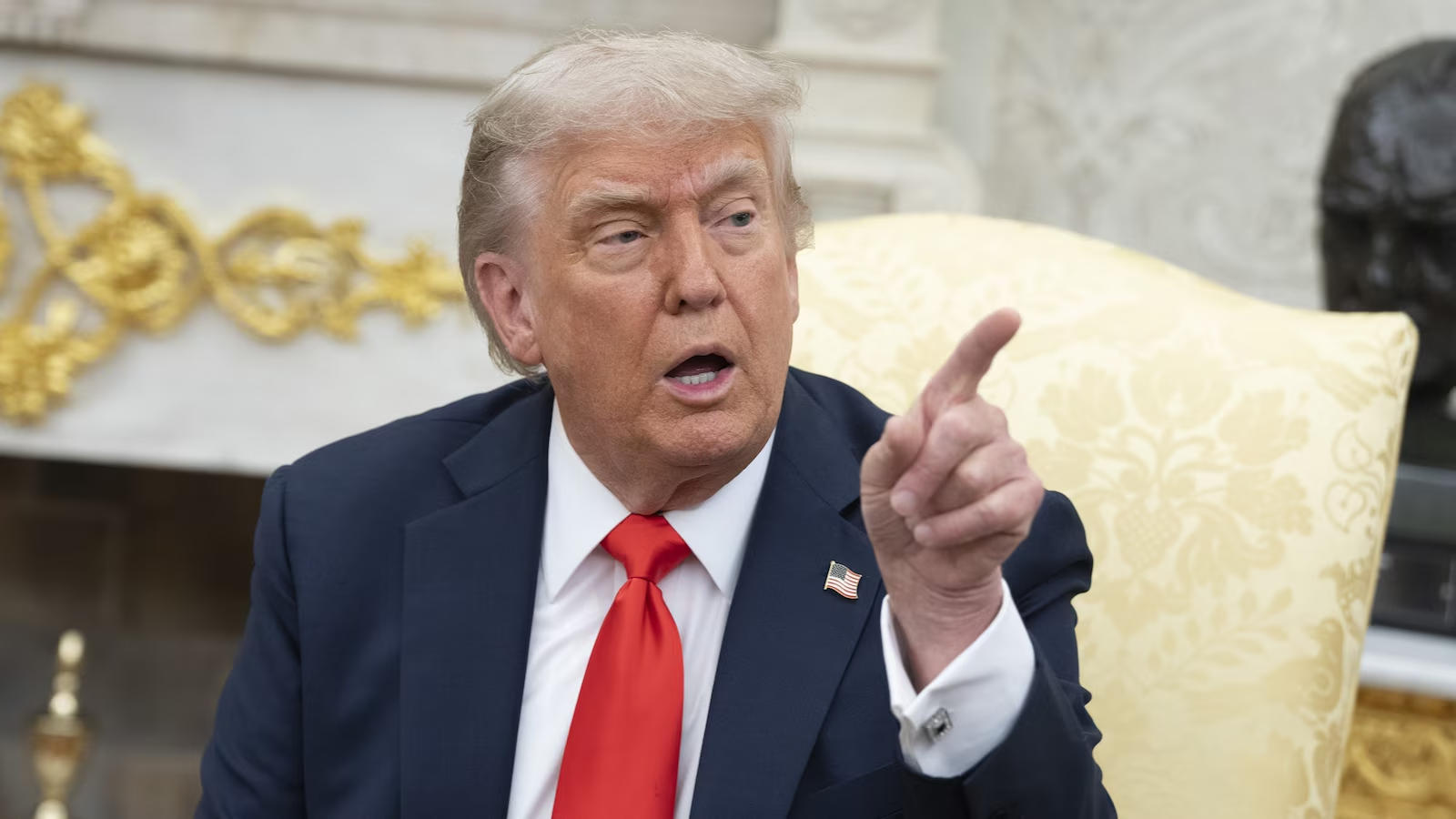
President Donald Trump is poised to set federal guidance for artificial intelligence that could preclude regulations that states like Florida and Governors like Ron DeSantis might want to enact.
“There must be only One Rulebook if we are going to continue to lead in AI. We are beating ALL COUNTRIES at this point in the race, but that won’t last long if we are going to have 50 States, many of them bad actors, involved in RULES and the APPROVAL PROCESS,” Trump posted to Truth Social.
“THERE CAN BE NO DOUBT ABOUT THIS! AI WILL BE DESTROYED IN ITS INFANCY! I will be doing a ONE RULE Executive Order this week. You can’t expect a company to get 50 Approvals every time they want to do something. THAT WILL NEVER WORK.”
The President’s comments come as the Florida House prepares to begin a week of committee meetings addressing AI, and after DeSantis has spent months fretting about the impacts of the technological inevitability and teasing statewide regulations to address it.
The House is holding meetings starting Tuesday revolving around what Speaker Daniel Perez calls “the potentially positive and negative impacts of the use of AI in their respective jurisdictions.”
The House Economic Infrastructure Subcommittee will tackle utility costs related to data centers. The House Careers & Workforce Subcommittee plans to explore “Artificial Intelligence and the Future of Work: Opportunities, Challenges, and Workforce Readiness.” And the House Information Technology Budget & Policy Subcommittee will examine “Examples of artificial intelligence use in state agencies and options for the future.”
Meanwhile, DeSantis is prioritizing a so-called “AI Bill of Rights” that is designed to counter what he calls an “age of darkness and deceit.”
Exploitative depictions concern the Governor. He said he wants the law to “do things like fortify some of the protections we have in place for things like deepfakes and use of explicit material, particularly those that depict minors.”
Foreign control also worries him.
DeSantis vows not to “allow any state or local government agency to utilize Chinese-created AI tools when they’re doing data here in the state of Florida.”

Other proposed protections include ensuring “that data inputted into AI is secure and private.”
Additionally, people dealing with insurance companies may have recourse against claims being determined by AI rather than humans, and lawyers’ clients could be protected from the technology being used to write briefs and filings.
DeSantis also wants the legislation to rein in data centers by capping utility rates that could be driven up by them, banning subsidies to build them, prohibiting them in agriculturally-zoned areas, issuing statewide noise regulations, and embracing the oft-trampled concept of home rule to allow local jurisdictions to ban them.
He also expects emergent legislation to “provide more parental rights … to ensure parents can access conversations their child has with one of these LLM (large language model) chatbots. Parents will be able to set parameters from when the child can access any of these platforms, and there will be notifications for parents required if the child exhibits concerning behavior.”
DeSantis has decried overstretched stock market valuations for “Mag 7” companies Alphabet, Amazon, Apple, Meta Platforms, Microsoft, Nvidia and Tesla, all of which are in the AI space. He has also suggested the “Founding Fathers” would hate the technology, and argued it will be used to perpetuate fraud.
Despite these qualms, Trump will move forward.
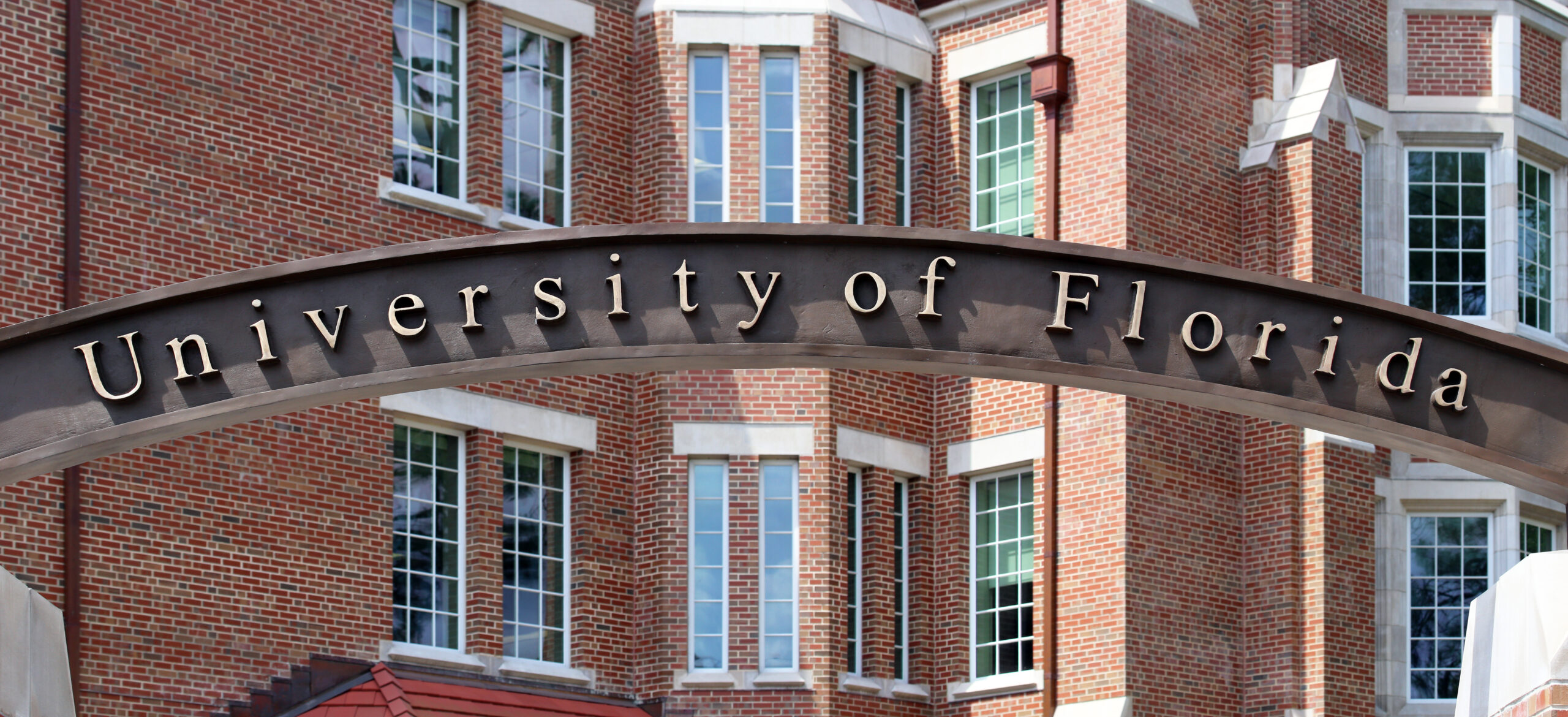
The University of Florida will not be taken over for ideological purposes, its interim President declared.
Interim President Donald Landry and UF Trustees expressed a commitment during a board meeting to “institutional neutrality” regarding how university actors will behave.
“We are not protecting the right to choose topics for classroom instruction, research, or scholarship if that right is not coupled with institutional neutrality,” Landry said.
“We have to provide protections for free expression, but we are not going to be able to engage in that protection if we have leadership speaking on issues that then create those aligned with leadership and those opposed to leadership. At that moment, those who are opposed to leadership are now afraid to speak, they don’t know if it’s safe.”
Trustees unanimously supported a policy that applies to university employees with access to communications resources used for “university business,” including email distribution lists, university websites, social media accounts, and teleconference systems.
“University business” encompasses “instructional activities, research and scholarship, administrative functions, communications,” and lobbying. Also: “Guidance regarding or requiring compliance with laws, regulations or policies.”
“Proclamations from UF institutional and unit leadership on issues that polarize society impair the free and open exchange of differing ideas on campus as it divides the student body and faculty into those aligned with leadership and those opposed,” the new policy says, in part.
The policy, according to its language, “clarifies expectations regarding (1) leadership commentary and proclamations on Social Issues; (2) the use of communication resources for personal expression; and (3) representations of affiliations.”
“When our leaders make comment or proclamations on social issues, political issues, normative issues, current events to their university constituents, these statements divide our faculty and students, chill free expression for those who do not agree with leadership, and send a signal that suddenly there’s no room for open discourse or the contest of ideas at the University of Florida,” Landry said.
Landry said he met with deans at the school about the neutrality statement.

“We resist ideological takeover of any unit of the university, we reject ideological indoctrination in favor of open discourse, we accomplish that at this university and in this state mainly through the right of the students to record any lecture,” Landry said.
The policy allows “political or social advocacy” as long as it’s not represented as UF policy, protecting “personal expression in their private capacities.”
Violation of the policy could result in termination.
“What we’re going to accomplish today is the voluntary restraint of leadership not to speak. If speech must come forth, it will come forth from the president in consultation with the chair, but otherwise we will remain silent,” Landry said.
Earlier in the meeting, Landry laid out his vision for the university. He holds the position while the university searches for a President. The search started Friday, and Chair Mori Hosseini said Landry signaled he will apply for the permanent position.
“This is a state where individuals can come confident that they will be able to learn, confident that their education will not be disrupted. It is a state where faculty can come, knowing they will be able to teach, they will be able to do research, they will be able to do their scholarship. That stability is priceless. That’s a firm foundation for a vision of preeminence and leadership,” Landry said.
The DeSantis administration’s political involvement in higher education led various professors to express their desire to leave the state, the Phoenix reported earlier this year.
Landry spent much of his time outlining his vision for the university, talking about expanding and supporting artificial intelligence research.
Hosseini, a major donor to Gov. Ron DeSantis, will serve another term as Chair of the state’s flagship university; the Trustees unanimously voted Friday to keep Hosseini in charge for another two years.
Hosseini has served on the UF Board since 2016 and before that he served on the Florida Board of Governors, which oversees public universities, on which he also was Chair.
Notably, Hosseini stood behind the UF Trustees’ support for Santa Ono, even after the state Board of Governors rejected him to be the leader of the university. Prominent Republicans came out in opposition to the former University of Michigan President after he abandoned his previous support for diversity, equity, and inclusion policies that are anathema to the MAGA movement.
“It’s no exaggeration to say that, in the modern era, I don’t think anybody has had as much influence on the trajectory of the University of Florida than you. From inspiring and challenging our leadership, to leveraging your relationships in Tallahassee for the benefit of our institution, the impact of your work is visible to all of us, every day,” Board Vice Chair Rahul Patel told Hosseini.
The Board also voted to keep Patel as the Board’s Vice Chair.
___
Reporting by Jay Waagmeester. Florida Phoenix is part of States Newsroom, a nonprofit news network supported by grants and a coalition of donors as a 501c(3) public charity. Florida Phoenix maintains editorial independence. Contact Editor Michael Moline for questions: info@floridaphoenix.com.
The post UF commits to ‘neutrality,’ institutionally appeared first on Florida Politics – Campaigns & Elections. Lobbying & Government..
Politics
Dan Newlin prepares to become Ambassador to Colombia amid high tension with Latin American nation
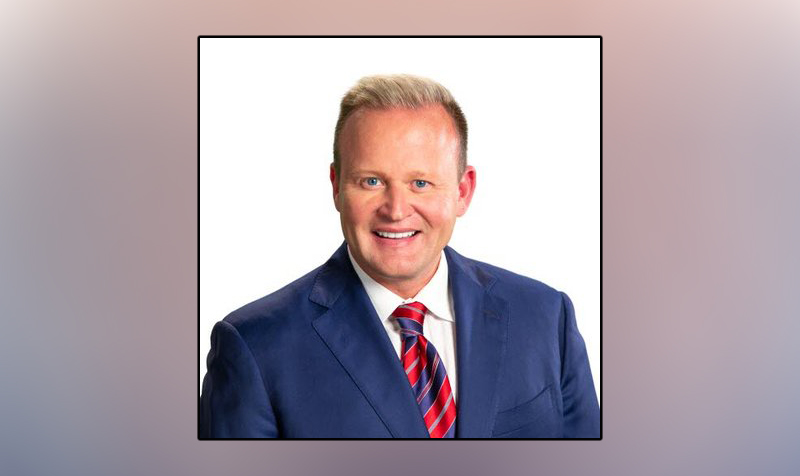
Orlando lawyer Dan Newlin has yet to be confirmed as President Donald Trump’s Ambassador to Colombia. But he said it’s a financial issue, not political resistance, slowing the process.
The Windermere Republican told Florida Politics shortly after a panel discussion in Washington that it has been a lengthy process cutting financial ties with the Orlando area law firm he has run for nearly a quarter century.
Newlin called the process “highly complex.”
“Once that’s completed, hopefully in 2026, early part of 2026, then I will be cleared to move through government ethics to the next phase. So really, that was my big holdup.”
He spoke at the Rescuing the American Dream summit on a panel moderated by U.S. Sen. Rick Scott, where Newlin discussed Trump’s foreign policy in South America. The former Sheriff’s Deputy suggested controlling the drug trade will be a huge focus for the U.S. in terms of any relationship with Colombia.
He said the number of plant-growing operations fueling the cocaine market has doubled in the last four years, particularly since Colombian President Gustavo Petro came into power in 2022. Meanwhile, drug cartels like the Northern Liberation Army, or ELN, and the Revolutionary Armed Forces of Colombia, or FARC, doubled in size to 250,000 active members.
“President Trump and Senator Scott are firm believers in taking it to the drug dealers, but taking it to the drug manufacturers who are bringing it to the U.S. is so important,” he said.
He and other diplomats defended controversial bombings of alleged drug trafficking vessels for that reason at the conference.
But that and several caustic statements by Petro at the United Nations have made the diplomatic situation more dicey each day as Newlin awaits confirmation. And considering the strong ties between Florida and Colombia — Newlin himself has owned a home in the South American nation for 16 years — the interactions could have significant consequences for the Sunshine State.
“Many Colombians live here — great people, amazing people. I think one of the biggest challenges in the economic recovery from what’s happened there for the last four years, it’s been very difficult on the people with, respectfully, the leadership that’s in place now,” Newlin said regarding the Petro era.

“There’s a lot of economic opportunity that needs to be worked through. Hopefully with President Trump’s commitment to South America, to the Western Hemisphere, we can get more contracts and we can get more people, and we can help the people of Colombia rise up from the oppression that they lived under. No one should have to make $300 or $400 a month working at a Starbucks in Colombia when a worker in the United States makes $4,000 a month.”
Can that work happen with Petro in charge? Newlin notes that there will be an election in Colombia in May. All the candidates in the running to succeed Petro have economic growth on their agenda, Newlin said. He has met with all of them, along with U.S. Sen. Bernie Moreno, an Ohio Republican. “All the presidential hopefuls really put economic recovery as one of their No. 1 agendas,” Newlin said.
Trump, unlike many U.S. Presidents, has weighed in openly on Latin American elections at points, most recently endorsing Nasry Asfura in a Honduras Presidential Election still being tabulated. Will the administration pick a favorite in Colombia?
Newlin said that’s not for him to say.
“I certainly think that President Trump has a good grip and read on who he believes will be the best candidates,” Newlin said. “That’s pretty much all I have to say about that.”


Ex-Levi Americas president buys Dr Martens shares

As Gov. DeSantis’ Florida explores AI checks, Donald Trump promises preemption

‘Everybody wants the economy of tomorrow, but paying the bills today is absolutely critical’: Democratic governors huddle on affordability
-

 Politics8 years ago
Congress rolls out ‘Better Deal,’ new economic agenda
-
Entertainment8 years ago
New Season 8 Walking Dead trailer flashes forward in time
-
Politics8 years ago
Poll: Virginia governor’s race in dead heat
-
Entertainment8 years ago
The final 6 ‘Game of Thrones’ episodes might feel like a full season
-
Entertainment8 years ago
Meet Superman’s grandfather in new trailer for Krypton
-
Politics8 years ago
Illinois’ financial crisis could bring the state to a halt
-
Business8 years ago
6 Stunning new co-working spaces around the globe
-
Tech8 years ago
Hulu hires Google marketing veteran Kelly Campbell as CMO