Connect with us

Politics

Blaise Ingoglia launches campaign for a full term as CFO
Published

on


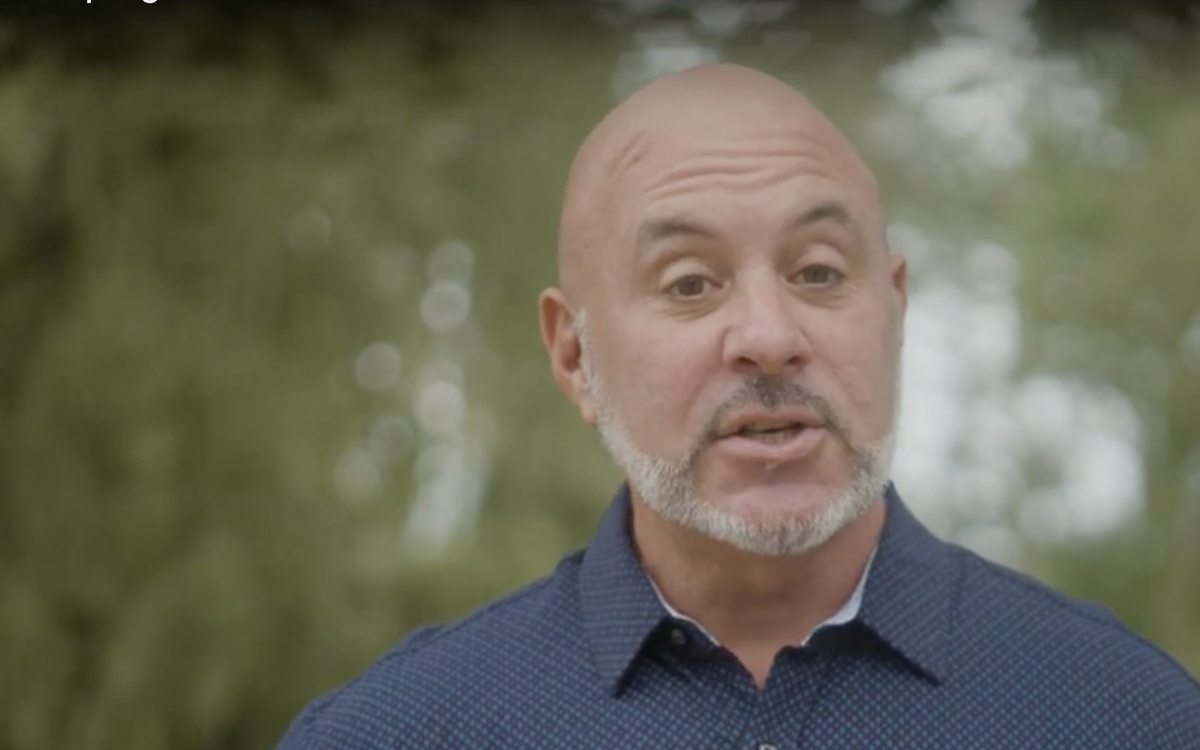
Chief Financial Officer Blaise Ingoglia has formally launched a campaign for a full term in office.

The Spring Hill Republican released a campaign video Tuesday morning where he advocated for eliminating property tax in Florida and promised to continue ferreting out waste at all levels of government.

“Today, I’m officially launching my campaign for Florida’s Chief Financial Officer because families and taxpayers deserve a trusted, conservative fighter to make Florida more affordable,” Ingoglia said in a statement.

Gov. Ron DeSantis in July appointed Ingoglia, then a Senator, to the Cabinet post. The job opened up after former Chief Financial Officer Jimmy Patronis resigned for a successful campaign for Congress.

“I’m thankful to Governor DeSantis for putting his trust in me and appointing me to stand strong on key priorities — lowering property taxes, auditing local governments, holding insurance companies accountable and supporting our brave first responders in my role as Chief Fire Marshal,” Ingoglia added.

“I promise you, nobody will work harder than I will to deliver on these promises. Florida is a beacon of freedom and opportunity and I will fight to ensure they don’t ‘New York Our Florida!’”

Many of the same themes were amplified in the launch video, which features Ingoglia speaking straight to the camera about his agenda.

Ingoglia uses some lines recognizable to those who have heard stump speeches by the Cabinet member, including a boast that he speaks four languages, “English, profanity, sarcasm and real s***.”

The former Republican Party of Florida Chair also long used the online handle @GovGoneWild, and that messaging also appears in the video.

“I’m running for Chief Financial Officer because I am done watching taxpayers get screwed by governments gone wild.”

His narration continues over video splices primarily of press conferences across Florida since his appointment. That includes several stops at local governments promising audits with the Florida Department of Government Efficiency, which he has suggested rebranding as the Florida Agency for Fiscal Oversight, or FAFO.

He promised to continue demanding local governments eliminate waste and supported a DeSantis-championed plan to eliminate property tax throughout the state.

“That’s just part of my plan to protect the great state of Florida as your CFO,” Ingoglia says. “Fight waste, lower insurance rates, support our first responders, and help you keep more of your money. Are you with me? Good, because we’re just getting started.”

Notably, because he is filling out less than half of Patronis’ term, Ingoglia potentially could win a full term in 2026 and again in 2030, allowing him to serve nearly a decade in the statewide office.

But he will likely have to prove himself at the ballot. Two other Republicans — Frank Collige and Benjamin Horbowy — have already filed for the seat and expect to challenge Ingoglia in a GOP Primary. Other candidates are rumored to be exploring bids as well.

But another filed opponent, Joe Gruters, signaled he will not run for CFO following his election as Republican National Committee Chair.

No Democrat has filed, but the party is expected to run a full slate of candidates for statewide office next year. Only one Democrat has ever won election as Chief Financial Officer since the position was created in 2002. Alex Sink won office in 2006 and served a single term.

But registered Democrats outnumbered Republicans at the time. The latest data from the Division of Elections shows Republicans outnumber Democrats by more than 1.3 million right now.


Post Views: 0


Source link

Continue Reading

Politics

James Uthmeier issues opinion that municipalities can’t force businesses to have shopping cart container plans

Published

on


The Attorney General published his opinion after Davie was considering a shopping cart retaining ordinance.

Attorney General James Uthmeier has issued an opinion that municipal governments can’t force businesses to submit a shopping cart collection plan to the local government for approval.

Uthmeier published his three-page opinion following a request from Allan Weinthal, the Town Attorney for Davie in South Florida. Weinthal asked for an opinion from the Attorney General’s Office in March as the Davie Town Council was considering enacting a shopping cart retention ordinance.

Weinthal asked in a letter to the Attorney General’s Office if state law preempts municipalities from enacting such a law. He also wanted to know if local governments can impose monetary penalties on businesses that don’t submit a plan.

In his opinion, Uthmeier said local governments don’t have any authority to establish such ordinances and they don’t have the legal ability to generally impose fines.

Uthmeier cited Florida law that “expressly preempts municipal ordinances that allow a municipality to require a business owner to submit a shopping cart retention plan to the municipality (or) deny a shopping cart retention plan (and) impose a monetary penalty for failing to submit and adhere to a shopping cart retention plan.”

Uthmeier said he understands the questions from Davie’s Town Attorney since Florida precedent does provide some leeway to municipalities, as they are “given broad authority to enact ordinances under its municipal home rule powers.” But state law preempts any “fee, fine, or costs” from being assessed, according to Uthmeier’s opinion.

Uthmeier acknowledged that local governments can impose fines on retailers if their carts are found on public property if the carts were removed from the retail establishment by retailers themselves. In that case, the Florida Department of Agriculture and Consumer Services has upheld some fines.


Source link

Continue Reading

Politics

Lois Frankel, Debbie Wasserman Schultz scold Florida for proposed cuts to AIDS care eligibility

Published

on


Democrats representing Florida in Congress say Florida’s Health Department doesn’t need to nix support for 10,000 AIDS patients. Worse, they say doing so could both cost lives and lead to further spread of the disease.

U.S. Reps. Lois Frankel and Debbie Wasserman Schultz slammed a recent decision by the Department of Health (DOH) to change eligibility requirements for the Ryan White AIDS Drug Assistance Program. That program, named for deceased child AIDS activist Ryan White, provides prescription drugs for more than 50,000 people living with HIV or AIDS in Florida. But financial eligibility changes strip coverage for more than 10,000 people.

“Researchers estimate the average lifetime health care costs associated with HIV infection can get up into the hundreds of thousands,” said Frankel, a West Palm Beach Democrat.

She made the comments on a press call featuring Florida Democrats and medical experts.

Frankel said the decision to kill funding for the program likely means a death sentence for many who will lose access to care, and now she wants the U.S. Department of Health and Human Services to investigate Florida’s administration of the program.

Wasserman Schultz, a Weston Democrat, said ending coverage for many would be a choice, and a wrong one, by Gov. Ron DeSantis’ administration.

“This is a lifeline that provides critical financial assistance to low-income Floridians living with HIV and AIDS. It helps ensure that they can afford their prescriptions and their health insurance, and despite its resounding success now the program is in jeopardy,” she said.

She said the change means most Floridians applying for the program would be denied if they made $120,000 or more, but HIV medication can cost thousands each month.

The subject has already spurred discussions in the Florida Legislature about whether other funding should be diverted.

Florida Surgeon General Joseph Ladapo told the Senate Health and Human Service Appropriations Committee, “It’s a really, really serious issue,” as reported by the Tampa Bay Times.

He notably blamed a budget shortfall on a federal government shutdown in the Fall, one that ultimately failed to lead to any extension in funding for pandemic-era Affordable Care Act tax credits. Ultimately, he said, that left funding for the program $120 million short.

But cutting the AIDS program is the wrong answer, experts on the call said. Michael Rajner, a public health advocate who personally has lived with HIV since 1995, said cutting the eligibility for the program will create an impossible financial burden on many patients.

“We need the Surgeon General and the Governor to give a halt to this and reverse these cuts and find the money, whether it’s through a budget spending authority request to the Legislature and the Governor,” he said.

Moreover, he said he believed money had been misappropriated. DOH has been criticized for spending money on marketing campaigns about marijuana and abortion ballot measures ultimately defeated at the ballot box last year, though Rajner declined to say explicitly which funding he was referring to. But he said some spending mistakes are easily documented.

“This is a problem that they created themselves because of how they administer the program and the fact that they’ve also forced out several staff over the last year,” Rajner said.

Carl Baloney Jr., President and CEO of AIDS United, said the consequences of cutting participation in the program could be far-reaching.

“This is not only morally wrong, it’s financially reckless,” Baloney said. “Consistent HIV treatment saves money, and disrupting care leads to emergency room visits, hospitalizations and higher uncompensated care. Florida is acting without transparency, without following the required regulatory process.”

Wasserman Schultz noted that Biktarvy was the most prescribed once-daily pill used by HIV patients, and forcing people to switch off that drug could cost individuals thousands each year and put their health at risk.

Dr. Elizabeth Sherman of Nova Southeastern University, an HIV clinical pharmacy specialist, said Florida ranks third in the nation right now for new HIV diagnoses. But with the help of public funding, the state has also seen fast incorporation of treatments like Pre-Exposure Prophylaxis, or PrEP, which uses drugs that not only treat HIV, but prevent its transmission.

That suggests that ending programs won’t just shorten lives, but will potentially lead to more infections.

“We have been the envy of many other states for successfully implementing test-and-treat programs where people with HIV are started on treatment on day one of their diagnosis,” she said. “We can continue to make incredible progress, or we can let our guard down now and watch it get worse.”

Frankel dismissed accusations that the problem came from the federal government. The U.S. House Appropriations Committee member said Florida has not requested additional help.

“Florida, I think, last year got about $130 million. And as far as I know, there has not been any request by the federal government to the states to put in their own funds,” she said, “nor do I know of any outreach by Gov. DeSantis to any of us on appropriations for more money.”

She said the impact on eligibility warranted a federal investigation to figure out the true cause of the funding shortfall.


Source link

Continue Reading

Politics

House subcommittee backs bill to regulate e-bikes in Florida, establish task force

Published

on


A House panel is on board with legislation that aims to increase regulations of electronic bikes and scooters in Florida.

Rep. Yvette Benarroch, a Naples Republican and co-sponsor of the House bill (HB 243), presented it before the House Government Operations Subcommittee. She offered a committee substitute bill, which the panel unanimously approved.

It’s identical to a measure that was approved by the Senate Transportation Committee Tuesday.

E-bikes especially have gained unflattering attention in recent years as they have been involved in more and more accidents. Benarroch during her presentation provided a list of about a half-dozen fatalities involving e-bikes on Florida roads recently.

“Unfortunately, this bill was inspired by tragedy,” Benarroch said during her presentation. “Young people have been seriously injured.”

She added that the number of e-bike accidents is not going down and there needs to be more data collected to understand how profound the issue is. She said she’s been working on the bill for about the past half-year.

“There are many others whose stories do not make the headlines,” Benarroch said. “The call to act is immediate.”

Benarroch’s bill is identical to Sen. Keith Truenow’s measure (SB 382). The Tavares Republican amended his original bill to include provisions establishing an “electric bicycle task force,” which are also included in the House proposal.

That task force would collect data on e-bike and scooter accidents, provide recommendations on enforcement, and submit a report to the Florida Department of Highway Safety and Motor Vehicles.

The bill would also limit e-bikes to operating at 10 mph on sidewalks if a pedestrian is within 50 feet.

Several law enforcement organizations, hospitals and School Boards supported Benarroch’s bill Wednesday.

Rep. Linda Chaney, a St. Petersburg Republican and Chair of the House subcommittee, said she was thankful for Benarroch’s work on the measure because local municipalities have approached the e-bike issue with inconsistent measures.

“There are a lot of different areas in our state with different laws, depending on how fast the bike goes, how you peddle it if you have a motor (and) there’s a lot of confusion out there. … This is going to have far-reaching impact,” Chaney said.

Two actions in North Florida in 2024 demonstrate the wide range of approaches to dealing with e-bikes.

Two 15-year-old boys were seriously injured in St. Johns County alone last year. The St. Johns County Commission passed a resolution in August to join forces with the Sheriff’s Office and the St. Johns County School District to promote more awareness and safety for the operators of e-bikes, as well as e-scooters and other electronic motorized devices.

The County Commission’s measure promised joint education with the St. Johns County Sheriff’s Office and the St. Johns County School District.

St. Johns County Sheriff Rob Hardwick said the resolution’s timing was right.

The Palm Coast City Council in 2025 also passed an ordinance that makes it illegal for e-bike owners to modify their vehicles so they can exceed state-defined speed limits on streets, sidewalks or paths.


Source link

Continue Reading

Trending

Copyright © Miami Select.