Politics
Bill to phase out homestead property taxes sent to House floor despite warnings of local impacts
Republican lawmakers have sent a bill that would phase out homestead property taxes over 10 years to the House floor, despite persistent warnings from Democrats and local officials that it would kneecap vital services.
It’s the second of seven proposed constitutional amendments, which would require voter approval in November, to clear its committee stops and be up for a full vote by the chamber.
Members of the House Ways and Means Committee voted 12-5 for the measure (HJR 203), which would not apply to property taxes for schools, police, firefighters and other first responders.
If approved by the Legislature and voters, HJR 203 would amend the Florida Constitution to increase the homestead property tax exemption by $100,000 per year for nine years, starting in 2028, and then make homestead property fully exempt from ad valorem taxes beginning in 2037.
The measure would prohibit local governments from reducing total funding for first responders below their highest budget level between Fiscal Years 2025-26 and 2026-27, and that funding floor would be adjusted for inflation.
Palm Bay Republican Rep. Monique Miller, the bill’s sponsor, said most homeowners will have no non-school property taxes by 2030. She said the proposed change comes as local governments have used residents’ homes “like ATM machines,” hiking property taxes since 2020 by close to $18 billion — a more than 50% increase far beyond the rise of the consumer price index and population growth numbers.
“By reducing taxes over years, we are giving local governments time to adjust to new revenue levels and empowering them to find responsible solutions,” she said, assuring her colleagues and concerned localities that “the sky is not falling.”
The first-year impact of HJR 203, she said, is $4 billion out of close to $60 billion in property taxes statewide, a 7% decrease. The average homeowner in a county like Pinellas could expect a yearly savings of about $2,500, while those in Miami-Dade would save about $3,500.
But that is hardly the only effect the bill would have, several of Miller’s cross-aisle peers on the panel stressed.
Rep. Robin Bartleman, a Weston Democrat, pointed out that the way the carve-outs for public safety are written in the legislation, it essentially creates a “ceiling and a floor” for police and fire rescue funding, since counties and cities would likely not spend any more than the minimum on them because of how little they would have for other vital services and maintenance.


She said the many unfunded mandates the Legislature has passed in recent years have fiscally overburdened localities, and HJR 203 and other property tax-elimination proposals GOP lawmakers are pushing are squeezing them from the other side.
“You cannot continue to increase expenditures for these counties and cities and decrease their revenue,” she said. “And that’s what we continuously do.”
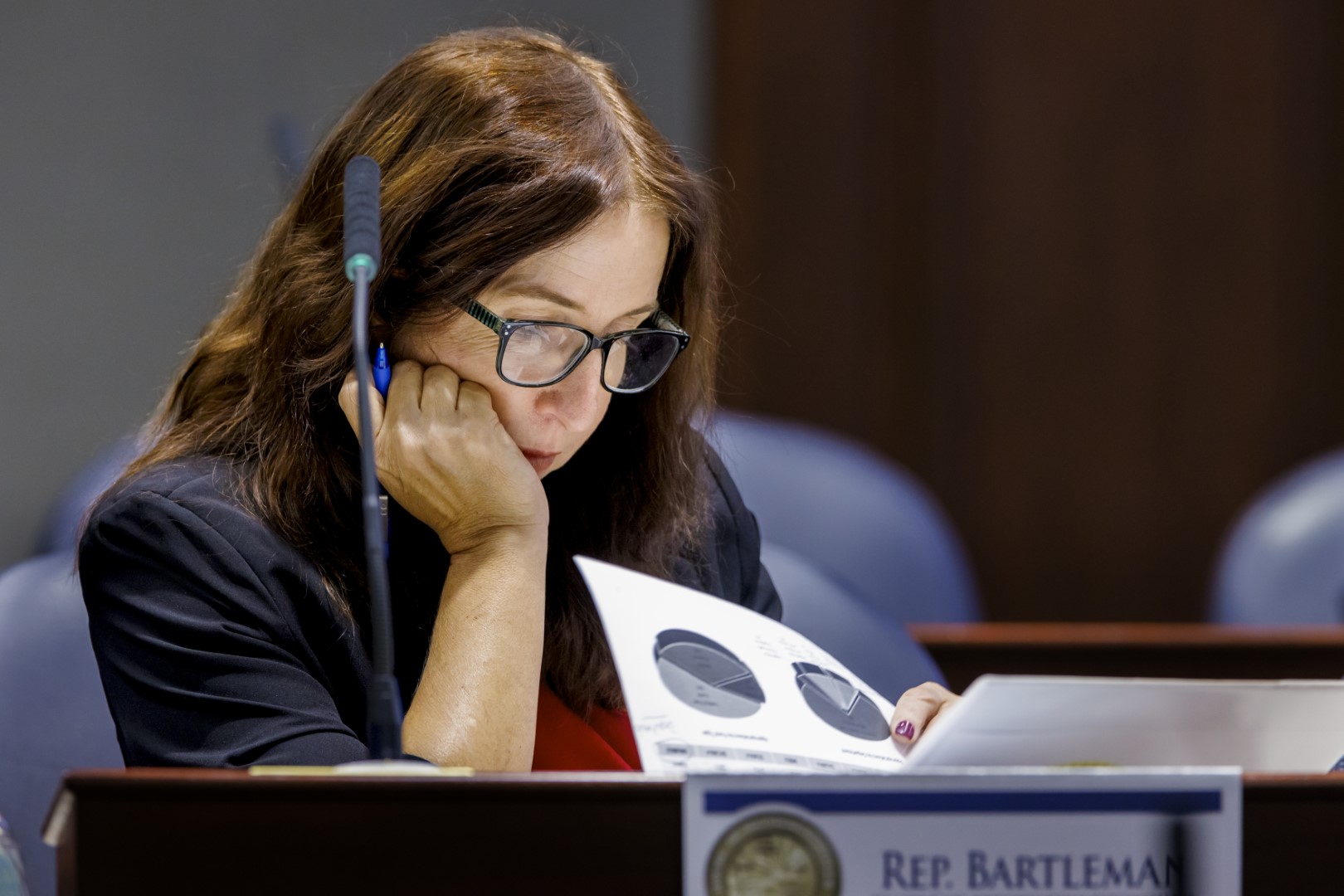
Bartleman also raised the issue of hospital districts and water management districts, which provide vital services while depending on far less flexible revenue streams, some of which come from property taxes.
All are led by Governor-appointed Boards, she said. “So, I don’t think you’re going to accuse them of wasteful spending like you’re accusing the municipalities.”
Democratic Reps. Anna Eskamani of Orlando, Dianne Hart-Lowman of Tampa and Kelly Skidmore of Boca Raton argued HJR 203 was being pushed through without sufficient study or thought by its proponents.
A recent study by the Florida League of Cities found that eliminating or sharply expanding Florida’s homestead exemption would slash municipal property tax revenues by roughly 25% to 46% — and in some cities more than half — creating severe budget gaps that threaten funding for core services.
The losses would be highly uneven, hitting smaller, rural, coastal and residentially dependent communities hardest, where narrow tax bases and infrastructure costs leave little capacity to absorb cuts.
And without state replacement revenue, researchers found, cities would likely face millage hikes of up to 70%, weakened bond ratings, and widening disparities in local service levels across Florida.
Skidmore called HJR 203’s wording misleading, as it suggests localities will have about a decade to adjust, when many would really have just three, and that voters will see savings, when counties and cities could still increase fees and sales taxes to make up the difference.
“Don’t avert your eyes; this bill is an emperor with no clothes,” she said. “Savings don’t come when you take money out of their back pockets instead of their front pockets. There is no savings. There is only a loss of services.”
Several Republicans spoke in defense of the bill, framing it as a matter of principle rather than trying to refute their Democratic peers’ points.
Apopka Rep. Doug Bankson spoke of the Boston Tea Party. He agreed that property taxes are a stable revenue stream for local governments through sometimes volatile periods, but said it’s inappropriate to take another person’s money “to support my lifestyle.”
“What we are doing is we are taxing homeowners upon something that they purchased and yet never truly own,” he said. “That’s the contention.”
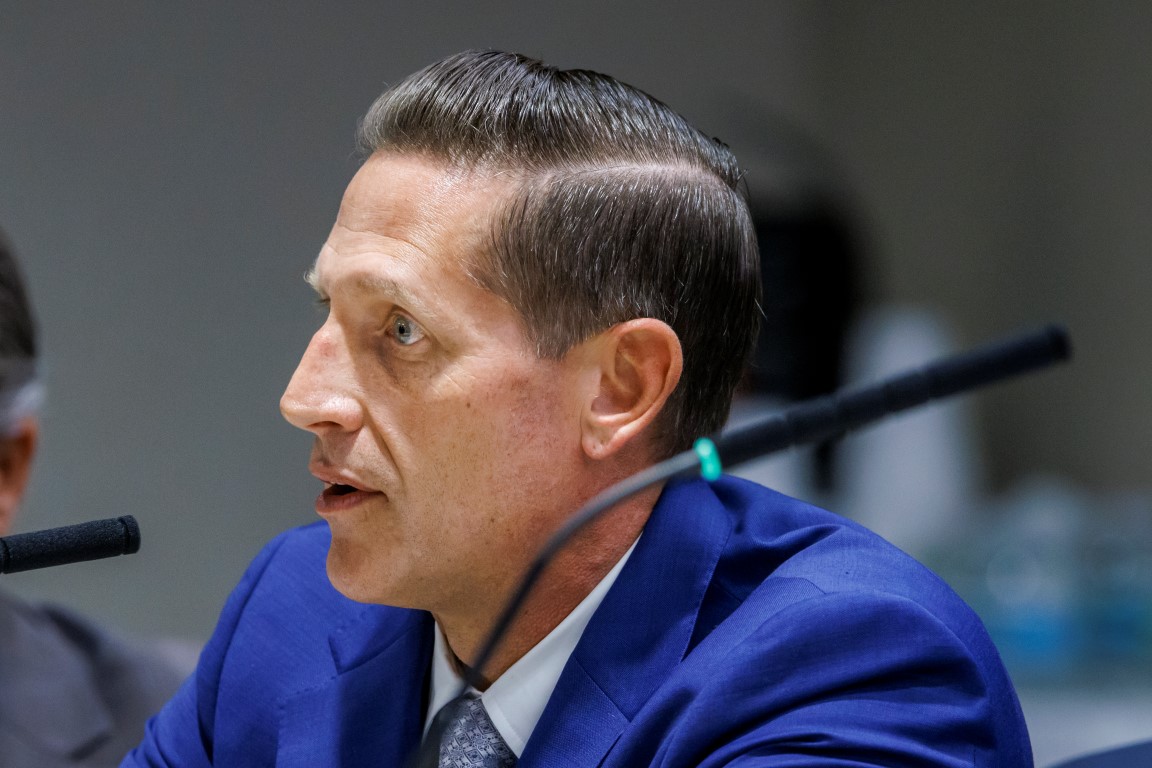
Montverde Republican Rep. Taylor Yarkosky suggested HJR 203 will continue to be fine-tuned on the House floor and as it moves through the Senate. (Miller has amended the bill twice, including a strike-all Thursday that made technical changes to the measure.)
“We’re not creating the law of the land, if you will. We’re creating options,” he said. “The Senate’s going to opine. The Governor’s going to opine before it gets to the ballot. It’s going to be well-vetted policy for the voters to consider, and I am very confident that the voters will make the right decision, like they always do.”
Gov. Ron DeSantis, for his part, has widely criticized the House’s fleet of property tax bills as insufficient, piecemeal “half-measures, which is not what the people are asking for.” Meanwhile, CFO Blaise Ingoglia continued his statewide audit of county and city spending Thursday in Nassau County, where he declared that his Office, so far, has found more than $1.9 billion in excessive spending by local governments in Fiscal Year 2024-25 alone.
Dozens of local officials and advocacy group representatives spoke against HJR 203. Some offered additional context they said is relevant to spending and tax-cutting talks. Others suggested there is an ulterior motive to the proposals.
Notably, not one person from the public spoke in support of the bill.
To Miller’s point about increased local spending, Charles Chapman of the Florida League of Cities said an average fire truck in 2019 cost about $550,000. Today, the price is close to $1.5 million, a 140% increase. Police car prices have risen 12%, and the equipment in them grew by 20%. Dispatch contracts, he continued, have skyrocketed by a whopping 253%.
“The cost of doing business is relevant to population and the price indexing,” he said. “But there’s a lot of other factors that go into local budgeting and spending that influence these types of cost increases.”
County Manager Paul Carlisle told the panel that Glades County’s millage rate has been static for years. But other factors, including a minimum wage ordinance passed in 2020, has driven costs up. The Sheriff’s Department uses 60% of the county’s funds, he said, with other large chunks going to the court system and four other constitutional officers.
“There is no way to make up this money,” he said. “We don’t have grocery stores. We don’t have hospitals. … You can raise the sales tax 100%. It won’t affect us at all. And guess what? Our residents come to our budget meetings and they ask for services … and they want to pay for it.”
Lobbyist Jack Cory, representing Jacksonville Beach through Public Affairs Consultants, cited a report by the nonpartisan Tax Foundation that found “18 states, from New Hampshire to Wyoming,” are engaging in a so-called “tax revolt.” And it’s not for a reason being given, he added.
“This is not an organically proposed issue, and it did not start on the first day of Session,” he said. “This proposal is a get-out-the-vote drive for ’26, not caring what happens in ’27. This is the greatest attack on home rule in over 50 years.”