Legislation that would override local zoning rules to expedite dense housing on contaminated land in Miami-Dade, Broward and Palm Beach counties just advanced through its first House Committee.
Members of the House Intergovernmental Affairs Subcommittee voted 13-2 for the measure (HB 979), which would force local governments to allow owners of environmentally contaminated properties abutting residential land to redevelop their parcels under nearby zoning standards.
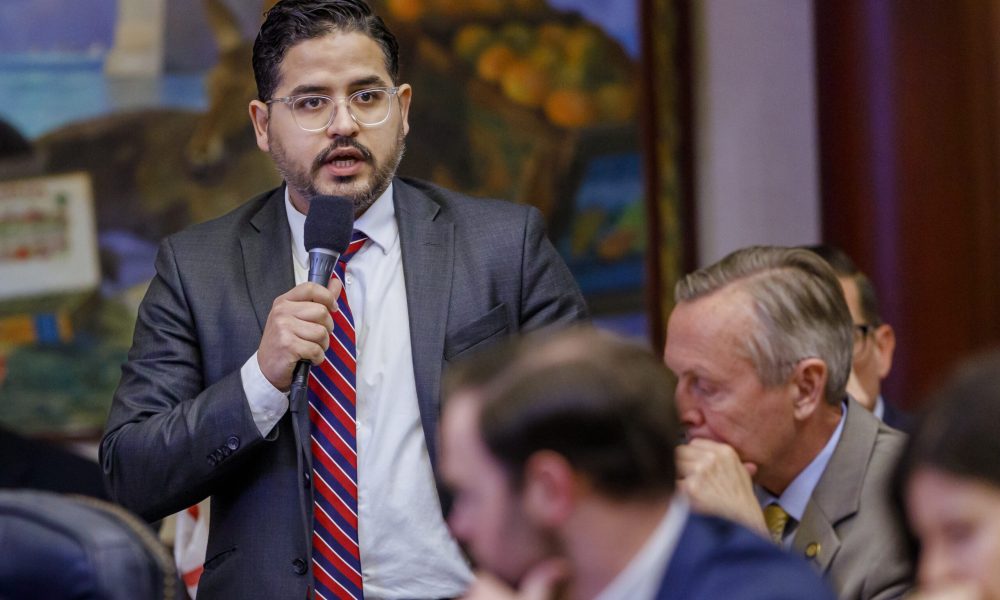
Hialeah Republican Rep. David Borrero, the bill’s sponsor, said the change would address two pressing issues in Florida.
“It takes properties that were otherwise undevelopable or uninhabitable or environmentally contaminated and allows us to make some use out of it. It allows us to provide housing for a much-needed market, and by doing so, you are helping to address the housing crisis, lower the cost of housing and make use of land,” he said.
“This bill is a win-win.”
HB 979, dubbed the “Infill Redevelopment Act,” would apply only to counties with 10 more municipalities and populations of over 1.475 million — Greater Miami, in short — and properties of five acres or more with suspected or known contamination, or mandated environmental cleanup.
Examples of such lands include former gas stations, dry cleaners, landfills, industrial plants, auto repair shops and manufacturing sites where chemicals or heavy metals may have leaked into the soil or groundwater, and properties enrolled or subject to state brownfield or cleanup programs, where testing, monitoring or remediation is required before or during development.
The bill would require local governments to allow those parcels to be developed at the highest residential density and intensity permitted nearby.
If no nearby residential zoning exists, local governments must allow single-family homes or townhomes to be built on the properties with minimum standards set in state law.
Cities and counties would be barred from using zoning, subdivision rules or discretionary approvals to scale back a development.
For former recreation sites like golf courses, HB 979 adds extra conditions, including proof the site has been unused, double park impact fees and a limited right for neighboring property owners to buy the land to preserve it as open space.
On Thursday, the Committee approved a strike-all Borrero filed that added a requirement for an “open-space buffer” between new developments and existing single-family residents and townhouses, and to allow local governments to apply “generally applicable” architectural design standards, if those standards do not affect the density of the proposed development.
Notably, HB 979 does not add new remediation requirements or condition project approvals on cleanup first. State law requires contaminated lands to be assessed and cleaned under rules the Department of Environmental Protection administers.
Additional levels of oversight and cleanup standards fall under Miami-Dade’s Risk-Based Corrective Action ordinance and Broward’s Environmental Assessment and Remediation section. Palm Beach participates in state petroleum cleanup programs.
Americans for Prosperity, Associated Industries of Florida and the Florida Homebuilders Association support the bill.
The only criticism from the dais of the measure came from Miami Democratic Rep. Ashley Gantt, who said preempting local governance and the voice residents would otherwise have in local developments was a nonstarter for her.
“People that live in that community should have the ability to have their local electeds listen to their feedback and make that ultimate decision, even if the property owner requests this and they meet the technical requirements,” she said.
Gantt and Orlando Democratic Rep. Rita Harris voted “no” on the bill.
Rep. Dan Daley, a Coral Springs Democrat who has worked as the in-house counsel of a developer specializing in the types of developments the bill would impact, shared a more favorable view.
He said the properties at issue are “really difficult” to develop, and while HB 979 may benefit from more fine-tuning, its overall impact is positive.
“Sometimes folks get a little unrealistic, and I always kind of default to (the old saying), ‘Buyer beware.’ If you bought (a property next to) a golf course (and) there wasn’t some sort of agreement that said that it was going to be a golf course forever, then you really don’t have the right to light your hair on fire when somebody comes in … to repurpose that property and also, by the way, address our affordable housing crisis,” he said.
“Your bill does a lot of that.”
HB 979 will next go to the Housing, Agriculture and Tourism Subcommittee, its penultimate stop before reaching a floor vote. Its upper-chamber companion (SB 1434) by Miami Republican Sen. Alexis Calatayud — whose Live Local Act included policies similar to those HB 979 would impose — cleared the first of three Committees to which it was referred late last month.