Connect with us

Business

Bill Gates says misinformation is the burden passed to children, after daughter harassed online

Published

on


There are many problems billionaire tech tycoon Bill Gates is hoping to help solve: eradicating polio, water sanitization, and agricultural development to name a few. But one frontier he worries is being passed on to future generations is misinformation.

Misinformation is a problem, the Microsoft cofounder said, that we are “handing to the younger generation.”

Speaking to CNBC Make It, Gates, worth $118 billion per the Bloomberg Billionaires Index, said he had been naive to assume that “when we made information available, that people would want correct information.”

A high-profile figure himself, Gates has seen scrutiny extend to his family. His daughter Phoebe, in particular, has struggled with being harassed online.

“Hearing my daughter talk about how she’d been harassed online, and how her friends experienced that quite a bit, brought that into focus in a way that I hadn’t thought about before,” Gates—a father of three—continued.

Gates’ youngest daughter—co-founder of AI shopping tool Phia—has previously spoken about misconceptions surrounding her family and relationships, including being “memed for being in an interracial relationship.”

An internet meme is an image or video, usually intended to be humorous, that is spread online.

Despite being aware of how misinformation is spreading online, Gates said he can understand why certain audiences flock to platforms that reflect their views—a phenomenon known as confirmation bias.

“We have context where we want correct information, like hopefully when we want medical advice,” Gates said. “But then we kind of like, in our community and enclave, have these shared views that kind of pull us together.”

He explained: “Even I will wallow. Let’s say there’s a politician I don’t like, and there’s some article online criticizing him a little bit. I’m like, ‘Oh, that’s such a good critique, [and] I enjoyed reading it, even if it was exaggerated.’”

AI could help curb misinformation

Gates’ probing questions about how to control the spread of incorrect information online may be at odds with the take of fellow billionaire Elon Musk.

Gates said in the interview: “We should have free speech. But if you’re inciting violence, if you’re causing people not to take vaccines, where are those boundaries? Even the U.S. should have rules, and then if you have rules, what is it? Is it some AI that encodes those rules? You have billions in activity, and if you catch it a day later the harm is done.”

This isn’t the first time Gates has proposed the emerging technology as a tool against misinformation and deepfakes (images and videos which are incredibly realistic but are not authentic).

In a blog post on his website, GatesNotes, in July 2023, the Bill and Melinda Gates Foundation cofounder wrote: “This will be a cyclical process: Someone finds a way to detect fakery, someone else figures out how to counter it, someone else develops counter-countermeasures, and so on.

“It won’t be a perfect success, but we won’t be helpless either.”

Elon Musk’s take on freedom of speech

Musk, the CEO of Tesla and owner of X—the platform previously known as Twitter—is a free-speech absolutist who is unlikely to appreciate the notion of rules being placed on what he, or others, can say.

Musk believes freedom of speech is the “bedrock of democracy” and has vowed to battle apparent censorship of his platform.

That being said, a debate over how to control misinformation wouldn’t be the first time the views of Musk and Gates have been at odds. In July 2024, for example, Musk threatened Gates would be “obliterated” for apparently holding a bearish position on Tesla stock. Fortune could not confirm whether Gates still owns a short position on the EV maker.

Likewise, Gates has said his management style is better than that of Musk—a boss he believes may push “too hard.” Meanwhile, Musk has claimed Gates doesn’t understand artificial intelligence, saying his insight on the topic is “limited.”

More recently, the tech titans have been at loggerheads over Musk’s work at the Department of Government Efficiency (DOGE.) In January 2025, Gates said he hoped some of the foreign aid and personnel cuts enacted by DOGE would be rolled back: “Elon I think said ‘Yeah, we made a mistake, we went overboard,’ but … what is the equilibrium? How many of those people can be kept so we can continue to save tens of millions of lives?” Gates also accused Musk of some “insane” political interference in 2025.

In November, Musk revived the bad blood between the pair, writing on X that if Gates hadn’t closed out his alleged “crazy short position” against Tesla, “he had better do so soon.”

It seems misinformation may just be another of many topics on which the billionaires will have to agree to disagree.

More on Bill Gates:

  • Bill Gates’ $200 billion moonshot: Inside the biggest bet on humanity a philanthropist has ever made
  • Bill Gates believes Alzheimer’s blood tests should be part of routine medicals—such prevention means you could work into your 90s if you wanted to
  • Bill Gates calls on Congress to ‘show its values’ on foreign aid, or this year will see children’s deaths go up instead of down

A version of this article was first published on September 5, 2024.

Join us at the Fortune Workplace Innovation Summit May 19–20, 2026, in Atlanta. The next era of workplace innovation is here—and the old playbook is being rewritten. At this exclusive, high-energy event, the world’s most innovative leaders will convene to explore how AI, humanity, and strategy converge to redefine, again, the future of work. Register now.


Source link

Continue Reading

Business

Paraplegic engineer becomes first wheelchair user to blast into space — laughing all the up

Published

on


A paraplegic engineer from Germany blasted off on a dream-come-true rocket ride with five other passengers Saturday, leaving her wheelchair behind to float in space while beholding Earth from on high.

Severely injured in a mountain bike accident seven years ago, Michaela Benthaus became the first wheelchair user in space, launching from West Texas with Jeff Bezos’ company Blue Origin. She was accompanied by a retired SpaceX executive also born in Germany, Hans Koenigsmann, who helped organize and, along with Blue Origin, sponsored her trip. Their ticket prices were not divulged.

An ecstatic Benthaus said she laughed all the way up — the capsule soared more than 65 miles (105 kilometers) — and tried to turn upside down once in space.

“It was the coolest experience,” she said shortly after landing.

The 10-minute space-skimming flight required only minor adjustments to accommodate Benthaus, according to the company. That’s because the autonomous New Shepard capsule was designed with accessibility in mind, “making it more accessible to a wider range of people than traditional spaceflight,” said Blue Origin’s Jake Mills, an engineer who trained the crew and assisted them on launch day.

Among Blue Origin’s previous space tourists: those with limited mobility and impaired sight or hearing, and a pair of 90-year-olds.

For Benthaus, Blue Origin added a patient transfer board so she could scoot between the capsule’s hatch and her seat. The recovery team also unrolled a carpet on the desert floor following touchdown, providing immediate access to her wheelchair, which she left behind at liftoff. She practiced in advance, with Koenigsmann taking part with the design and testing. An elevator was already in place at the launch pad to ascend the seven stories to the capsule perched atop the rocket.

Benthaus, 33, part of the European Space Agency’s graduate trainee program in the Netherlands, experienced snippets of weightlessness during a parabolic airplane flight out of Houston in 2022. Less than two years later, she took part in a two-week simulated space mission in Poland.

“I never really thought that going on a spaceflight would be a real option for me because even as like a super healthy person, it’s like so competitive, right?” she told The Associated Press ahead of the flight.

Her accident dashed whatever hope she had. “There is like no history of people with disabilities flying to space,” she said.

When Koenigsmann approached her last year about the possibility of flying on Blue Origin and experiencing more than three minutes of weightlessness on a space hop, Benthaus thought there might be a misunderstanding. But there wasn’t, and she immediately signed on.

It’s a private mission for Benthaus with no involvement by ESA, which this year cleared reserve astronaut John McFall, an amputee, for a future flight to the International Space Station. The former British Paralympian lost his right leg in a motorcycle accident when he was a teenager.

An injured spinal cord means Benthaus can’t walk at all, unlike McFall who uses a prosthetic leg and could evacuate a space capsule in an emergency at touchdown by himself. Koenigsmann was designated before flight as her emergency helper; he and Mills lifted her out of the capsule and down the short flight of steps at flight’s end.

“You should never give up on your dreams, right?” Benthaus urged following touchdown.

Benthaus was adamant about doing as much as she could by herself. Her goal is to make not only space accessible to the disabled, but to improve accessibility on Earth too.

While getting lots of positive feedback within “my space bubble,” she said outsiders aren’t always as inclusive.

“I really hope it’s opening up for people like me, like I hope I’m only the start,” she said.

Besides Koenigsmann, Benthaus shared the ride with business executives and investors, and a computer scientist. They raised Blue Origin’s list of space travelers to 86.

Bezos, the billionaire founder of Amazon, created Blue Origin in 2000 and launched on its first passenger spaceflight in 2021. The company has since delivered spacecraft to orbit from Cape Canaveral, Florida, using the bigger and more pow


Source link

Continue Reading

Business

Georgia regulators OK 50% power capacity boost, betting AI data center demand will materialize

Published

on


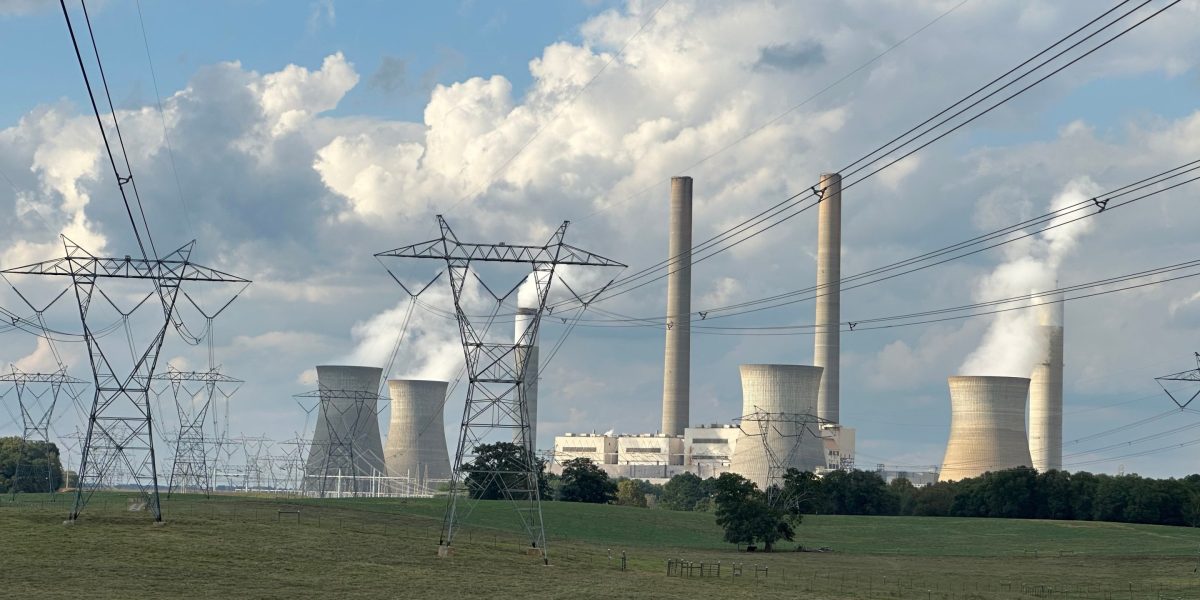
Georgia’s only private electric utility plans to increase power capacity by 50% after state regulators on Friday agreed 5-0 that the plan is needed to meet projected demand from data centers.

It would be one of the biggest build-outs in the U.S. to meet the insatiable electricity demand from developers of artificial intelligence. The construction cost would be $16.3 billion, but staff members say customers will pay $50 billion to $60 billion over coming decades, including interest costs and guaranteed profit for the monopoly utility.

Georgia Power Co. and the Public Service Commission pledge large users will more than pay for their costs, and that spreading fixed costs over more customers, could help significantly cut residents’ power bills beginning in 2029.

“Large energy users are paying more so families and small businesses can pay less, and that’s a great result for Georgians,” Georgia Power CEO Kim Greene said in a statement after the vote.

But opponents say the five elected Republicans on the commission are greenlighting a risky bet by the utility to chase data center customers with existing ratepayers left holding the bag if demand doesn’t materialize.

“The need for 10,000 megawatts of new capacity resources on the system in the next six years isn’t here,” said Bob Sherrier, a lawyer representing some opponents. “It just isn’t, and it may never be.”

The approval came less than two months after voters rebuked GOP leadership, ousting two incumbent Republicans on the commission in favor of Democrats by overwhelming margins. Those two Democrats won in campaigns that centered on six Georgia Power rate increases commissioners have allowed in recent years, even though the company agreed to a three-year rate freeze in July.

Peter Hubbard and Alicia Johnson — the Democrats who will take office Jan. 1 — opposed Friday’s vote. But current commissioners refused to delay.

Electric bills have emerged as a potent political issue in Georgia and nationwide, with grassroots opposition to data centers partly based on fears that other customers will subsidize power demands of technology behemoths.

Georgia Power is the largest unit of Atlanta-based Southern Co. It says it needs 10,000 megawatts of new capacity — enough to power 4 million Georgia homes — with 80% of that flowing to data centers. The company has 2.7 million customers today, including homes, businesses and industries.

Whether the company’s projections of a huge increase in demand will pan out has been the central argument. Georgia Power and commission staff agreed Dec. 9 to allow the company to build or acquire all the desired capacity, despite staff earlier saying the company’s forecast included too much speculative construction.

In return, the company agreed that after the current rate freeze ends in 2028, it would use revenue from new customers to place “downward pressure” on rates through 2031. That would amount to at least $8.50 a month, or $102 a year, for a typical residential customer. That customer currently pays more than $175 a month, including taxes.

“So we’re taking advantage of the upsides from this additional revenue, but allow it to shift the downside and the risk over to the company. And I’m real proud of that,” Commission Chairman Jason Shaw said after the vote.

But “downward pressure” doesn’t guarantee a rate decrease.

“It doesn’t mean your bills are going down,” said Liz Coyle, executive director of consumer group Georgia Watch. “It means that maybe they’re not going up as fast.”

Existing customers would pay for part of the construction program that doesn’t serve data centers. More importantly, opponents fear Georgia Power’s pledge of rate relief can’t be enforced, or won’t hold up over the 40-plus years needed to pay off new natural-gas fired power plants.

In a Monday news conference, Hubbard likened it to a mortgage “to build a massive addition to your home for a new roommate, big tech.”

“If in 10 years, the AI bubble bursts or the data centers move to a cheaper state, then the roommate moves out, but the mortgage doesn’t go away,” he said.

Staff members say the commission must watch demand closely and that if data centers don’t use as much power as projected, Georgia Power must drop agreements to purchase wholesale power, close its least efficient generating plants and seek additional customers.

Many opponents oppose any new generation fueled by natural gas, warning carbon emissions will worsen climate change. Some opponents were escorted out of the commission meeting by police after they began chanting “Nay! Nay! Nay! The people say nay!”

“Increased natural gas output for the sake of these silicon billionaire kings seems like a lose-lose,” opponent Zak Norton told commissioners Friday.


Source link

Continue Reading

Business

U.S. forces stop second tanker off the coast of Venezuela after Trump vows oil ‘blockade’

Published

on


U.S. forces on Saturday stopped an oil tanker off the coast of Venezuela for the second time in less than two weeks as President Donald Trump continues to ramp up pressure on Venezuelan President Nicolás Maduro.

The pre-dawn operation comes days after Trump announced a “blockade” of all sanctioned oil tankers coming in and out of the South American country and follows the Dec. 10 seizure by American forces of an oil tanker off Venezuela’s coast.

Homeland Security Secretary Kristi Noem confirmed that the U.S. Coast Guard with help from the Defense Department stopped the oil tanker that was last docked in Venezuela. She also posted on social media an unclassified video of a U.S helicopter landing personnel on a vessel called Centuries.

A crude oil tanker flying under the flag of Panama operates under the name and was recently spotted near the Venezuelan coast, according to MarineTraffic, a project that tracks the movement of vessels around the globe using publicly available data. It was not immediately clear if the vessel was under U.S. sanctions.

“The United States will continue to pursue the illicit movement of sanctioned oil that is used to fund narco terrorism in the region,” Noem wrote on X. “We will find you, and we will stop you.”

The action was a “consented boarding,” with the tanker stopping voluntarily and allowing U.S. forces to board it, according to a U.S. official who was not authorized to comment publicly and spoke on the condition of anonymity.

Pentagon and White House officials did not immediately respond to a requests for comment.

Venezuela’s government in a statement Saturday characterized the U.S. forces’ actions as “criminal” and vowed to not let them “go unpunished” by pursuing various legal avenues, including by filing complaints with the United Nations Security Council.

“The Bolivarian Republic of Venezuela categorically denounces and rejects the theft and hijacking of another private vessel transporting Venezuelan oil, as well as the enforced disappearance of its crew, perpetrated by United States military personnel in international waters,” according to the statement.

Trump following the first tanker seizure, of a vessel named the Skipper, this month vowed that the U.S. would carry out a blockade of Venezuela. It all comes as Trump has ratcheted up his rhetoric toward Maduro and warned that the longtime Venezuelan leader’s days in power are numbered.

And the president this week demanded that Venezuela return assets that it seized from U.S. oil companies years ago, justifying anew his announcement of a “blockade” against oil tankers traveling to or from the South American country that face American sanctions.

Trump cited the lost U.S. investments in Venezuela when asked about his newest tactic in a pressure campaign against Maduro, suggesting the Republican administration’s moves are at least somewhat motivated by disputes over oil investments, along with accusations of drug trafficking. Some sanctioned tankers already are diverting away from Venezuela.

“We’re not going to be letting anybody going through who shouldn’t be going through,” Trump told reporters earlier this week. “You remember they took all of our energy rights. They took all of our oil not that long ago. And we want it back. They took it — they illegally took it.”

U.S. oil companies dominated Venezuela’s petroleum industry until the country’s leaders moved to nationalize the sector, first in the 1970s and again in the 21st century under Maduro and his predecessor, Hugo Chávez. Compensation offered by Venezuela was deemed insufficient, and in 2014, an international arbitration panel ordered the country’s socialist government to pay $1.6 billion to ExxonMobil.

The targeting of tankers comes as Trump has ordered the Defense Department to carry out a series of attacks on vessels in the Caribbean and eastern Pacific Ocean that his administration alleges are smuggling fentanyl and other illegal drugs into the United States and beyond.

At least 104 people have been killed in 28 known strikes since early September.

The strikes have faced scrutiny from U.S. lawmakers and human rights activists, who say the administration has offered scant evidence that its targets are indeed drug smugglers and that the fatal strikes amount to extrajudicial killings.

The Coast Guard, sometimes with help from the Navy, had typically interdicted boats suspected of smuggling drugs in the Caribbean Sea, searched for illicit cargo, and arrested the people aboard for prosecution.

The administration has justified the strikes as necessary, asserting it is in “armed conflict” with drug cartels aimed at halting the flow of narcotics into the United States. Maduro faces federal charges of narcoterrorism in the U.S.

The U.S. in recent months has sent a fleet of warships to the region, the largest buildup of forces in generations, and Trump has stated repeatedly that land attacks are coming soon.

Maduro has insisted the real purpose of the U.S. military operations is to force him from power.

White House chief of staff Susie Wiles said in an interview with Vanity Fair published this week that Trump “wants to keep on blowing boats up until Maduro cries uncle.”

This story was originally featured on Fortune.com


Source link

Continue Reading

Trending

Copyright © Miami Select.