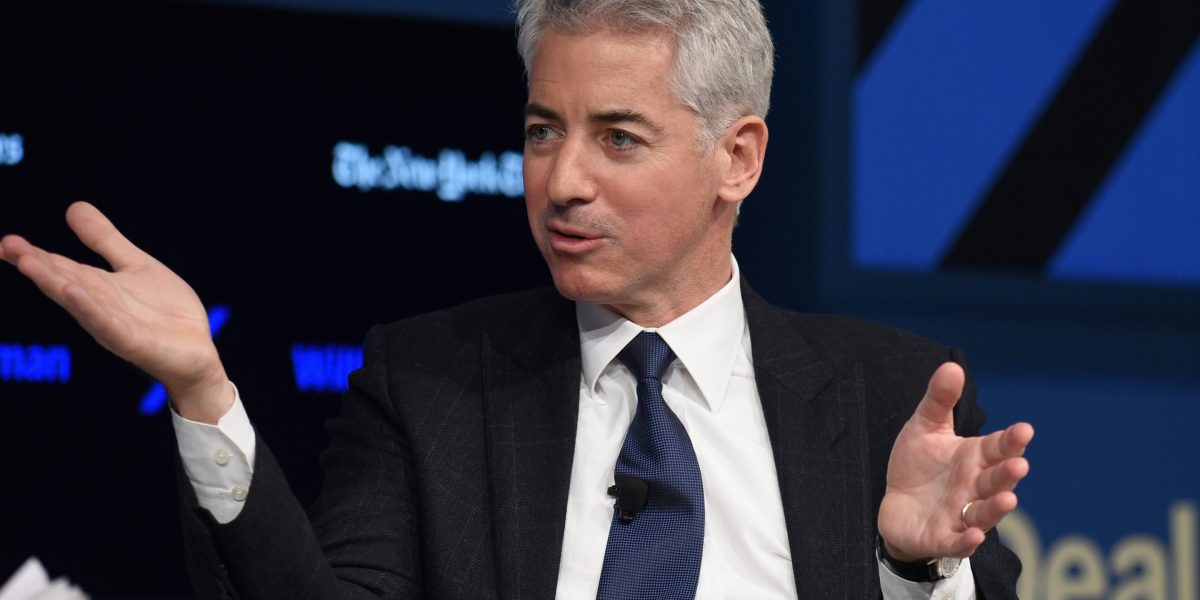
“Some of the highest quality businesses in the world are trading at extremely cheap prices,” Ackman wrote. “Ignore the MSM. One of the most one-sided wars in history that will end well for the U.S. and the world. And we have the potential for a large peace dividend.”
Then he added, almost as an aside, that “Fannie and Freddie are stupidly cheap. Asymmetry at its best. They could be a 10X and it could happen soon.”
Ackman’s tweet was the only obvious catalyst as Fannie Mae surged as much as 41% in Monday trading, while Freddie Mac climbed as much as 34%. These were the largest single-day moves for each stock since May of last year, when Trump floated the idea of privatizing the two entities.
Ackman’s post clearly touched a nerve. Investors are feeling “extreme fear” according to CNN’s Fear & Greed Index as the Iran war, now in its sixth week, wreaks havoc on markets. Oil prices are spiking on threats to the Strait of Hormuz, which Iran’s semiofficial Fars News Agency reported will be used as a toll and blocked off to Israel, and American stocks sold off last week and again on Monday. But Ackman’s message to anyone watching their portfolio bleed: get over it.
Many investors seemed to take that confidence at face value. But Ackman isn’t a neutral source, in fact, he’s the single biggest beneficiary of the trade he’s recommending. Pershing Square Capital Management is the largest common shareholder in both companies, holding more than 210 million shares combined. He’s been in the position for over a decade and has helped lead the charge to get Fannie and Freddie privatized.
The timing also might raise eyebrows, as Monday is the last trading day of Q1 2026, which matters for hedge funds. The price a stock closes at on the final day of the quarter is the price that shows up in performance reports to investors. A 40% pop in your largest position on that exact day is, at minimum very convenient.
Ackman has previous in this regard. On December 30, 2024 — the second-to-last trading day of Q4 — he published a detailed thesis calling the GSE trade his best idea for 2025. That post got 4.9 million views and sent shares surging by similar margins.
Still, the valuation disparity that Ackman is pointing to is genuinely striking. Fannie printed $14.4 billion in net income last year, while Freddie printed $10.7 billion. Their combined market cap before Monday’s move was roughly $10 billion, meaning both companies earn more than twice their market value annually.
Michael Burry, of “Big Short” fame, also encouraged Ackman and responded to his post, writing that he “cannot emphasize enough how rare this is in this market.” Burry also added extra thoughts on the housing market in a different post, where he blamed Fannie and Freddie’s long-time conservatorship for keeping the housing supply low, in addition to what he called artificially low interest rates and 6 to 7 trillion in “helicopter cash” during the COVID-19 pandemic.
“Government created the problem and now maintains policies that prevent free markets from reaching a solution, not the least of which is keeping the GSEs inefficiently run while in conservatorship,” Burry wrote.
The bullish case for the GSEs, that the Trump administration will privatize the two via IPO, potentially by the end of the year, has been the thesis since they went under government conservatorship in 2008, and it has never materialized. Fannie topped out at around $15.30 in September 2025 due to peak privatization optimism sparked by Ackman and his allies. Even after Monday’s rally, both stocks remain down nearly 60% from that peak. At the ResiDay housing conference in November, White House housing director Bill Pulte said that a decision on the IPO would happen sometime by the end of that quarter or early this year, but that decision has yet to come.
Some critics, like UCLA economist Wesley Yin, argue that a rushed privatization process could raise borrowing costs and risk recreating the conditions that fueled the Great Recession; namely, allowing for-profit companies with access to risk-free government backed borrowing. He raised questions about whether the government would truly risk repeating that mistake.
In his December post, Ackman acknowledged the uncertainty with some legalese. “There remains a high degree of uncertainty about the ultimate outcome so you should limit your exposure to what you can afford to lose if you choose to invest,” he wrote.
That caveat was gone Sunday night. Ackman wrote, “ignore the bears.”