Nike investors will look for signs this week that the recovery glimpsed last quarter is sustainable and that a bigger marketing budget is helping the sportswear maker claw back market share lost to nimbler rivals.
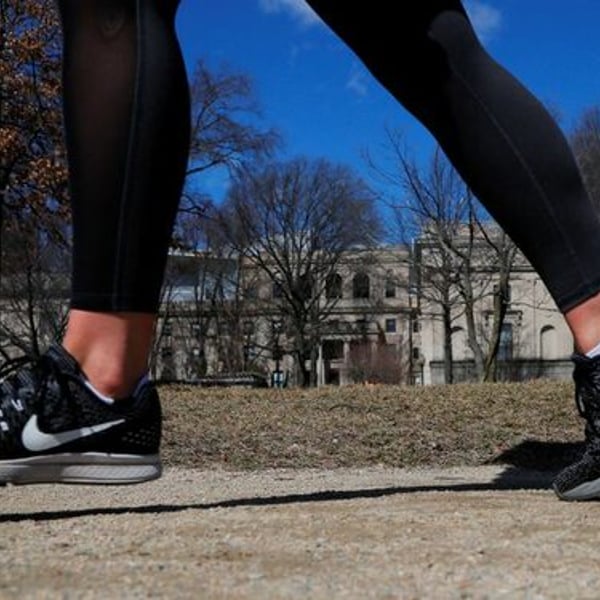
A jogger wearing Nike shoes runs along the Charles River in Cambridge, Massachusetts, U.S., March 18, 2019 – REUTERS/Brian Snyder/File Photo
Nike, long synonymous with sport, is trying to regain momentum after ceding ground to hipper alternatives such as On and Deckers’ Hoka. Demand in China has been choppy. CEO Elliott Hill has vowed to return Nike to its roots, focusing on core sports like running and soccer.
That first means aggressively clearing out old inventory- usually at discounts- which is weighing on revenue at a time when steep tariffs are pressuring margins. Last quarter, Nike raised its expected tariff costs this year to $1.5 billion, citing exposure to high-tariff countries such as Vietnam.
The company, set to report second-quarter earnings on Thursday, had nearly 60 marketing and communications jobs open on its website as of Tuesday and held a rare job fair for communications professionals in New York this week. Finance chief Matthew Friend in September forecast “an acceleration of demand creation investment”- corporate speak for marketing spend.
That spend is expected to top $5 billion in 2026, according to LSEG data, up from $4.68 billion in fiscal 2025. The added focus on marketing is “a bullish sign that they feel better about the product,” but also that “they acknowledge they need to make the appropriate investment behind it,” said Mari Shor, senior equities analyst at Columbia Threadneedle, which holds Nike stock.
Nike is expected to report that net profit fell for the sixth straight quarter in the three months ended November 30, more than halving to $562.35 million, according to LSEG data. Second-quarter revenue likely fell again – down 1.09% to $12.22 billion- after a small uptick in the first quarter. Gross margin likely slipped to 40.77% from 42.2% in the first quarter.
In recent years, Nike has lacked new, innovative products to highlight, leading its ads to focus more on the storied brand than individual products, said Morningstar analyst David Swartz. As the company starts to innovate on new products, its advertising could evolve, he said. But Swartz added: “No one is expecting a great quarter.”
Competition in China, which accounts for 15% of sales, has been stiff from domestic brands Anta and Li-Ning. Retail in China operates mostly through mono-brand stores, limiting a company’s ability to sell through diverse channels as Nike does in the US.
Nike has invested heavily in new versions of its running shoe lines Pegasus Premium and Vomero 18- as the running category has performed well- while scaling back production of sneakers such as the Air Force 1. With new products boosting performance- and the sports marketing bonanza that is the World Cup six months away- Nike faces a golden chance to reaffirm its cultural cachet.
It has also forged partnerships with Kim Kardashian‘s activewear and essentials brand Skims, while promoting sustainability initiatives such as recycled materials to align with evolving consumer demands for ethical shopping.
The deal was signed by Swinger International, led by Mathias Facchini, and 21 Invest, the private equity fund founded in 1992 by Alessandro Benetton, which acquired a majority stake in the French brand in July 2016, when it was known as 21 Investimenti. Swinger International also owns Genny, produces the Just Cavalli collections and, as of this morning, holds a minority stake in Etro.
Philippe Model, an artist and painter, founded his eponymous label in Paris in 1978. In the 1980s, he created the innovative and highly successful ‘Elastique,’ a comfortable heeled shoe constructed with elastic straps. Throughout his career, he collaborated with leading Parisian designers and houses, including Christian Dior, Claude Montana, Lanvin, and Jean-Paul Gaultier.
The company expanded from haute couture accessories to interior design projects, and in 2008 it was relaunched as a maker of premium sneakers for men and women, with all footwear produced in Italy’s Riviera del Brenta footwear district. Its 2024 turnover is estimated by the business press at around €30 million.
This article is an automatic translation. Click here to read the original article.
From 2026, Umbro’s France business will be managed by the Drôme-based group Textiss. The company, led by Sylvain Caire and specialising in men’s underwear, notably develops its Freegun brand, as well as licensed products for Pierre Cardin and Von Dutch. Textiss is taking over Umbro’s footwear and textile licence in France, which had been held by the Royer Group for 10 years.
Textiss takes over Umbro’s footwear and textile licence for the French market – Umbro
“As owner of the Umbro brand, the Iconix Group has decided to entrust the Textiss Group with the textile and footwear licence in France from 2026, a natural evolution that continues the historic relationship between Iconix, Royer, and Textiss,” the group explained in a press release on December 19, adding that Textiss has been Umbro’s underwear and socks licensee in France for a decade.
“In agreement with the Royer Group, the licence will be subject to an organised and carefully managed transition,” said the group. “From January 2026, Textiss will manage orders for the second half of 2026, ensuring a smooth operational handover for all customers and partners.”
The American Iconix Group, a specialist in the licensed brand development model, was seeking a solution for the licence covering the key products of the British sporting goods brand it acquired from Nike in 2012. The Royer Group held the licence after taking it over in 2016.
With the French specialist in the development of footwear and sportswear brands facing difficulties, Iconix ultimately opted for the Châteauneuf-du-Rhône-based group to take on the brand’s key categories. Umbro currently outfits the Le Havre football club, HAC.
Neither the value of the deal nor details of the organisation concerning the teams that have worked or will work on the licence have been disclosed.
This article is an automatic translation. Click here to read the original article.
Under Armour Inc. has laid off two employees who worked on Stephen Curry’s shoe and apparel brand and moved others to new jobs as the athletic company winds down its partnership with the basketball star.
Stephen Curry collaborated with Under Armour on branded goods – Curry
The company is disbanding the team that worked on the brand despite plans to sell new Curry merchandise through October, according to a person familiar with the matter who wasn’t authorised to speak publicly.
A spokeswoman for Under Armour said the company doesn’t comment on personnel-related decisions. Representatives for Curry didn’t immediately respond to messages seeking comment.
Last month Under Armour and Curry announced their surprise separation, ending a yearslong relationship that had helped boost sales and draw attention to the brand. Under Armour still plans to release the Curry 13 sneaker in February and says additional colorways and apparel collections will be available through October.
The end of the tie-up adds to growing pressure at Under Armour, whose shares have fallen 45% this year. The company has been trying to stem two years of sales declines by increasing marketing and prioritising core products.
The split came after Curry and his advisers became frustrated with what they considered to be a lack of investment in the brand and sales of the division hadn’t met their expectations or the company’s, Bloomberg News has previously reported.
Under Armour has said it will incur an additional $95 million in restructuring costs in part tied to the separation.