Connect with us

Business

Bessent calls anti-tariff TV ad ‘psy-ops’ and says rescue of Argentina is still ‘America first’

Published

on


Treasury Secretary Scott Bessent had sharply contrasting views of longtime U.S. ally Canada, which is a top target in President Donald Trump’s trade war, and Argentina, which is getting a U.S. currency lifeline.

In an interview Sunday on NBC’s Meet the Press with Kristen Welker, he was asked about the additional 10% tariff Trump said he will impose on Canada due to an anti-tariff TV ad that Ontario’s government aired.

“This is a kind of propaganda against U.S. citizens. It’s psy-ops,” Bessent replied, using shorthand for psychological operations.

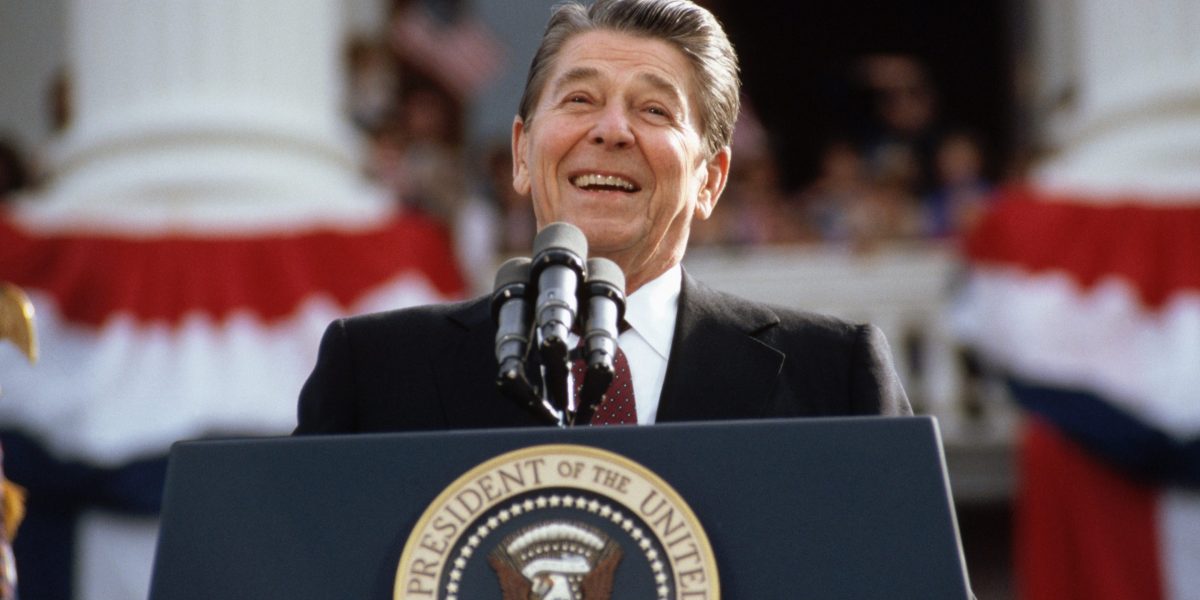
The ad features remarks from President Ronald Reagan criticizing tariffs. Ontario’s premier said he would take down the ad on Monday, after the first two games of the World Series between the Toronto Blue Jays and the Los Angeles Dodgers.

In a Truth Social post on Saturday, Trump claimed the ad was a “misrepresentation of the facts,” though trade experts say it was not, and a “hostile act.” He had earlier called off talks with Canada over the ad.

He also said it was meant to influence the Supreme Court, which will hear arguments on Nov. 5 in a case disputing his ability to invoke International Emergency Economic Powers Act to justify tariffs

The Canadian prime minister’s office and the Ontario premier’s office didn’t immediately respond to requests for comment.

But during an economic forum in Malaysia, Prime Minister Mark Carney appeared to sideline Ontario, telling reporters that talks with the U.S. are the “sole responsibility of the government of Canada.”

Later in the NBC interview, Bessent was asked about a $20 billion currency swap line that the U.S. extended to Argentina, which has struggled to prop up its peso.

The rescue has come under criticism, including from Republicans like Rep. Marjorie Taylor Greene, who questioned how helping Argentina with billions of dollars is “America first” while Americans are struggling with high costs.

“It is America first because we are supporting a U.S. ally,” Bessent said. “There will be no taxpayer losses. This is a swap line. This is not a bail-out.”

He added that the money for Argentina comes from the Treasury Department’s Exchange Stabilization Fund, which has never lost money and will not with its current program.

However, U.S. currency intervention has so far failed to halt the peso’s slide. And Wall Street expects Argentine President Javier Milei, who has drawn praise from Trump and other Republicans, to devalue the peso soon after the country’s midterm elections on Sunday, with some analysts wondering if the U.S. will get paid back.

Bessent reiterated that the administration seeks to prevent the emergence of another “failed state” in Latin America that would join Venezuela.

“So we think it is much better to use American economic power up front to stabilize a friendly government and lead the way,” he added. “Because we’ve got many other governments in Latin America, Bolivia, Ecuador, Paraguay, who all want to follow. So I would rather extend a swap line than be shooting at the boats carrying drugs … coming out of Venezuela.”


Source link

Continue Reading

Business

Supreme Court rejects call to overturn its decision legalizing same-sex marriage nationwide

Published

on


The Supreme Court on Monday rejected a call to overturn its landmark decision that legalized same-sex marriage nationwide.

The justices, without comment, turned away an appeal from Kim Davis, the former Kentucky court clerk who refused to issue marriage licenses to same-sex couples after the high court’s 2015 ruling in Obergefell v. Hodges.

Davis had been trying to get the court to overturn a lower-court order for her to pay $360,000 in damages and attorney’s fees to a couple denied a marriage license.

Her lawyers repeatedly invoked the words of Justice Clarence Thomas, who alone among the nine justices has called for erasing the same-sex marriage ruling.

Thomas was among four dissenting justices in 2015. Chief Justice John Roberts and Justice Samuel Alito are the other dissenters who are on the court today.

Roberts has been silent on the subject since he wrote a dissenting opinion in the case. Alito has continued to criticize the decision, but he said recently he was not advocating that it be overturned.

Justice Amy Coney Barrett, who was not on the court in 2015, has said that there are times when the court should correct mistakes and overturn decisions, as it did in the 2022 case that ended a constitutional right to abortion.

But Barrett has suggested recently that same-sex marriage might be in a different category than abortion because people have relied on the decision when they married and had children.

Human Rights Campaign president Kelley Robinson praised the justices’ decision not to intervene. “The Supreme Court made clear today that refusing to respect the constitutional rights of others does not come without consequences,” Robinson said in a statement.

Davis drew national attention to eastern Kentucky’s Rowan County when she turned away same-sex couples, saying her faith prevented her from complying with the high court ruling. She defied court orders to issue the licenses until a federal judge jailed her for contempt of court in September 2015.

She was released after her staff issued the licenses on her behalf but removed her name from the form. The Kentucky legislature later enacted a law removing the names of all county clerks from state marriage licenses.

Davis lost a reelection bid in 2018.


Source link

Continue Reading

Business

You don’t hate AI because of genuine dislike. No, there’s a $1 billion plot by the ‘Doomer Industrial Complex’ to brainwash you, Trump’s AI czar says

Published

on


That disconnect, David Sacks insists, isn’t because AI threatens your job, privacy and the future of the economy itself. No – according to the venture-capitalist-turned-Trump-advisor, it’s all part of a $1 billion plot by what he calls the “Doomer Industrial Complex,” a shadow network of Effective Altruist billionaires bankrolled by the likes of convicted FTX founder Sam Bankman Fried  and Facebook co-founder Dustin Moskovitz. 

In an X post this week, Sacks argued that public distrust of AI isn’t organic at all — it’s manufactured. He pointed to research by tech-culture scholar Nirit Weiss-Blatt, who has spent years mapping the “AI doom” ecosystem of think tanks, nonprofits, and futurists.

Weiss-Blatt documents hundreds of groups that promote strict regulation or even moratoriums on advanced AI systems. She argues that much of the money behind those organizations can be traced to a small circle of donors in the Effective Altruism movement, including Facebook co-founder Dustin Moskovitz, Skype’s Jaan Tallinn, Ethereum creator Vitalik Buterin, and convicted FTX founder Sam Bankman-Fried.

According to Weiss-Blatt, those philanthropists have collectively poured more than $1 billion into efforts to study or mitigate “existential risk” from AI. However, she pointed at Moskovitz’s organization, Open Philanthropy, as “by far” the largest donors. 

The organization pushed back strongly on the idea that they were projecting sci-fi-esque doom and gloom scenarios.

“We believe that technology and scientific progress have drastically improved human well-being, which is why so much of our work focuses on these areas,” an Open Philanthropy spokesperson told Fortune. “AI has enormous potential to accelerate science, fuel economic growth, and expand human knowledge, but it also poses some unprecedented risks — a view shared by leaders across the political spectrum. We support thoughtful nonpartisan work to help manage those risks and realize the huge potential upsides of AI.”

But Sacks, who has close ties to Silicon Valley’s venture community and served as an early executive at PayPal, claims that funding from Open Philanthropy has done more than just warn of the risks– it’s bought a global PR campaign warning of “Godlike” AI. He cited polling showing that 83% of respondents in China view AI’s benefits as outweighing its harms — compared with just 39% in the United States — as evidence that what he calls “propaganda money” has reshaped the American debate.

Sacks has long pushed for an industry-friendly, no regulation approach to AI –and technology broadly—framed in the race to beat China. 

Sacks’ venture capital firm, Craft Ventures, did not immediately respond to a request for comment.

What is Effective Altruism?

The “propaganda money” Sacks refers to comes largely from the Effective Altruism (EA) community, a wonky group of idealists, philosophers, and tech billionaires who believe humanity’s biggest moral duty is to prevent future catastrophes, including rogue AI.

The EA movement, founded a decade ago by Oxford philosophers William MacAskill and Toby Ord, encourages donors to use data and reason to do the most good possible. 

That framework led some members to focus on “longtermism,” the idea that preventing existential risks such as pandemics, nuclear war, or rogue AI should take priority over short-term causes.

While some EA-aligned organizations advocate heavy AI regulation or even “pauses” in model development, others – like Open Philanthropy– take a more technical approach, funding alignment research at companies like OpenAI and Anthropic. The movement’s influence grew rapidly before the 2022 collapse of FTX, whose founder Bankman-Fried had been one of EA’s biggest benefactors.

Matthew Adelstein, a 21-year-old college student who has a prominent Substack on EA, notes that the landscape is far from the monolithic machine that Sacks describes. Weiss-Blatt’s own map of the “AI existential risk ecosystem” includes hundreds of separate entities — from university labs to nonprofits and blogs — that share similar language but not necessarily coordination. Yet, Weiss-Blatt deduces that though the “inflated ecosystem” is not “a grassroots movement. It’s a top down one.” 

Adelstein disagrees, noting that the reality is “more fragmented and less sinister” than Weiss-Blatt and Sacks portrays.

“Most of the fears people have about AI are not the ones the billionaires talk about,” Adelstein told Fortune. “People are worried about cheating, bias, job loss — immediate harms — rather than existential risk.”

He argues that pointing to wealthy donors misses the point entirely. 

“There are very serious risks from artificial intelligence,” he said. “Even AI developers think there’s a few-percent chance it could cause human extinction. The fact that some wealthy people agree that’s a serious risk isn’t an argument against it.”

To Adelstein, longtermism isn’t a cultish obsession with far-off futures but a pragmatic framework for triaging global risks. 

“We’re developing very advanced AI, facing serious nuclear and bio-risks, and the world isn’t prepared,” he said. “Longtermism just says we should do more to prevent those.”

He also brushed off accusations that EA has turned into a quasi-religious movement.

 “I’d like to see the cult that’s dedicated to doing altruism effectively and saving 50,000 lives a year,” he said with a laugh. “That would be some cult.”


Source link

Continue Reading

Business

Credit card companies are jacking up annual fees for airport lounges

Published

on


For every passenger trying to decide if a $17 slimy ham and cheese croissant and their phone’s 34% remaining battery will sustain them for a four-hour layover, there’s someone smugly sipping a complimentary gin and tonic in a secret luxury lounge.

Once a refuge for frequent business travelers, airport lounges are increasingly becoming more popular (and crowded) with casual travelers, encouraging some companies to create even more exclusive spaces—or raise the barrier to entry:

  • Capital One opened its largest lounge (13,500 square feet) in June at NYC’s JFK Airport, complete with Ess-a-Bagels and a designated cheesemonger (as well as classic lounge amenities, like shower suites and a cocktail bar).
  • Over half of JFK’s overall Terminal 4 lounge space has been added in the last two years.

How much would you pay for exclusivity?

The increase in global airport lounge visits in 2024 (31%) has outpaced growth in air traffic overall (10.4%) compared to the previous year. And access isn’t cheap. United charges $750 annually for individual access to its airport lounge network. Amex recently announced that the annual fee for its Platinum card—which includes the perk of lounge access—is increasing from $695 to $895. And one of the most popular travel perk cards, the Chase Sapphire Reserve, just ratcheted up its annual fee from $550 to $795.—MM

This report was originally published by Morning Brew.


Source link

Continue Reading

Trending

Copyright © Miami Select.