Connect with us

Business

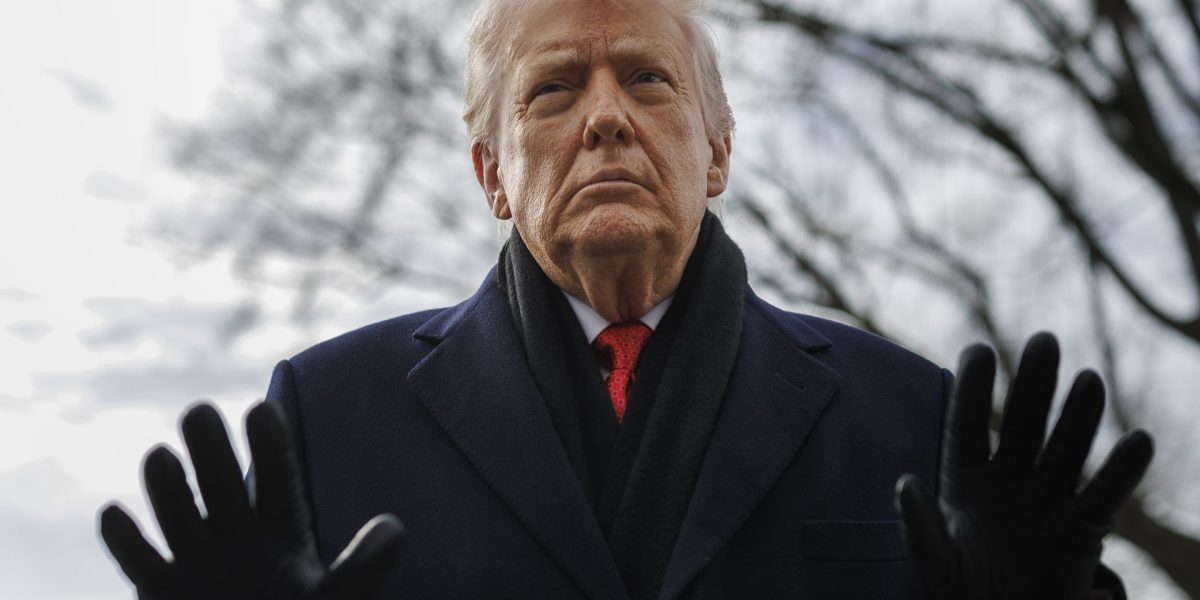
Bescarfed Trump tells reporters that Jack Nicklaus will ‘do some work’ on longtime presidential golf course

Published

on


President Donald Trump says he’s enlisting the help of legendary golfer Jack Nicklaus to spruce up the courses at Joint Base Andrews — adding a site long known as the “president’s golf course” to his long list of construction projects.

The president took an aerial tour of the Courses at Andrews aboard Marine One on Saturday, and promised, “We’re going to do some work” there, as well as to other parts of the base.

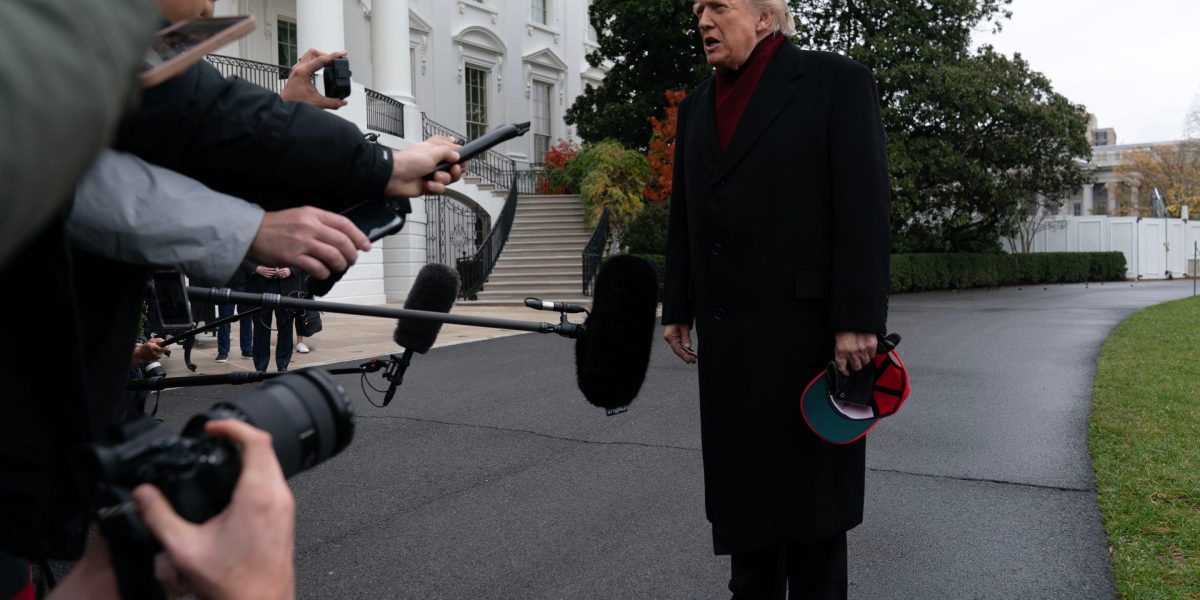
“We’re doing some fix-up of the base, which it needs. We’re gonna try and reinstitute the golf courses. I’m meeting with the greatest Jack Nicklaus,” Trump told reporters outside the White House before boarding Marine One to head to Andrews. “He’s involved in trying to bring their recreational facility back.”

Located in Maryland, about 15 miles (24.14 kilometers) from the White House, Andrews houses Air Force One. Gerald R. Ford was the first president to golf there in 1974, but the facility was most recently a favorite of Barack Obama.

An 11th Force Support Squadron asset, the facilities include three 18-hole golf courses, three practice putting greens, two private practice areas and a driving range, according to the Andrews website. Trump said at least two of the courses could get facelifts.

Trump has infrequently golfed at Andrews, but prefers to spend most weekends playing at or near one of his own properties. Those are Bedminster in New Jersey, or Mar-a-Lago in Palm Beach, Florida. On those weekends he remains at the White House, Trump often golfs at his course in Sterling, Virginia, near Dulles International Airport.

Nicklaus won 18 professional majors and 73 times on the PGA Tour. The Nicklaus Design firm features a team that has completed more than 425 courses in 40 states and more than 45 countries.

Trump said Saturday that the base at Andrews “was a great place that’s been destroyed over the years through lack of maintenance.”

“So we’ll fix that up, and Jack will be the architect and he’ll design it,” the president said.

He also referenced, “Two existing courses that are in very bad shape” saying, “we can — for very little money — fix it up.”

“And we’re looking at other things over at Andrews,’ Trump added.

Trump’s comments immediately raised questions about who is paying Nicklaus, and how much such design services might cost. Also, given that Andrews is military property, who pays for improvements to its golf courses or other parts of its grounds was also unclear. Andrews deferred queries on the matter to the White House, which didn’t respond to a request for more details.

The potential Andrews redesign follows construction crews already having demolished the East Wing of the White House to make room for a $300 million ballroom that Trump commissioned. He’s promised that it is being paid for by himself and private donors — including 37 individuals, firms and charitable organizations that have publicly disclosed contributing to the project.

Work on the ballroom follows Trump having replaced the lawn in the Rose Garden with a patio area reminiscent of Mar-a-Lago, and redecorated the Lincoln Bathroom and Palm Room in the White House’s interior. The president also installed a Walk of Fame featuring portraits of past presidents along the Colonnade, massive flagpoles on the north and south lawns and substantially overhauled the Oval Office through the addition of golden flourishes, cherubs and other, flashy items.

The work at Andrews may eventually join another off-White House site project Trump has announced publicly: his plan to erect a Paris-style arch just west of the Lincoln Memorial.

Trump ceded control of his family business to his children when he returned to the White House, but it has had ties to other courses designed by Nicklaus — including the Trump Golf Links at Ferry Point in the New York City borough of the Bronx and Trump National Jupiter in Florida. The Trump Organization sold its right to operate the Bronx course in 2023 to Bally’s Corporation.


Source link

Continue Reading

Business

The rise of on-demand leadership in the AI economy

Published

on


A quiet but consequential shift is underway in the executive labor market. Companies are rethinking how they access senior judgment in the AI era. 

Rather than defaulting to full-time executive roles that command lofty salaries and long-term overhead, companies are increasingly turning to experienced consultants, strategists, and advisors to provide leadership on a limited and targeted basis.

This is not a dilution of leadership, but a recalibration of where experience delivers the most value.

According to LinkedIn’s latest Jobs on the Rise report, the fastest-growing roles in the U.S. economy sit at the intersection of AI and strategy. AI engineers claimed the top spot, while AI consultants and strategists ranked No. 2 overall. Strategic advisors and consultants also placed in the top 10. Together, the data show that as execution becomes cheaper, human judgment becomes more valuable.

The underlying driver is the implementation gap. After years of AI experimentation, organizations are struggling to convert tools into returns. While they do not lack models or software, many lack orchestration. Companies are increasingly turning to AI consultants and strategists to align technology with business realities, governance, and incentives, work that requires credibility, cross-functional fluency, and the kind of judgment typically associated with senior leadership roles.

The labor market now reflects a clear division of labor. Demand is rising simultaneously for full-time technical AI talent and for senior professionals who can translate those capabilities into business outcomes. As companies scale internal AI teams, they are increasingly relying on external advisors and consultants to provide the judgment required to direct that work at critical moments.

The supply side of this shift is shaped by organizational reality. Executives continue to make daily decisions, but AI has concentrated risk into fewer, more complex, and higher-impact choices around operating models, capital allocation, and governance. Rather than expanding permanent headcount, companies are bringing in experienced external leaders to guide those decisions when the stakes are highest.

The economics reinforce the model. Although senior advisors and consultants often command higher hourly rates, their total annual cost is typically a fraction of a comparable full-time executive role because they are engaged for a limited scope and time. Just as important, this approach allows organizations to draw on multiple forms of expertise rather than binding themselves to a single permanent hire.

The talent profile filling these roles is equally telling. Many of these advisors are former founders, CEOs, and COOs. Experience functions as a filter. LinkedIn’s data shows that many of the fastest-growing strategic roles carry a median of eight or more years of experience. These are not entry-level positions, but mid- or second-act careers for professionals with deep industry context.

The rise of founders and independent consultants on the Jobs on the Rise list also signals that this shift is driven by talent behavior, not just employer demand. Senior professionals are increasingly opting for career paths that offer autonomy, variety, and the opportunity to leverage their skills rather than committing to a single organization in an uncertain environment.

As AI automates and cheapens execution, the market value of human judgment, strategy, and accountability rises. As a result, pricing power shifts from doing the work to deciding what work should be done and how it should scale.

In this environment, experience is the moat. What is often described as “fractional leadership” is better understood as the unbundling of executive judgment from full-time roles. Over time, this model is likely to become not a stopgap but a structural response to the redistribution of value, risk, and expertise in the AI economy.

Join us at the Fortune Workplace Innovation Summit May 19–20, 2026, in Atlanta. The next era of workplace innovation is here—and the old playbook is being rewritten. At this exclusive, high-energy event, the world’s most innovative leaders will convene to explore how AI, humanity, and strategy converge to redefine, again, the future of work. Register now.


Source link

Continue Reading

Business

Trump finds a ‘solution’ to Greenland crisis, backs off on 10% tariff threats

Published

on


President Donald Trump seems to have found a “solution” to the Greenland crisis following talks with NATO leadership on Wednesday. He said he will back away from the threat to impose 10% tariffs on eight European allies — an announcement that had sparked a mass sell-off on Tuesday — that were set to take effect on Feb. 1.

The reversal came only hours after Trump walked back an earlier threat to use force to secure Greenland during his World Economic Forum speech in Davos, Switzerland.

“We have formed the framework of a future deal with respect to Greenland and, in fact, the entire Arctic Region,” Trump wrote on Truth Social, adding that the plan would be “a great one for the United States of America, and all NATO Nations.” He said the tariffs would be shelved “based upon this understanding.”

The announcement followed a meeting with NATO Secretary General Mark Rutte, who has been seeking to defuse growing tensions between Washington and its European allies as Trump escalated rhetoric over Greenland’s strategic importance. Trump also said on Truth Social that additional discussions were underway concerning what he called the “Golden Dome” initiative related to Greenland, without providing details.

Markets reacted sharply to the apparent de-escalation. The S&P 500 rose 1.5% in afternoon trading, while long-term U.S. Treasury yields fell, signaling investor relief after days of volatility. Despite this pullback potentially confirming yet another instance of the “TACO trade,” or “Trump Always Chickens Out,” major questions remain over the substance of the framework. 

Trump has repeatedly said that anything less than controlling all of Greenland is “unacceptable.” It’s unclear, and seems unlikely, that the outline discussed with NATO leadership satisfies that particular condition, given that Denmark reiterated that it would not give up Greenland’s sovereignty after Trump’s speech on Wednesday. 

In his Truth Social post, Trump said Vice President JD Vance, Secretary of State Marco Rubio, and Special Envoy Steve Witkoff would lead negotiations going forward and report directly to him.The announcement also comes after the EU suspended trade negotiations with the U.S. and suspended the trade agreement they have had in place since August. CATO scholar Kyle Handley, in a statement provided to Fortune, wrote that the suspension should have never been seen as a “dramatic breakdown,” because “there was never a real deal to begin with.”

“What’s unraveling now was a fragile, politically convenient set of press releases that papered over fundamental disagreements and was always vulnerable to executive-level tariff threats.”


Source link

Continue Reading

Business

Trump says Europe does one thing right: drug prices

Published

on


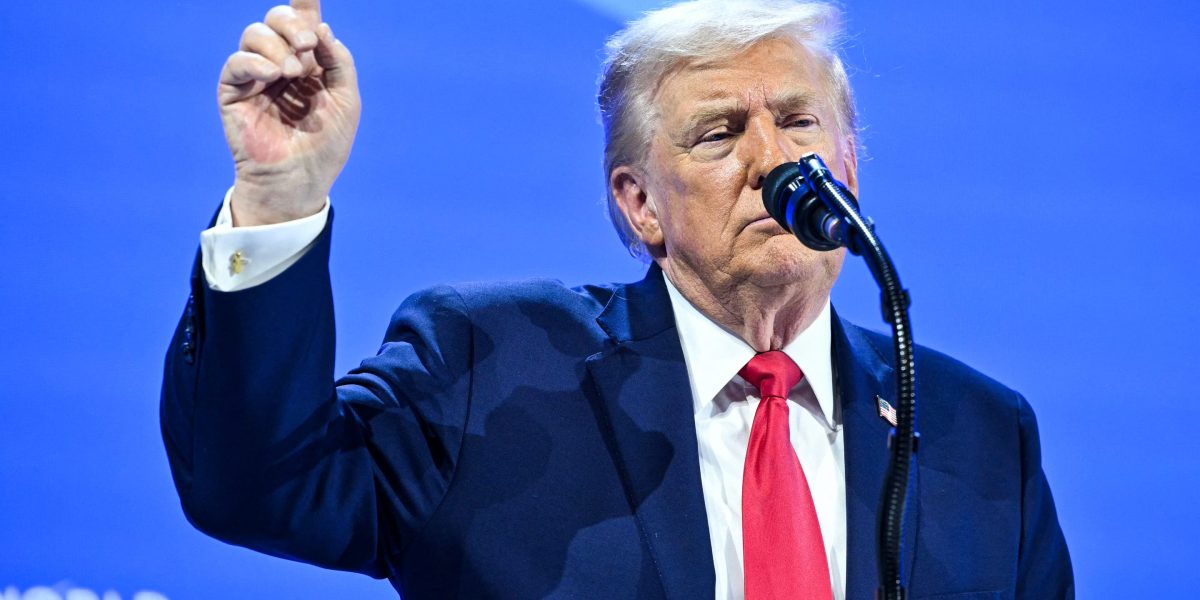
President Donald Trump told an audience of thousands of executives and global leaders at the World Economic Forum that European countries have taken a turn for the worse. Trump said his friends who visit the continent tell him they don’t recognize the region—and “not in a positive way.”

“I love Europe, and I want to see Europe go good,” Trump said on Wednesday at the Davos, Switzerland, meeting. “But it’s not heading in the right direction.”

But the president conceded that Europe is doing one thing better: keeping its drug prices low. 

“A pill that costs $10 in London costs $130. Think—it costs $10 in London, costs $130 in New York or in Los Angeles,” he said to murmurs from the crowd. 

Europe may not be recognizable to Trump’s friends, but Trump said he has other friends returning from London, remarking on the affordability of medication there. Indeed, a 2024 Rand study found that across all drugs, U.S. customers paid on average 2.78 times higher prices than in 33 other countries, including France, Germany, and the United Kingdom, in 2022.

The president has adopted a “most favored nation” policy meant to both lower drug costs for Americans while pushing other countries to pay more. Trump made a concerted effort in his second term to address astronomical drug costs, including minting a deal with 17 pharmaceutical companies to slash U.S. prices to match medication costs overseas. The move followed a sweeping executive order issued in May to introduce the most-favored-nation policy. On Wednesday, Trump alluded to an executive order he signed last week, pledging to lower drug prices by up to 90%.

Fallout with France

Trump said pharma companies did not initially believe countries would be willing to change prices. Trump noted in his remarks that he first approached French President Emmanuel Macron about increasing drug prices, but Macron refused.

“I said, ‘Emmanuel, you’re going to have to lift the price of that pill,” Trump said.

Trump said that threatening a 25% tariff on French goods, including wines and champagne, sealed the deal. Macron’s office disputed Trump’s assertion that he pressured the French president into lowering drug prices. 

“It’s being claimed that President @EmmanuelMacron increased the price of medicines. He does not set their prices. They are regulated by the social security system and have, in fact, remained stable,” Macron’s office said in an X post. “Anyone who has set foot in a French pharmacy knows this.”

Included in the post was a gif of Trump with animated “Fake news!” text overlaid on the image.

Health policy experts say drug prices in the U.S. are so high because of a system structured differently from other countries that allow companies to negotiate with individual insurance companies or pharmacy benefit managers, giving them more leverage to raise prices than in other countries’ systems, where there is one regulatory agency negotiating drug prices for a population.

Efficacy of Trump’s efforts to lower drug costs

Industry leaders think Trump’s efforts to lower drug costs could pay off. Vas Narasimhan, CEO of pharmaceutical giant Novartis, told Fortune’s Jeremy Kahn at a USA House session in Davos on Wednesday that Trump identified a valid issue in the high cost of U.S. drugs.

About two-thirds of new drugs on the market over the last decade have come from the U.S., a result of its highly developed research and development (R&D) infrastructure. Some argue that other countries benefit from U.S. innovation without paying their fair share to support the industry’s growth.

“When you look at what underpins R&D in our industry, it’s been primarily in the United States,” Narasimhan said. “The United States is the source of more than half the profits of the industry, and without the United States, you wouldn’t have all of these innovations, all these incredible medicines.”

Narasimham emphasized the need for a “more balanced approach” to funding R&D, implying that other countries should pay more for U.S.-produced pharmaceuticals. He pointed to Trump’s deal with the 17 drug companies as a “reasonable” solution.

Early signs, however, suggest drug prices have not come down. A January report from drug price research firm 46brooklyn found drug companies, including 16 firms with which Trump made deals since September, raised drug prices for at least some of their drugs in the first two weeks of 2026. The median increase of the 872 brand-name drugs with hiked prices was about 4%, the same rate as the year before.

Reuters similarly reported earlier this month, citing data from 3 Axis Advisors, that those 17 drug companies had raised the prices of 350 medications. Public health experts attributed the rise to the behind-the-scenes nature of the deals between drug companies and insurers.

“These deals are being announced as transformative when, in fact, they really just nibble around the margins in terms of what is really driving high prices for prescription drugs in the U.S.,” Dr. Benjamin Rome, a health policy researcher at Brigham and Women’s Hospital in Boston, told the outlet.

The Department of Health and Human Services did not immediately respond to Fortune’s request for comment.



Source link

Continue Reading

Trending

Copyright © Miami Select.