
Politics
Berny Jacques’ E-Verify expansion bill clears first committee hurdle on party-line vote

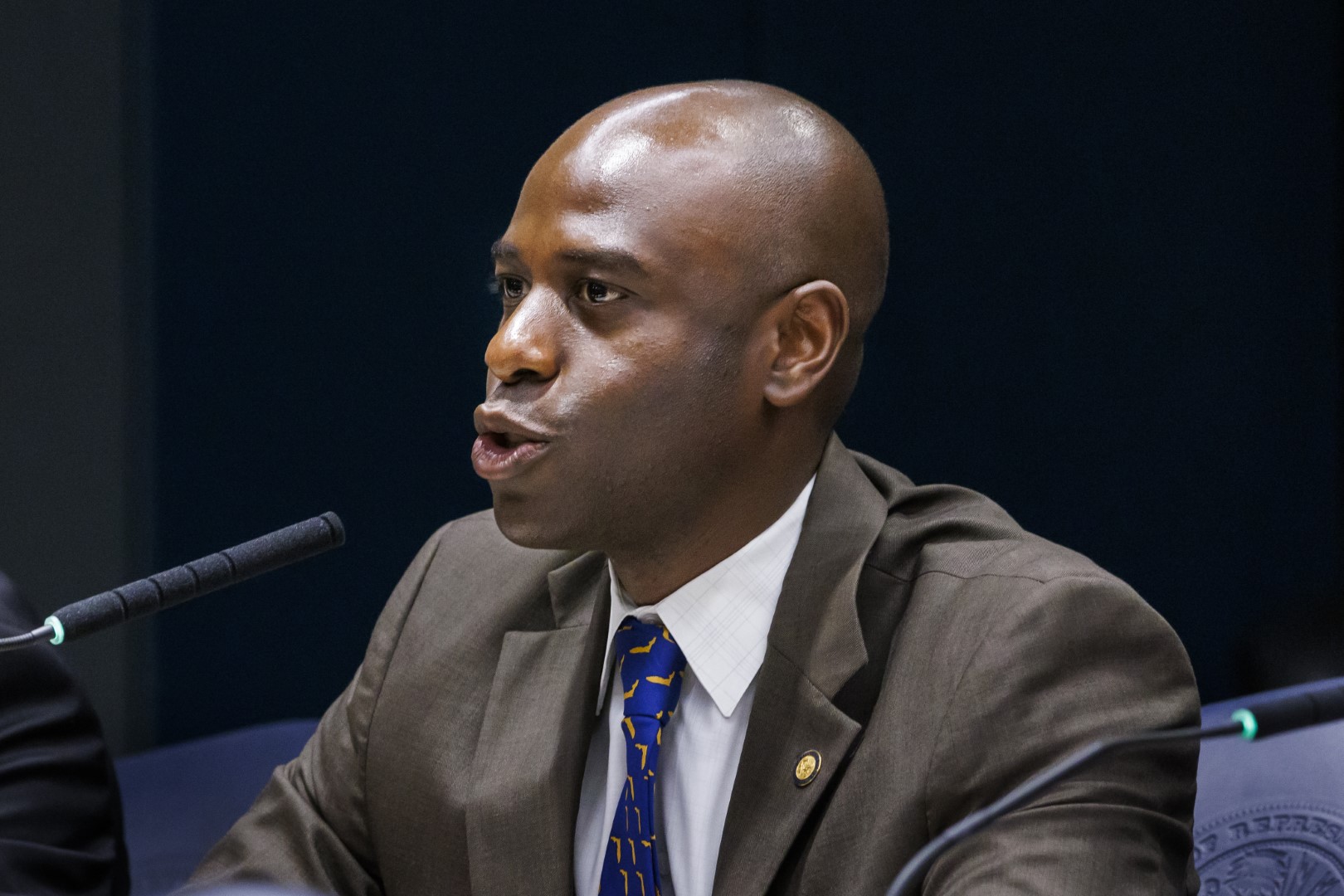
Legislation by Seminole Republican Rep. Berny Jacques to require all private businesses in Florida to confirm that their employees can legally work in the U.S. is again advancing in the House.
Members of the House Industries and Professional Activities Subcommittee voted to advance HB 197, which would mandate the use of E-Verify, a federal system administered by the U.S. Department of Homeland Security that enables companies and agencies to check the legal status of new employees.
The current law, enacted in 2023, requires E-Verify only for public employers and private employers with 25 or more workers. HB 197 would remove the 25-employee threshold.
The measure, which has no Senate analogue yet, is Jacques’ second consecutive attempt at passing the expansion. It comes amid a rising national crackdown on undocumented immigration across the U.S. under President Donald Trump, whose administration has also worked to remove existing exceptions and protections for foreign-born residents.
“This simply enforces the law,” Jacques told the panel Wednesday.
“It’s already illegal to hire these unauthorized workers, and we have a system that will verify whether or not you are in compliance with the law. That system is E-Verify, something that’s been used for many, many years now. It’s been used for all public-sector employers. This is nothing new.”
Effective July 1, HB 197 — like its predecessor that cleared the House floor in April before stalling out in the Senate — would keep enforcement authority with the Florida Department of Commerce. It would also maintain the current penalty rate of $1,000 per day for repeated violations and allow for the suspension of business licenses until compliance is proven.
Penalties would apply to any business that gets caught skirting the rules three times within 24 months, Jacques said.
“This simply closes the gap that we currently have,” he said. “It will strengthen the workforce integrity of our state.”
Every Republican on the subcommittee agreed with that assertion and voted “yes” for the bill.

Rep. Yvette Bennaroch, a Marco Island Republican born in Puerto Rico, said that despite numerous reports that E-Verify can be unreliable, “over 98% of employees” today are verified “instantly” and without issue. It’s also free for employers, she added.
“It’s not perfect, but just because it’s not perfect doesn’t mean that it doesn’t work,” she said, adding that there is “plenty of data to support” the figure she provided. That includes the E-Verify website and information provided by the Center for Immigration Studies, an anti-immigration think tank.
Democratic Reps. Bruce Antone and Anna Eskamani of Orlando, Yvonne Hinson of Gainesville and Angie Nixon of Jacksonville voted against HB 197.
Nixon, a small-business owner, noted that all employers already must complete and maintain I-9 forms for their employees, which provide documentation similar to E-Verify. She argued the added requirement Jacques proposes would be “cumbersome” for many modestly sized companies.
“We don’t need it, honestly,” she said.
Nearly 476,000 businesses in Florida employ fewer than 20 people, according to the U.S. Small Business Administration’s Office of Advocacy.
Eskamani said that while there’s a general consensus on both sides of the political aisle that the federal immigration system is “broken” and that comprehensive reform is needed, imposing new state-level requirements under volatile federal policies is a recipe for hardship.
“There are millions of hard-working people in this state, many who are currently asylum seekers, TPS recipients, and their status is just being pulled away from them for all different sorts of political reasons, so one day you have (legal) status, the other day you don’t,” she said. “It’s hard for me to vote on a bill without thinking about the larger ecosystem that we’re operating within.”
Hinson read a written testimony from the left-leaning Florida Policy Institute, which opposes HB 197.
Among its objections: Employees must read a 145-page E-Verify user manual and sign a contract with the federal government to use the system, “significant time and cost burdens” to employers that Bloomberg estimated in 2010 would cost small-business owners $81 million, and the bill’s lack of a carve-out for home-based employees like nannies, maids, nurses and other domestic service providers.
“This has high implications for Florida’s growing senior population, which currently comprises over one-fourth of the state’s residents,” Hinson said.
Two other organizations — Voices of Florida and the Florida AFL-CIO — also spoke against the measure Wednesday.
Rich Templin, Legislative and Political Director for Florida AFL-CIO, said that his organization doesn’t oppose E-Verify in concept, since the U.S. labor movement’s purpose is to protect American jobs and workers.
But only Congress can solve the immigration crisis, he said.
“Any effort by the state to weigh in on the immigration issue only complicates our overall goal of fixing the problem once and for all, and that’s the issue we have here,” he said. “Any state that arbitrarily, at the state level, mandates that this system be used is going to complicate the effort of other states to implement all kinds of things. Immigration cannot be a patchwork of different solutions. It has to be comprehensive. We are one nation.”
Templin added that despite its intended purpose, E-Verify remains dependably faulty.
“Since the moment it was implemented, it has had exceedingly high error rates,” he said. “It just has never worked, which is why so many employers have pushed back on it, even those that want to use it.”
Jacksonville Republican Rep. Kiyan Michael is the co-prime sponsor of HB 197, which Deltona Republican Rep. Webster Barnaby is co-sponsoring. The bill has one more stop in the Commerce Committee before reaching the House floor.
The bill’s webpage lists only one related piece of legislation: SB 328 by Orlando Democratic Sen. Carlos Guillermo Smith. It’s a very different bill.
So far, it also doesn’t have a proper companion in the opposite chamber.
SB 328, if passed — an unlikely event, considering the current political climate — would establish an Office for New Americans in Florida focused on immigrant and refugee inclusion and workforce participation.
The bill would also revise state ID laws to allow additional forms of identification proof, prohibit the state from sharing people’s photos and identification information with agencies that primarily enforce immigration law without a court order and remove some existing E-Verify mandates.
Further, it would broaden access to Florida public colleges and universities for students regardless of immigration status —a reversal of legislation Gov. Ron DeSantis signed earlier this year that eliminated in-state tuition for undocumented students.
Politics
While St. Pete Beach residents were locked out after Hurricane Helene, the Mayor was already having repairs done
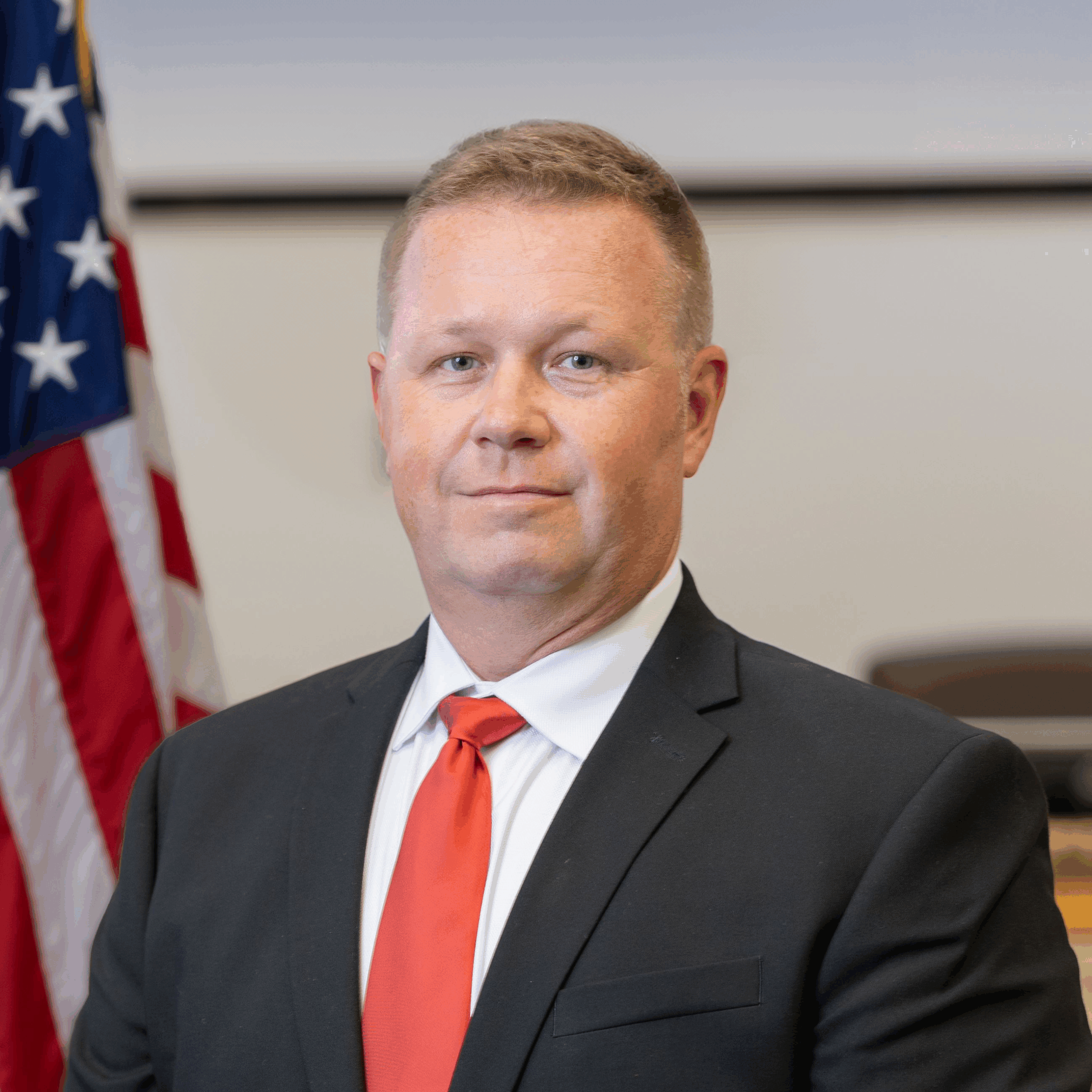
One day after Hurricane Helene skirted past the Tampa Bay area on Sept. 26, 2024, leaving devastating flooding, St. Pete Beach residents were still blocked from returning to their homes to survey damage, as crews worked to ensure it was safe to return.
Yet even as residents grew anxious to see what remained of their homes and communities, St. Pete Beach Mayor Adrian Petrila was already on the island and, it appears, already taking steps to repair his flooded home.
On Sept. 27, 2024, the city of St. Pete Beach posted a warning on Facebook informing residents that access points to the local barrier islands “remain closed today” as “crews from the county and impacted municipalities continue to work on clearing impassable roadways, removing dangerous debris, restoring power, and addressing other infrastructure issues including returning power to our sanitary sewer system.”
The post went on to caution residents that they “should plan to spend multiple days away from their houses.”
That same day, a local resident who had remained on the island to weather the storm captured video at Petrila’s home of what appears to be crews bringing in fans to dry flood areas.
Donna Miller had stayed on the island with a neighbor — a decision she said many residents made after weathering numerous storms without much damage and with no risks to safety. This time was different, as flooding impacted much of the island, leaving homes badly damaged.
She told Florida Politics that she and others who had stayed behind were unable to obtain water, food or other supplies as the barrier islands remained closed because they were told they could leave the island, but would not be able to return until access was restored. Not wanting to miss out on time to address flood damage, many continued to stay.
Instead, Miller and a friend hopped in her car to check on other neighbors. In doing so, they came across Petrila’s home, where video Miller took shows a crew carrying several large fans into the home. The video is just 10 seconds long, but Petrila’s address is visible in the footage and metadata on the video confirms it was taken the day after the hurricane. Petrila is also visible in the garage.
Miller said she stopped filming to confront the homeowner. Said she didn’t realize it was the Mayor until after the confrontation.
Miller told Florida Politics that during the interaction, she asked Petrila, “How is it that you have workers cleaning out your house when people need food and supplies?”
He responded, according to Miller, that the men had already been on the island, a claim Miller said she doubts.
“It seemed like he played the Mayor card to get them in,” she said.
Florida Politics reached out to Petrila on Monday via his city email asking about the video. The email included questions about how workers were able to bring supplies to his house. As of Wednesday, he had still not responded.
Miller, meanwhile, has sent letters to the Pinellas County Sheriff’s Office and to U.S. Rep. Anna Paulina Luna complaining about what she perceived as Petrila misusing his authority as Mayor for personal benefit.
“A Mayor who puts himself before the people needs to find another career,” Miller told Florida Politics. “What he did was horrible. Instead of getting trucks on the island with emergency supplies, he got blowers and workers on the island.”
Petrila, a Republican, is up for re-election this year. He faces fellow Republican Scott Tate in what is expected to be a tight race. Petrila is the top fundraiser in the race, but only barely. Tate has nearly matched Petrila’s fundraising, with new fourth-quarter totals showing he has brought in just over $14,000, only $1,300 less than Petrila.
The tighter-than-usual fundraising in a beach town election cycle that is more often than not a quiet affair comes as Petrila faces criticism for proposing to impose tolls at the north, central and southern access points to the island to fund ongoing infrastructure repairs and improvements following back-to-back hurricanes in 2024 that devastated the island.
Despite his plan exempting residents, employees and business owners, it has been controversial, with some worrying such tolls would reduce tourism and other revenue-generating traffic on St. Pete Beach.
And Petrila, like neighboring St. Petersburg Mayor Ken Welch, who is also facing intraparty opposition for his re-election, is also earning resident frustration over a permitting backlog following the hurricanes that is ongoing as residents continue to rebuild. While Tate has not directly weighed in on the tolling issue, he has lamented that the permitting red tape is a failure of leadership.
Petrila is facing his first re-election contest after first being elected in 2023, when he unseated then-incumbent Alan Johnson.
The St. Pete Beach municipal election is March 10.
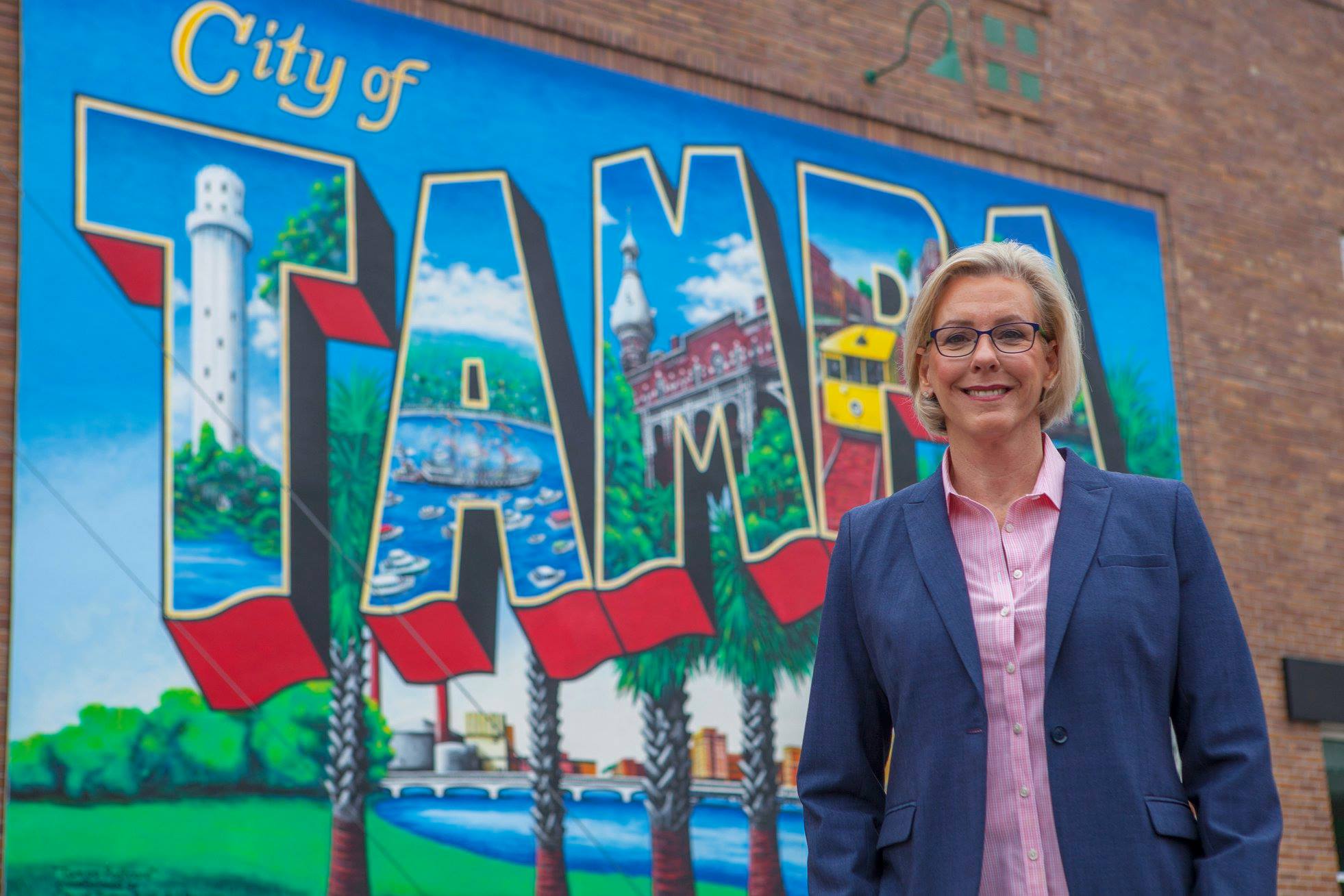
With just over a year remaining in her second and final term, Tampa Mayor Jane Castor’s administration is shifting into a “finish strong” phase to wrap up major redevelopment projects while positioning the city for continued growth under its next Mayor.
Castor told Florida Politics that she is focused on completing long-planned initiatives in the coming year, and creating what she called “project launch pads” for the next administration after nearly seven years of rapid development and population growth.
“We’ve accomplished a great deal in just a bit less than seven years,” Castor said. “Our city’s grown dramatically. We’re focused on finishing up some of those projects and getting other projects ready for the next administration.”
Castor said recent city budgets have emphasized investment in transportation, affordable housing and workforce development.
Transportation remains Tampa’s biggest challenge, she said, calling it the city’s “Achilles heel.” Castor pointed to the defeat of Hillsborough County’s voter-approved transportation surtax as a major setback for the region, though she emphasized that local governments have continued pursuing alternatives.
“We mourned the loss of that, but we didn’t stop,” Castor said.
Instead, Tampa and regional partners turned to grants and federal funding, securing nearly $4 million through a U.S. Department of Transportation program known as the Regional Infrastructure Accelerator. The grant supports planning for large-scale, multicounty transportation projects across Hillsborough, Pinellas and Pasco counties, including both local and regional transit options.
One proposal under consideration would expand Tampa’s streetcar system beyond its current footprint in Ybor City, Channel District and downtown, extending north into Tampa Heights. Castor said the city is also examining longer-term regional transit connections, including potential airport links and public-private partnerships to help finance future projects.
Meanwhile, construction across Tampa continues at a rapid pace, particularly along the riverfront and in historically underserved neighborhoods.
Castor highlighted projects nearing key milestones, such as the West River redevelopment in West Tampa — where a new Riverwalk extension is under construction. Castor also noted the Rome Yard project near Rome Avenue and Columbus Drive, a 16-acre mixed-use development now rising out of the ground.

In East Tampa, the city recently held a ribbon-cutting for the new East Tampa Recreation Center, a sprawling, multiblock complex that Castor said will be among the best facilities in Tampa’s parks system once completed later this year.
Downtown and surrounding neighborhoods are also seeing a wave of new residential construction. Castor cited multiple high-rise developments near downtown, additional riverfront condominiums along Kennedy Boulevard, student housing tied to the University of Tampa, and the long-anticipated opening of the five-star Pendry Hotel near the river this year.
Ybor City and the Channel District remain hot spots for redevelopment as well, with Water Street Tampa entering its second phase and developer Darryl Shaw advancing residential, office and retail projects, including a food hall, near the Gas Worx site.
“The city is just on fire,” Castor said. “I keep saying I’m going to change our city bird to the crane, there’s cranes all over the city.”
As lawmakers convene in Tallahassee for the ongoing Legislative Session, Castor said her top request is simple: leave property taxes alone.
Property taxes remain the primary revenue source for cities and counties, she said, and are already constrained by Florida’s Save Our Homes cap, which limits annual increases regardless of rising property values.
“Any cuts to property tax would be cuts to police and fire, to our parks and recreation, and to all the other city departments that rely on property tax funding,” Castor said.
Castor also addressed ongoing discussions surrounding professional sports facilities, noting that planned improvements to Raymond James Stadium and Benchmark International Arena are already accounted for through Hillsborough County’s voter-approved Community Investment Tax extension. She said city and county officials are meeting with the Tampa Bay Rays as discussions continue around a potential baseball stadium site near Hillsborough Community College.
Looking beyond her tenure, Castor said she does not plan to seek another political office, but intends to remain active in civic life after leaving City Hall.
“I don’t have any plans politically, but I definitely will stay involved in the community,” Castor said. “I was born and raised here in Tampa, so I’ll always be involved — participate on boards, volunteering, whatever way I can — to help continue to grow this great city.”


Slipping on ICE: innocent retailers are the latest collateral damage from Trump’s perpetual noise machine

Alix Earle Pours Heart Out in Late-Night Post Lamenting Life After Braxton Berrios

While St. Pete Beach residents were locked out after Hurricane Helene, the Mayor was already having repairs done
-

 Politics8 years ago
Congress rolls out ‘Better Deal,’ new economic agenda
-
Entertainment9 years ago
New Season 8 Walking Dead trailer flashes forward in time
-
Politics9 years ago
Poll: Virginia governor’s race in dead heat
-
Politics9 years ago
Illinois’ financial crisis could bring the state to a halt
-
Entertainment9 years ago
The final 6 ‘Game of Thrones’ episodes might feel like a full season
-
Entertainment9 years ago
Meet Superman’s grandfather in new trailer for Krypton
-
Business9 years ago
6 Stunning new co-working spaces around the globe
-
Tech8 years ago
Hulu hires Google marketing veteran Kelly Campbell as CMO