Connect with us

Politics

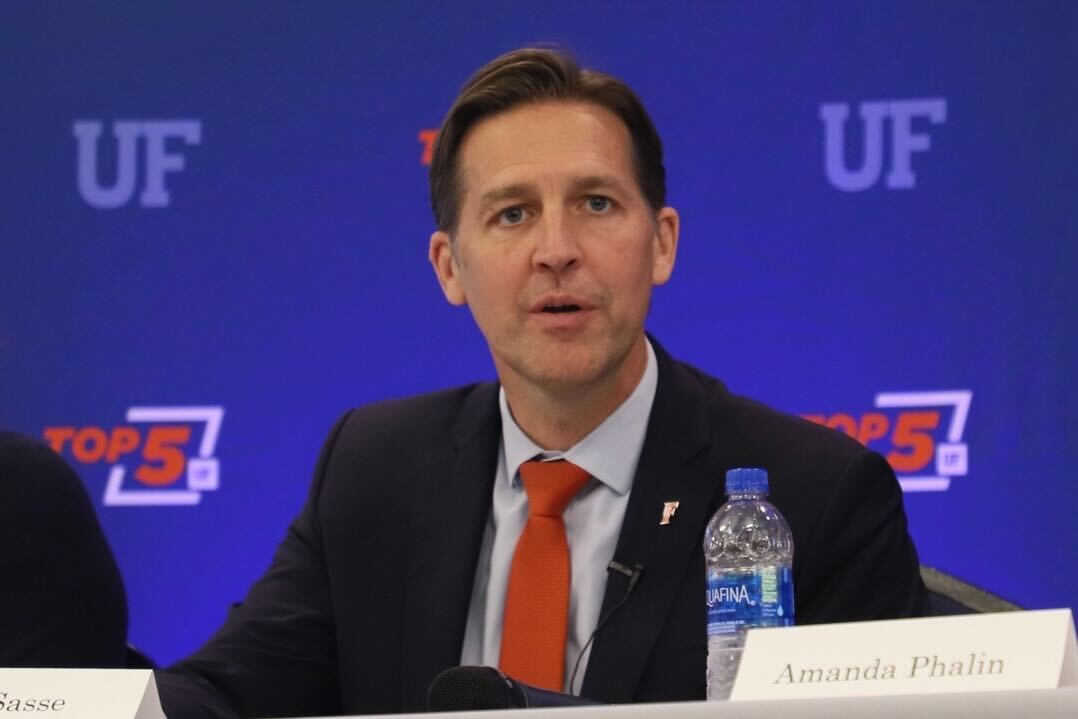
Ben Sasse announces stage 4 pancreatic cancer diagnosis

Published

on


Ben Sasse, a former U.S. Senator from Nebraska and onetime President of the University of Florida (UF), has been diagnosed with metastasized, stage 4 pancreatic cancer.

He announced the diagnosis in a statement posted to X, saying that the disease is terminal and he is now “on the clock.”

“This is a tough note to write, but since a bunch of you have started to suspect something, I’ll cut to the chase: Last week I was diagnosed with metastasized, stage-four pancreatic cancer, and am gonna die,” Sasse said.

He described advanced pancreatic cancer as “a death sentence,” while also reflecting that mortality is a universal condition.

“I already had a death sentence before last week too — we all do,” he said.

Sasse, 53, has long been a distinctive figure in American public life, blending conservative politics with academic training and an emphasis on institutions, civic culture and constitutional norms.

Raised in Plainview, Nebraska, he earned degrees from Harvard and Yale, completing a doctorate in history with a focus on American political development. He served in former President George W. Bush’s administration as Assistant Secretary of Health and Human Services for Planning and Evaluation, focusing on long-term entitlement and demographic issues. He later became President of Midland University in Nebraska.

Sasse entered the U.S. Senate in 2015 after winning Nebraska’s 2014 race as an outsider candidate critical of Washington dysfunction. He became nationally prominent for his willingness to publicly challenge President Donald Trump, despite voting conservatively on most policy matters.

Notably, he was among a small group of Republican Senators who voted to convict Trump during impeachment proceedings, a stance that made him a polarizing figure within his party.

In 2022, Sasse resigned from the Senate to become UF President, returning to academia amid intense debate over politics and public higher education. He stepped down from the role in 2023, citing health-related reasons involving his family, and largely withdrew from public life.

After his departure, it was revealed that while President, Sasse tripled his office’s spending, with most of it covering lucrative consulting contracts and high-paying positions for GOP allies.

Sasse wrote Tuesday that his time away from politics allowed his family to establish “new rhythms.”

Much of his cancer announcement focused on his wife, Melissa, and their three children. He described milestones including his daughter Corrie’s commissioning into the U.S. Air Force and flight training, his daughter Alex’s early college graduation while teaching advanced science courses, and his 14-year-old son Breck learning to drive.

“This is hard for someone wired to work and build,” Sasse said, “but harder still as a husband and a dad.” He praised his siblings and close friends, quoting one who told him, “Sure, you’re on the clock, but we’re all on the clock.”

He called death “a wicked thief,” but emphasized gratitude for the time he has.

The statement was deeply rooted in Sasse’s Christian faith. While acknowledging the severity of his diagnosis, Sasse said he plans to pursue treatment and is not surrendering quietly, citing advances in immunotherapy and adding, “I’m not going down without a fight.”


Source link

Continue Reading

Politics

JJ Grow bill aims to dissolve Citrus County Hospital Board

Published

on


It’s wind-down time for the Citrus County Hospital Board.

Created by legislative act in 1949 to oversee health care through what would become Citrus Memorial Hospital, the CCHB has outgrown its usefulness.

If a bill filed by Inverness Rep. JJ Grow becomes law, the CCHB will cease to exist on Oct. 1, 2026.

HB 4043 requires the hospital Board to dissolve and turn its remaining assets over to the Citrus County Board of County Commissioners.

The county would also oversee the 50-year lease with Hospital Corporation of America, which has operated what is now HCA Florida Citrus Hospital since 2013.

“We’ve been talking about this for six years,” hospital Board Chair Dr. Mark Fallows said in October when the Board voted to seek legislative dissolution.

Attorney William Grant, who has represented the CCHB for two decades, said a smooth transition will take several months.

“We want to be able to sunset in a way that’s consistent with the mission and the good work that all of you have done,” Grant said.

The CCHB existed in relative anonymity as a low-level taxing district for years. In 1987, its members, Governor appointees, created a separate nonprofit foundation Board to oversee hospital operations.

Those two boards eventually splintered when the foundation amended its bylaws in 2006 to increase its size, effectively placing hospital Board members in the minority.

Detailed reviews of the hospital’s finances showed significant instability.

“The hospital started getting deeper and deeper in debt,” Fallows told Citrus County Commissioners.

The CCHB and the Foundation Board agreed to seek bids to either sell or lease the hospital. They received bids from three for-profit hospitals and one nonprofit and, in 2013, decided with HCA on a 50-year, $131 million lease.

The CCHB stopped collecting taxes in 2013, but its role did not end. Lawmakers in 2014 created the Citrus County Community Charitable Foundation to disburse interest payments from lease proceeds to meet the medical needs of Citrus County citizens. Its members represent a cross-section of Citrus County, including two elected officials.

More recently, the CCHB settled a dispute with the Agency for Health Care Administration. AHCA sought $5 million in Medicaid overpayments to CMH over 10 years; CCHB reduced that amount to $650,000.


Source link

Continue Reading

Politics

Ron DeSantis appoints new member to Florida Transportation Commission

Published

on


Two others were reappointed.

Gov. Ron DeSantis has appointed a new member of the Florida Transportation Commission (FTC), and reappointed two others, he announced this week.

DeSantis appointed Thomas C. Nash II to the panel that oversees transportation policy for Florida. DeSantis reappointed Ronald Howse and Russell Roberts to additional terms.

The FTC was founded in 1987 to provide citizen oversight of the Florida Department of Transportation (FDOT). The panel also includes expanded influence over the state’s expressway authorities and regional transportation authorities. There are nine members on the FTC, each serving four terms. The board is required to meet at least four times a year, though it convenes usually more often each year and the FTC’s geographic meeting locations rotate around the state.

Nash brings to the board experience from an extensive career as a lawyer in the Tampa area and beyond. He is the Chair and Shareholder of Macfarlane Ferguson and McMullen headquartered on the Gulf Coast.

Nash is no stranger to public and community service. He has served as Chair of the Morton Plant Mease Health Care  Foundation and is a member of the Morton Plant Mease Hospital Board of Trustees.

Nash obtained his bachelor’s degree from University of the South and his law degree from Samford University.

Howse returns to the FTC as he remains owner and CEO of the Real Deal Development Group, a real estate development firm based on the Space Coast specializing in industrial properties. He’s also Principal of Howseco. Howse is also a member of the Board of Trustees for Eastern Florida State College and he sits on the St. Johns River Water Management District board.

Howse holds a bachelor’s degree from the University of Central Florida.

Roberts serves as a Senior Policy Advisor for the U.S. Federal Railroad Administration. He also previously served as Chief of Staff for former U.S. Rep. John Mica, a Republican who held the Florida’s 7th Congressional District, which represents much of Volusia County and stretches inland to several counties in Central Florida. Roberts ran for the seat himself in 2022, but lost in the Republican Primary.

Roberts was also the Vice President of Government Affairs for Brightline Trains Florida. He also sat on the Board of Directors for Florida TaxWatch, one of the highest-profile conservative government watchdog groups in the state. He also served as a member of the American Public Transportation Association.


Source link

Continue Reading

Politics

U.S. economy expands at a surprisingly strong 4.3% annual rate in the third quarter

Published

on


The U.S. economy expanded at a surprisingly strong 4.3% annual rate in the third quarter as consumer spending, exports and government spending all grew.

U.S. gross domestic product from July through September — the economy’s total output of goods and services — rose from its 3.8% growth rate in the April-June quarter, the Commerce Department said Tuesday in a report delayed by the government shutdown. Analysts surveyed by the data firm FactSet forecast growth of 3% in the period.

However, inflation remains higher than the Federal Reserve would like. The Fed’s favored inflation gauge — called the personal consumption expenditures index, or PCE — climbed to a 2.8% annual pace last quarter, up from 2.1% in the second quarter.

Excluding volatile food and energy prices, so-called core PCE inflation was 2.9%, up from 2.6% in the April-June quarter.

Consumer spending, which accounts for about 70% of U.S. economic activity, rose to a 3.5% annual pace last quarter, up from 2.5% in the April-June period.

Within the GDP data, a category that measures the economy’s underlying strength grew at a 3% annual rate from July through September, up slightly from 2.9% in the second quarter. This category includes consumer spending and private investment, but excludes volatile items like exports, inventories and government spending.

Exports grew at an 8.8% rate, while imports, which subtract from GDP, fell another 4.7%.

Tuesday’s report is the first of three estimates the government will make of GDP growth for the third quarter of the year.

Outside of the first quarter, when the economy shrank for the first time in three years as companies rushed to import goods ahead of President Donald Trump’s tariff rollout, the U.S. economy has continued to expand at a healthy rate. That’s despite much higher borrowing rates the Fed imposed in 2022 and 2023 in its drive to curb the inflation that surged as the United States bounced back with unexpected strength from the brief but devastating COVID-19 recession of 2020.

Though inflation remains above the Fed’s 2% target, the central bank cut its benchmark lending rate three times in a row to close out 2025, mostly out of concern for a job market that has steadily lost momentum since Spring.

Last week, the government reported that the U.S. economy gained a decent 64,000 jobs in November but lost 105,000 in October. Notably, the unemployment rate rose to 4.6% last month, the highest since 2021.

The country’s labor market has been stuck in a “low hire, low fire” state, economists say, as businesses stand pat due to uncertainty over Trump’s tariffs and the lingering effects of elevated interest rates. Since March, job creation has fallen to an average 35,000 a month, compared to 71,000 in the year ended in March. Fed Chair Jerome Powell has said that he suspects those numbers will be revised even lower.

___

Republished with permission of The Associated Press.


Source link

Continue Reading

Trending

Copyright © Miami Select.