Connect with us

Business

Before ‘Crazy Rich Asians,’ Henry Golding swept salon floors at 14 for $32 a day and worked as a travel host on his way to stardom

Published

on


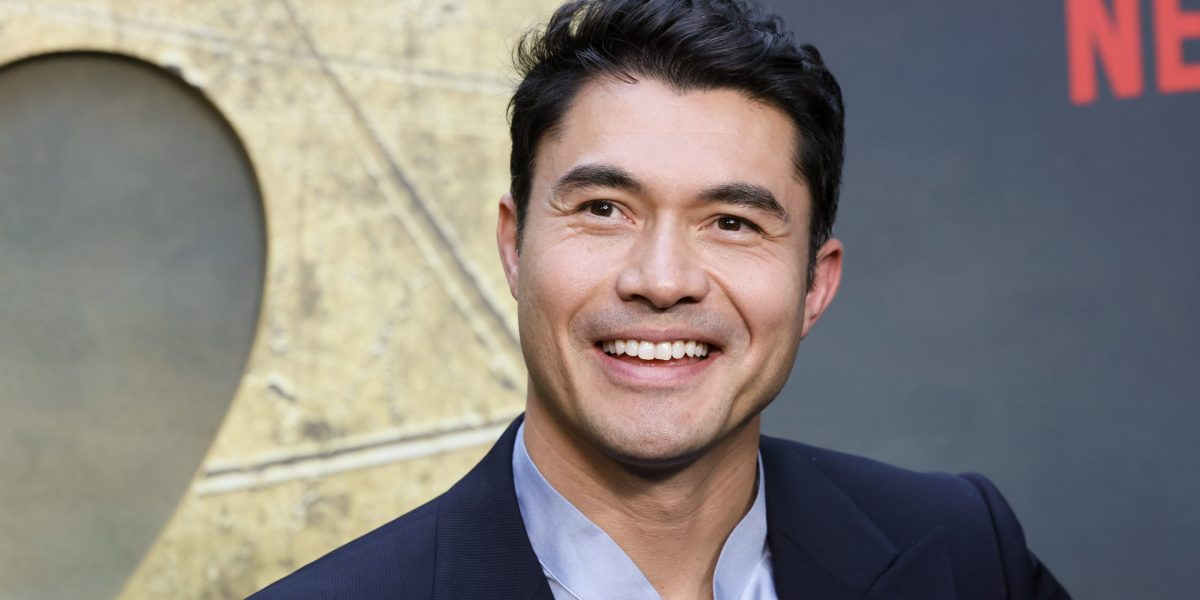
Many Hollywood stars rose to A-list status by acting from gig to gig since childhood, rising to stardom after years of countless auditions. But Crazy Rich Asians star Henry Golding had several careers before he landed box office hits—and his first job was sweeping the floors of hair salons for just $32 a day. 

“I started in a barber shop when I was 14, 15 years old just cleaning hair as a job for pocket money. I remember a day’s work was like 24 pounds,” Golding tells Fortune, recalling his days in England. “Child labor, classic. But it got me into hairdressing. It will always be my first passion.”

Golding, now 38 and no longer cleaning up the hair clippings of his salon’s wealthy clientele, has since become one of the most recognizable names in Hollywood. He landed his first major studio role as wealthy heartthrob Nicholas Young in the highly popular Crazy Rich Asians movie, which grossed nearly $240 million worldwide in 2018. And the opportunities haven’t slowed down since; Golding went on to star in A Simple Favor, Last Christmas, The Gentlemen, and Nine Perfect Strangers. 

But Golding’s acting career may never have come to fruition if it weren’t for his second career after hair styling: being a travel host. Exposure from his globetrotting video segments soon caught the attention of notable film producers, and the rest is history.

While Golding career-hopped chasing his various passions, he knew one thing for certain at a very young age: his passion didn’t lie in typing away in a cushy air-conditioned office. 

“I was never one who was very stuck at a desk and learning and revising and testing. I’m not academic in that way at all,” Golding says. “Curiosity was always my strong point.”

From high-end hairstylist to travel host for the BBC 

Although sweeping the floors of hair salons isn’t the most glamorous gig, Golding was excited by the thought of being creative and working with his hands. He loved the idea of being a hair stylist so much that he skipped college for an apprenticeship in the career. 

After wrapping up high school in Surrey, England, he was at a crossroad: take the GCSE (U.K. college qualifications exam) and pursue higher education, or become an apprentice and jump into work. At just 17, he made the choice to dive into hair dressing in lieu of a white-collar job. 

“My parents were so supportive. They couldn’t think of another room for me because they knew I was doing so well with hairdressing, and it was a trade, so I could travel with it,” Golding reminisces. 

After five years of styling hair and working at high-end salon Richard Ward in London’s Sloane Square—with affluent clientele including Kate Middleton’s brother—he decided to pivot. At the age of 22 he made a big career leap by moving to Malaysia, where the actor was born, to pursue travel television. As an avid watcher of Lonely Planet and fan of Anthony Bourdain, he wanted in on the magic of traveling to the far corners of the world. 

“My plans after working were really like, ‘Well, I’m gonna give this travel presenter thing a go, and if I mess that up, then I’m just gonna move to Australia and become a hairstylist there,’” Golding says. “I grew up watching all of those guys, so it was one of those dreams of mine. And so I was like, ‘Ah, maybe I’ll just give it a go. I’ll head over to Asia…I’ve got nothing to lose.’”

While restarting one’s life across the world sounds like a total gamble, it clearly paid off. Golding went on to lead a variety of shows for 8TV Malaysia, co-hosted a weekly football segment on ESPN, and presented global coverage for BBC’s The Travel Show. 

Golding was 11 years into his successful travel host career when one major Hollywood director found his clips on YouTube and recognized his star power. 

The Facebook message that launched Golding into Hollywood stardom

While most actors are sweating it, driving from audition to audition with no luck, Golding’s breakout role happened to land in his lap. Or rather, his DMs. 

“[Crazy Rich Asians director] John Chu reached out via a friend on Facebook. He’d been trying to hunt me down,” Golding recalls. “And I had been pushing away these offers of auditioning for this [movie] that was happening in Singapore, because I was like, ‘Oh, I’m not an actor. They’re gonna get an actor-actor to do that.’”

But Chu wasn’t ready to give up so easily—he reasoned with the then-travel host that he should at least do a reading of the script, calling it a “career-changing” opportunity. Golding folded and gave in, hopping on a Skype call with a casting director in Asia who had seen his travel shows on YouTube.

And as it turned out, Chu was right. Golding joined the shoot of Crazy Rich Asians, and the big acting gig propelled him into Hollywood stardom. Alongside his portfolio of acting roles, he’s also ventured into business. Golding is an investor in fintech company Chocolate Finance, backer of London-based tech business Nothing, and current partner with $170 billion bank Citi on a new travel rewards credit card. 

“I think curiosity really was what helped me excel and fall down rabbit holes to learn things, and travel really is medicine for the soul,” Golding says. “That’s been my life for the past 15 odd years.”

Introducing the 2025 Fortune Global 500, the definitive ranking of the biggest companies in the world. Explore this year’s list.


Source link

Continue Reading

Business

Millionaire YouTuber Hank Green tells Gen Z to rethink their Tesla bets—and shares the portfolio changes he’s making to avoid AI-bubble fallout

Published

on


For years, YouTube star Hank Green has stuck to the same straightforward investing wisdom touted by legends like Warren Buffett: Put your money in an S&P 500 index fund and leave it alone.

It’s advice that has paid off handsomely for millions of investors: this year alone, the index is up roughly some 16%, and averaged more than 20% in gains over the last three years and roughly 14.6% over the past two decades. In most cases, it’s easily beaten investors who try to pick individual stocks like Tesla or Meta.

But as Wall Street frets over a possible AI-driven bubble—with voices from  “Big Short” investor Michael Burry to economist Mohamed El-Erian sounding alarms—Green isn’t waiting around to see what happens. He’s already rethinking how much of his own wealth is tied to Big Tech.

A major reason: The S&P 500 is more concentrated than ever. The top 10 companies—including Nvidia, Apple, Microsoft, Amazon, Google, and Meta—make up nearly 40% of the entire index. And nearly all of them are pouring billions into AI.

“I feel like my money is more exposed than I would like it to be,” Green said in a video that’s racked up over 1.6 million views. “I feel like by virtue of having a lot of my money in the S&P 500, I am now kind of betting on a big AI future. And that’s not a future that I definitely think is going to happen.”

So Green is hedging. He’s taking 25% of the money he previously invested in S&P 500 index funds—a meaningful chunk for a self-made millionaire—and moving it into a more diversified set of assets, including:

  • S&P 500 value index funds, which tilt toward companies with lower valuations and less AI-driven hype.
  • Mid-cap stocks, which he believes could benefit if smaller firms catch more of AI’s productivity gains.
  • International index funds, offering exposure outside the U.S. tech-heavy market.

Green’s thesis is simple: even if AI transforms the economy, the biggest winners may ultimately not be the mega-cap companies building the models.

“I think that these giant companies providing the AI models will actually be competing with each other for those customers in part by competing on price,” Green said. “And that might mean that the value delivered to small companies will be bigger than value delivered to the big AI companies. Who knows though? I just think that’s a thing that could happen.”

And if his concerns are overblown? He’s fine with that, too.

“If I’m wrong, 75% of my money is still in the safe place that everybody says your money should be, which is the S&P 500.”

YouTuber’s message to his Gen Z and Gen Alpha viewers: The stock market isn’t a ‘Ponzi scheme’

Gen Z continues to trail other generations in financial know-how—from saving and investing to understanding risk, according to TIAA. Moreover, one in four admit they are not confident in their financial knowledge and skill—a stark admission considering that 1 in 7 Gen Z credit card users have maxed out their credit cards and many young people hold thousands in student loan debt.

As a self-described “middle-aged, 45-year-old successful person,” Green said he’s trying to model what thoughtful, long-term decision-making actually looks like. And part of that effort includes dispelling one big misconception shared among some of his audience:

“I get these comments from people who are like, I can’t believe that you’re participating in this Ponzi scheme,” Green told Fortune. “I do want to alienate those people, because I don’t believe that the stock market is a Ponzi scheme. I do think that it’s overvalued right now, but I think that it’s tied to real value that’s really created in the world.”

His broader point: Investing isn’t about vibes or just dumping money into the hot stock of the week; rather, it’s something to seriously research.

“A lot of people think that investing is like getting a Robinhood account and buying Tesla,” Green added. “And I’m like, ‘Nope, you’ve got to get a Fidelity account and buy a low cost index fund everybody and or just keep it in your 401K and let the people who manage it manage it’—which is what a lot of people do, which is also fine.”

His younger viewers are paying attention. One popular comment summed it up: “As a young person entering the point in my life where I’m starting to think about investing, I really appreciate you talking through your logic and giving a ton of disclaimers rather than telling me I should buy buy buy exactly what you buy buy buy.” The comment has already racked up more than 4,700 likes.

Financial advisors agree: Portfolio diversification is king

While Green doesn’t come from a financial background, experts from the world of investing said they agree largely with his rationale: Having a diversified portfolio is the way to go—especially if you have worries about an AI bubble.

“Unlike many dot-com companies, today’s tech giants generally have substantial revenue, cash reserves, and established business models beyond just AI,” certified financial planner Bo Hanson, host of The Money Guy Show, said in a video analyzing Green’s take.

“Still, the concentration risk remains a valid concern for investors that are seeking diversification. However, this is precisely why we advise against putting all investments solely in the S&P 500, especially if you have a shorter time horizon.”

Hanson added wise investors spread their money across various asset classes, including small-caps, international, and bonds, in order to reduce portfolio volatility and provide

more consistent returns across various market environments.

It’s sentiment echoed by Doug Ornstein, director at TIAA Wealth Management, who said it’s important to realize that not every investment needs to chase growth.

“Particularly as you get older, having guaranteed income streams becomes crucial. Products like annuities can provide reliable payments regardless of market swings, creating a foundation of financial security,” Ornstein told Fortune. “Think of it as building a floor beneath your portfolio—one that market volatility can’t touch.”


Source link

Continue Reading

Business

Warren Buffett: Business titan and cover star

Published

on


Warren Buffett’s face—always smiling, whether he’s slurping  a milkshake, brandishing a lasso, or palling around with fellow multibillionaire Bill Gates—has graced the cover of Fortune more than a dozen times. And it’s no wonder: Buffett has been a towering figure in both business and 

investing for much of his—and Fortune’s—95 years on earth. (The magazine first hit newsstands in February 1930; Buffett was born that August.) As Geoff Colvin writes in this issue, Buffett’s investing genius manifested early, and he bought his first stock at age 11. By Colvin’s calculations, over the 60 years since Buffett took control of his company, Berkshire Hathaway, its returns have outpaced the S&P 500 by more than 100 to one.  

Buffett has always had a special relationship with Fortune, particularly with legendary writer and editor Carol Loomis, who profiled him many times, and to whom he broke the news of his paradigm-shifting moves in philanthropy in 2006 and 2010. The end of an era is upon us, as Buffett on Dec. 31 will step down from his role as Berkshire’s CEO. We’re grateful to have been along for the ride. 

Warren Buffett on the cover of Fortune in 2009 and 2010.

Cover photographs by David Yellen (2009), and Art Streiber (2010)

Warren Buffett on the cover of Fortune in 2003 and 2006.

Cover photographs by Michael O’Neill (2003), and Ben Baker (2006)

Warren Buffett on the cover of Fortune in 2001 and 2002.

Cover photographs by Michael O’Neill

Warren Buffett on the cover of Fortune in 1986 and 1998.

Cover photographs by Alex Kayser (1986) and Michael O’Neill (1998)


Source link

Continue Reading

Business

Kimberly-Clark exec says old bosses would compare her to their daughters when she got promoted

Published

on


Women have their own unique set of challenges in the workforce; the “motherhood penalty” can set them back $500,000, their C-suite representation is waning, and the gender pay gap has widened again. One senior executive from $36 billion manufacturing giant Kimberly-Clark knows the tribulations all too well—after all, she’s one of few women in the Fortune 500 who holds the coveted role. 

Tamera Fenske is the chief supply chain officer (CSCO) for Kimberly-Clark, who oversees a massive global team of 22,665 employees—around 58% of the global CPG manufacturer’s workforce. She’s in charge of optimizing the company’s entire supply chain, from sourcing raw materials for Kimberly-Clark products including Kleenex and Huggies, to delivering the final product into customers’ shopping carts. 

It’s a job that’s essential to most top businesses operating at such a massive scale; around 422 of the Fortune 500 have chief supply chain officers, according to a 2025 Spencer Stuart analysis. However, most of these slots are awarded to white men; only about 18% of executives in this position are women, and 12% come from underrepresented racial and ethnic backgrounds. It’s one of the C-suite roles with the least female representation, right next to chief financial officers, chief operating officers, and CEOs. 

In fact, Fenske is one of just 76 Fortune 500 female executives who have “chief supply chain officer” on their resumes. However, the executive tells Fortune it’s an unfortunate fact she “doesn’t think about” too often—if anything, it motivates her further.

“Anytime someone tells me I can’t do something, it makes me want to work that much harder to prove them wrong,” Fenske says. 

The first time Fenske noticed she was one of few women in the room

Fenske has spent her entire life navigating subjects dominated by men—something she didn’t even consider until college. 

Her father, aunts, uncles, and grandfather all worked for Dow Chemical, so she grew up in a STEM-heavy household. Naturally, she leaned into math and science as well, eventually pursuing a bachelor’s in environmental chemical engineering at Michigan Technological University. It was there that her eyes first opened to the reality that she was one of few women in the room. 

“It definitely was going to Michigan Tech, where I first realized the disparity,” Fenske said, adding that there was around an eight-to-one male-to-female ratio. “As you continue through the higher levels and the grades, it becomes even more tighter, especially as you get into your specialized engineering.” 

Once joining the world of work, it wasn’t only Fenske who noticed the lack of women in senior roles—some bosses would even point it out. 

The Fortune 500 boss is paying it forward—for both men and women

After Fenske graduated from Michigan Tech, she got her start at $91 billion manufacturer 3M: a multinational conglomerate producing everything from pads of Post-It notes to rolls of Scotch tape. Fenske was first hired as an environmental engineer in 2000. Promotion after promotion came, but all people could seem to focus on was her gender.

“It would come to light when I moved relatively quickly through the ranks. Some of my bosses would say, ‘You’re the age of my daughter,’ and different things like that. ‘You’re the first woman that’s had this role at this plant or in this division,’” Fenske recalls. Over the course of 2 decades, she rose through the company’s ranks to the SVP of 3M’s U.S. and Canada manufacturing and supply chain. 

And anytime she was asked about her gender? She’d flip the questions back at them while standing her ground. “I would always try to spin it a little bit and ask them questions like, ‘Okay, so what is your daughter doing?’…I always try to seek to understand where they are coming from, but then also reinforce what brought me to where I am.”

Now, three years into her current stint as Kimberly-Clark’s CSCO, the 47-year-old is paying it back—but not just to the women following in her footsteps.

“I never saw myself as necessarily a big, ground-breaker pioneer, even though the statistics would tell you I was,” Fenske says. “I tried to give back to women and men, to be honest. Because I think men [are] one of the strongest advocates for women as well. So I think we have to teach both how to have that equal lens and diverse perspective.”


Source link

Continue Reading

Trending

Copyright © Miami Select.