While the overriding trend in UK retail sometimes seems to be all about stalling sales, closing stores and discounting, there are more positive trends too and CACI and and P-Three have just identified three of them.
The data specialist focused on people and place (CACI) and the “people-first” leasing agency for retail, restaurant, and leisure destinations (P-Three), said three key markets are starting to mature in London, “and are set to dominate the retail sector across the UK”.
And those markets are beauty, footwear, and social wellness.
We’re told the beauty market is “being transformed by three key movements: clean beauty; Korean beauty; and accessible luxury fragrance”.
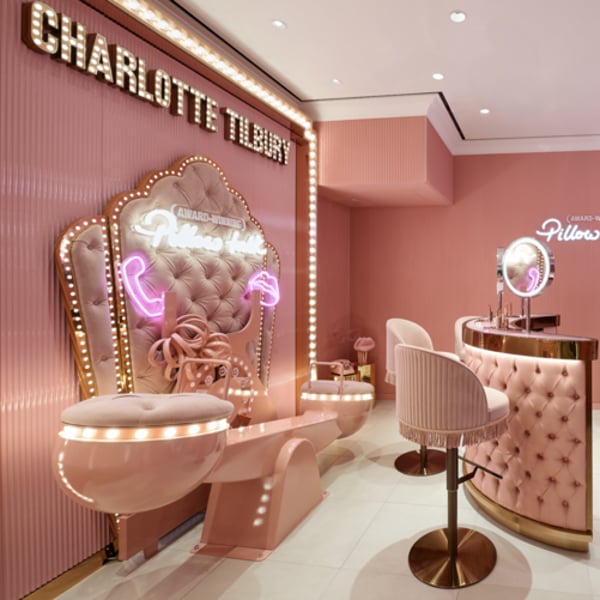
Occupier demand is an example of the trend with growing brands like Le Labo, Byredo, and Charlotte Tilbury “identifying the market potential, the former two going to Leeds recently for debut sites outside of the capital, and the latter launching new spaces in Covent Garden and Soho”.
CACI’s Brand Dimensions data shows a 15% spending increase in June 2025 against the same month two years ago and also highlighted positive performance for brands with strong store acquisition plans. PureSeoul (+86.5%), Space NK (+20.2%), Sephora (+14.9%), and Rituals (+33.7%) has all benefitted from “significant year-on-year sales growth as of June”.
As for footwear, it’s said to be “experiencing a nostalgic revival, with fashionable brands such as Crocs, Ugg, and Birkenstock that had fallen away now regaining popularity”. CACI/P-Three also said that “simultaneously, the athleisure movement continues to grow, fuelled by ‘Gorpcore’ streetwear and sneaker culture, as evidenced by recent London openings from brands Salomon, On Running, and Saucony”. And while the market is a buoyant one, such openings also mean “some of the UK’s best-known footwear stores are under more pressure, with greater market share being taken by the newer challenger brands”.
Interior of Saucony’s London flagship – Saucony
The social wellness trend has also emerged with a focus on fitness and self-improvement within a community setting. This “reflects changing habits among health-conscious Gen Z and Millennials who are moving away from a drinking culture and toward fitness-oriented lifestyles”. Growth in gym visits is well known but “the emerging trend is in facilities that offer more, with health clubs David Lloyd and Third Space both benefitting from steady sales increases in every month over the last two years”.
Hannah McNamara, co-founder of P-Three, commented: “Today’s shoppers aren’t just buying products, they’re investing in identities, experiences, and communities. The ‘lipstick effect’ shows beauty thrives even in challenging economic times, while the athleisure ‘Gorpcore’ movement demonstrates how leisure and adventure wear has become an everyday fashion. In London in particular, we’re seeing an evolution from transactional venues to hubs, where fitness communities are even rivalling traditional social spaces like pubs. For brands and landlords throughout the country, success will depend on creating environments that foster genuine connection and shared experiences.”
German womenswear brand Marc Cain has named a new CEO and it’s clearly preparing well in advance as he’ll take the reins of the business as of June next year.
Dr. Patric Spethmann – MARC O’POLO
He’s Dr Patric Spethmann, who will be responsible for all areas of the business. Helmut Schlotterer, founder and owner of Marc Cain, will remain chairman of the board, “primarily to mentor Patric Spethmann and act as a coach and advisor”.
So what is it about Spethmann that made the company (whose products are available internationally include the US and UK) pick him? He joins from Marc O’Polo, where he most recently held the position of COO. There, his focus was on “optimising internal processes, increasing the efficiency of workflows and organising structures”.
“In Patric Spethmann, we have gained a leader who brings with him many years of experience in the industry. Together, we will set the course for maintaining our brand and values and strategically driving them forward. This puts us in an excellent position for the future and enables us to respond quickly and efficiently to the challenges of the new era,” Schlotterer said.
And Spethmann added: “I am very much looking forward to joining Marc Cain in June 2026. As a leading player in the field of premium women’s fashion, I am particularly impressed by the company’s extraordinary innovative strength and its clear focus on forward-looking technologies. This combination of creativity, quality and progressive thinking makes Marc Cain, in my opinion, a company that sets trends for the entire industry.”
South African fashion retailer Mr Price will acquire NKD Group, a German-based discount retailer for up to 487 million euros ($567.55 million), it said on Wednesday, marking its first entry to the European market. By 1030 GMT, Mr Price shares were down 13.35%.
A shopper pushes a trolley outside a branch of South African clothing and homeware retailer Mr Price, at the Trade Route Mall, in Lenasia outside Johannesburg, South Africa, February 8, 2023 – REUTERS/Siphiwe Sibeko/File Photo
Mr Price said that NKD, an apparel and homeware retailer with 2,108 stores in seven Central and Eastern European countries, is a strategic fit. Market data indicates that the growth in the value retail market is outpacing that of the overall retail market. In Europe, value retailing accounts for about 22% of the market.
“After meeting the NKD team, it was evident that this was the right business to pursue,” said the group’s Chief Executive Officer Mark Blair. “Like us, they are value-retailers at heart and have a very clear understanding of who their customer is and how to best serve them,” he added.
The acquisition of NKD, which is from funds managed by TDR Capital LLP, includes the purchase of all NKD shares and income from shareholder loans. The deal will be settled using a mix of existing cash reserves and debt facilities, Mr Price said in a statement.
The transaction is subject to regulatory approvals, including clearance from the European Commission and the South African Reserve Bank. It is expected to close by the second quarter of 2026, Wednesday’s statement said.
Once completed, Mr Price’s annual revenue would increase to approximately 53 billion rand ($3.12 billion) from 40.9 billion rand, while the number of its stores would reach more than 5,000, up from around 3,100, and it would have more than 40,000 employees.
Private equity firm CVC Capital Partners is seeking a sale of FineToday Holdings, the Japanese personal-care company behind the Tsubaki shampoo brand, after shelving plans to list it in Tokyo, said four sources with knowledge of the matter.
The Tsubaki shampoo brand retails in numerous Asian countries – The Beauty Room- Facebook
FineToday, which counts China as its second-biggest market, postponed its Tokyo Stock Exchange initial public offering (IPO) in October, citing market conditions, according to a company statement. FineToday was expected to debut with a market capitalisation of about 169 billion yen ($1.08 billion) in the postponed IPO. The company had previously targeted roughly 219 billion yen in a 2024 attempt to go public.
Both valuation outcomes fell short of CVC’s internal expectations, two of the sources said. One of the sources said CVC is now seeking a valuation of over $2 billion, or around 14–15 times earnings before interest, taxes, depreciation and amortisation (EBITDA), for FineToday.
Interest has emerged from global buyout firms and at least one Chinese strategic investor, one of the sources added, but declined to name any of the interested parties. All the sources declined to be identified as the information is confidential.
CVC and FineToday declined to comment on Wednesday. The planned sale comes amid renewed strains in Japan–China relations. FineToday noted in its latest preliminary offering document that sales in China and Hong Kong were hit by a consumer backlash against Japanese brands after Japan released treated water from the Fukushima nuclear plant in 2023, and warned that it remains exposed to any future geopolitical tensions.
FineToday was created in 2021 after Shiseido Co carved out its personal-care unit and sold it to CVC in a 160 billion yen deal. The Tokyo-based company manufactures and markets haircare, skincare and deodorant products under brands including Tsubaki, Fino, Senka, Uno, Ag Deo24 and Kuyura, according to its official website and IPO filing.
About half of its sales come from overseas markets, with China a key market. In the six months ended June 30, 2025, 35.9% of revenue came from China and Hong Kong, while Japan contributed 44.3%, the filing showed.
FineToday posted 107.3 billion yen ($688.66 million) revenue in 2024 and 56.6 billion yen in the first half of 2025, with an adjusted EBITDA margin improving to 21.0% from 15.5% a year earlier, according to the filing.