Connect with us

Business

Barry’s cofounder meets with ‘random’ people who send him cold emails and LinkedIn DMs

Published

on


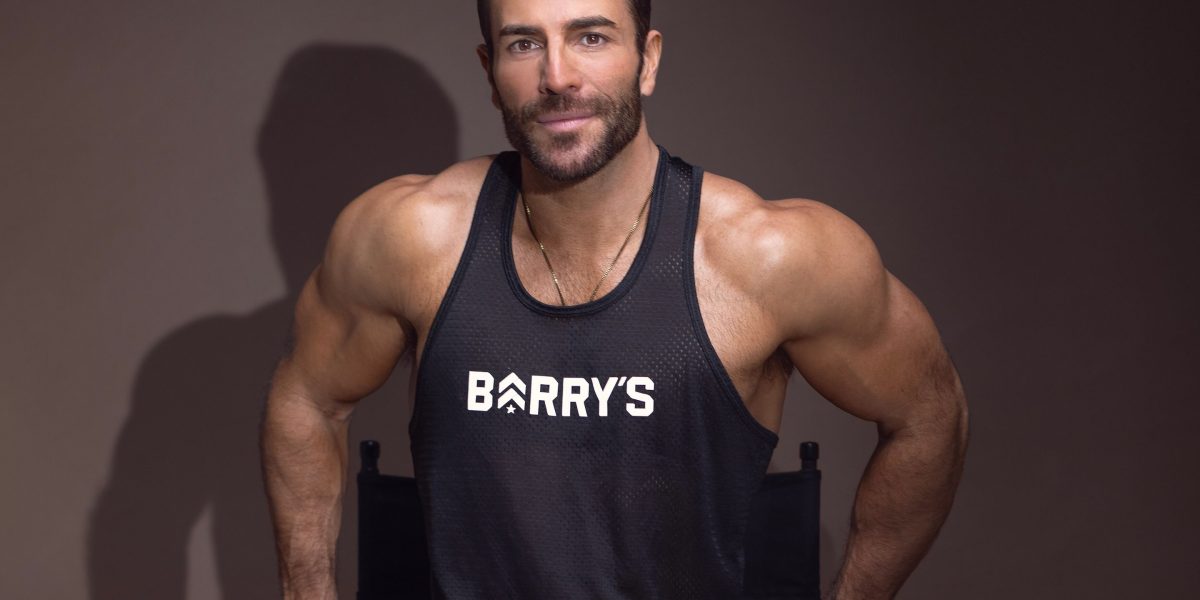
When Joey Gonzalez walked into a Barry’s Bootcamp class at 26, he thought he was just signing up for a good workout. He loved it so much that he became an instructor. By 2015, a decade later, he was running the company as CEO. His advice for Gen Z and young millennials who want to scale their careers at a similar speed? Start sending cold emails.

He would know. Last year, the self-made millionaire transitioned to the role of executive chairman of the upscale boutique fitness brand. But despite his busy schedule, Gonzalez still makes time to read the unsolicited messages ambitious young people send him—and he even found his successor that way.

“I used to dedicate, and I still do, most of my day on Friday, to anybody who wants to have a conversation around careers, even random people on LinkedIn, who reach out to me,” Gonzalez exclusively tells Fortune

“I would set aside the day to help meet with an MBA student who has questions about my career and how I got here. Or a trainer who’s working somewhere who wants to open up their own place.”

Even if you aren’t planning to leave your current company, Gonzalez argues that reaching out and building relationships is invaluable for landing that promotion.

“Take a look around and notice, what are the qualities of the people around you who are growing with the company? What do you see? Ask them: Can I have a coffee?”

Instead of finding your cold outreach annoying, Gonzalez insists that most bosses want to help the next generation of workers learn the ropes and climb the ladder. If anything, he says that confidently raising your arm for help is a green flag. 

“People are generally really good, and want to help, and you have so much to learn, especially from other individuals who are in your same company, and they’ll appreciate you having that kind of ambition and dialogue.”

Job seekers: Here’s how to make your cold email (or LinkedIn DM) stand out

Gonzalez isn’t just paying lip service when he says leaders want to help—he literally put someone into a senior role off the back of a cold email.

“It’s funny because my current CEO cold emailed me. And that’s how I hired him to be first CFO, then president, and now CEO,” the 47-year-old chairman and father of 2 recalls. “You just never know. You should always take that risk.”

What makes a cold email stand out? Passion. 

“What really resonated with me was his passion for the brand,” Gonzalez says, adding that young people should take note of the brands they’re already wearing and consuming, the hobbies that they’re into, and try to align their careers with those. 

“If you’re going to cold email someone, and you can’t be passionate about the service of the product or whatever it might be, it’s not going to be a compelling email,” he explains. “But if you send someone an email that’s like, ‘Hey, I just want to let you know I’ve been doing Barry’s for a year, and it’s changed my life. This is my resume, and maybe one day you’ll have something for me’—it just goes a long way.”

Take JJ Gantt, the boutique gym’s CFO-turned-CEO, for example. That’s exactly how he caught Gonzalez’s attention: “He was ready for change, and was a huge brand evangelist. Most of the executive team were clients and fans first.”

And it’s a win-win hack for young people. The worst that can happen is you remain in the same position you’re already in, so there’s nothing to lose. 

“Just be genuine,” Gonzalez advises. “I really believe honesty can get you everywhere.” 

“And it’s a no-fail system, because if you email and you are honest about how you feel, and the recipient thinks it’s corny, that job wasn’t meant for you. And that’s just not the right person that you should go work for.”

Figma’s billionaire CEO Dylan Field, self-made Skims entrepreneur Emma Grede, and Nespresso boss say cold emails are the secret to success

Gonzalez’s story isn’t a one‑off quirk. Many high-profile execs, across various industries, have admitted that their big break came off the back of a cold email—or cold letter, or cold call, for that matter. 

For example, you’ve probably heard of the British Entrepreneur Emma Grede because of Skims, the $4 billion shapewear company she runs with Kim Kardashian. She’s also invested in other brands with the family, such as the cleaning products company Safely and Kylie Jenner’s clothing line, Khy.

But what you may not know is that the growing empire can be traced back to one phone call she made to Kris Jenner in 2015, which changed everything.

“I had an idea, and I formed the partnership in my mind,” the self-made millionaire told Fortune in an exclusive interview. “The difference between me and someone else is that I made the phone call, I took the meeting, and I made it happen.”

Grede hadn’t run a fashion business before, nor had she ever worked with the Kardashian-Jenners, but she didn’t wait for the stars to align. She picked up the phone, pitched Good American Denim to the “momager,” and the rest is history.

Likewise, when Figma’s billionaire CEO Dylan Field was 19 and looking to get his design tool off the ground, the millennial cofounder cold-emailed his tech “heroes” to invite them out for coffee. He also hit up the inbox of former fellow interns and peers from LinkedIn, Flipboard, and O’Reilly Media—and it worked.

And then there’s Nespresso U.K. CEO Anna Lundstrom, who got her foot through the door of the notoriously hard-to-break-into luxury industry thanks to a cold email to an LVMH boss. He instantly offered her an internship, which snowballed into a 5-year career at the likes of Louis Vuitton, Chanel, and Gucci.

Read more: Barry’s ‘cofounder’ unwinds at his own gym—but even he admits balance is elusive: ‘Many days I have to wake up and choose who I’m going to disappoint’


Source link

Continue Reading

Business

U.S. Supreme Court ruling on tariffs could derail Trump’s plan to take Greenland

Published

on


The U.S. Supreme Court could rule on Tuesday that President Donald Trump’s trade tariffs are illegal—and that would throw up a significant hurdle for his plan to acquire Greenland.

President Trump posted his latest threat to take over Greenland late last night on Truth Social: “Now it is time, and it will be done!!!”

Previously, on Saturday, he threatened to impose tariffs of 10%, rising to 25%, on Denmark, Norway, Sweden, France, Germany, the U.K., the Netherlands, and Finland, rising to 25% on June 1, “until such time as a Deal is reached for the Complete and Total purchase of Greenland.”

But analysts noted this morning that the court is due to issue rulings on Tuesday and Wednesday of this week. The expectation on Wall Street is that the court will rule that the president does not have the power under the International Emergency Economic Powers Act (IEEPA) to impose tariffs on routine international trade. If that happens, Trump’s threats could become meaningless, at least in the short-term.

“Threatened U.S. tariffs … may be overturned by the U.S. Supreme Court,” UBS advised clients in a note this morning.

At ING, Carsten Brzeski and Bert Colijn said, “If the Supreme Court rules against all earlier IEEPA tariffs, Trump’s latest announcement [about Greenland] would be void, and he would have to find other tariffs. Something that would take more time.”

The ruling had been expected earlier this month. The delay has caused some to speculate that the court, which at oral arguments appeared to be skeptical of the White House’s arguments, may now be leaning toward the Trump Administration. The court has a history of taking longer to produce its big, unexpected rulings.

“While the Court is positioned to issue additional opinions this week—sessions are scheduled for Tuesday and Wednesday—our economists’ expectation is that the ruling may not come until later in the year, potentially as late as June,” Jim Reid and his colleagues at Deutsche Bank said in their morning note.

Join us at the Fortune Workplace Innovation Summit May 19–20, 2026, in Atlanta. The next era of workplace innovation is here—and the old playbook is being rewritten. At this exclusive, high-energy event, the world’s most innovative leaders will convene to explore how AI, humanity, and strategy converge to redefine, again, the future of work. Register now.


Source link

Continue Reading

Business

Elon Musk: AI, robotics will make work optional and money irrelevant in 10 to 20 years

Published

on


In the future, Elon Musk sees humans as metaphorical vegetable farmers.

The Tesla CEO said at the recent U.S.-Saudi Investment Forum in Washington that in the next 10 to 20 years, work will be optional, likening the decision to have a job to the more laborious upkeep of a vegetable garden.

“My prediction is that work will be optional. It’ll be like playing sports or a video game or something like that,” Musk said. “If you want to work, [it’s] the same way you can go to the store and just buy some vegetables, or you can grow vegetables in your backyard. It’s much harder to grow vegetables in your backyard, and some people still do it because they like growing vegetables.”

The future of optional work will be the result of millions of robots in the workforce able to usher in a wave of enhanced productivity, according to Musk. The tech mogul, worth about $681 billion, has made the recent push to expand Tesla beyond just electric vehicles, working on consolidating his sprawling business interests into his broader vision of an AI-fueled, robotic-powered future. That includes his goal of having 80% of Tesla’s value come from his Optimus robots, despite continuous production delays for the humanoid bots. 

These advancements in automation will have other benefits, too, according to Musk. In an episode of the Moonshots with Peter Diamandis podcast earlier this month, the Tesla CEO predicted his automatons would outnumber human surgeons within the decade. These advancements in medical care would exceed the quality of service the president receives, he said.

In Musk’s imagined future, humans would need that exceptional medical care for longer. He told Diamandis overcoming the problem of a limited lifespan is a programming issue, with access to immortality within human reach thanks to AI.

“You’re pre-programmed to die. And so if you change the program, you will live longer,” Musk said.

Addressing growing pains of an automated future

To many others, the notion of an automated future is less bright, particularly amid concerns about and early evidence of AI displacing entry-level jobs, which may be contributing to Gen Z’s job market woes and flatlining income growth—more of a nightmare than a utopian dream.

But in Musk’s automated, job-voluntary future, money won’t be an issue, he said. Musk takes a page from Iain M. Banks’ Culture series of science fiction novels, in which the self-proclaimed socialist author conjures a post-scarcity world filled with superintelligent AI beings and no traditional jobs.

“In those books, money doesn’t exist. It’s kind of interesting,” Musk said. “And my guess is, if you go out long enough—assuming there’s a continued improvement in AI and robotics, which seems likely—money will stop being relevant.” 

At Viva Technology 2024, Musk suggested “universal high income” would sustain a world without necessary work, though he did not offer details on how this system would function. His reasoning rhymes with that of OpenAI CEO Sam Altman, who has advocated for universal basic income, or regular payments given unconditionally to individuals, usually by the government. 

“There would be no shortage of goods or services,” Musk said at last year’s conference.

Tesla did not immediately respond to Fortune’s request for comment.

Is Musk’s optional-work vision possible?

Creating the world Musk is describing will be a challenge, according to economists. First of all, there’s the question of whether the technology to automate jobs will be accessible and affordable in the next couple of decades. While the cost of AI is decreasing, robotics are stubbornly expensive, making them harder to scale, according to Ioana Marinescu, an economist and associate professor of public policy at the University of Pennsylvania, who alongside colleague Konrad Kording published a working paper at the Brookings Institution last year. (For example, AI expense management platform Ramp noted in April 2025 companies are now paying $2.50 per 1 million tokens—the fundamental unit for powering AI—compared with $10 a year ago.) 

“We’ve been at it making machines forever, since the industrial revolution, at scale,” Marinescu told Fortune. “We know from economics that … you often run—for these kinds of activities—into decreasing returns, as it gets harder in order to make progress in a line of technology that you’ve been at, in this case, for a couple of centuries.”

AI is progressing rapidly, she said. Large language models can be applied to myriad white-collar careers, while physical machines, which she said are necessary in automated labor, are not only more expensive, but highly specialized, contributing to the slowdown in their workplace implementation.

Marinescu agrees with Musk’s vision of full-scale automation as the future of labor, but she is dubious about his timeline—not only because of the limitations of robotics, but also because AI adoption in the workplace is still not as rapid as anticipated, despite recent tech-related layoffs. A Yale Budget Lab report from October 2025 found that since ChatGPT’s November 2022 public release, the “broader labor market has not experienced a discernible disruption” because of AI automation.

Then there’s the matter of what these sweeping changes in labor will mean for the millions—or possibly billions—of people without jobs. Even with an established need for a universal basic income, finding the political willpower to make it happen is a different issue, said Samuel Solomon, an assistant professor of labor economics at Temple University. He told Fortune the political structure supporting the transformed labor force will be just as important as the technological one. 

“AI has already created so much wealth and will continue to,” Solomon said. “But I think one key question is: Is this going to be inclusive? Will it create inclusive prosperity? Will it create inclusive growth? Will everyone benefit?”

The current systems have appeared to widen the gap between the haves and have-nots during this AI industrial revolution, beginning with Musk’s $1 trillion pay package. A ballooning AI bubble has also illuminated class differences, with earnings expectations being revised up for the Magnificent Seven because of the AI boom, while expectations for the rest of the S&P 493 are being revised down, according to Apollo Global Management chief economist Torsten Slok. It suggests that as of today.

“Spending by well-off Americans, driven by their surging stock portfolios, is the single most significant driver of growth,” Slok wrote in a blog post.

Existential changes from AI

Ironing out the complicated logistics of a work-optional world is one thing. Figuring out whether that’s something humans really want is another. 

“If the economic value of labor declines so that labor is just not very useful anymore, we’ll have to rethink how our society is structured,” Anton Korinek, professor and faculty director of the Economics of Transformative AI Initiative at the University of Virginia, told Fortune.

Korinek cited research, such as the landmark 1938 Harvard University study that found humans derive satisfaction from meaningful relationships. Most of those relationships right now come from work, he said. In Musk’s imagined future, the coming generations will have to shift the paradigm of establishing meaningful relationships.

Musk offered his own take on the existential future of humans at Viva Technology in 2024.

“The question will really be one of meaning: If the computer and robots can do everything better than you, does your life have meaning?” he said. “I do think there’s perhaps still a role for humans in this—in that we may give AI meaning.”

A version of this story was published on Fortune.com on November 20, 2025.

More on Elon Musk’s vision for the future:

  • Elon Musk shares 4 bold predictions for the future of work: Robot surgeons in 3 years, immortality, and no need for retirement savings
  • Bad luck, six-figure earners: Elon Musk warns that money will ‘disappear in the future as AI makes work (and salaries) irrelevant
  • Elon Musk says saving for retirement is irrelevant because AI is going to create a world of abundance: ‘It won’t matter’


Source link

Continue Reading

Business

I lead IBM Consulting, here’s how AI-first companies must redesign work for growth

Published

on


Across every industry, organizations are investing heavily in the potential of artificial intelligence to reshape how they operate and grow. Nearly 80% of executives expect AI to significantly contribute to revenue by 2030, yet only 24% know where that revenue might come from. 

This isn’t an awareness gap. It’s an architecture gap.

The companies already capturing AI’s value aren’t waiting to discover it through pilots and proofs-of-concept. They’re engineering it through deliberate choices about how work gets designed, how human and digital workers come together, and how productivity savings are reinvested. 

From our work with enterprises across every major industry, a clear divide is emerging. 

Some organizations are bolting AI onto legacy workflows and gaining marginal productivity. Others are redesigning how value gets created and building growth trajectories competitors can’t replicate.

By 2030, this won’t be just a short-term positioning advantage. It will determine who remains in business. The difference comes down to three architectural choices that separate AI-first enterprises from everyone else.

Redesign Work Itself, Don’t Just Augment It

Most AI adoption fails because organizations are automating fundamentally broken processes. They’re making inefficient work more efficient—and wondering why transformation doesn’t happen.

AI-first enterprises start with a different question: If we were designing this work today with no legacy constraints, what outcome do we want? And what combination of human judgment and AI capability achieves that outcome best?

Nestlé provides a powerful example of a more than a centry-old global enterprise. The company isn’t just adding AI features to existing systems. They’re building an AI-powered enterprise architecture that understands their entire product ecosystem, supply chain, and consumer relationships in ways generic models never could. The goal isn’t incremental improvement—it’s the capability to deliver superior products faster while creating more personalized experiences for employees and customers.

Riyadh Air represents the opposite end of the business spectrum—a startup with no legacy constraints. But the principle is identical. The airline is building an AI-native operation from day one, with a unified architecture connecting operations, employees, and customers as a single intelligent system.

The insight both share is that the digital backbone isn’t just infrastructure. It’s the intentional architecture that allows humans and AI to work as integrated capabilities, creating adaptability that compounds over time.

Build Proprietary Intelligence, Not Just Access to Models

By 2030, everyone will have access to powerful AI models. The winners will have customized AI that knows their business better than any third-party AI possibly could.

L’Oréal isn’t just using AI to accelerate R&D. They’re building a custom AI foundation model trained on their proprietary formulation data, scientific research, and sustainability requirements.
These models will give their scientists capabilities no competitor could replicate, enabling new scientific possibilities that wouldn’t otherwise exist.

In our recent survey, more than half of executives expect their competitive edge to come from AI model sophistication specifically. Sophistication also comes from proprietary data, custom models tuned to specific challenges, and continuous learning loops. Organizations need multi-model portfolios – some proprietary, some licensed, all integrated into architectures that evolve as quickly as their markets.

The most valuable companies won’t be those with the most data. They’ll be the ones that turn data into AI-driven decisions at scale, with intelligence competitors can’t mimic by simply licensing better models.

Engineer Growth Loops, Not Just Efficiency Gains

Most AI strategies fail because they treat productivity as the destination.

Executives expect AI to boost productivity by 42% by 2030. But if you bank those gains as cost savings, you’ve fundamentally misunderstood the opportunity. AI-first enterprises treat productivity as fuel by reinvesting efficiency gains into new products, services, and markets.

The pattern works like this: AI-driven efficiency frees capital and talent. That freed capacity funds innovation in new markets. New markets generate new data. New data trains better AI. Better AI creates more efficiency. The loop accelerates.

L’Oréal scientists won’t just make formulations faster—this speed will allow them to explore sustainable ingredients that were not economically feasible before. Nestlé isn’t just optimizing supply chains—they’re using those gains to build direct consumer relationships that transform how people interact with their products. Riyadh Air isn’t just building a new airline—they’re stripping out fifty years of legacy in a single stroke that will define the next decade of aviation.

This creates exponential divergence. While laggards optimize margins, leaders accelerate into new markets, building capabilities that compound. By 2030, the gap won’t be measurable in productivity percentages. It will be measurable in entirely different business models.

The Questions That Determine Who Wins

The next era of growth won’t be predicted. It will be engineered. Leaders must answer three uncomfortable questions now:

  1. If we redesigned our operations with AI-first principles, what would we stop doing entirely? Not what would we do faster, rather, what would we eliminate? Most organizations discover that 30-40% of their workflows exist solely to compensate for constraints that AI removes. But elimination requires courage optimization avoids.
  2. What proprietary intelligence could we build that competitors can’t replicate? Not what AI can you license, but what AI could you engineer—built on the human expertise unique to your organization—that is so deeply tuned to your business that competitors would need a decade to catch up?
  3. Are we banking productivity gains or reinvesting them into growth loops?  Cost savings are finite, but growth loops are exponential. Which one is your strategy building?

By 2030, the companies that can answer these questions won’t just be more productive. They’ll be operating in markets competitors didn’t know existed, with capabilities competitors can’t build, and business models competitors can’t afford.

The real risk isn’t moving too fast on AI. It’s engineering too slowly while competitors redesign the game entirely.

The opinions expressed in Fortune.com commentary pieces are solely the views of their authors and do not necessarily reflect the opinions and beliefs of Fortune.


Source link

Continue Reading

Trending

Copyright © Miami Select.