Connect with us

Business

Barry’s cofounder meets with ‘random’ people who send him cold emails and LinkedIn DMs

Published

on


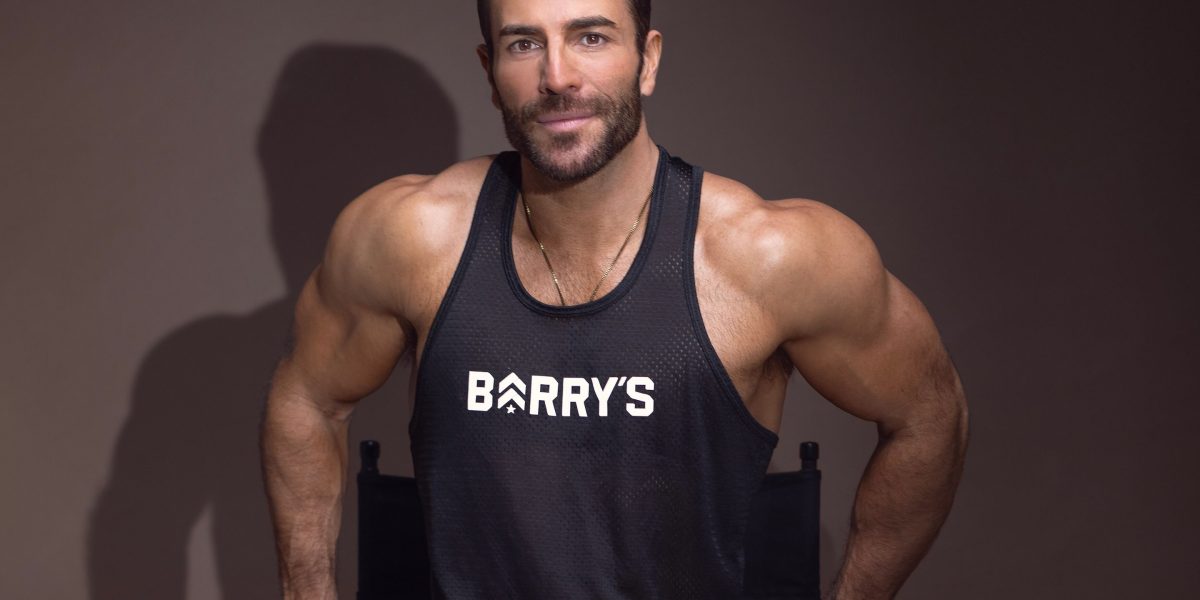
When Joey Gonzalez walked into a Barry’s Bootcamp class at 26, he thought he was just signing up for a good workout. He loved it so much that he became an instructor. By 2015, a decade later, he was running the company as CEO. His advice for Gen Z and young millennials who want to scale their careers at a similar speed? Start sending cold emails.

He would know. Last year, the self-made millionaire transitioned to the role of executive chairman of the upscale boutique fitness brand. But despite his busy schedule, Gonzalez still makes time to read the unsolicited messages ambitious young people send him—and he even found his successor that way.

“I used to dedicate, and I still do, most of my day on Friday, to anybody who wants to have a conversation around careers, even random people on LinkedIn, who reach out to me,” Gonzalez exclusively tells Fortune

“I would set aside the day to help meet with an MBA student who has questions about my career and how I got here. Or a trainer who’s working somewhere who wants to open up their own place.”

Even if you aren’t planning to leave your current company, Gonzalez argues that reaching out and building relationships is invaluable for landing that promotion.

“Take a look around and notice, what are the qualities of the people around you who are growing with the company? What do you see? Ask them: Can I have a coffee?”

Instead of finding your cold outreach annoying, Gonzalez insists that most bosses want to help the next generation of workers learn the ropes and climb the ladder. If anything, he says that confidently raising your arm for help is a green flag. 

“People are generally really good, and want to help, and you have so much to learn, especially from other individuals who are in your same company, and they’ll appreciate you having that kind of ambition and dialogue.”

Job seekers: Here’s how to make your cold email (or LinkedIn DM) stand out

Gonzalez isn’t just paying lip service when he says leaders want to help—he literally put someone into a senior role off the back of a cold email.

“It’s funny because my current CEO cold emailed me. And that’s how I hired him to be first CFO, then president, and now CEO,” the 47-year-old chairman and father of 2 recalls. “You just never know. You should always take that risk.”

What makes a cold email stand out? Passion. 

“What really resonated with me was his passion for the brand,” Gonzalez says, adding that young people should take note of the brands they’re already wearing and consuming, the hobbies that they’re into, and try to align their careers with those. 

“If you’re going to cold email someone, and you can’t be passionate about the service of the product or whatever it might be, it’s not going to be a compelling email,” he explains. “But if you send someone an email that’s like, ‘Hey, I just want to let you know I’ve been doing Barry’s for a year, and it’s changed my life. This is my resume, and maybe one day you’ll have something for me’—it just goes a long way.”

Take JJ Gantt, the boutique gym’s CFO-turned-CEO, for example. That’s exactly how he caught Gonzalez’s attention: “He was ready for change, and was a huge brand evangelist. Most of the executive team were clients and fans first.”

And it’s a win-win hack for young people. The worst that can happen is you remain in the same position you’re already in, so there’s nothing to lose. 

“Just be genuine,” Gonzalez advises. “I really believe honesty can get you everywhere.” 

“And it’s a no-fail system, because if you email and you are honest about how you feel, and the recipient thinks it’s corny, that job wasn’t meant for you. And that’s just not the right person that you should go work for.”

Figma’s billionaire CEO Dylan Field, self-made Skims entrepreneur Emma Grede, and Nespresso boss say cold emails are the secret to success

Gonzalez’s story isn’t a one‑off quirk. Many high-profile execs, across various industries, have admitted that their big break came off the back of a cold email—or cold letter, or cold call, for that matter. 

For example, you’ve probably heard of the British Entrepreneur Emma Grede because of Skims, the $4 billion shapewear company she runs with Kim Kardashian. She’s also invested in other brands with the family, such as the cleaning products company Safely and Kylie Jenner’s clothing line, Khy.

But what you may not know is that the growing empire can be traced back to one phone call she made to Kris Jenner in 2015, which changed everything.

“I had an idea, and I formed the partnership in my mind,” the self-made millionaire told Fortune in an exclusive interview. “The difference between me and someone else is that I made the phone call, I took the meeting, and I made it happen.”

Grede hadn’t run a fashion business before, nor had she ever worked with the Kardashian-Jenners, but she didn’t wait for the stars to align. She picked up the phone, pitched Good American Denim to the “momager,” and the rest is history.

Likewise, when Figma’s billionaire CEO Dylan Field was 19 and looking to get his design tool off the ground, the millennial cofounder cold-emailed his tech “heroes” to invite them out for coffee. He also hit up the inbox of former fellow interns and peers from LinkedIn, Flipboard, and O’Reilly Media—and it worked.

And then there’s Nespresso U.K. CEO Anna Lundstrom, who got her foot through the door of the notoriously hard-to-break-into luxury industry thanks to a cold email to an LVMH boss. He instantly offered her an internship, which snowballed into a 5-year career at the likes of Louis Vuitton, Chanel, and Gucci.

Read more: Barry’s ‘cofounder’ unwinds at his own gym—but even he admits balance is elusive: ‘Many days I have to wake up and choose who I’m going to disappoint’


Source link

Continue Reading

Business

Trump, Greenland threats to dominate high-stakes World Economic Forum in Davos

Published

on


Good morning from Davos, Switzerland where the 56th annual meeting of the World Economic Forum is now underway. Organizers are calling this one of the highest-level gatherings in WEF history, a mix of almost 3,000 global leaders with about 850 top CEOs and chairs and a record 400 top political leaders, including 64 heads of state. All eyes will be on President Donald Trump, who’s coming with five cabinet secretaries and a large delegation of other senior officials. The theme this year, WEF’s first without founding chairman Klaus Schwab at the helm: “A Spirit of Dialogue.”

Some might find that conceit to be ironic in a week when Trump threatened to impose tariffs on European nations that oppose his plan to buy Greenland, and Europe vowed to fight back. No wonder the 2026 Edelman Trust Barometer finds a world retreating into isolationism. All the more reason for leaders around the globe to come together at a time when the stakes feel so high.

As I walked past USA House last night, a man lay sprawled on the icy ground, surrounded by paramedics trying to gauge if he could get up on his own. It felt like an apt metaphor for the sentiment I’ve encountered from several non-U.S. business leaders here so far: shell shock, a burst of unfamiliar pain and a desire to stay as close as possible to the U.S. As Mohamed Kande, the Washington-based global chairman of PwC, explained to me last night: “The U.S. continues to be the No. 1 destination for investment; people respect the fundamentals of the economy and the fundamentals of the companies.”

While geopolitics will likely dominate the news agenda, AI will dominate many of the discussions in hotels and sponsored houses along the Davos Promenade, where large numbers of unofficial attendees spend much of their time. That’s where the coveted parties, receptions, programming and dinners take place.

Fortune, for one, is hosting a series of gatherings, from C-suite lunches and the Fortune Most Powerful Women reception to our annual Global Leadership Dinner and a special block of programming this Wednesday at USA House. You can check out our full schedule here

I’ll be joined on the ground by my colleagues Alyson Shontell, Kamal Ahmed and Jeremy Kahn, who will be filing dispatches, taping vodcasts, and moderating conversations throughout the week. (Kamal’s first column is here.)

One of my favorite places in Davos to experience a true spirit of dialogue is Barry’s Piano Bar, also known as “Cloudflare After Dark” since Cloudflare CEO Matthew Prince rescued veteran WEF pianist Barry Coulson when Coulson’s longstanding Davos gig down the street dried up. If the six G7 members who are in town this week could sit around that piano, belting out some tunes, that might give peace a chance.

Contact CEO Daily via Diane Brady at diane.brady@fortune.com

Top leadership news

There’s no business case for taking Greenland 

President Trump is stressing the national security rationale for the U.S.’s desire to annex Greenland. That may be wise since there’s essentially no business case for the move, as Fortune energy editor Jordan Blum reports. The icy island’s harsh environment is only one reason why.

National debt is killing the American dream

Low housing stock, education barriers, and the high cost of living are all crushing the American dream, but one leading economist is naming another culprit: the U.S.’s ballooning national debt, which now totals $38.5 trillion. Fortune‘s Eleanor Pringle explains why.

Ford CEO’s AI warning

Ford CEO Jim Farley is warning that the U.S. won’t achieve its grand AI ambitions if it doesn’t solve its blue-collar labor shortage; such workers are needed to build the AI data centers and related manufacturing facilities. “How can we reshore all this stuff if we don’t have people to work there?” he said.

The markets

S&P 500 futures were down 1.11% this morning; U.S. markets are closed for MLK Day. The last session closed down 0.06%. STOXX Europe 600 was down 1.24% in early trading. The U.K.’s FTSE 100 was down 0.46% in early trading. Japan’s Nikkei 225 was down 0.65%. China’s CSI 300 was up o.05%. The South Korea KOSPI was up 1.32%. India’s NIFTY 50 was down 0.42%. Bitcoin was at $93K.

Around the watercooler

A filmmaker deepfaked Sam Altman for his movie about AI. Then things got personal by Beatrice Nolan 

When Jamie Dimon poached a top Berkshire exec, he called Warren Buffett, who said ‘If he’s going anywhere, at least he’s going to you’ by Marco Quiroz-Gutierrez

Exclusive: Elon Musk’s Boring Co. is studying a tunnel project to Tesla Gigafactory near Reno by Jessica Mathews

Like DoorDash and Google’s CEOs, Informatica boss is a McKinsey alum—he says being ‘pushed around’ by smart consultants helped him grow by Emma Burleigh

Dollar sinks as Trump’s new tariffs raise fears about U.S. debt and reserve currency status. ‘When it’s lost, economic collapse will follow’ by Jason Ma

CEO Daily is compiled and edited by Joey Abrams, Claire Zillman and Lee Clifford.


Source link

Continue Reading

Business

Construction firm Italian-Thai Development is under fire after consecutive crane collapses

Published

on


Italian-Thai Development, one of Thailand’s largest construction conglomerates, is in the spotlight after successive fatal incidents on its building sites.

On Jan. 14, a crane collapsed onto a passenger train in the country’s northeast, killing at least 32 people. Just one day later, another crane fell on a highway project in Samut Sakhon province, leading to two deaths. Italian-Thai Development helmed both projects, and so on Jan. 16, Thailand’s Transport Ministry ordered a 15-day construction halt on more than ten projects overseen by the company, citing a “danger to the public.”

Italian-Thai Development released a statement to Thailand’s stock exchange on Jan. 15, noting that it had started the process of assessing damage and will take responsibility by providing compensation. Fortune has reached out to Italian-Thai Development for further comment.

The construction company is also linked to the collapse of a partially-constructed skyscraper in Bangkok last March, following a devastating earthquake in nearby Myanmar. The disaster killed almost 100 people.

Following the skyscraper incident, Premchai Karnasuta, the CEO of Italian-Thai Development, was indicted alongside 22 others, on charges including document forgery and professional negligence causing death. (Executives from China Railway No. 10, a Chinese state-owned construction firm that partnered with Italian-Thai Development, were also charged.)

Italian-Thai Development, with $2 billion in 2024 revenue, ranks No. 174 on Fortune’s Southeast Asia 500 list, which measures the region’s largest firms by revenue. 

Thai businessman Uthai Vongnai and Italian engineer Giovanni Tani founded Italian-Thai Development in 1958, after the two worked together salvaging five ships that sank in the Chao Phraya River. The firm expanded to sectors like real estate, manufacturing and mining, and has had a hand in building some of Thailand’s largest public infrastructure projects, like Bangkok’s subway system.

Still, the firm has had a rocky few years. They lost a total of 6 billion Thai baht ($192 million) between 2020 and 2022, according to the Bangkok Post, in part after its work in Myanmar was stalled after a 2021 coup and imposition of military rule.  

Karnasuta, Italian-Thai Development’s CEO, was also jailed for illegal poaching in 2021, after he was caught with hunting gear and animal carcasses in one of Thailand’s wildlife sanctuaries. He was released on parole in 2023. 

Italian-Thai Development has been forced to slash costs and dump several overseas units. The firm’s market value plunged from a peak of 12 billion baht ($384 million) in 2021 to just 1 billion baht ($32 million) in 2026.


Source link

Continue Reading

Business

Down Arrow Button Icon

Published

on


Most of us are still living by an Industrial Age life script — learn, work, retire. Yet, AI with human-like capabilities, able to operate around the clock, is making that script irrelevant. Our current educational, economic, and social frameworks weren’t built for the speed and scale of today’s change.  

When capabilities become obsolete faster than ever, what should we teach, and how? If expertise can be automated, what does human relevance in work really mean? In a future that will require rapid adaptation, the static, three-stage life script no longer fits. Instead, we need a system where learning and work are integrated and continuous, with education designed for an AI-enabled world and career pathways that blend credentialling and professional growth across a lifetime. 

Businesses are at the forefront of this shift — they operate at the edge of change, where new skill demands surface long before traditional systems can respond. Leading companies are already treating hiring as a step in the learning journey and building structures where work and education complement and amplify each other. 

AI as the breaking point 

For the past century, the broad framework for life progression — learning, career, retirement — has been largely unchanged. Innovation did occur within each stage, yet it did so largely within the existing framework, and new pathways to support a more fluid reality have not materialized at scale. 

AI represents a breaking point. It accelerates skill obsolescence, redefines productivity by decoupling output from human hours, and shifts the premium from execution to judgement, making long-developing cracks in the legacy framework become obvious chasms. Given that, in principle, today’s AI capabilities could transform roughly 93% of jobs, we must reimagine our life script and implement new pathways that will enable humans to harness the tailwind of technological innovation rather than be grounded by its speed

Despite progress with immersive, mastery-based approaches in some schools, K-12 education arguably relies too heavily on outdated teaching methods like memorization-based learning, siloed curriculum organized by subject, and schooling separated from real work. And while AI is now seen as indispensable in the workplace, with businesses considering its use critical to adaptation, teachers are struggling with how to integrate it into the educational experience.  

Our scaffolding for work and retirement similarly lacks the plasticity needed to support more dynamic career paths and people’s desire to continue making meaningful contributions into later life. 

Longer lifespans and rapid skill turnover suggest careers will be more fluid and people will have to cycle through multiple “learn – unlearn – relearn – work” phases over a lifetime, with periods of renewal built in. Yet the constructs of full -time employment, job ladders and narrow career progression remain the norm today. Digital native companies innovated here by embracing gig work, yet this model encounters added friction today, as many parts of our credit, housing and benefit systems are wired around W2 predictability. 

Finally, we lack widely-adopted pathways for late career contributions. Too often, experienced workers end up competing for roles optimized for early-career strengths, when competencies that often deepen with experience – judgment under ambiguity, systems thinking, the ability to mentor, to de-escalate, to build trust — could deliver significant value. Intentional redesign must yield systems that allow for a gradual ramp-down without losing status, income, or belonging. 

From sequential to parallel — an integrated journey of learning and work

Education, work, and retirement are ultimately institutional answers to fundamental societal needs: turning people into capable, value-anchored individuals who can navigate and improve their world; converting human potential into value, for oneself and society; and providing structured support for the work transition that comes with age, health changes or changing priorities.

With this first-principles approach we can design a new life script for a world enabled by AI, a script that supports human flourishing through continuous learning and growth. 

Shaping the right mindset

Education must foster life-long learners who are proficient with AI but not dependent on it. This starts in K-12 schools, where students must develop the ability to think critically and adjust to shifting circumstances. If we engender autonomy, curiosity, and a drive for excellence at an early age, lifelong learning will occur naturally and help individuals create value, build a strong reputation, and remain relevant and adaptive even into later-life roles. 

Practically, students can be encouraged to use AI for self-directed learning – finding information, synthesizing perspectives, testing hypotheses and evaluating AI outputs critically – while still being held accountable for the underlying comprehension. Similar to a calculator, AI becomes a tool that can accelerate and augment reasoning but does not replace learning or critical thought. 

In order to empower educators to drive this shift, we need to also develop intentional learning pathways for teachers, with credentialled, hands-on training on emerging technology use cases and guardrails. 

The convergence of learning and work

In a future augmented by AI, learning should take place throughout adulthood alongside careers, so it can provide on-ramps to new chapters. The lines between learning and work are increasingly dissolving. 

A growing number of employers offer formal apprenticeship programs combining paid on-the-job training with related classroom work. In countries like Germany, Switzerland and Austria robust apprenticeship systems have long integrated education and employment, proving that when businesses and schools co-design curricula and offer hands-on training, young people can develop career ready skills quickly and credibly. 

In the US, apprenticeships have historically been associated with the trades, but that’s changing. At Cognizant, we’re partnering with educational institutions on paid apprenticeships that offer work-based learning and serve as early talent pipelines. As technology companies, banks and healthcare organizations increasingly embrace apprenticeships as a way to develop talent from the ground up, startups such as BuildWithin are emerging to help them design and run these programs. 

Fellowships are also gaining traction as an alternative to the traditional college route. Programs like the Thiel Fellowship and, more recently, the Palantir Meritocracy Fellowship offer financial support (and in Palantir’s case, hands on experience) for young people with the drive to learn by doing. 

Clear structures for later-life contributions

A new life template also needs explicit structures for later-life contribution, with recognized roles and pathways that enable workers to change how they contribute over time. With life expectancy at around 78 years in the US and evidence linking a strong sense of purpose to better cognitive health, the future will require structures that help people continue contributing in ways that fit changing strengths, health, and priorities.

Businesses play a critical role in building a new, integrated system of learning and work because they see change first. They own the tools and data shaping modern work, and they sense when a capability becomes obsolete or when a new one is needed much sooner than traditional educational institutions. 

Enterprises therefore have a dual responsibility. They must partner with schools and universities to bring real projects and tools into learning much earlier, contributing to blended programs that make work part of the primary learning environment. And they must build their own skills engines, with programs and credentials that are tied to actual roles and portable enough to support employees as they learn, re-skill and reinvent their careers across different chapters of their lives. 

The new framework is already emerging, not through theory but through practice. If businesses and educational institutions converge to create joint pathways for an integrated learn-work journey, we can shape a new life template that prepares humanity for the next era. 

The opinions expressed in Fortune.com commentary pieces are solely the views of their authors and do not necessarily reflect the opinions and beliefs of Fortune.


Source link

Continue Reading

Trending

Copyright © Miami Select.