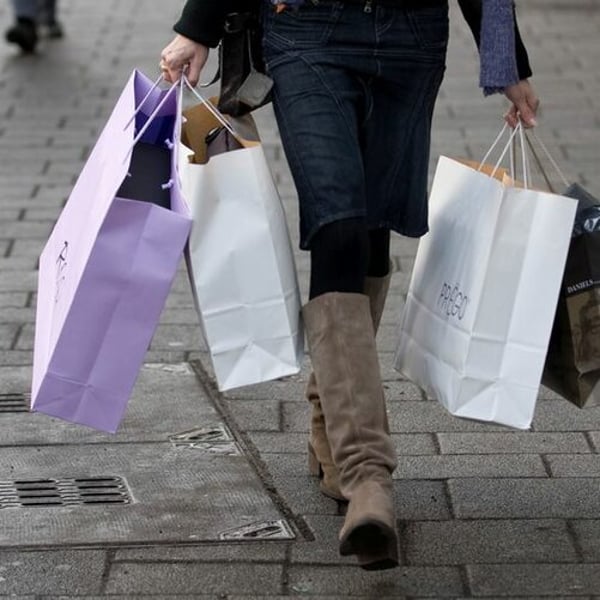
Two key monthly reports about British retail sales and wider consumer spending agreed on one main thing on Tuesday — both are slowing down.
Reuters
The regular Barclays consumer card spending report (which also covers retail sales) and the British Retail Consortium/KPMG report on retail sales specifically blamed consumer caution about what next month’s annual Budget might contain.
So let’s look at Barclays first. It said consumer card spending declined 0.7% year-on-year in September, down from 0.5% growth in August and much lower than the latest CPIH inflation rate of 4.1%. Essential spending fell 2.6%, while growth in discretionary spending continued, but it slowed to just 0.2%.
At least clothing furniture and beauty all had stronger months “as affordable ‘pick-me-up’ purchases were prioritised amid wider cutbacks”.
In fact, clothing spend rose 2.1% and transaction growth was 3.1%, although again, both figures lagged the inflation rate. But the figures still marked eight months of year-on-year growth, as 20% of shoppers reported spending more on clothes, shoes and accessories in September.
Pharmacy, health & beauty spend rose an impressive 9% with transaction numbers falling 0.6% suggesting beauty is able to push through higher prices.
Some spending last month was hit by transport strikes in London. Spending on public transport saw its greatest decline since March 2021 in September, down 2.6%, following widespread tube strikes. Over one in three Londoners said strike action reduced their monthly outgoings and their non-food retail spend was down by £26 less.
Overall, face-to-face spending decreased 1.6% across the UK – its greatest fall since June 2024.
Barclays also said consumer confidence in the strength of the UK, European and global economy all fell in September, to 25%, 29% and 26%, respectively. But consumers’ belief in their ability to live within their means reached its highest level in over four years, at 78%.
This comes as 44% of UK adults say they’re making changes to their personal finances in anticipation of November’s Autumn Budget, with 35% of this group building a savings buffer.
Meanwhile, the BRC/KPMG report for the five weeks to 4 October showed total retail sales rising up but more slowly. Sales rose 2.3% while non-foods grew only 0.7%, below the 12-month average growth of 0.9%.
In-store non-food sales increased by 0.5%, lower than the growth of 0.8% in September 2024.
Online non-food sales increased by 1%, well short of the growth of 3.4% in September 2024.
Helen Dickinson, the BRC’s chief executive, said: “With the Budget looming large, and households facing higher bills, retail spending rose more slowly than in recent months. Milder weather meant shoppers delayed refreshing autumn and winter wardrobes.
“Rising inflation and a potentially taxing Budget is weighing on the minds of many households planning their Christmas spending. Retailers also face difficult decisions about investment and hiring over the Golden Quarter given uncertainty over business rates bills arriving in April. The future of many large anchor stores and thousands of jobs remains in jeopardy while the Treasury keeps the risk of a new business rates surtax on the table. By exempting these shops when the Budget announcements are made, the Chancellor can reduce the inflationary pressures hammering businesses and households alike.”
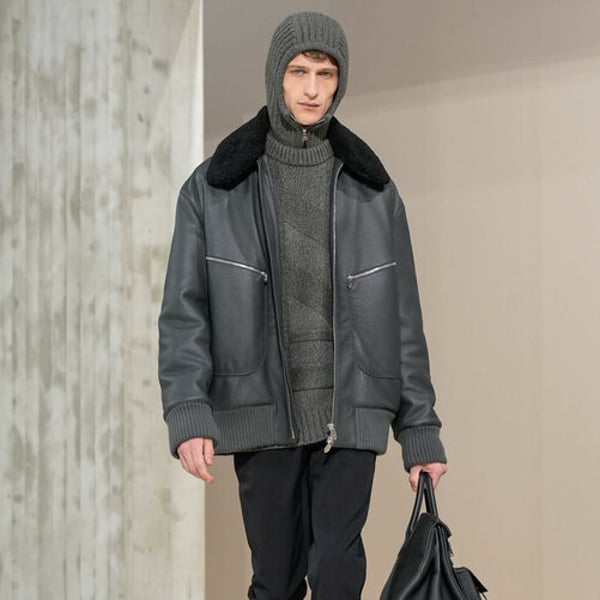
This January’s French menswear catwalk season will feature 35 live shows, including two Paris debutantes, and at least 32 presentations, including a surprise return by Balenciaga
Scheduled to last six days from Tuesday, January 20 to Sunday evening, January 25, the season will welcome debut Paris shows by two noted young brands: Jeanne Friot and Magliano, according to the official calendar released Thursday by the Federation de la Haute Couture et de la Mode (FHCM), French high fashion’s governing body.
Though the season’s most anticipated shows will be the debut of Grace Wales Bonner at Hermès, the return of Jacquemus, and the second menswear collection by Jonathan Anderson for the house of Dior. However, the house of Saint Laurent, notorious for its erratic show dates, has gone missing again from the French calendar, after showing last June.
In terms of new arrivals, Jeanne Friot is a gender-neutral brand based in Paris founded by Friot in 2020. A graduate of the Duperré School and then the Institut Français de la Mode in 2018, Friot cut her teeth at several fashion houses, including Balenciaga. Her show will open the season on Tuesday morning, in a busy opening day which finishes with Pharrell Williams’ fifth runway collection for Louis Vuitton.
Luca Magliano is a Bologna-born creator who first received recognition at the Who Is On Next? menswear awards in 2017. Six years later, Magliano nabbed the coveted Karl Lagerfeld award at the 2023 LVMH Prize. Last January he staged a dramatic show in Florence as Pitti’s guest designer, in a skilful and dramatic display that cleverly combined gender fluidity and quirky Italian tailoring.
Though the season’s hottest ticket will be Wales Bonner’s opening act at Hermès with a Saturday evening show, where she succeeds Veronique Nichanian after a three-decade-plus tenure. Jacquemus will climax the menswear season with the final show on Sunday night.
Anderson’s second Dior Homme menswear show will be staged on Tuesday afternoon, which ends with an evening show by Alexandre Mattiussi for his line Ami.
Balenciaga, which had previously presented menswear mainly in co-ed shows under designer Demna, will try out a novel format under his successor Pierpaolo Piccioli. The house will unveil its menswear online on January 15, when most buyers and press will be attending the Pitti menswear salon in Florence, before physically unveiling the collection on January 20 in its historic Paris HQ.
Elsewhere, Paris will also welcome back inventive perennials like Yohji Yamamoto, Comme des Garçons, Junya Watanabe, and Rick Owens. And feature shows by happening labels such as Willy Chavarria, Kidsuper, Sacai, 3. Paradis, and Kolor.
As noted, the house of Loewe has decided not to stage a runway show in the next menswear season in Paris in January. Instead, it will combine menswear and womenswear into a co-ed show during the next women’s ready-to-wear season in the French capital in March. While J.W. Anderson, the house of Loewe’s former designer Jonathan Anderson, who decamped to Dior, will also not stage a runway event.
In a busy week, four fresh arrivals will hold presentations: ERL by Eli Russell Linnetz from Los Angeles; Saudi label Kml; eco-friendly brand Sonia Carrasco; and Japanese minimalist label ssstein. While three other labels return after brief hiatuses: Charles Jeffery Loverboy, Maison Kitsuné, and Post Archive Faction (PAF).
Bulgari has named Laura Burdese, a 10-year veteran of LVMH, to be the famed jewellery brand’s CEO, though her appointment is only effective from July 1, 2026. Burdese succeeds Jean-Christophe Babin and will report to Stéphane Bianchi.
Laura Burdese is Bulgari’s new CEO – Bulgari
“I am very proud of this smooth transition from one great leader to another. For the past three years, Laura and Jean- Christophe have worked side by side to sustain and orchestrate the brand elevation of the iconic Roman jewellery Maison. The nomination of Laura, while opening a new chapter for Bulgari, is a tribute to her strong contribution and accomplishments,” said Stéphane Bianchi, LVMH group managing director and CEO of LVMH watches and jewellery, in a release.
Burdese began her career in the LVMH Group as CEO for Acqua di Parma, before joining Bulgari in 2022 as chief marketing officer. After leading the brand transformation and elevation over recent years, she was promoted to deputy CEO in July 2024.
“Jean-Christophe has shaped the success of TAG Heuer and Bulgari while creating unique paths within their respective industries. I am confident that in his new missions, he will bring the same energy and keep on supporting LVMH and its maisons thanks to his extraordinary vision,” Bianchi added in a release.
Babin will step down as CEO of Bulgari after more than 25 years in the giant luxury group, first at TAG Heuer and then at Bulgari. Under his leadership, the maison underwent a profound transformation, reclaiming its unique position as the quintessential Roman high jeweller. He also spearheaded Bulgari’s advancements in watchmaking and expanded Bulgari into the luxury hospitality industry with new hotels in major global cities.
Babin also demonstrated a strong commitment to Italian craftsmanship, evidenced by the inauguration of a new factory extension in Valenza and the launch of the Scuola Bulgari. Babin will continue to serve as chairman of the Bulgari Board, CEO of the Bulgari Hotel Business Unit, and president of the Bulgari Foundation. He will also report to Bianchi.
Burdese started her career in the beauty industry, holding brand management positions at Beiersdorf and L’Oréal. In 1999, she joined the Swatch Group as marketing director Italy, before doing management stints at Klein Watch and Jewelry and Swatch Group’s Italian subsidiary. In addition to this role in 2012, she was named president and CEO of Calvin Klein Watch & Jewelry Co. Ltd.
In October 2016, she joined LVMH as president and CEO of Acqua di Parma. In 2022, Burdese was appointed vice president of marketing and communications at Bulgari, before being appointed deputy CEO in 2024. She holds a degree in International Economics from the University of Trieste and a Master’s degree in Marketing and Communication.
In 2025, Vivaia is betting on the world’s fashion capitals. After establishing itself in New York and then London, the footwear brand has opened its second French store, on the outskirts of Paris at the Westfield Les 4 Temps shopping centre in La Défense. Inaugurated on December 9, this new location follows the first Parisian boutique, opened in 2024 at the Carrousel du Louvre, and underscores the brand’s strategy to expand its physical retail footprint. The Les 4 Temps boutique spans 135 square metres and offers the full range of Vivaia collections.
Vivaia boutique at Les 4 Temps – DR
The brand was founded in 2020 by Marina Chen, who had previously worked in fashion at Camuto Asia, and Jeff Chan, a Chinese entrepreneur who describes himself as the co-founder of the Nordace travel backpack brand. The duo envisioned a direct-to-consumer (DTC) brand with a focus on using recycled materials. The brand says it works with certified suppliers, including Repreve, to transform recycled PET plastic bottles into yarn used in the manufacture of its shoes. Production also relies on 3D knitting technologies, helping to reduce waste and incorporate recycled materials into the collections.
Marina Chen, co-founder of Vivaia – Vivaia
Since its launch, Vivaia has developed more than 200 models, from ballet flats to trainers, Mary Janes, and boots, with a particular emphasis on sole comfort and the fit of elastic uppers.
The brand has been accelerating its global roll-out, appointing Howard Herman as managing director in 2022. A former executive at Li & Fung Limited, the global supply-chain giant, he brings expertise in retail development and international strategy.
Vivaia is operated in Europe by London-based Stroud International. However, the brand rights are held by Shenzhen Starlink Network Technology Co (Starlink), a Chinese company specialising in international e-commerce. Established in Shenzhen around 2016–2017, the company, led by co-founder John Lau, was conceived as a platform for creating consumer brands to be sold directly and via marketplaces outside China, particularly in the US and Europe. Starlink, not to be confused with the company behind SpaceX, is therefore the parent of the Vivaia women’s footwear brand, as well as an athleisure label called Fanka. In 2021, the group received strategic investments from ByteDance, owner of TikTok, and Sequoia Capital, giving it the means to accelerate its global expansion.
Today, Vivaia does not disclose its turnover, but according to several media outlets it generated around €180 million in 2024. The brand is now present in 61 countries, with two directly operated stores in France and 75 internationally, including Milan and Rome, as well as in key Asian cities such as Tokyo, Manila, Singapore, Taipei, Hong Kong, Macau, and Kuala Lumpur.
In the US, the brand is stocked by major department store chains Dillard’s and Von Maur. Still absent from China, like Shein, the brand has also recently entered new markets such as Brazil and Australia, a sign of its ambition for international expansion.
This article is an automatic translation. Click here to read the original article.