
Politics
Bale Dalton considers Artemis program NASA’s premier mission for the 2020s and beyond
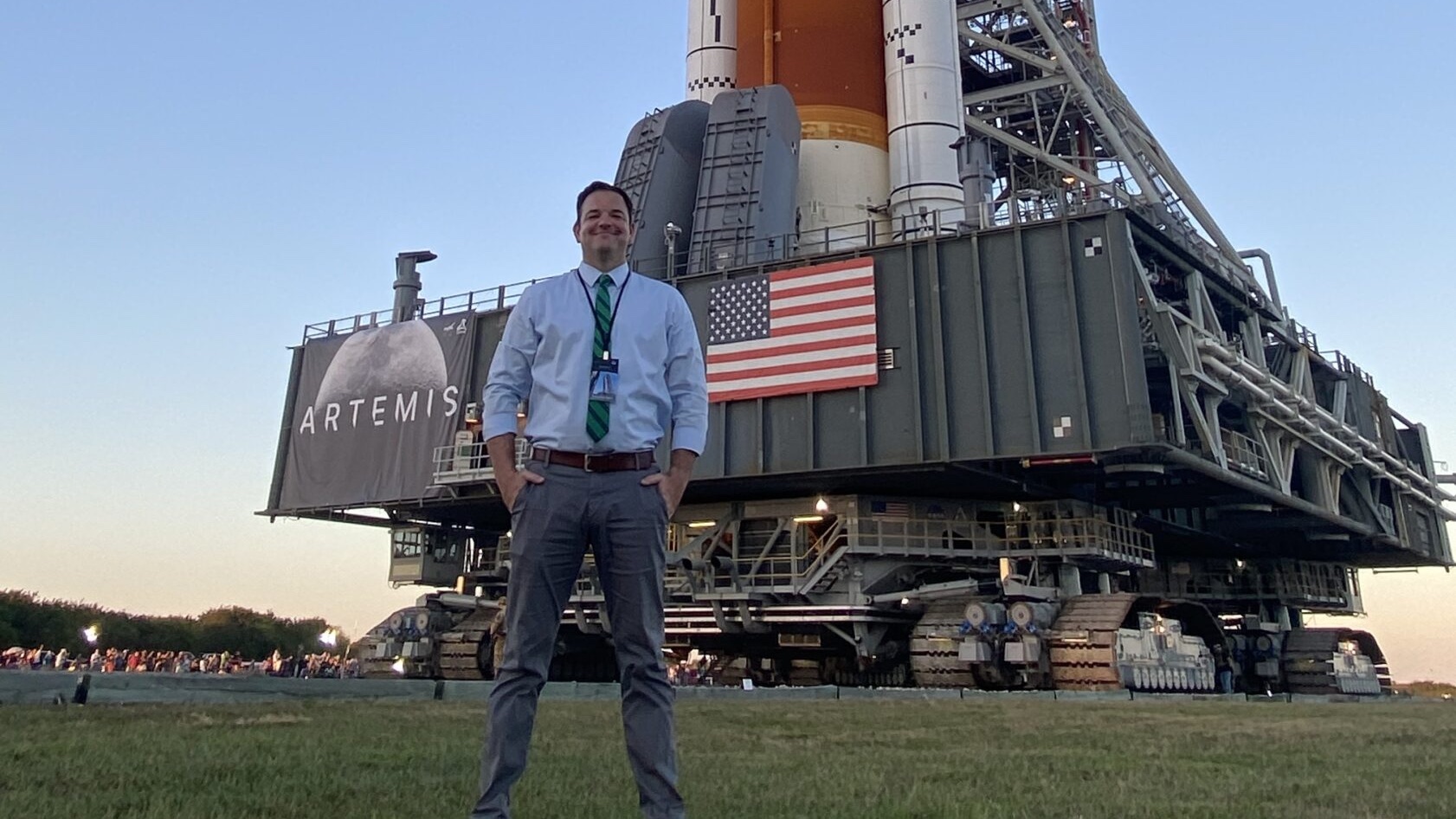
For Democratic congressional candidate Bale Dalton, Artemis II represented more than an impressive rocket launch. To the former NASA Chief of Staff, the trip to the moon represents years of labor and commitment.
He’s on a first-name basis with Artemis II astronauts Reid Wiseman, Victor Glover, Christina Koch and Jeremy Hansen. And before the launch, Dalton said he felt nervous for their safety and excited for their future. “These are going to be the first humans to ever see with the human eye the far side of the Moon,” he said.
Dalton called Artemis “one of the premier missions of NASA in these years of the ‘20s and going forward into the ‘30s.”
“But of course, the most important part of getting back to the moon is we’re not going just to touch it,” Dalton said. “We’re not going just to say that we’ve been there. We are going to figure out ways to live and work and conduct research over time and cultivate resources which will inform later missions — possibly crewed missions to Mars.”
The launch occurred as Dalton sets out on another challenging endeavor, unseating incumbent Republican U.S. Rep. Cory Mills.
Should Dalton win a seat in Congress, his enthusiasm for exploring the stars and expanding the reach of mankind will go with him. He said he will fight for NASA in Washington, as he did when he worked in agency headquarters.
“It’s always a fight for resources. One of the things that was top of mind for us at NASA is to be good stewards of the resources that we were given,” he said.
“I do think that there are folks that understand the value of what NASA, as an entire agency, brings to us here in America.”
Dalton laid out some of those benefits.
“We’ve got incredible science operations through earth observation, which help inform our farmers how to plant and how to irrigate more efficiently, measuring the types of changes that are going on here on our Earth, so that we can be resilient in the face of those and then, of course, facing exploration, like the Webb telescope, looking further into the cosmos than we have ever looked before,” Dalton said.

“We hang our hat on the fact that we’re doing incredible exploration and incredible research, which helps us here on Earth and helps inform future missions even beyond our solar system.”
The Artemis mission has been called a “return to the moon,” but Dalton noted that this mission seeks to do far more than the Apollo missions in the 1960s and early ‘70s. He said a trip to the south pole of the moon will be exponentially harder than the 1969 moon landing.
Artemis II will fly by the moon, but Artemis IV, scheduled for an early 2028 launch, includes a lunar landing. NASA Administrator Jared Isaacman recently announced plans to open a base on the moon, something Dalton supports.
Isaacman also added an Artemis earth orbit mission that means a delay in landing on the moon. Dalton, though, said changes were to be expected and defended Isaacman’s decision.
“I’d be worried if NASA weren’t thinking every single day about how we could improve the plan, how we could improve the schedule,” Dalton said.
“Here in America, with our ingenuity and our ability to get things done, we want to ensure that we are leading the way in research and development and exploration of space. NASA is one of those areas of our government that needs constancy of leadership. We need the best and brightest of America to be employed and working there. And I think that’s what we have.”
Of note, U.S. Rep. Mike Haridopolos in a separate interview on Artemis praised Isaacman as well. Haridopolos said he has been more communicative and transparent with private sector space companies than predecessor Bill Nelson, a former Democratic U.S. Senator and Dalton’s former boss, whom Haridopolos called “aloof” and “slow-moving.”
Nelson notably has endorsed Dalton’s candidacy for Congress. Dalton said he plainly disagreed with Haridopolos’ assessment of the former NASA administration.
“You’re talking about making sure that a partnership between government and private industry is working in the most efficient way, but also in the safest way, especially considering the launch today,” Dalton said.
“Carrying humans into space is an incredibly dangerous activity, and it requires a lot of oversight and making sure that everybody is complying with standards, and so I think that is top of mind in any partnership.”