Connect with us

Business

AWS CEO Matt Garman says AI displacing junior employees is bad for business

Published

on


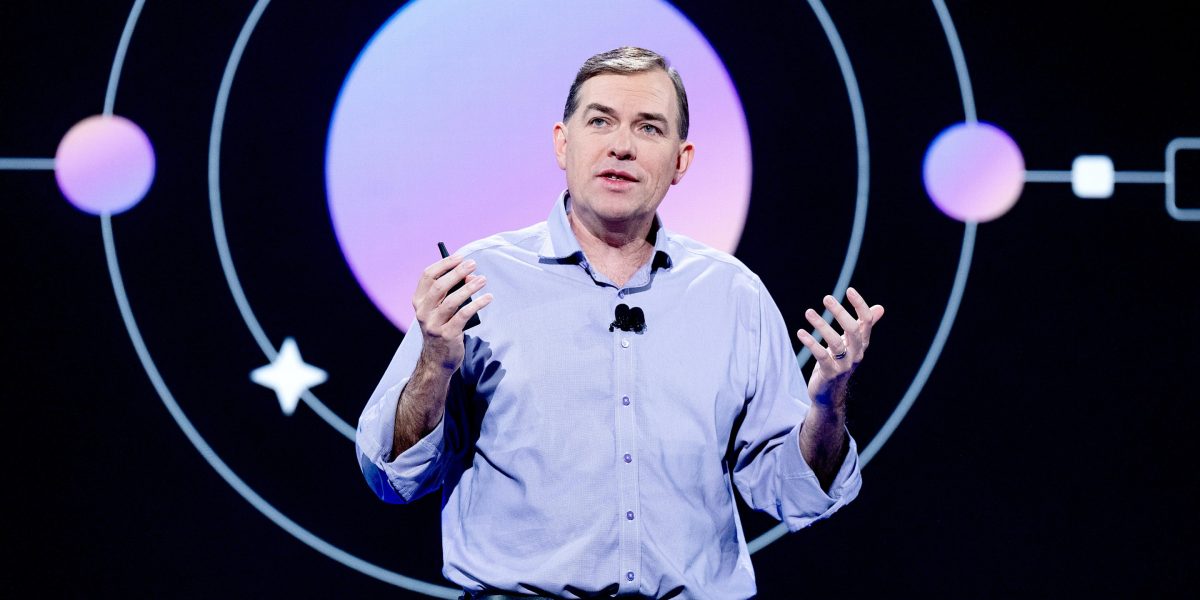
Earlier this year, Garman said replacing junior software developers with AI was “one of the dumbest things I’ve ever heard,” and it’s a point he stands by. In an interview with WIRED published on Tuesday, Garman said displacing junior engineers and employees with new tech is a bad business move. 

Entry-level workers are usually paid the least, meaning getting rid of their positions first in favor of higher-paid senior talent is not a cost-effective strategy, he noted. Moreso, these fresh-faced young workers are likely recent college graduates with energy, excitement, and deep familiarity with AI tools. Eliminating them, in Garman’s eyes, would be myopic.

“At some point that whole thing explodes on itself,” Garman said. “If you have no talent pipeline that you’re building and no junior people that you’re mentoring and bringing up through the company, we often find that that’s where we get some of the best ideas.”

“You’ve gotta think longer term about the health of a company,” he added. “And just saying ‘OK great, we’re never going to hire junior people anymore,’ that’s just a nonstarter for anyone who’s trying to build a long-term company.”

A Stanford University study published in August suggested AI is already starting to have its way with entry-level workers. The research revealed that “the AI revolution” is having a “significant and disproportionate impact on entry-level workers in the U.S. labor market,” particularly 22- to 25-year-old software engineers and customer service agents.

AI’s workforce shakeups 

Despite Garman’s adamance on AI not replacing young workers, Amazon’s own automation advancements have coincided with the company laying off thousands of employees this fall. The tech giant announced in October it would slash 14,000 jobs, mostly middle management positions. Earlier this year, Amazon laid off a smaller portion of workers from divisions including AWS, its Wondery podcast division, and the consumer devices unit. 

Rather than attribute the axings to AI, Amazon instead said the layoffs were part of an effort to make the business more efficient after a period of growth, as well as resolve cultural mismatches that emerged in the workforce.

“The announcement that we made a few days ago was not really financially driven, and it’s not even really AI-driven, not right now at least,” CEO Andy Jassy said at the time. “It’s culture.”

Still, AI advancements are poised to impact Amazon’s workforce. The memo outlining the fall layoffs cites the transforming technology of AI as the impetus for improving workflows with leaner teams. A June memo from the company said AI efficiency gains will “reduce our total corporate workforce,” and a New York Times investigation published in October reported Amazon had a lofty goal to automate 75% of its work, translating to about 600,000 jobs the tech giant would not ultimately need to hire for.

AWS did not immediately respond to Fortune’s request for comment.

Garman isn’t naive to the workplace upheaval AI could bring. He predicted the technology will initially create a burst of new jobs, as well as reduce several roles, but he was certain that AI would ultimately transform the nature of work.

“One of the things that I tell our own employees is ‘Your job is going to change.’ There’s no two ways about it,” he told WIRED.

The 49-year-old AWS CEO said employees have the potential to have more impact and responsibilities as a result of AI, but it will require learning news skills, as well as organizing teams differently. While entry-level workers should not be the primary victims of AI’s workplace shake-ups, other jobs and industries will be impacted, Garman noticed.

“If they don’t, they’ll most likely get left behind by people who move faster and do change,” he said. “There is going to be some disruption in there for sure. Like there is no question in my mind.”


Source link

Continue Reading

Business

‘They took all of our oil not that long ago. And we want it back’: Trump demands Venezuela return seized assets

Published

on


President Donald Trump demanded Wednesday that Venezuela return assets that it seized from U.S. oil companies years ago, justifying anew his announcement of a “blockade” against oil tankers traveling to or from the South American country that face American sanctions.

Trump cited the lost U.S. investments in Venezuela when asked about his newest tactic in a pressure campaign against leader Nicolás Maduro, suggesting his administration’s moves are at least somewhat motivated by disputes over oil investments, along with accusations of drug trafficking. Some sanctioned tankers already are diverting away from Venezuela.

“We’re not going to be letting anybody going through who shouldn’t be going through,” Trump told reporters. “You remember they took all of our energy rights. They took all of our oil not that long ago. And we want it back. They took it — they illegally took it.”

U.S. oil companies dominated Venezuela’s petroleum industry until the country’s leaders moved to nationalize the sector, first in the 1970s and again in the 21st century under Maduro and his predecessor, Hugo Chávez. Compensation offered by Venezuela was deemed insufficient, and in 2014 an international arbitration panel ordered the country’s socialist government to pay $1.6 billion to ExxonMobil.

While Venezuela’s oil has long dominated relations with the U.S., the Trump administration has focused on Maduro’s links to drug traffickers, accusing his government of facilitating the shipment of dangerous drugs into the U.S. In his social media post Tuesday night, Trump said Venezuela was using using oil to fund drug trafficking and other crimes.

U.S. forces last week seized an oil tanker off Venezuela’s coast amid a massive military buildup that includes the Navy’s most advanced aircraft carrier.

The military also has carried out a series of strikes on suspected drug boats in the Caribbean Sea and eastern Pacific Ocean that have killed a total of at least 99 people, including four in a strike Wednesday. Those attacks have prompted questions from lawmakers and legal experts about their legal justification. Trump also has said he is considering strikes on land.

Trump’s talk of ‘stolen assets’

Stephen Miller, Trump’s deputy chief of staff, likened Venezuela’s move to nationalize its oil industry to a heist.

“American sweat, ingenuity and toil created the oil industry in Venezuela,” Miller wrote on social media Wednesday. “Its tyrannical expropriation was the largest recorded theft of American wealth and property. These pillaged assets were then used to fund terrorism and flood our streets with killers, mercenaries and drugs.”

Venezuela first moved to nationalize its oil industry in the 1970s, a process that expanded under Chávez, who nationalized hundreds of private businesses and foreign-owned assets, including oil projects run by ExxonMobil and ConocoPhillips. That led to the arbitration panel’s 2014 order.

“There is a case that can be made that Venezuela owes this money to Exxon. I don’t think it’s ever been paid,” economist Philip Verleger said.

Trump blamed his predecessors for not taking a harder line against Venezuela over the asset seizures.

“They took it away because we had a president that maybe wasn’t watching,” Trump said Wednesday. “But they’re not going to do that again. We want it back. They took our oil rights — we had a lot of oil there. As you know they threw our companies out, and we want it back.”

Chevron has a waiver from the U.S. government for oil production in Venezuela, and the Texas-based oil giant says its operations have not been disrupted.

Venezuela’s debt to Chevron “has decreased substantially” since the company’s license to resume exporting Venezuelan oil to the U.S. was first granted in 2022, said Francisco Monaldi, a Venezuelan oil expert at Rice University in Houston. He said the amount is not public.

A new designation for Maduro’s government?

There was no change Wednesday to the list of foreign terrorist organizations after Trump said in his post that the “Venezuelan Regime” has been designated as one.

Officials at several national security agencies were told not to take Trump’s remarks about the designation literally and they should be treated as a figure of speech, according to a U.S. official involved in the discussions.

That official, who spoke on condition of anonymity to describe internal interagency communications, also stressed that the “blockade” Trump announced applies only to previously sanctioned vessels against which certain actions are already authorized, such as the seizure last week.

The State Department, which oversees the list, didn’t respond to requests for clarification.

Trump’s Justice Department in 2020 indicted Maduro on narcoterrorism charges and U.S. authorities have alleged that Venezuela’s leaders have profited from drug trafficking. Last month, the Trump administration designated a group linked to Maduro — the Cartel de los Soles — as a terrorist organization.

Venezuela decries American ‘piracy’

Maduro called United Nations Secretary-General Antonio Guterres on Wednesday for a conversation “regarding the current tensions in the region,” U.N. deputy spokesman Farhan Haq said.

“During the call, the secretary-general reaffirmed the United Nations’ position on the need for member states to respect international law, particularly the United Nations Charter, exert restraint and de-escalate tensions to preserve regional stability,” Haq said.

Venezuelan Foreign Minister Yván Gil demanded in a letter to the U.N. Security Council, which was obtained by The Associated Press, that the U.S. immediately release the “kidnapped crew” and return the oil illegally confiscated on the high seas.

In a second letter Wednesday, Venezuela’s U.N. Ambassador Samuel Moncada called for an emergency meeting of the U.N.’s most powerful body to discuss “the ongoing U.S. aggression.”

Citing Trump’s social media post, Moncada said, “this means that the U.S. government is claiming the world’s largest oil reserves as its own, in what would be one of the greatest acts of plunder in human history.”

In addition to urging the Security Council to condemn the taking of the tanker, Gil urged the U.N.’s most powerful body for a written statement stating that it hasn’t authorized actions against Venezuela “or against the international commercialization of its oil.”

While the strikes on alleged drug boats have raised questions about the use of military force, Trump’s seizure of the tanker and other actions against sanctioned entities are consistent with past American policy, said retired U.S. Vice Admiral Robert Murrett, now a professor at Syracuse University.

He also noted that from a military standpoint, seizing sanctioned oil tankers and imposing a blockade are far less risky than direct military confrontation.

“U.S. policy supports peaceful, democratic transition in Venezuela,” Murrett said. “If Maduro agrees tomorrow to step down and have a free and open election, I think we’d be delighted, Democrats and Republicans alike.”

___

Associated Press writers Matthew Lee in Washington, Regina Garcia Cano in Caracas, Venezuela, Cathy Bussewitz in New York and Edith M. Lederer at the United Nations contributed to this report.



Source link

Continue Reading

Business

LinkedIn CEO says it’s ‘outdated’ to have a five-year career plan

Published

on


One of the most common pieces of career advice is you should always have a five-year plan mapped out. It’s a way to set targets, stay on track, and advance in your career. But LinkedIn’s CEO says that’s “outdated,” considering the state of today’s job market. 

“You’ll hear people frequently say, ‘Hey, you have to have a five-year plan, like, chart out what the next five years of your life are going to look like, and then follow that path and follow that plan,” Ryan Roslansky said during a recent No One Knows What They’re Doing podcast episode

“And in reality, when you know technology and the labor market and everything is moving beneath you, I think having a five-year plan is a little bit foolish,” the LinkedIn CEO continued. 

Being the chief executive of one of the most popular career-focused social media and job-search platforms since 2020, Roslansky has witnessed countless career paths from users—especially in a tumultuous job market challenged by the pandemic, different administrations, layoffs, tariffs, inflation, and more. 

But one of the most recent and prominent transformations to the job market is the introduction of AI. Because technology is changing the workplace at such a rapid pace, Roslansky suggested professionals make shorter-term career goals instead of focusing on years down the road. Data from the World Economic Forum supports Roslansky’s argument the workplace is changing rapidly—and therefore people need to stay more agile about mapping their careers. Workers can expect roughly 39% of their core skills to be transformed or become obsolete by 2030, according to WEF. 

“I would much recommend people focus on maybe the next few months and a couple of things that aren’t a plan, but [rather] what do you want to learn? What type of experiences do you want to get? That’s, I think, the right mental model in this environment,” he said. 

Other career experts still subscribe to the necessity of a five-year plan, arguing “career growth doesn’t just happen by accident,” and more intensive planning helps people actually reach their goals. 

“Five-year plans also give you the flexibility to change what’s no longer relevant to your long-term goals, without derailing your progress,” talent management executive Mary McNevin told Arielle Executive. “This way, you’re always working toward what you truly want to achieve.”

But Roslansky is so dedicated to this idea he hosts his own podcast called The Path, which is focused on how professionals take on a variety of career paths that aren’t necessarily linear. 

“A lot of people just believe that there’s some linear career path that you jump on,” he said. “You know, you graduate high school and then go to a certain college and then you become a consultant and then get an MBA. People believe that’s how it happens.”

Armed with insights and data from his own company, Roslansky knows a linear education and career is not the reality for most people. In fact, a recent report from vocational and education provider TAFE Gippsland shows people, on average, go through three-to-seven career changes throughout their lifetime—and 16 job changes. 

And this trend is especially evident in Gen Z, who changes jobs, on average, every 1.1 years, according to a recent report by recruiting firm Randstad. The firm calls this “growth-hunting,” and not “job-hopping,” though, because Gen Z says they change jobs because they sense a lack of progression in their current roles.

“If you focus on those shorter steps, gaining learning, gaining experience, a lot of your career path will open up for you,” he said. “And the sooner you realize that, you can take your own career into your own hands. No one is trying to figure this out for you.”


Source link

Continue Reading

Business

Down Arrow Button Icon

Published

on


IT service was built to bring structure to chaos. But for many organizations today, it’s become a source of it. The ticket queues keep growing. Processes feel rigid. And employees often feel frustrated by systems that seem stuck a decade behind.

The numbers reflect this pain, with 40% of organizations either replacing or re-implementing their IT service tools in 2025. This is a clear sign that the model is cracking and needs to be reimagined. Meanwhile, 58% of organizations say their IT team spends more than five hours each week fulfilling repetitive requests. Something has to give.

Today’s businesses are agile. Customers expect instant fixes, and artificial intelligence (AI) is redefining how work gets done. The problem? Many IT processes haven’t kept up. They’re still burdened by manual, outdated workflows that slow everyone down, with a recent report citing that 45% of organizations consider repetitive tasks as their top IT service challenge in 2025. To stay relevant, IT must evolve from a back-office function into a strategic driver of business growth.

Here are the three biggest challenges holding IT service back and how forward-thinking teams can help solve them:

1. The manual workload trap

For most IT teams, the day begins and ends with manual tasks: logging incidents, assigning tickets, documenting fixes, and updating records. These repetitive processes drain time and productivity. In fact, 90% of IT leaders say manual, repetitive work contributes to low employee morale.

The impact runs deep. Skilled analysts are pulled away from strategic work. Projects stall. Employee burnout rises. And IT ends up perceived as a cost center, not an enabler.

The fix starts with automation, but not just rule-based automation. The next generation of IT service is built on intelligence, context-aware systems that can actually understand what someone needs. For example, when an employee messages IT about a problem, the system can pick up the key details, create a ticket, and send it to the right person automatically. Instead of humans chasing data, the system does it for them.

This shift doesn’t replace people; it refocuses them. Analysts can now spend time on important work like diagnosing complex issues or improving processes, not copy-pasting tickets.

2. The employee experience gap

The modern workplace runs on collaboration platforms like Slack and Teams. Yet most IT service tools still live outside of where people actually work. Employees have to leave their workflow, open a portal, fill out forms, and wait. Often, they do this without any visibility into what happens next.

The result? Low engagement. In many companies, a large number of IT issues go unreported because the process feels too painful. In fact, 62% of employees say they avoid their service desk altogether, and 58% admit they’re living with ongoing problems that IT hasn’t been able to fix, according to a recent survey.

IT analysts feel this friction, too. The conversations that matter (troubleshooting, context gathering, updates) happen in chat threads, while the official records live in a different system. That constant switching between tabs slows everything down.

Modern IT leaders are closing this gap by bringing IT service into the collaboration layer. When employees can request help and track issues directly in the places where they collaborate and work, like Slack or Teams, context stays intact and work keeps moving. With AI agents now built into these platforms, they can simply ask for what they need in natural language, just like chatting with a colleague or a ChatGPT-style interface. The result: IT becomes an active part of daily work, not a separate system to avoid.

It’s a cultural shift as much as a technical one, aligning IT with how employees actually communicate. And it pays off: 71% IT leaders believe that AI or intelligent automation will improve employee and customer satisfaction in IT service.

3. Rigid processes in a dynamic world

If there’s one phrase that frustrates every IT leader, it’s this: “This is just how the system works.”

Traditional IT service frameworks often lock teams into fixed workflows. Need to adjust an approval process for a new compliance rule? Add a custom step for a high-priority change type? Often, it takes weeks of development or costly consultants to make even minor updates.

The irony is that IT service, meant to bring flexibility to operations, has become one of the least agile systems in the enterprise stack.

What’s changing now is the rise of low-code and adaptive workflows. Platforms like Salesforce, ServiceNow, and other modern ITSM tools let teams design and modify processes without deep coding expertise. Instead of rigid, hard-coded systems, IT can define dynamic lifecycles where each stage has its own rules, tasks, and access controls. Approvals can adapt automatically based on risk or impact. And integrated analytics help teams see what’s working and where bottlenecks form.

Rethinking IT service for what’s next

The IT service of the future won’t just manage incidents and changes. It will orchestrate intelligent workflows across the enterprise. Employees will interact with IT the same way they use any modern app — conversationally, contextually, and instantly. IT teams will focus less on maintaining systems and more on improving outcomes.

We’re already seeing the blueprint: automation reducing manual load, Slack-first collaboration improving experiences, and flexible frameworks enabling adaptation. Together, these shifts are redefining what IT service can be, turning it from a support function into a strategic partner for every department.

The challenge isn’t technology anymore. It’s the mindset. Modern IT service isn’t about keeping the lights on. It’s about lighting the way forward.

The opinions expressed in Fortune.com commentary pieces are solely the views of their authors and do not necessarily reflect the opinions and beliefs of Fortune.


Source link

Continue Reading

Trending

Copyright © Miami Select.