
Politics
Austin Rogers considering a run to succeed Neal Dunn in CD 2


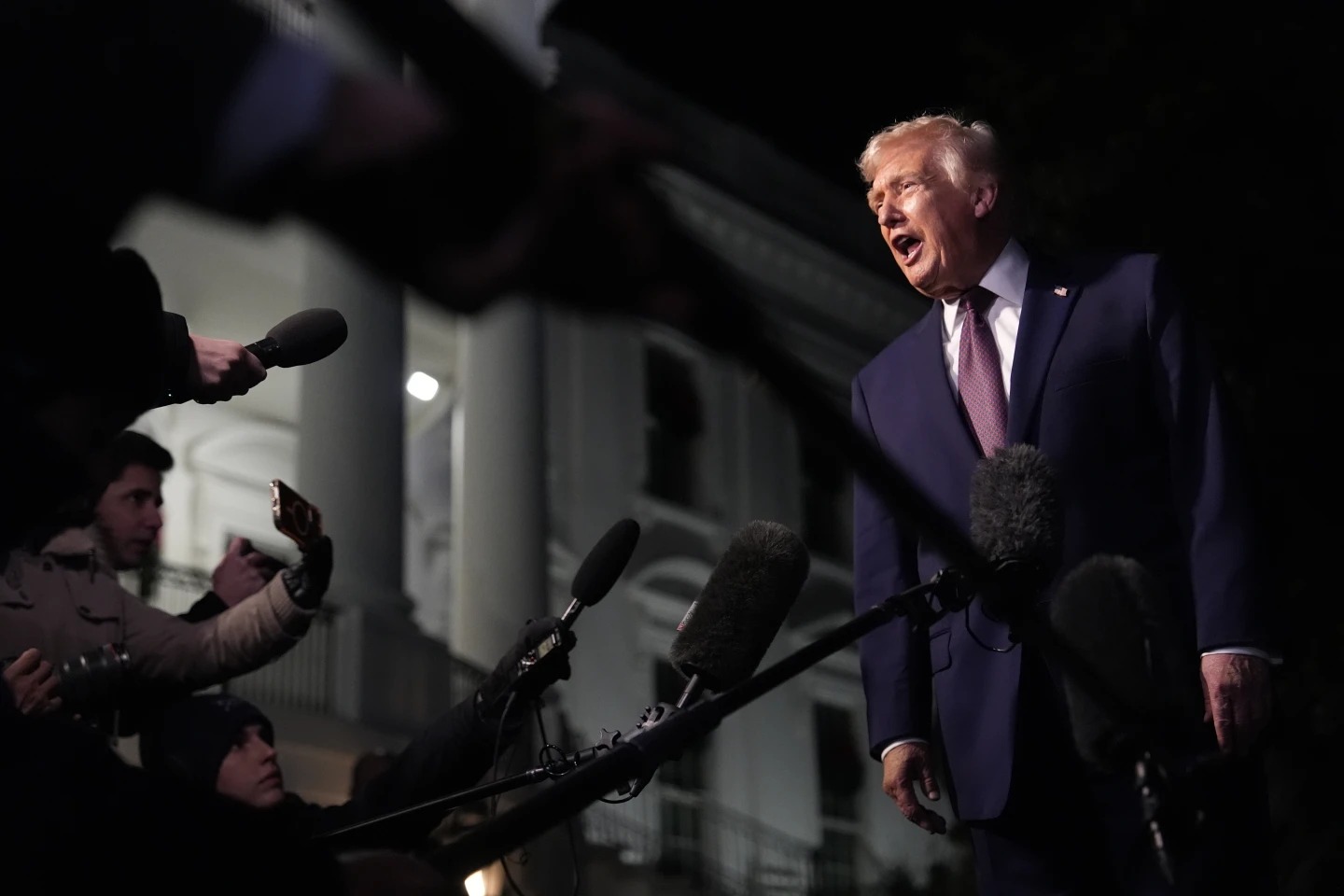
Exactly one year ago, Donald Trump was sworn in for his second term while promising the American public that help was on the way, particularly regarding affordability.
The issue had already been creating major challenges for lower- and middle-income earners across the nation. One year in, Trump continues to claim the nation is enjoying an “economic boom.” But the Democratic National Committee (DNC) wholly disagrees, especially for Floridians.
“The numbers don’t lie: Trump’s first year back in office has been a complete disaster for Florida families. Trump broke his promise to lower costs on Day One and instead has made life far more expensive for Florida families,” said Tim Hogan, the DNC’s senior advisor for messaging, mobilization and strategy.
“Because of Trump’s Big Ugly Bill and failed economic policies, unemployment in Florida is up, families are paying $1,060 more a year, and 1,500,000 Floridians will be kicked off their health care after Trump let premiums skyrocket. While Donald Trump may think affordability is a hoax, Florida families know better, which is why they are putting their trust in Democrats who will keep fighting to lower costs and protect health care.”
A DNC study last week found Florida is one of 26 states where unemployment has risen since Trump took office, at a 0.7-percentage-point increase. The $1,060 figure is the approximate amount Florida households are losing through higher costs related to Trump’s tariffs and his “One Big Beautiful Bill” package, which the DNC and other Democratic groups have taken to calling the “Big Ugly Bill.”
The same study estimated that expiring premium tax credits under the Affordable Care Act would lead to 1.5 million Floridians losing health coverage, one of the highest numbers in the nation behind only California.
But the DNC’s critique does not stop there. Democrats point to a Joint Economic Committee Minority report this month finding that families paid $310 more for groceries during Trump’s first year in office than they did in 2024.
The DNC’s own study found that working American families have lost $585 to inflation and that nearly 4.5 million Floridians who rely on the Affordable Care Act’s marketplace for health coverage are seeing premiums skyrocket, which the DNC attributes to Trump’s refusal to extend tax credits. It’s worth noting that while Trump opposed extending the credits, Congress declined to pass an extension.
Additionally, cuts under the One Big Beautiful Bill to the Supplemental Nutrition Assistance Program, colloquially known as food stamps, will mean more than 1.6 million Floridians lose some or all of their food benefits, according to the DNC analysis. The Harvard Kennedy School found that the legislation is cutting about $186 billion from the program over 10 years, a 20% cut that is the largest in the program’s history.
And what the DNC describes as failures seem to be also resonating with the American public, with new polling on Trump’s first year in office showing twice as many Americans say Trump is focused on the wrong priorities as the right ones. The AP-NORC poll also shows 60% of U.S. adults think Trump has done more to hurt than help the cost of living in his second term.

Meanwhile, the poll finds only 4 in 10 approve of Trump’s job performance. While Trump is far underwater in his approval rating, it has improved slightly since December, when his disapproval was at 61%, compared to 59% now. Even at his highest approval since March, Trump was still underwater, with 53% disapproving of his job performance.
Politics
New statewide insurance trust enters 2026 with sustained growth and millions more in taxpayer savings

The Florida Educator Health Trust (FLEHT) enters 2026 less than a year old, but already with significant progress under its belt.
Established to help Florida School Districts save on employee health plans without having to pass along benefit reductions, the program opened last June with just three counties on board, representing 1,671 public school employees in DeSoto, Hardee and Hendry counties.
By the end of December, the nonprofit health insurance program had eight counties enrolled, with the addition of Brevard, Charlotte, Okeechobee, Highlands and Polk counties, bringing its total public school employee representation to nearly 22,000 people.
As of mid-January, more School Boards have voted to join the program at various points throughout 2026, which will bring the total counties enrolled to 15.
“In an era of rising health insurance costs for employees, we set out to provide much-needed services to School Districts without compromising benefits to educators, and it is working,” said Ted Roush, a former Superintendent of Schools and FLEHT Executive Director.
“In only 6 months, we have shown demonstrable savings to the districts, and consequently to taxpayers, realizing savings in the millions of dollars. Our growth — going from three to 15 counties in our first year of full operation — will allow us to continue achieving significant economies of scale, saving taxpayers even more money while maintaining a high level of health insurance for district employees.”
“By harnessing the power of the group district membership, FLEHT is able to perform for the whole what is not possible individually in the insurance marketplace,” Roush added.
The FLEHT realizes savings for School Districts by bringing Districts together to deliver efficient health programs for employees.
Formerly known as the FSHIP program, it was established in 2009 by the Florida School Board Insurance Trust. The program transitioned to FLEHT under the Florida Association of District School Superintendents last year. The change was meant to align the needs of Florida educators.
The FLEHT under its new structure is overseen by an executive committee composed of Superintendents, with all member Districts represented with voting trustees.

Hernando County is expected to be the next School Board to enter into a participation agreement with FLEHT. Program officials estimate they will have as many as 20 School Districts on board by Spring Break season. The group also estimates it has saved taxpayers more than $12 million.
The program is responding to rising health care premiums across the U.S. While cost of living is already creating a challenge, at an estimated 17% increase, health care premiums have increased by 45%, according to the National Council on Teacher Quality.
In order to participate in FLEHT, School Boards must first adopt a participation agreement. The District must already be or become self-insured. From there, the District establishes a transition plan into FLEHT and then formally enters the program. Once a District is a member, its Superintendent becomes a member/trustee of the program.
The program estimates savings of 7%-12% when fully transitioning from a fully-insured health insurance plan to a self-insured FLEHT participant. Within one to three years, the program claims members will enjoy savings of up to 13%.

Last Call – A prime-time read of what’s going down in Florida politics.
First Shot
Did Christina Pushaw break the law by asking gubernatorial candidate James Fishback to delete text messages the two exchanged in recent months?
Maybe.
Pushaw, who earns a $179,000 tax-funded salary as a senior management analyst for Gov. Ron DeSantis, all but confirmed the authenticity of texts between her and Fishback in which she appears to have written, “I need you to confirm that you deleted everything with my name on it.”
The exchange has raised questions about whether she solicited the destruction of public records, which would be illegal if the messages involved her government duties, but likely not if they were strictly campaign-related, as she says.
Fishback posted a screenshot of the exchange following a public blowup between the two after they, according to Pushaw, spoke “frequently” since October about Fishback’s campaign.
On X, Pushaw accused Fishback of deception, writing: “Thanks for proving my point that you have no qualms about lying and revealing private messages. I truly believed that we were friends, and I feel sickened and violated by this betrayal.”
Pushaw, who has worked for DeSantis as both a campaign and government staffer, says she was never paid for advising Fishback and never told the Governor about her communications with Fishback.
In a brief phone interview on Monday, she said none of her messages with Fishback touched her state job.
“I never talked to him about government business,” she said. She declined to explicitly confirm the authenticity of Fishback’s screenshots, including one that referenced her government position.
Read more on Florida Politics.
Evening Reads
—“Donald Trump ties Greenland takeover bid to Nobel Prize in text to Norway leader” via Ellen Francis and Steve Hendrix of The Washington Post
—”Trump’s letter to Norway should be the last straw” via Anne Applebaum of The Atlantic
—”Trump’s Greenland move is one of the dumbest political decisions I have ever seen” via Chris Cillizza of So What
—”The race to build the DeepSeek of Europe is on” via Joel Khalili of WIRED
—”Three maps tell a tale of the 2026 Midterms.” via Ashley Cai and Shane Goldmacher of The New York Times
—”Orlando Sentinel 150: Remembering MLK’s only visit to Orlando in 1964” via the Orlando Sentinel
—“Jeff Brandes: Six ideas Legislature can’t afford to ignore in 2026” via Jeff Brandes for Florida Politics
—”The Indiana-Miami CFP game is the Hollywood tangle we didn’t know we needed” via Steven Zeitchik of The Hollywood Reporter
—”‘It shaped my DNA’: The very Miami story of Mario Cristobal” via Andrea Adelson of ESPN
—”Two other Hoosiers from Miami are coming home, too — and could play a big role” via David J. Neal and Jordan McPherson of the Miami Herald

Quote of the Day
“I didn’t vote for this weather.”
— Marc Caputo on a frigid morning in Miami.
Put it on the Tab
Look to your left, then look to your right. If you see one of these people at your happy hour haunt, flag down the bartender and put one of these on your tab. Recipes included, just in case the Cocktail Codex fell into the well.
Even though it’s booze-free, the Duval delegation could use a Cortisol Cocktail to calm their nerves after a bomb threat landed in their inboxes.
Disney and Universal are getting an Investigators Rite, courtesy of Central Florida Democrats, who are requesting they look into a company that operates independent restaurants on their properties.
Someone should’ve sent an Out of Office for Attorney General James Uthmeier, because he picked an odd day to drop his latest opinion.


Breakthrough Insights

Tune In
Miami plays for national title at home
The Miami Hurricanes try for the program’s first national championship since 2001 when they face top-seeded Indiana at Hard Rock Stadium tonight (7:30 p.m. ET, ESPN).
Miami entered the College Football Playoff as the 10th seed and knocked off Texas A&M, Ohio State, and Ole Miss to reach the finals. The Hurricanes (13-2) have benefitted from a defense that has limited opponents to 14 points per game this season. Defensive end Rueben Bain Jr. was named the ACC defensive player of the year and is a likely Top 10 pick in the NFL Draft.
Indiana (15-0) has enjoyed the greatest season in program history. In the second season under Curt Cignetti, the Hoosiers have not only won more games than they ever have in a season, but also more than the program ever did in two consecutive seasons combined before Cignetti’s arrival.
The Hoosiers are led by Heisman Trophy-winning quarterback Fernando Mendoza.
The two programs have met twice in history, with Indiana winning the first meeting in 1964 and the Hurricanes taking the return match in 1966. The two programs have not met since.
The last time a college football team won the national championship by winning a game on its home field was the Hurricanes, who won the Orange Bowl following the 1987 season to win the program’s second of five national championships.
___
Last Call is published by Peter Schorsch, assembled and edited by Phil Ammann and Drew Wilson, with contributions from the staff of Florida Politics.


Leaders at Davos are obsessing over how to use AI at scale

DNC declares Donald Trump’s first year in office a ‘complete disaster’

‘High School Musical’ Hot Shots … Happy 20th Anniversary!
-

 Politics8 years ago
Congress rolls out ‘Better Deal,’ new economic agenda
-
Entertainment9 years ago
New Season 8 Walking Dead trailer flashes forward in time
-
Politics9 years ago
Poll: Virginia governor’s race in dead heat
-
Politics8 years ago
Illinois’ financial crisis could bring the state to a halt
-
Entertainment8 years ago
The final 6 ‘Game of Thrones’ episodes might feel like a full season
-
Entertainment9 years ago
Meet Superman’s grandfather in new trailer for Krypton
-
Business9 years ago
6 Stunning new co-working spaces around the globe
-
Tech8 years ago
Hulu hires Google marketing veteran Kelly Campbell as CMO