
Fashion
Atelier Tuffery expands its vertical model with Merino wool production
Translated by
Nazia BIBI KEENOO
Published
August 1, 2025
Atelier Tuffery has been steadily expanding—not just in sales, which grew by 20% between 2023 and 2024 to reach €4.6 million before tax, but also in purpose. Since taking over the family business in 2014, Julien Tuffery, the fourth-generation descendant of founder Célestin Tuffery, and his partner Myriam have remained focused on reinforcing French craftsmanship and local production.
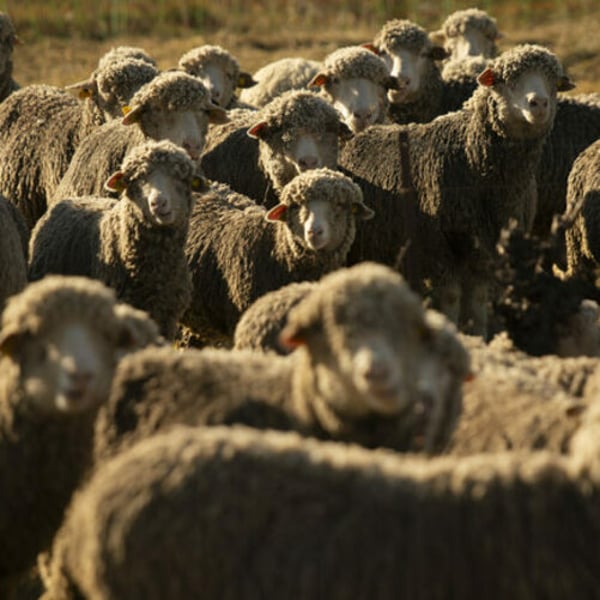
At the end of 2024, this approach led to the integration of two shepherds into the company and the purchase of 150 Merino d’Arles ewes, which gave birth to lambs. After the first lamb births, Atelier Tuffery now has a flock of 300 head. The company harvested the wool in the spring, which will be incorporated into some 1,500 products in its Autumn-Winter 2025/26 collection. It seems an anachronistic choice in a fashion and textile world with a fragmented value chain, but one that the company’s management has accepted.

For more than ten years, the couple has been steadily expanding their range of jeans, priced between €100 and €250, combining classic and contemporary silhouettes, and their local production. Their Florac workshop soon became too small, and in 2022 the company invested €2.5 million to structure its production and inaugurate a 2,000-square-meter factory, open to the public.
By prioritizing production tools over communication, Atelier Tuffery is betting on creating a buzz around the values of quality, social and environmental responsibility, and proximity, with three-quarters of its products made in its workshops. Despite a complicated consumer environment, the brand continues to grow. It boasts a gross operating profit margin of 10%, enabling it to launch a new emblematic project with the creation of its own flock of Merino ewes.
“It’s a question of consistency and sincerity. To explain the decision to buy our own ewes, I have to point out that we’ve embarked on a long journey. I think that tomorrow we’ll be selling a pair of pants not just because they’re beautiful and well-made, but also for the whole story behind them. We were 30 years old when we took over the company, and we want to pass on the keys to a company that will be at the cutting edge in 30–40 years. Over the last ten years, we have invested in tools, manufacturing, transmission, and training. This represents some €7–8 million, but we’ve been able to do it while remaining profitable. If we had invested in advertising or marketing, Atelier Tuffery would certainly have a totally different reputation. But what would we have left behind? Our vision is that thirty years from now, we won’t be able to afford a model whose raw materials are mainly cotton and elastane, which means petrochemicals. But we can’t build everything we do on garment making, transmission, and manufacturing transformation if we don’t control our raw material sovereignty.”
A mastered value chain
Over the past ten years, the company has gradually worked its way up the value chain, initially securing its canvas suppliers, claiming to work with four weavers: the last Tarn workshop bought out four years ago, a workshop in the Vosges, a family-run company in northern Italy, and a Spanish denim manufacturer, Royo.
On the knitwear side, the brand works with French companies Malterre and Lemahieu. Even if, for pragmatic reasons, it retains a small proportion of its range incorporating 1.8% elastane, the company has also set about diversifying the materials it uses.

In addition to cotton, denim’s flagship material, the brand exploits and energizes the supply chains of other French resources (which also enable it to claim a carbon impact three times lower than that of other jeans on the market), such as linen, hemp, and wool. For the last ten years, the company has been working with Merino sheep breeders in the south of France to add value to French wool, and claims to have recovered 15 tons of wool by 2024. This approach has enabled the company to state that 20% of its sales are now generated by products whose cotton has been replaced by locally sourced bio-fibers.
By 2025, Atelier Tuffery will have taken a further step towards developing products for which it controls the entire value chain, from agropastoralism to sales in its Montpellier workshop and store.
“The wool project was very close to our hearts because it comes from our region, which is classified as a UNESCO World Heritage Site for its sub-Mediterranean agropastoralism. For hundreds of years, transhumant flocks of sheep have shaped these territories. When we want to build a common-sense sovereignty, we turn to productions adapted to the territory. Wool is one such product, even if the industry has collapsed with the development of globalized cotton and synthetic materials. We’ve worked hard to redeploy the industry in Occitania. There are thousands of tons of wool in our region, and it would be a shame not to use it when it is burnt. When Myriam and I started knocking on farmers’ doors to use local wool in our jeans, we were seen as crazy. It took a lot of R&D to find the best blends of materials, but we did it!”
The company has structured its processing chain for wool collected in Lozère. It is then washed in Sologne at Laurent Laine, before being combed at Dumortier in Tourcoing. Next, the material is sent to the Filature de Dreuilhe in Ariège, before being sent to the Tissages d’Autan in Tarn, and finally to the Tuffery factory in Florac, where the garments are made. After collecting some 15 tons last year with its partners, the brand aims to maintain this harvest of Lacaune wool and add some two tons of its own Merino wool production within three years.
“We’re finally starting to get to the heart of why I believe in reindustrialization: to reach volumes that allow us to have logical industrial operations. But we’ve had to work hard, because we have to sell them. Integrating our own wool is the last stage of the rocket. Having our own Merino wool gives us a very clear vision of wool quality. And we’re confident that this will spread throughout the region.”
A strategy rooted in agropastoralism
For Julien Tuffery, the choice to build up this herd is a defense of agropastoralism, with animals that live freely all year round and are thus more resistant to disease, weeding the vineyards of the Hérault in winter and ascending via the Mediterranean garrigues to the plateaux of Lozère in summer. Like its production, this herd reinforces the brand’s terroir image. But the integration of this activity is also based on the company’s need to secure its supplies.
“This project has very substantial costs, but we couldn’t carry it out without integrating it. These sheep serve our daily needs, because we’re more than just a jeans brand. We’re a local player. We’re able to finance it because it’s part of the company’s overall economy, with a logic of ‘brand that makes, brand that sells’. Today, we’re doing it with our financial strength, so we can say to ourselves that in twenty years, we’ll have built up a herd of woollens that will enable us to design tomorrow’s business models,” says the entrepreneur. “We were quite traumatized by what happened to linen. Linen twill fabrics are now selling at around €35 a meter, excluding tax. It’s complicated because Asian countries are pre-empting us. If we can avoid this scenario with wool, all the better.”
A product with “a story to tell”
The CEO admits to an obsession with mastering his business model, taking the time to build and consolidate the different strata of his project. He focuses on profitable growth, making sure to gradually increase his production capacity to meet demand on his e-commerce site, at his factory, and in the Montpellier boutique opened last year.

“We thrive in digital, but perform better physically because our in-person experience aligns more with who we are—an excellence of products to touch, a strong story to tell. But we don’t make any commercial decisions that might damage our values. Before developing a network of boutiques, we need to be sure we have the products to sell in those boutiques. You need factories and supply chains that stand the test of time. At a time when many companies were accelerating their commercial rollout, we insisted on our production facilities. We are super manufacturers: what’s important is that we generate a super margin. We have very solid shareholders’ equity. That’s cool, because when you go to see your banker, that’s the first thing he looks at.”
This focus on profitability is underpinned by a vision of financial autonomy to drive long-term transformation. With this in mind, Julien Tuffery admits that for the time being, he is not considering developing wholesale sales, as the margins of resellers today do not allow him to maintain prices in line with the market, in his opinion.
“That would mean a retail price of less than €40,” he says. “Right now, at €40, I’ve made half a pair of pants. I don’t want to change our model. In 1983, my dad went from 60 to three people in a village of 2,000 inhabitants, because big retailers left for North Africa overnight. We’ve learned a lesson from this, and a great deal of humility about development.”
On the other hand, Atelier Tuffery is looking to the future. Its industrial model is designed to be duplicated in other regions, with sites that are “hyper-human, hyper-agile, hyper-competent, hyper-versatile” and able to respond rapidly to local needs. But the next important step will be commercial. The brand feels ready to open new stores under its own name.
This article is an automatic translation.
Click here to read the original article.
Copyright © 2025 FashionNetwork.com All rights reserved.