Connect with us

Business

At least 2 killed and several more hurt in shooting at Brown University in Rhode Island

Published

on


At least 2 people were killed and several more injured in a shooting in the area of Brown University on Saturday, a law enforcement official said, as the Ivy League school issued an active shooter alert and urged students and staff to take shelter during the second day of final exams.

Police did not immediately release details about the number of victims, their conditions or the circumstances of the shooting. The official who gave the tally of at least two dead could not publicly discuss details of the ongoing investigation and spoke to AP on condition of anonymity.

University officials initially told students and staff that a suspect was in custody, before later saying that was not the case and that police were still searching for a suspect or suspects, according to alerts issued through Brown’s emergency notification system.

“We’re still getting information about what’s going on, but we’re just telling people to lock their doors and to stay vigilant,” said Providence Councilmember John Goncalves, whose ward includes the Brown campus. “As a Brown alum, someone who loves the Brown community and represents this area, I’m heartbroken. My heart goes out to all the family members and the folks who’ve been impacted.”

The reported shooting occurred near the Barus & Holley building, a seven-story complex that houses the university’s School of Engineering and physics department. According to the university’s website, the building includes more than 100 laboratories, dozens of classrooms and offices.

Engineering design exams were underway in the building when the shooting occurred.

President Donald Trump said late in the afternoon that he has been briefed on the shooting.

“God bless the victims and the families of the victims!” he said on his social media site.

Students were urged to shelter in place as police responded to the scene, and people were told to avoid the area. A police officer warned media to take cover in vehicles because the area was still an active scene.

Officials cautioned that information remained preliminary as investigators worked to determine what had occurred.

Police were actively investigating and still gathering information from the scene, said Kristy DosReis, the chief public information officer for the city of Providence. The FBI said it was assisting in the response.

Brown is a private institution with roughly 7,300 undergraduate students and more than 3,000 graduate students. Saturday was the second day of final exams for the fall semester.


Source link

Continue Reading

Business

Everything Trump is doing in Venezuela and South America involves oil—despite what White House says

Published

on


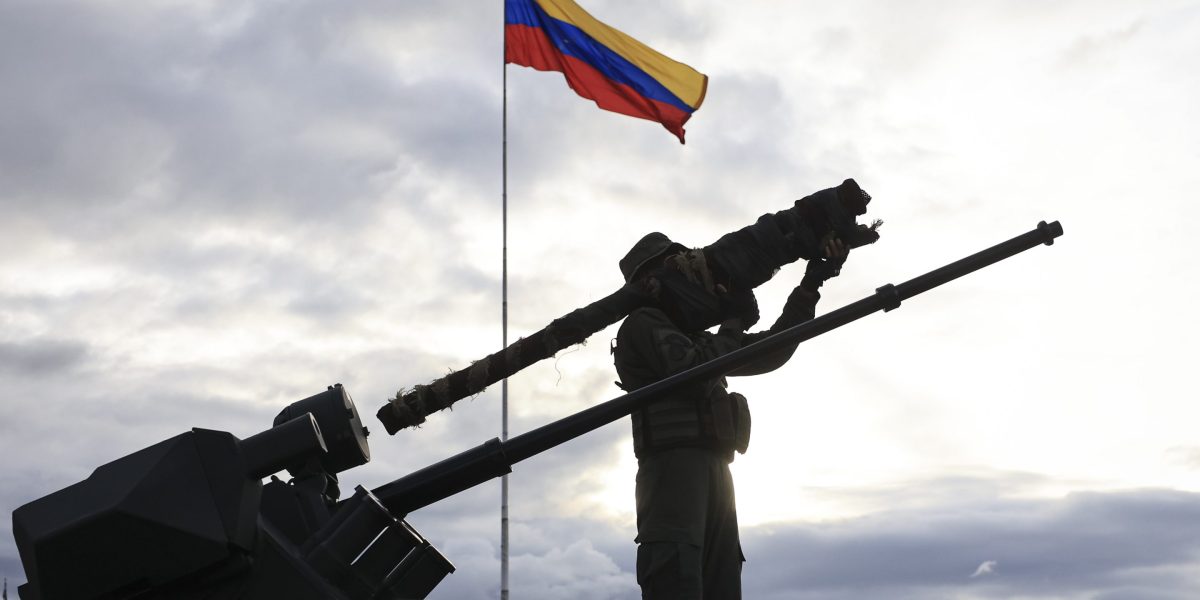
The U.S. seizure of a massive oil tanker offshore of Venezuela this week represented a brazen escalation of the Trump administration’s repeated military incursions in the area. It’s also a broader sign of the increasing involvement of the U.S. in South America’s petroleum politics.

The U.S. paces the world in oil and gas production, but President Trump’s new national security strategy—the so-called “Trump corollary”—emphasizes greater U.S. control of the Western Hemisphere, including much more influence over South America, which increasingly leads the globe in new oil output growth. Almost everything the Trump administration is doing in South America—from pressuring Venezuela to a $20 billion Argentina bailout to defending Guyana’s territorial waters—is at least related to the black gold that is crude oil.

While the White House emphasizes national security concerns over drug trafficking and immigration as it bombs boats and kills more than 80 people thus far in repeated, legally questionable actions, Venezuela is home to the world’s largest proven oil reserves. Regime change and new laws opening Venezuelan oil to more U.S. and foreign investment could lead to much greater oil flows.

And, remember, Trump is a big fan of controlling oil volumes in order to lower prices at the pump—a major political bellwether for him—without having to lean on OPEC.

“In the next five years, we’re going to see a lot more oil coming from South America,” said Jorge León, head of geopolitical analysis for the Rystad Energy research firm. “I think there is going to be a growing U.S. influence in the region to attract foreign and American companies, sort of like what happened in the 1980s when there were a lot of U.S. players in South America. I wouldn’t be surprised if you see a new wave of companies flying back there to unlock this massive oil potential.”

If Trump has his way and forces Maduro out, the U.S. also could see a lot more investment in Venezuelan oil, which is a heavier crude grade favored by American oil refineries even over U.S. crude, León told Fortune. That’s a big “if,” however. Venezuelan President Nicolás Maduro will likely resist tooth and nail. He has already insisted his nation won’t become a U.S. “oil colony” and accused Trump of piracy.

Francisco Monaldi, director of the Latin America Energy Program at Rice University’s Baker Institute for Public Policy, said oil is a “piece of the puzzle” in all of Trump’s interventions in Venezuela and the broader continent, but not necessarily the key motivating factor.

“Trump does have the view that he can control the mineral reserves,” Monaldi said.

“It seems part of [Trump’s] notion for some sort of new Monroe Doctrine. Some call it the ‘Donroe’ Doctrine,” Monaldi said. “He basically wants the U.S to have a predominant role in the region in terms of raw materials and to limit the role of geopolitical rivals, like China, which is challenging.”

The domestic U.S. oil business is maturing and showing signs of plateauing, Monaldi said, and the U.S. wants more control of global petroleum outside of the Middle East and Russia. Companies such as Exxon Mobil and Chevron already are helping to grow South American production at a time when the continent’s politics are leaning more to the right—coincidentally or not.

“Bottom line, the region could become much more aligned with President Trump,” Monaldi said. “Not so long ago, the region was absolutely ruled by the left or the hard left, which was super anti-American.”

Intense Venezuela focus

Home to the world’s largest proven oil reserves but less than 1% of global oil production, Venezuela is arguably the planet’s biggest underachiever from a petroleum extraction perspective.

Once a major player churning out nearly 4 million barrels of oil daily, Venezuela’s volumes have plunged from 3.2 million barrels daily in 2000 down to about 960,000 barrels today under the authoritarian socialist regimes of Maduro and his predecessor, Hugo Chávez, from a combination of mismanagement, underinvestment, and escalating U.S. sanctions.

Outside of arguably Iran, no country gets under Trump’s skin more than Venezuela in either of Trump’s presidential terms thus far. Repeated sanctions and threats have failed to force Maduro out of office thus far.

And, while the Trump administration may truly be most focused on drugs and immigration, Monaldi said, Venezuela and its rich Orinoco Oil Belt represent a key geopolitical tool.

“Venezuela looks like a very important piece of the puzzle. It’s removed from the geopolitical areas that are problematic [in the Eastern Hemisphere],” Monaldi said. “The oil reserves are there, and the geological risks are pretty low. The problems in Venezuela are above ground.

“Venezuela could be producing four times or even five times as much oil—at least technically. This requires tens of billions of dollars in investments.”

Starting this fall, the U.S. has launched more than 20 known strikes against boats in the Venezuelan area, killing more than 80 people. The administration insists, without providing evidence, that the boats are trafficking drugs. Trump has built up a military force in the region, sending the U.S.S. Gerald R. Ford aircraft carrier to the Caribbean with a host of fighter jets and guided-missile destroyers.

On December 10, in another escalation, the U.S. seized the sanctioned oil tanker Skipper for allegedly making repeated, illegal shipments of Venezuelan and Iranian oil. The tanker was placed under U.S. sanctions under a different name in 2022 for its shipments of Iranian crude. The administration is threatening to seize more tankers going forward, potentially further crippling the Venezuelan economy.

In a new Politico interview, Trump said Maduro’s “days are numbered,” but he declined to comment on a potential land invasion of Venezuela.

When asked about the involvement of oil, White House spokeswoman Anna Kelly would only say in a statement that Trump is focused on stopping the “narcoterrorists bringing deadly poison” to the U.S. “The President will continue to use every element of American power to stop drugs from flooding into our country,” she added.

The corporate role

In July, Trump granted Chevron a new, restricted license to produce oil in Venezuela. As the only U.S. oil producer in the country—Chevron has worked in Venezuela for a century—Chevron produces about 25% of Venezuela’s crude with state oil company PDVSA. However, Venezuela ships about 80% of its oil to China under deep discounts because of U.S. sanctions.

In a Washington, D.C. conference in November, Chevron Chairman and CEO Mike Wirth said the geopolitical circumstances are difficult, but Venezuela’s potential is worth the effort. “The kinds of swings that you see in places like Venezuela are challenging. But we play a long game. Venezuela is blessed with a lot of geologic resource and bounty. And we are committed to the people of the country and would like to be there as part of rebuilding Venezuela’s economy in time when circumstances change.”

In a statement, Chevron spokesman Bill Turenne added that its Venezuela “presence continues to be a stabilizing force for the local economy, the region, and U.S. energy security.”

Matt Reed, vice president of the geopolitical and energy consultancy Foreign Reports, said much of the focus on Venezuelan oil involves hawkish Republican politicians and Maduro’s opponents in Venezuela arguing for even greater U.S. military intervention.

“They are trying to convince Trump to jump in with both feet and get rid of Maduro, making the argument there are also economic incentives with oil,” Reed said. “They’re the ones pushing the idea that American companies are going to profit in the long run if they can get access to Venezuelan oil resources.”

Trump certainly wants to get rid of Maduro and unlock Venezuela’s oil potential, Reed said, but—despite his oft-erratic whims—he prefers to do so without a repeat of the 2003 U.S. invasion of Iraq.

“Getting involved in regime change in Venezuela would probably be the most ambitious military mission he would be involved in, which is why I don’t think he’s going to overcommit,” Reed said of Trump. “I think what he wants to do is tighten the noose and make Maduro untenable—make sure everyone understands that maybe the U.S. and Venezuela can turn the page once he’s out of the picture.”


Source link

Continue Reading

Business

Peter Greene, ‘Pulp Fiction’ actor famous for ‘Zed’s dead’ line, dies at 60

Published

on


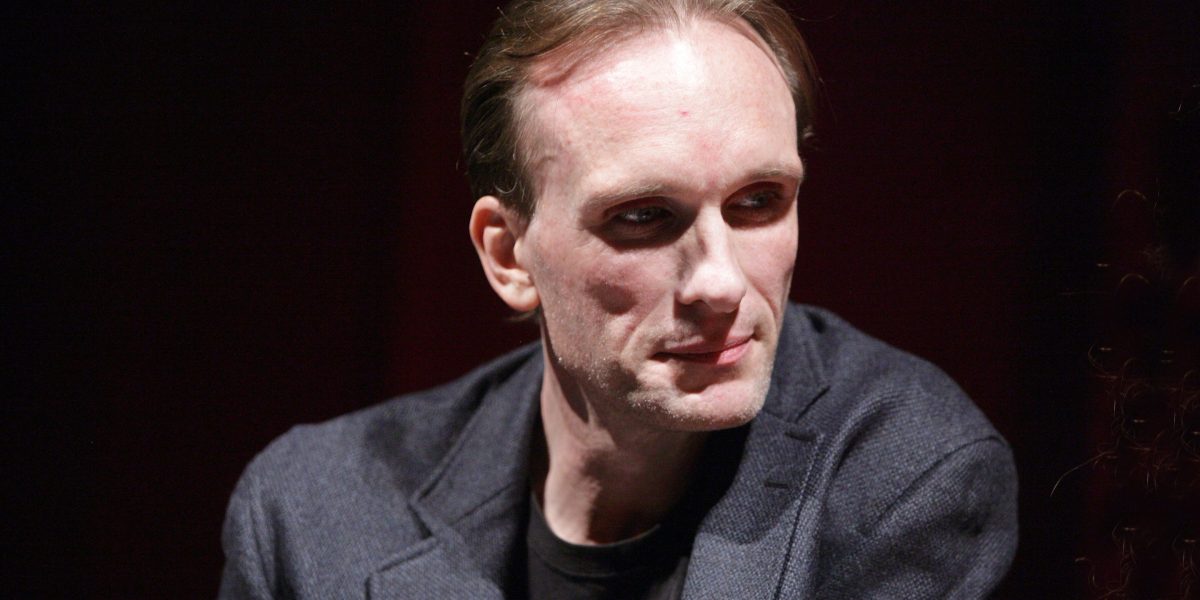
Peter Greene, a character actor best known for his role as the iconic villain Zed in “Pulp Fiction,” has died. He was 60.

He died in his home in New York City, his manager, Gregg Edwards confirmed on Friday. His cause of death was not immediately released.

“He was just a terrific guy,” said Edwards. “Arguably one of the greatest character actors on the planet; Has worked with everybody.”

Born in Montclair, New Jersey, Greene landed some of his first leading roles in “Laws of Gravity” in 1992 and “Clean, Shaven” in 1993, according to IMDb.

In 1994, he played the memorable villain in Quentin Tarantino’s “Pulp Fiction,” who is brought in to torture characters played by Bruce Willis and Ving Rhames. That same year, he played another leading villain opposite Jim Carrey and Cameron Diaz in “The Mask.”

Greene was working on two projects when he died, including a documentary about the federal government’s withdrawal of funding from the U.S. Agency for International Development, according to Edwards.

“We’ve been friends for over a decade,” said Edwards. “Just the nicest man.”

Join us at the Fortune Workplace Innovation Summit May 19–20, 2026, in Atlanta. The next era of workplace innovation is here—and the old playbook is being rewritten. At this exclusive, high-energy event, the world’s most innovative leaders will convene to explore how AI, humanity, and strategy converge to redefine, again, the future of work. Register now.


Source link

Continue Reading

Business

‘There are a lot of people concerned he’s not the same old Chuck Grassley’: Where has the oversight chief gone under Trump 2.0?

Published

on


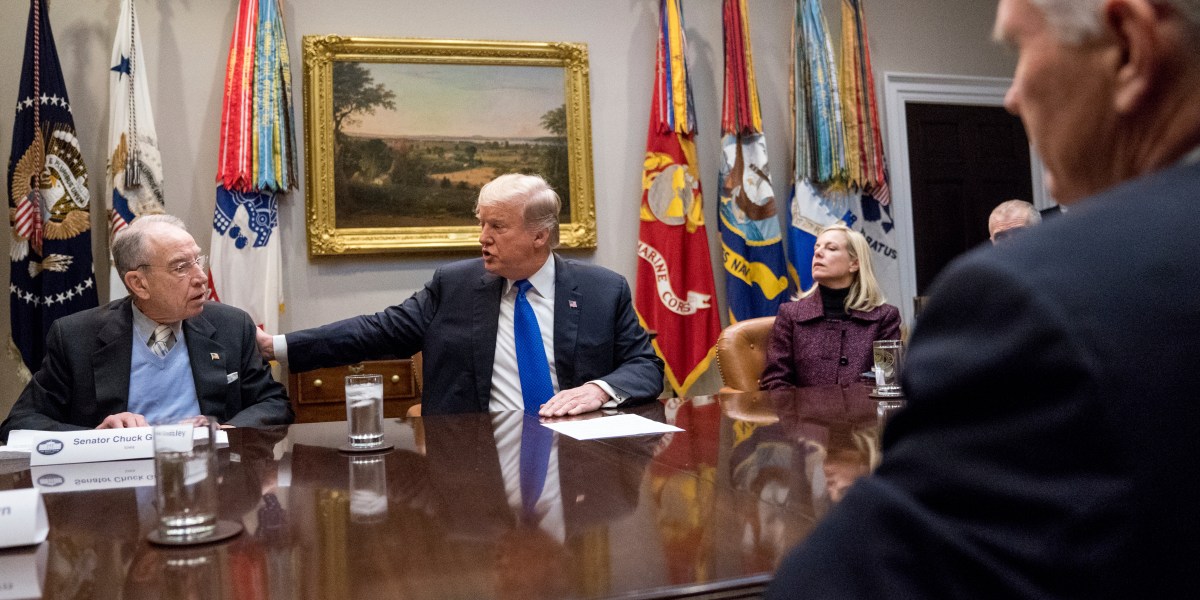
As President Donald Trump’s top law enforcement officials were firing and forcing out waves of Justice Department veterans, Sen. Chuck Grassley denounced a “political infection” that had poisoned FBI leadership.

The Iowa Republican was not criticizing FBI Director Kash Patel or Attorney General Pam Bondi. In a July statement, he directed his ire at the FBI’s “extreme lack of effort” in investigating Democrat Hillary Clinton’s use of a private email server as secretary of state a decade ago.

Trump loyalists have roiled the Justice Department, shattering norms and leading to a mass exodus of veteran officials, but the 92-year-old chairman of the Senate Judiciary Committee has remained focused on the past.

Critics say Grassley’s reluctance to challenge the Trump administration has even extended to a defining issue: His support for whistleblowers making claims of fraud, waste and abuse.

In an interview, Grassley insisted he has not abandoned his oversight role. He said he has felt compelled to investigate issues under earlier presidents to avoid a repeat of what he described as politically motivated prosecutions carried out against Trump and his allies.

“Political weaponization is being brought to the surface and being made more transparent because this administration is the most cooperative of any administration — Republican or Democrat,” Grassley said.

Grassley has acknowledged that Congress has ceded a great deal of power to the current administration, a concession he says makes his own oversight more crucial.

“It’s going to enhance the necessity for it,” he said.

Grassley is known for his focus on oversight

Grassley, upon entering Congress in 1975, quickly developed a reputation for exposing corruption and waste. He once drove to the Pentagon in his orange Chevy Chevette to demand answers from officials about their purchase of $450 hammers and $7,600 coffee pots.

He was among the chief proponents in Congress of laws to shield employees who revealed such waste and sponsored the landmark 1989 Whistleblower Protection Act. He also has played a key role in empowering inspectors general, internal watchdogs tasked with rooting out misconduct.

“He has been the conscience of the Senate on whistleblower protection rights for decades,” said Tom Devine, legal director for the Government Accountability Project. In the current Congress, he has co-sponsored legislation boosting protections for whistleblowers in the FBI and CIA.

“No one is close to having his impact,” Devine said. “That hardly means that we always agree with his judgment calls about policy.”

Criticized for not taking on Trump administration

Trump and Grassley are not always in alignment. This past week, for example, they tussled over the pace of confirmation of administration nominees.

Even so, Democrats and good government advocates say Grassley has been conspicuously silent as the administration has investigated Trump’s perceived enemies, fired agents who worked on politically sensitive cases and upended the Justice Department’s longstanding post-Watergate independence.

Some whistleblowers have been loath to trust him with revelations that might harm the administration, according to interviews with more than a dozen current and former U.S. officials, or their attorneys, several of whom spoke on condition of anonymity because they feared retaliation.

“There are a lot of people concerned he’s not the same old Chuck Grassley,” said Eric Woolson, author of a 1995 biography of Grassley who once served as a Grassley campaign spokesman.

Grassley rejected that criticism, saying whistleblowers call him regardless of who is in the White House. His office’s online portal has received more than 5,300 complaints in 2025, about the same level as past years, staffers reported.

“His entire career, he’s the guy people will trust,” said Jason Foster, a former chief investigative counsel to Grassley who founded Empower Oversight, a group that has advocated on behalf of FBI agents disciplined under the Biden administration.

Staunch Trump ally

Many of Grassley’s recent actions, however, suggest he has evolved from being a fiercely independent moderate eager to sniff out fraud to being a stalwart Trump ally, according to Democrats and whistleblower advocates.

Some were particularly alarmed at Grassley’s dismissal of witnesses who raised concerns about the June nomination of Emil Bove, a high-ranking Justice Department official and former Trump lawyer, to a lifetime federal appeals court seat.

Among several officials who came forward was Justice Department lawyer Erez Reuveni, who said he was fired for refusing to go along with Bove’s plans to defy court orders and withhold information from judges to advance the administration’s aggressive deportation goals.

Grassley said his staff tried to investigate some of the claims but that lawyers for one whistleblower would not give his staff all the materials they requested in time. Instead of delaying the hearing to dig further, Grassley circled the wagons behind Trump’s nominee.

The “vicious rhetoric, unfair accusations and abuse directed at Mr. Bove,” Grassley said in a speech, have “crossed the line.”

Stacey Young, a former Justice Department lawyer who founded Justice Connection, a network of department alumni mobilized to uphold the department’s traditionally apolitical workforce, said she was disappointed Grassley has not used his influence to condemn firings at the department.

“How is the congressional majority not screaming bloody murder? We are watching the near decimation of DOJ in real-time, and Congress is sitting by doing nothing,” she said. “Does Sen. Grassley think it’s OK that people get fired for doing their jobs?”

At a September oversight hearing, Grassley passed up a chance to grill Patel on a series of terminations of line agents and high-level supervisors, including five whose abrupt and still-unexplained dismissals had generated headlines weeks earlier.

When Democrats pressed Patel about his use of the bureau’s plane for personal reasons, Grassley chided Senate colleagues for their disinterest in the travel practices of previous directors.

Grassley has also been an eager conduit for an FBI leadership seeking to expose what it insists was misconduct and overreach in an investigation during the Biden administration into Trump’s efforts to overturn the 2020 election.

He has released batches of sensitive documents from that investigation, known as “Arctic Frost,” that he says have been furnished by FBI whistleblowers or that have been labeled as “Produced by FBI Director Kash Patel.” The records are not the type of documents federal law enforcement would typically make public on its own.

Advocates dismayed over Grassley response to IG firings

Whistleblower advocates said they were dismayed when Grassley failed to take a robust stance when Trump, within days of taking office, fired without cause some inspectors general.

Even some Republican-appointed inspectors general accused Trump of violating a law requiring the White House to provide 30-day notice and rationale to Congress. If any Republican were going to stand up for them, some of the fired inspectors general said, they expected it to be Grassley.

“He has been uncharacteristically silent,” said Mark Greenblatt, a Trump appointee at the Interior Department who was among those fired. ”It is unimaginable that the Grassley of a few years ago, the man who held nominees and fired off blistering threats at the smallest provocation to protect inspectors general, would be so silent in the face of these assaults.”

Grassley responded to the purge by sending Trump a letter requesting officials “immediately” spell out their case-by-case specific reasons for the dismissals.

It took the White House eight months to respond. In a two-page letter, it reasserted presidential authority to fire inspectors general at will and made no attempt to explain its rationale other than to cite “changed priorities.”

___

Associated Press writer Ryan J. Foley in Iowa City, Iowa, contributed to this report.


Source link

Continue Reading

Trending

Copyright © Miami Select.