Business
Ascend Money wants to finance millions of Thais ignored by traditional banks stuck in the past
Published
5 hours agoon
By
Jace Porter
Tanyapong Thamavaranukupt, co-president of Thai fintech Ascend Money, sees spending patterns—like magazine subscriptions or mobile bills—as a signal of creditworthiness, particularly in markets like Southeast Asia which have both a large underbanked population and underdeveloped financial institutions.
“We don’t rely on traditional data to make our loan decisions,” he told Fortune. Instead, Ascend Money’s lending service, Ascend Nano, relies on data from the company’s digital wallet, a service used to store and transact money, and make payments. “We can see what types of transactions users make, where they use their money, the type of phone they’re using,” he explains.
That can build a risk profile of a customer that doesn’t rely on traditional evidence, like financial statements, payslips, or a credit bureau assessment. Take a magazine subscription: Tanyapong suggests that a user who regularly reads a publication might be slightly more educated, and so may have a higher income–and so may be a safer person for Ascend to lend to.
Tanyapong reckons that about 20 million Thais, out of a larger population of 70 million, should be able to access a loan. Yet the country’s formal banks are only lending to about 5 million customers. That leaves around 15 million Thais who can’t get access to financing even though they may be creditworthy. “It’s not because they’re not qualified,” Tanyapong says. “It’s simply because the traditional players … use the exact same model that’s been there for the last 30 years.”
Micro- and small-sized businesses often don’t have financial statements, meaning they can’t convince banks to offer them a loan. Many traditional lenders also rely on credit bureaus, which don’t cover many underbanked people, again denying them access to financing.
If banks don’t step in, loan sharks will
Financial access is a regional problem. Around 225 million people in Southeast Asia lacked access to a formal bank account in 2021, according to calculations by the Center for Impact Investing and Practices. Around 350 million couldn’t get access to formal financing. Furthermore, the SME Finance Forum in 2018 calculated that more than half of the region’s SMEs couldn’t get access to financing.
Those that need money then turn to informal lenders, who can charge exorbitantly high interest rates. Tanyapong says Ascend Money’s nano loans can help get people out of the informal lending market, where loan sharks can charge as much as 20% interest per month. (Ascend Nano, by comparison, charges just 2%.)
Ascend isn’t the only company in Southeast Asia trawling customer data to build risk profiles. Grab, Southeast Asia’s most successful super-app, has tried to use data gleaned from its ride-hailing and GrabPay services to assess creditworthiness. Other regional platforms, like the Philippines’ GCash and Vietnam’s Momo, also use data collected from their digital wallets to help extend loans to users.
Ascend Money is the fintech arm for Thailand’s CP Group, a major conglomerate with interests in retail, agriculture, and manufacturing. Ascend started with payments and money transfer, but low margins pushed the company to expand to other financial services. Ascend Nano was one of the company’s first initiatives, providing “nano finance,” tiny loans that can be as little as $20, to consumers and small enterprises in Thailand.
Ascend Money’s work providing financing to Thailand’s unbanked and underbanked populations helped get the fintech company onto Fortune’s 2025 “Change the World” list, which recognizes businesses that do good through their business models.
Ascend Nano’s ties to the broader CP Group also help it find new customers. Tanyapong notes that many of their clients, particularly those that run small roadside stalls, buy their products wholesale from the broader conglomerate. “Based on their purchase history, we can give them a credit line to buy from CP Makro [the CP Group’s cash-and-carry wholesaler],” he explains, continuing that customers have managed to grow their business by up to two times their working capital.
Tanyapong spent 15 years in Thailand’s finance industry, including stints at GE Capital (Thailand) and KrungSri Ayudhya Bank. He then led retail banking at Krungthai Bank, one of the highest-ranked Thai companies on the Southeast Asia 500, at No. 57. He joined Ascend Money as its co-president in 2016.
Small-scale lending is a competitive market. The top 5% of services capture half the region’s users, according to a 2025 report from Bain, Temasek, and Google. The rest is served by a “long tail of smaller, aggressive apps” in markets with high demand for “fast credit.” Half of these services close within two years.
Ascend is also looking at other, “nano-” versions of financial services, including insurance and investing. “We often find our customers don’t even have insurance,” Tanyapong says. “We have more than ten million motorcycle drivers, and they’re always getting into accidents.”
You may like
Good morning. As President Donald Trump has initiated tariff wars and threatened individual companies, his second term has been marked by pilgrimages of CEOs from Big Tech and beyond to bestow gifts upon POTUS and perform public acts of praise.
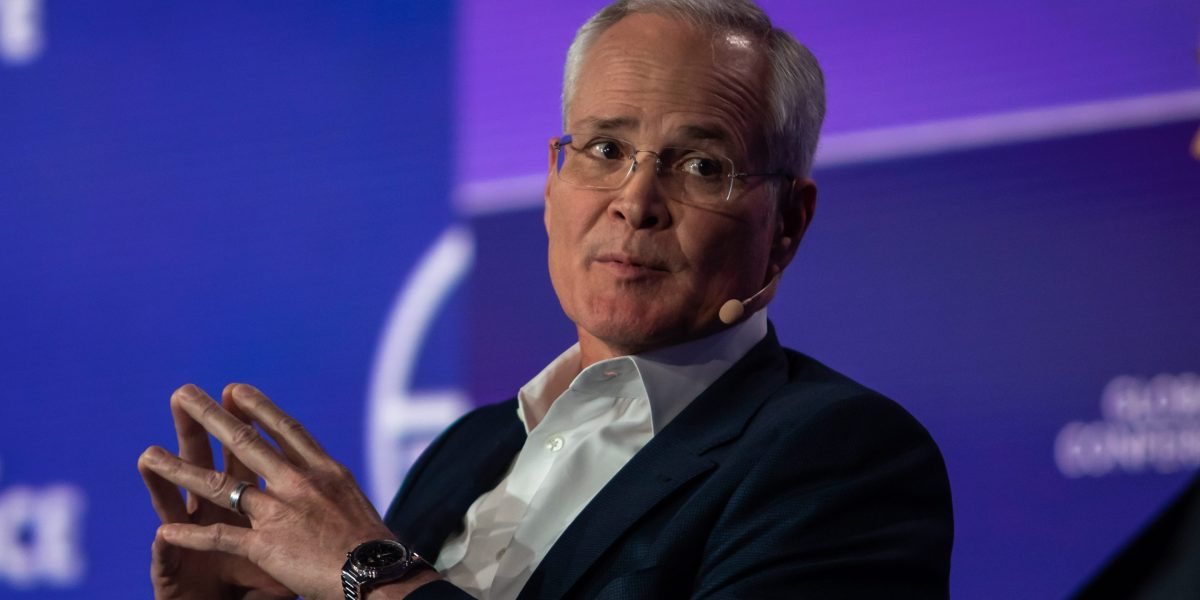
Many oil executives took their turn Friday when they were called to the White House to discuss investing billions of dollars in revitalizing the dilapidated Venezuelan industry. But Exxon Mobil CEO Darren Woods politely poured cold water on Trump’s preferred expediency, calling Venezuela “uninvestable” until a prolonged period of reforms can be enacted.
A clearly miffed Trump on Sunday called Exxon “too cute,” and he said he’s inclined to keep the world’s largest Big Oil giant out of Venezuela.
Woods, an Exxon lifer who succeeded Rex Tillerson as CEO in 2017 when his boss went to work for Trump, is a reserved but strong-spoken chief who has emerged as an unofficial industry spokesman.
Woods is a believer in the famed, disciplined ‘Exxon way.’ He’s always cordial but blunt. He’ll tell you Exxon won’t invest in renewables—Exxon is about molecules, not electrons—and that Exxon shouldn’t be blamed for climate change.
And he’s not going to appease the president by upsetting Exxon shareholders—an ongoing conundrum for the business leaders. Energy analysts said Exxon stock likely would have suffered if Exxon overcommitted to spending billions in Venezuela in its current, uneconomic state. Exxon’s stock ticked down only slightly by 0.5% on Monday—despite Trump’s critical words—and maintained a market cap of about $529 billion.
“There was nobody to say anything, except Darren, and he’s eloquent as heck,” said Jim Wicklund, veteran oil analyst and managing director for PPHB energy investment firm.
Sometimes it comes down to who has the most leverage.
“This is Trump’s problem. There’s no urgency by the industry at all to go back into Venezuela. And there’s almost no inducement other than guaranteeing profitability, which they can’t do,” Wicklund said. “You can sweeten the terms, but the political risk outweighs that variable by a factor of 10.”—Jordan Blum
Contact CEO Daily via Diane Brady at diane.brady@fortune.com
Top news
Fed probe fallout
Federal prosecutors’ criminal investigation of Federal Reserve Chair Jerome Powell has sparked outrage across politics and finance and stoked fear that the probe could erode the Fed’s independence and ultimately destabilize the U.S. economy. Top Republican lawmakers issued rare rebukes of the president over the action, which was also denounced by every living former Fed chair. Wall Street analysts are almost universally negative about the news.
Target’s ICE problem
The federal immigration crackdown in Minnesota has put Minneapolis-based retailer Target in a bind as customers demand the company do more to keep agents out of its stores. Late last week, a video circulated online of agents arresting two Target employees in a store; they were both U.S. citizens and later released. Target hasn’t commented on the matter, but retailers argue they have little power to keep law enforcement from their premises.
Meta’s new AI infrastructure initiative
Meta is launching a new initiative called Meta Compute to build out AI infrastructure. Two new hires will help oversee the effort. Daniel Gross, who previously co-founded Safe Superintelligence with Ilya Sutskever, will co-lead the project, and Wall Street veteran and former Trump advisor Dina Powell McCormick will help broker agreements with governments to finance and deploy data centers globally.
A mysterious productivity surge
U.S. productivity surged in the third quarter, according to a Morgan Stanley report last week. That’s usually an indicator of non-inflationary economic growth, but analysts aren’t exactly sure what’s causing it.
Maduro bets spark insider training concerns
An anonymous user on prediction markets platform Polymarket made more than $400,000 betting that Venezuelan President Nicolás Maduro would leave office, with the bulk of the wagers placed shortly before the announcement of his capture. Rep. Ritchie Torres (D–NY), who last week introduced a bill that would limit government employees’ betting on Polymarket, told Fortune that the use of prediction platforms by federal workers is “corrupting the government itself.”
Paramount Skydance’s new fight for Warner Bros.
Paramount Skydance on Monday launched two new efforts to disrupt Warner Bros. Discovery’s planned sale to Netflix: nominating its own candidates for election to Warner Bros. board and suing the company to reveal details about the Netflix deal. Warner Bros. rejected a revised hostile acquisition bid by Paramount last week.
Craigslist nostalgia
Craigslist, the decades-old online classifieds site, is still the go-to platform for some millennials who are nostalgic for the earnestness of the early web. Craigslist does not use algorithms to track users’ activity or guess their next move; it also doesn’t support ratings, “shares” or “likes” that foster clout-chasing, leaving Wired to wonder if it’s the “last real place on the internet.”
The markets
S&P 500 futures were down 0.13% this morning. The last session closed up 0.16%. STOXX Europe 600 was flat in early trading. The U.K.’s FTSE 100 was up o.o5% in early trading. Japan’s Nikkei 225 was up 3.1%. China’s CSI 300 was down o.6%. The South Korea KOSPI was up 1.47%. India’s NIFTY 50 was down 0.25%. Bitcoin was at $92K.
Around the watercooler
U.K. investigation into X over allegedly illegal deepfakes risks igniting a free speech battle with the U.S. by Beatrice Nolan
Americans making more than $100,000 are quickly losing faith in the economy—and it’s a red flag for the white-collar job market by Tristan Bove
Former New York Mayor Eric Adams has a new act as a crypto entrepreneur—though details of his “NYC Token” remain vague by Leo Schwartz and Ben Weiss
CEO Daily is compiled and edited by Joey Abrams, Claire Zillman and Lee Clifford.
Business
Why Trump’s plan to shut out institutional investors could raise housing costs
Published
1 hour agoon
January 13, 2026By
Jace Porter
Given President Trump’s pledge to conquer America’s housing crisis, and the plan he just grandiosely delivered to do it, you’d think he’d soon hatch a new credo to spotlight the campaign—something like MAHAA, for “Make America’s Homes Affordable Again.” Indeed, the biggest part of the overall “affordability” problem that’s so crucial to voters, and increasingly dominates the debate among politicians—led by Trump himself—is the explosion in the cost of housing. The rise in what families need to pay for the staple of staples that they strive to own over all others has, since just before the pandemic’s onset, far outstripped the sticker shock on the likes of groceries, cars, insurance, or any other key item. Put simply, America’s biggest household expense has grown so enormous that most first-time buyers don’t have the means to take it on.
The tens of millions of renters in the wings know the math all too well. The two factors that determine the ability to buy, home prices and mortgage rates, have both moved in the wrong direction big-time, and shockingly fast. According to the American Enterprise Institute, average prices have risen over 150% since the start of 2019, and home loan rates posted at Mortgage News Daily have ballooned by two-thirds, from roughly 3.7% to today’s 6.2%. That dire twofer, the National Association of Home Builders reckons, has made home ownership an aspiration that’s beyond the grasp for three in four U.S. households.
Trump proposes an unorthodox fix: Blocking institutional investors from amassing homes to rent
On Jan. 6, Trump unveiled a program to restore housing affordability by banning what he considers a major force driving prices higher: purchases of homes by big investors that they recast as rentals. As the president wrote on Truth Social, “For a very long time owning a home was considered the pinnacle of the American Dream [that’s become] increasingly out of reach for too many people, especially younger Americans. I am immediately taking steps to bar large institutional investors from buying more single-family homes. I will be calling on Congress to codify it.”
The same day, in an unusual confluence in policy, Gavin Newsom basically endorsed the president’s initiative. A spokesman for the California governor declared, “When housing is treated mainly as a corporate strategy, Californians feel the impact. Prices go up, rents rise, and fewer people have a chance to buy a home.” The idea that Wall Street is a potent force in inflating home prices, and must be stopped, has also stirred prominent voices in Congress. Senators Elizabeth Warren (D-Mass.) and Jeff Merkley (D-Ore.) have each introduced (so far unsuccessful) legislation that would impose tax penalties on big home acquirers. New York Gov. Kathy Hochul has joined the chorus calling for a crackdown, blasting the large own-to-rent purveyors for “buying up the housing supply and leaving everyday homebuyers with fewer and fewer affordable options.” The movement’s also gaining traction at the local level: Two municipalities in Indiana recently nixed long-term rentals by investors, the first in the U.S. to do so.
Restricting institutional housing buyers is counterproductive, says a leading expert
The president and his growing crowd of allies from both parties are essentially arguing that by purchasing large numbers of single-family homes, either in new developments or long-standing neighborhoods, then renting them out, large investors are substantially shrinking the inventory available for sale. That supposedly drives up prices for regular folks, since they’re bidding on a pool of available houses that’s a lot smaller than if those big players weren’t competing with them. The theory goes, stop the institutional buying led by such publicly traded giants as Invitation Homes and American Homes 4 Rent, and an array of investment firms including Pretium Partners and Brookfield Asset Management, and prices would fall or at least flatten, notching a big advance in affordability.
“There’s no empirical evidence that large institutions have driven up housing prices,” says Ed Pinto, codirector of the American Enterprise Institute Housing Center. Pinto argues that the rise of institutional buyers is a symptom, not a cause of the housing crisis—and that in fact, they’re helping to address the real problem that misguided policies engineered on Main Street and in Washington, D.C., caused in the first place: a severe shortage of new construction, and hence homes for sale, caused by restrictive local zoning and excessive demand for that paltry supply triggered by the Fed’s easy-money policies that drove mortgage rates to super-bargain levels following the pandemic. It’s that combination—not these supposed marauders—that unleashed the rampant price run-up that’s locking out most Americans. “These companies are not pillaging homebuyers,” says Pinto. “It’s just the opposite. As more and more people can’t afford to buy single-family homes, they’re providing the option of living in one at lower cost by renting. That takes those people out of the purchase market, and hence can take pressure off prices.”
Single-family rentals also provide extra flexibility for America’s workforce. Say someone moves to a new city for a job as a nurse or construction foreman, but believes they may relocate in a year or two for a fresh position in another locale, either in the same company or for another employer. The ability to rent a home means they get all the lifestyle benefits of owning, but don’t need to make a big financial commitment on a property that they may live in only for a relatively short time.
Pinto points out that in two rough periods for housing, investors came to the rescue. The first was the real estate crash that defined the Great Financial Crisis. “The investors bailed out the market,” says Pinto. “There were nowhere near enough individual buyers to soak up the houses thrown on the market and going through foreclosure, despite the collapse in prices. Few potential buyers had sufficient credit. Investors bought tens of thousands of derelict homes sight unseen, many of them owned by the banks, and set a floor under the market.” Then following the pandemic, when the sharp drop in rates orchestrated to reboot the economy sent prices soaring, the buy-to-rent players boosted their portfolios once again, this time not because people didn’t have credit or were unemployed or cash-strapped, but since towering prices were pushing would-be buyers into long-term renters. That trend gave families suddenly unable to purchase but who still wanted that third bedroom and backyard the opportunity to live in a house while they waited to become homeowners.
Another advantage provided by institutional buyers, says Pinto: They sweep up rundown houses en masse, then invest heavily to fix roofs, rewire electrical systems, repair flooring, and install new appliances, all to win renters. He also cites a big misconception in the critics’ view of the industry. These housing investors aren’t only buyers. In fact, they’ve recently been selling slightly more houses than they’re acquiring.
A misconception about what’s making housing so expensive
Pinto notes that investors overall have long been big owners of single-family homes. But it’s small, mom-and-pop businesses that always dominated the market, and that’s the case today. The institutions play a minor role, though they contributed greatly as purchasers of last resort during the GFC and providers of sorely needed rentals in the pandemic. Today, over 12% of the nation’s stock of single-family houses is held by landlords owning 100 properties or less. The institutions, at 100-plus, account for just 1% of the total. In not a single county does a large investor harbor over 10% of the homes, and in 60% they own none at all. Atlanta, for example, has relatively huge investor presence at 4.2%, and Dallas and Houston also rank high at 2.6% and 2.2% respectively.
It’s especially informative to study the recent trend in purchases by the institutions—and it doesn’t show the kind of listing-crushing accumulation the president and others targeting the industry suggest. Pinto assembled data that runs for the 21 months ending in November 2025. He found that overall, investors large and small bought around one-quarter of all homes sold. But the share accumulated by the 100-plus club amounted to just 2%. Plus, their portfolios actually slipped since they sold more than they bought. Here’s the data: In that almost two-year period, large landlords acquired 178,000 single-family houses, and exited 184,000, for a net decline of 6,000. Despite all the criticism claiming that these alleged exploiters squeezed out regular folks looking to make the life-transforming leap, their holdings barely budged. Sean Dobson, CEO of the Amherst Group, an Austin investment firm that owns around 50,000 homes for rent, says the idea that the institutions compete with regular buyers is wrong. He notes that Amherst purchases homes that require significant rehab, typically costing $30,000 or more, and that it caters to consumers who can’t buy now due to tightened credit.
By Pinto’s estimate, the large buyers purchased around 40% of their newly acquired homes from developers who built new dwellings for them, often in bespoke communities conceived specifically for rental. The industry is as much about build-to-rent as fix-up to rent. For example, in 2023 Pretium Partners forged a pact to buy 4,000 single-family homes erected by D.R. Horton in such states as Georgia, Florida, Texas, and Arizona. Once again, these are additions to the nation’s housing stock that fulfill a need by enabling priced-out Americans to live in a roomy cape or ranch, say, instead of a cramped apartment. The necessity to rent effectively created the new house.
When rental markets soften and sale prices improve, the investors typically put a portion of the homes originally built for lease back on the market. That increases the roster of listings, the reverse of what the critics denounce as the institutions’ supply-hammering role. It’s a similar story for the fixer-uppers. Many of these homes are so dilapidated before the investors purchase them that they’re extremely difficult to sell, if they’re livable enough to find buyers at all. Once again, when the owner market rebounds, these older dwellings, now fully refurbished, frequently boomerang back as “for sale.” In the mid-2010s, it appears the investors were net sellers as the owner crowd stormed back in the recovery from the GFC.
As Pinto’s stats show, today the industry’s powerhouses are taking a middle stance by acquiring about the same volumes as they’re marking “for sale,” even tilting a bit toward lightening their portfolios. The ebb and flow that investors furnish by hatching rentals when demand for them is strong, then switching toward sales when buyers return, helps balance in the marketplace. “We are able to step in when consumers step out, says Dobson. “This serves as a shock absorber that reduces volatility across cycles.”
Here’s the clincher for Pinto: His research shows absolutely no relationship between the level of institutional ownership and the shortage of housing—the principal factor inflating prices—in the individual markets. Pinto studied the price increases in 150 metros from January 2012 to June 2025, and compared them to the degree of institutional ownership in each city. Many of the biggest jumps came in locales where the large landlords barely participated. Prices in Boise City, Idaho; Bend, Ore.; Modesto, Bakersfield, and Stockton, Calif.; Prescott Valley, Ariz.; Ocala, Fla.; and Austin, Texas, all rose between 165% and 270%, above to well above the national average, yet investors in each city held less than 1% of the homes. By contrast, metros featuring relatively large shares witnessed below-average price appreciation over that almost 13-year span, including Birmingham, San Antonio, Indianapolis, and Columbia, S.C. Memphis had the highest share of institutional rental homes among all the cities at 4.5%, yet home prices increased far less than the nation’s norm.
Pinto stresses that the focus on the big buyers obscures the real reasons for the affordability crisis and the structural solutions needed to fix it. “Institutions own 1% of the nation’s single-family housing stock, yet prices rose 154% from 2012 to 2025,” he says. “Institutional investors are not the root cause of rapid home price appreciation. America faces a shortage of 6 million homes because of restrictive land use practices and zoning regulations, and because of the Fed’s easy-money policy in the pandemic. In California, there’s a 15% housing shortage, the biggest in the country, and investors own under 1% of the homes. The solution is build a lot more houses. Big investors have nothing to do with how the housing shortage got created.”
So what will be the impact of barring large investors from adding to their portfolios? Keep in mind that they’re not increasing their stocks right now. So in the short term, the effect would be negligible. But if we suffer a sharp economic downturn, they won’t be able to jump in and provide the support to prevent a free fall in prices, their crucial function in the GFC. More low-income folks will get stuck in one-bedroom rentals instead of getting the chance to have a garden and separate bedrooms for mom and dad and the two preteens. And the investors won’t be around contributing the capital expenditures for fixing the flooring and replacing the bathrooms in the country’s most battered homes. Nor will any new manses they specially buy from developers to rent hit the marketplace when demand rises, and they can get a better deal selling than renting.
“I always worry about the unintended consequences of these kind of plans,” says Pinto. “And for this plan, they could easily be not even neutral but negative.” This could be a bad deal for America’s aspiring homebuyers and for folks shut out of home ownership for now who cherish the prospect of living in a house, even as a rental. Denying this vast demographic-in-waiting that option removes a step that brings them closer to the American Dream.
Business
Trump threatens to keep ‘too cute’ Exxon out of Venezuela after CEO provides reality check
Published
10 hours agoon
January 12, 2026By
Jace Porter
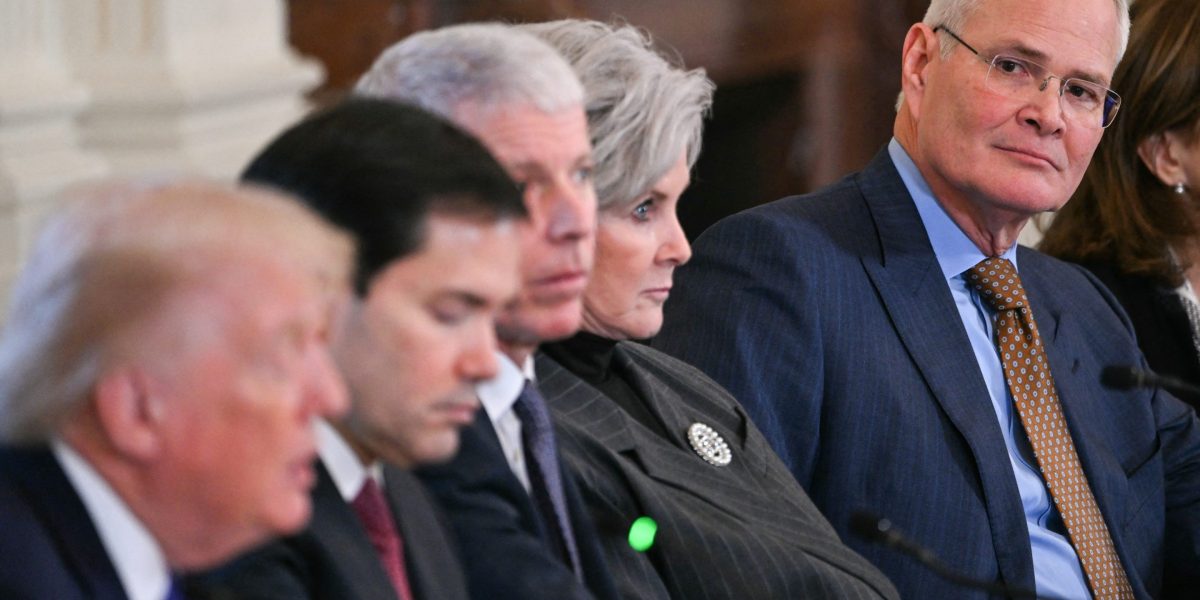
As other oil executives lavished President Trump with praise at the White House, Exxon Mobil CEO Darren Woods bluntly said the Venezuelan oil industry is currently “univestable,” and that major reforms are required before even considering committing the many billions of dollars required to revitalize the country’s dilapidated crude business.
Two days later, a miffed Trump told reporters Jan. 11 that he would “probably be inclined to keep Exxon out” of Venezuela. “I didn’t like their response. They’re playing too cute,” Trump said.
Woods, an Exxon lifer who succeeded Rex Tillerson as CEO in 2017 when his boss went to work for Trump, is a reserved but strong-spoken chief who has emerged as an unofficial industry spokesman as the leader of the world’s largest Big Oil giant.
But he’s inadvertently crossed swards with the president who wants U.S. Big Oil players to invest more than $100 billion in the Venezuelan oil sector—and to do it quickly.
“There was nobody to say anything, except Darren, and he’s eloquent as heck,” said Jim Wicklund, veteran oil analyst and managing director for PPHB energy investment firm, noting that Exxon stock most likely would have fallen if Woods had overcommitted to Venezuela.
“This is Trump’s problem. There’s no urgency by the industry at all to go back into Venezuela. And there’s almost no inducement other than guaranteeing profitability, which they can’t do,” Wicklund said. “You can sweeten the terms, but the political risk outweighs that variable by a factor of 10.
“We don’t need Venezuelan oil. It’s going to hurt everybody else (including U.S. producers) if we boost Venezuelan production because, right now, we’re awash in oil.”
But Trump also wants more oil to keep lowering prices because it means cheaper prices at the pump to help win the midterm elections.
Exxon and ConocoPhillips, specifically, had their Venezuelan oil assets expropriated by the government in 2007, costing them billions of dollars. Although Venezuela has the world’s largest proven oil reserves, its oil output has plunged to one-third of its volumes from the turn of the century because of mismanagement, labor strikes, and U.S. sanctions.
Trump has used the 2007 expropriations as a pretense for the shocking Jan. 3 military attack and arrest of leader Nicolás Maduro. Trump has repeatedly called the expropriations the largest theft in American history.
He called an impressive group of global oil executives to the White House on Jan. 9 to discuss how they will go into Venezuela, invest, and turn the industry around.
But Woods more than anyone put a damper on Trump’s enthusiasm to move fast and spend big. Woods promised to set a technical team to Venezuela within two weeks to assess the situation. But any major financial commitments would take much longer.
“The questions will ultimately be: How durable are the protections from a financial standpoint? What do the terms look like? What are the commercial frameworks, the legal frameworks?” Woods said. “All those things have to be put in place in order to make a decision to understand what your return will be over the next several decades for these billions of dollars of investment.”
Exxon did not respond to requests for comment Jan. 12, and the White House declined further comment.
Oil desires meet reality
Dan Pickering, founder of the Pickering Energy Partners consulting and research firm, said he expected “cheerleading” from the oil executives, and they “delivered in spades” except for Woods.
“If you only had to have one snippet about what’s actually going to happen, Exxon gave it to you,” Pickering said. “We could have hung up after that.”
The reality: More than doubling Venezuela’s current oil production likely would take until 2030 and cost about $110 billion, according to research firm Rystad Energy, while tripling back to levels from 2000 would take well over a decade and cost closer to $185 billion.
Exxon Mobil recently pioneered the oil industry offshore of Guyana, Venezuela’s southern neighbor, and it makes more sense to keep investing there than to move back into Venezuela, Wicklund said.
“If you have the choice of committing capital to another well in Guyana, an offshore well in Brazil, making an acquisition in the Permian basin, or spending $20 billion and waiting a couple of years to get an incremental drop of oil out of Venezuela, then it comes in last,” Wicklund said.
You must spend to rebuild the infrastructure in Venezuela long before it can return to profitability and, even though the oil is already discovered, it isn’t cheap to produce because the extra heavy grade of Venezuelan crude requires extra effort to get out of the ground. Diluent—essentially a very light oil—is needed to thin out and get the heavy crude to flow out of wells.
“You’re talking about having to bring in oil to get the oil out. It’s basically sludge,” Wicklund said.
Maybe Woods could have “sugarcoated” his message a bit more, but he did still promise boots on the ground quickly—just not money, Wicklund said.
“He may regret saying that today, but none of it would have changed reality.”
That said, Trump remains in a position of strength in Venezuela because controlling the oil can force the acting Venezuelan government to cooperate.
“The U.S. doesn’t need the oil, but it’s a perfect way to control Venezuela,” Wicklund said. “Why did you leave everybody in place? Stability. They all hate you, yes, but now Trump owns on the purse strings. It is kind of brilliant, and nature will take its course in the economics of the oil and gas industry.”
Senate Committee approves bill that gets a facelift with amendment on local control for residential development
Down Arrow Button Icon
Ace Turtle launches Lee and Wrangler stores in Gujarat, India
Trending
-
Politics8 years agoCongress rolls out ‘Better Deal,’ new economic agenda
-
Entertainment8 years agoNew Season 8 Walking Dead trailer flashes forward in time
-
Politics8 years agoPoll: Virginia governor’s race in dead heat
-
Politics8 years agoIllinois’ financial crisis could bring the state to a halt
-
Entertainment8 years agoThe final 6 ‘Game of Thrones’ episodes might feel like a full season
-
Entertainment8 years agoMeet Superman’s grandfather in new trailer for Krypton
-
Business8 years ago6 Stunning new co-working spaces around the globe
-
Tech8 years agoHulu hires Google marketing veteran Kelly Campbell as CMO