Connect with us

Business

As Trump helps Gen Z on student debt, watchdog calls it an ‘incoherent political giveaway’

Published

on


The Trump administration’s announcement on Friday of an indefinite pause on the collection of defaulted federal student loan debt, including through the Treasury Offset Program, at least temporarily extends a program that began more than half a decade ago, as a temporary pandemic measure under the first Trump Administration. It has since been extended through both bipartisan legislation and administrative action during the Biden administration.  

The student-debt relief will likely come as relief to many members of Gen Z, who, as Fortune‘s Jacqueline Munis recently reported, average $94,000 in student-loan debt, driving them into “disillusionomics.” Other pundits, notably Kyla Scanlon, have riffed on the concept of “financial nihilism,” as coined by entrepreneur Demetri Kofinas, to describe how Gen Z’s crushing anxiety over their own futures—be it artificial intelligence, the $38 trillion national debt, or any other long-running financial emergency—drive them to destructive behaviors.

Trump, for his part, has been scrambling to address voter concerns about “affordability,” and has been reportedly in close contact, even texting back and forth in what the New York Post calls a “bromance,” with the bard of affordability himself: New York City Mayor Zohran Mamdani.

In the opinion of the Committee for a Responsible Federal Budget, though, the nonpartisan watchdog that stresses sustainability in fiscal policy, there is no excuse for this development.

CRFB President Maya MacGuineas called the decision “beyond ridiculous,” coming six years removed from the Covid pandemic that first put a stop to student-debt collections.

“This is an incoherent political giveaway, doubling down on the debt cancelation from the Biden era,” she wrote. “We’re not in a pandemic or financial crisis or deep recession. There’s no justification for emergency action on student debt, and no good reason the for the President to back down on efforts to actually begin collecting debt payments again.”

CRFB estimated that Trump’s pivot away from collections would cost about $5 billion a year in lost revenue.

A new pause, old playbook

Until now, Trump’s second-term team had been moving in the opposite direction, restarting the Treasury Offset Program in May 2025 and preparing to resume wage garnishment for borrowers in default. The new policy abruptly reverses that trajectory by restoring and extending a freeze that critics say was supposed to be temporary and tied to the COVID crisis, not a permanent fixture of higher-education finance.

MacGuineas argued that by blocking collections, the administration risks undermining “historic cost-saving reforms” to the federal student loan program that Congress approved this year to put the system on a more sustainable footing with a “fair repayment system.” She warned that taxpayers will end up paying more while borrowers could ultimately face larger balances, and the wider economy could feel upward pressure on interest rates and inflation.

Clash over Congress’s role

At the heart of the fight is who should shape the future of student lending: Congress or the president acting alone. Lawmakers this year enacted significant reforms meant to trim long-term costs and cement a more predictable repayment framework, and the CRFB credits the Trump administration with implementing those changes “with fiscal costs in mind” until now.

“The student loan program isn’t supposed to be a tool to stimulate the economy or buy votes,” MacGuineas argued, “it’s a way to help millions of students access college.” The White House should work with Congress to reform the collection of defaulted loans if that’s what it really wants to do, “But loans are supposed to be repaid, and the Administration should start collecting,” she added.

The action came just days after Trump took another page out of Mamdani’s democratic socialist playbook, suggesting a 10% cap on credit card interest rates. His former communications director, Anthony Scaramucci, suggested that this “hard-left” move could only have come from one place: his text message bromance with the princeling of Gotham.


Source link

Continue Reading

Business

Trumps threatens to impose tariffs on countries ‘if they don’t go along’ with his Greenland takeover

Published

on


U.S. President Donald Trump suggested Friday that he may punish countries with tariffs if they don’t back the U.S. controlling Greenland, a message that came as a bipartisan Congressional delegation sought to lower tensions in the Danish capital.

Trump for months has insisted that the U.S. should control Greenland, a semiautonomous territory of NATO ally Denmark, and said earlier this week that anything less than the Arctic island being in U.S. hands would be “unacceptable.”

During an unrelated event at the White House about rural health care, he recounted Friday how he had threatened European allies with tariffs on pharmaceuticals.

“I may do that for Greenland too,” Trump said. “I may put a tariff on countries if they don’t go along with Greenland, because we need Greenland for national security. So I may do that,” he said.

He had not previously mentioned using tariffs to try to force the issue.

Earlier this week, the foreign ministers of Denmark and Greenland met in Washington this week with U.S. Vice President JD Vance and Secretary of State Marco Rubio.

That encounter didn’t resolve the deep differences, but did produce an agreement to set up a working group — on whose purpose Denmark and the White House then offered sharply diverging public views.

European leaders have insisted that is only for Denmark and Greenland to decide on matters concerning the territory, and Denmark said this week that it was increasing its military presence in Greenland in cooperation with allies.

A relationship that ‘we need to nurture’

In Copenhagen, a group of senators and members of the House of Representatives met Friday with Danish and Greenlandic lawmakers, and with leaders including Danish Prime Minister Mette Frederiksen.

Delegation leader Sen. Chris Coons, a Delaware Democrat, thanked the group’s hosts for “225 years of being a good and trusted ally and partner” and said that “we had a strong and robust dialogue about how we extend that into the future.”

Sen. Lisa Murkowski, an Alaska Republican, said after meeting lawmakers that the visit reflected a strong relationship over decades and “it is one that we need to nurture.” She told reporters that “Greenland needs to be viewed as our ally, not as an asset, and I think that’s what you’re hearing with this delegation.”

The tone contrasted with that emanating from the White House. Trump has sought to justify his calls for a U.S. takeover by repeatedly claiming that China and Russia have their own designs on Greenland, which holds vast untapped reserves of critical minerals. The White House hasn’t ruled out taking the territory by force.

“We have heard so many lies, to be honest and so much exaggeration on the threats towards Greenland,” said Aaja Chemnitz, a Greenlandic politician and member of the Danish parliament who took part in Friday’s meetings. “And mostly, I would say the threats that we’re seeing right now is from the U.S. side.”

Murkowski emphasized the role of Congress in spending and in conveying messages from constituents.

“I think it is important to underscore that when you ask the American people whether or not they think it is a good idea for the United States to acquire Greenland, the vast majority, some 75%, will say, we do not think that that is a good idea,” she said.

Along with Sen. Jeanne Shaheen, a New Hampshire Democrat, Murkowski has introduced bipartisan legislation that would prohibit the use of U.S. Defense or State department funds to annex or take control of Greenland or the sovereign territory of any NATO member state without that ally’s consent or authorization from the North Atlantic Council.

Inuit council criticizes White House statements

The dispute is looming large in the lives of Greenlanders. Greenland’s prime minister, Jens-Frederik Nielsen, said on Tuesday that “if we have to choose between the United States and Denmark here and now, we choose Denmark. We choose NATO. We choose the Kingdom of Denmark. We choose the EU.””

The chair of the Nuuk, Greenland-based Inuit Circumpolar Council, which represents around 180,000 Inuit from Alaska, Canada, Greenland, and Russia’s Chukotka region on international issues, said persistent statements from the White House that the U.S. must own Greenland offer “a clear picture of how the US administration views the people of Greenland, how the U.S. administration views Indigenous peoples, and peoples that are few in numbers.”

Sara Olsvig told The Associated Press in Nuuk that the issue is “how one of the biggest powers in the world views other peoples that are less powerful than them. And that really is concerning.”

Indigenous Inuit in Greenland do not want to be colonized again, she said.


Source link

Continue Reading

Business

Senate Republicans close ranks around Powell, who spent years building ties in Congress

Published

on


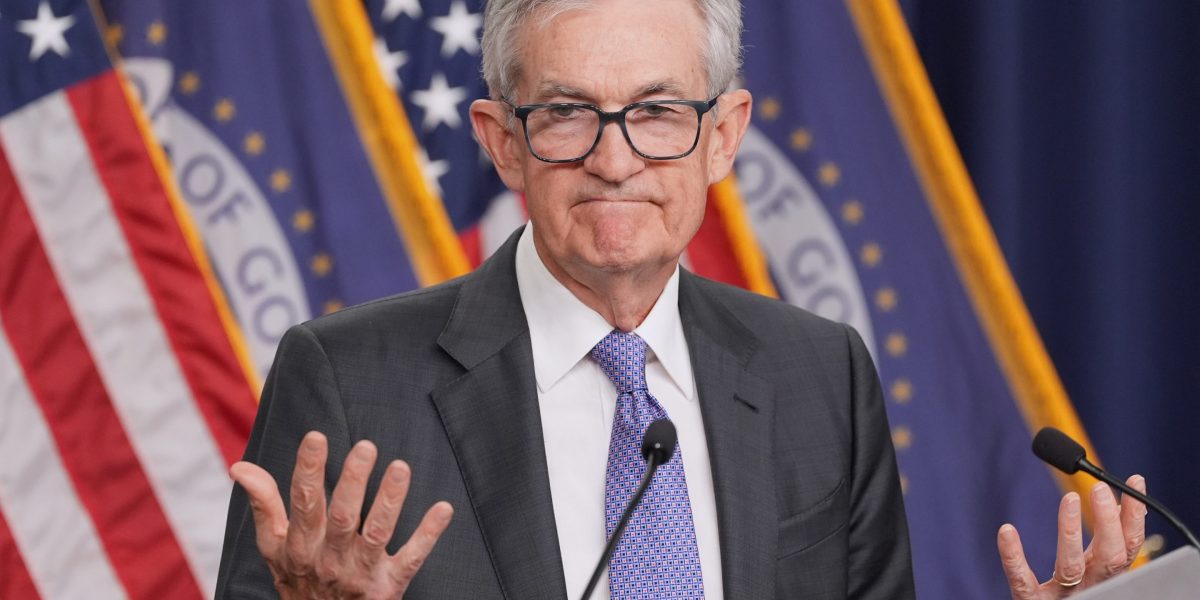
President Donald Trump has spent his second term bulldozing elected and appointed officials who resist him or refuse to bend to his demands. But he may have met his match in Federal Reserve Chair Jerome Powell.

As the Trump administration ramps up its pressure campaign against the central bank — now including Justice Department subpoenas and the threat of criminal charges — Senate Republicans have closed ranks around Powell, defending an independent Fed chair under attack from a president of their own party.

“I know Chairman Powell very well. I will be stunned — I will be shocked — if he has done anything wrong,” said GOP Sen. John Kennedy of Louisiana, one of Trump’s most reliable allies in the Senate.

Soon after the Justice Department served subpoenas on the Fed, Powell went on the offensive, releasing a video statement accusing the administration of using “pretexts” to pressure the central bank into sharply cutting interest rates, as Trump has demanded. The 72-year-old Fed chair also leaned on Capitol Hill relationships he has cultivated since his 2018 appointment, holding multiple calls with Republican senators in the days following the video’s release.

“He knows his way around Congress,” said Robert Tetlow, a former senior policy adviser at the Fed. “He gets in there, pets the dog, shoots the breeze, and has a way of getting people to like him, and he’s really good at it.”

For some in Congress, it’s personal

In a March 2024 hearing, Powell received an unusual greeting from a member of the Senate Banking Committee: The office dog had said hello.

“Gus sends his regards,” said Sen. Thom Tillis, a North Carolina Republican. “If you have time after the hearing, you ought to go by and see him.”

“I don’t want to disturb his nap,” Powell said to laughter in the hearing room.

Now, Tillis — who is retiring at the end of this year — has been among the Republicans rushing to Powell’s defense, vowing to withhold support for any Trump administration nominees to the Federal Reserve until the legal cloud surrounding the chair is resolved.

Alaska Sen. Lisa Murkowski put her support behind Tillis’ plan to block nominees. She was among the multiple Republican senators who said they spoke with Powell after his video statement.

“I look at the situation with Jay Powell and this supposed investigation of the overhaul of their offices going over there as grounds to do nothing but intimidate, threaten and coerce,” Murkowski told reporters. Powell goes by “Jay” informally.

Murkowski and Tillis have not shied away from critiquing the Trump administration in recent months. What makes the Powell backlash unique is that even reliable Trump allies — and opponents of the Fed’s recent decisions — have rushed to the Fed chair’s side.

“I believe strongly in an independent Federal Reserve,” said Pennsylvania Sen. Dave McCormick, who also sits on the Senate Banking Committee. The first-term senator added that he agrees “with President Trump that Chairman Powell has been slow to cut interest rates” but said he doesn’t “think Chairman Powell is guilty of criminal activity.”

Senate Majority Leader John Thune, R-S.D., said that the investigation “better be real” and “better be serious.”

In the House, Financial Services Chair French Hill criticized the Justice Department’s investigation.

“I know Mr. Powell to be a man of integrity with a strong commitment to public service,” he said. “While over the years we have had our policy disagreements, I found him to be forthright, candid, and a person of the highest integrity.”

Decades of service in Washington

Hill also said in his statement that he has “known Chairman Powell since we worked together at Treasury during the George H.W. Bush Administration.”

Powell, a Republican, has been a fixture in the nation’s capital for decades, where he developed a reputation as a centrist. He worked at the Bipartisan Policy Center, a think tank, from 2010 to 2012 and pushed congressional Republicans toward compromise during their budget battles with President Barack Obama.

Obama, in turn, appointed Powell to the Fed’s governing board in 2012. Trump then elevated him to the Chair position in 2018. He was reappointed by President Joe Biden in 2022.

Powell also built up credibility among Republicans in the House and Senate by largely ignoring Trump’s personal attacks during the president’s first term in office, when he complained about rate hikes by Powell in 2018. In general, Powell has tried to keep his head down and avoid a back-and-forth with the White House. A solid economy — at least until the COVID pandemic struck — also helped protect the Fed during Trump’s first term.

Powell has often cited support on Capitol Hill as a counterweight to Trump’s attacks. At a news conference last July, Powell discussed the importance of distancing the Fed from “direct political control,” because that allows the central bank to take unpopular steps such as raising interest rates to thwart inflation.

“I think that’s pretty widely understood,” he said. “Certainly, it is in Congress.”

Powell’s public schedule underscores his commitment to staying connected with Congress. In the month following Trump’s inauguration last year, he met with or spoke by phone with 27 senators from both parties, according to his schedule.

After testifying before the Senate Banking Committee about the renovation of Fed buildings in June of last year, Powell followed up with the chair, Tim Scott, and the ranking member, Democratic Sen. Elizabeth Warren, about the cost of the project.

“As is to be expected in the major renovation of nearly 100-year-old historic buildings, the Board’s designs have continued to evolve over the course of the project,” wrote Powell.

The accusations against Powell

The subpoenas served to the Fed relate to Powell’s comments about the $2.5 billion renovation of two office buildings, which Trump has criticized as excessive.

“The threat of criminal charges is a consequence of the Federal Reserve setting interest rates based on our best assessment of what will serve the public, rather than following the preferences of the President,” Powell said in a video statement.

Trump has insisted he was unaware of the investigation into Powell. When asked by CBS News whether the subpoenas were a form of retribution, Trump said Tuesday, “I can’t help what it looks like.”

Trump has gone after several officials he sees as having done him wrong, including an attempted firing of another Fed board member, Lisa Cook. The Supreme Court has allowed Cook to keep her job and will hold a hearing on her case on Wednesday.

But not all of Trump’s efforts are sticking, with federal inquiries against former FBI Director James Comey and New York Attorney General Letitia James tossed out by the courts.

“So far it looks like this has been a misstep for the administration,” said Lev Menand, a law professor at Columbia University and author of a book about the Fed. “This attempt to go after Jay Powell with a potential criminal indictment is leading to significant resistance from elected officials even within the Republican Party.”


Source link

Continue Reading

Business

Trump says he’ll make tech firms pay for power. They’d love to

Published

on


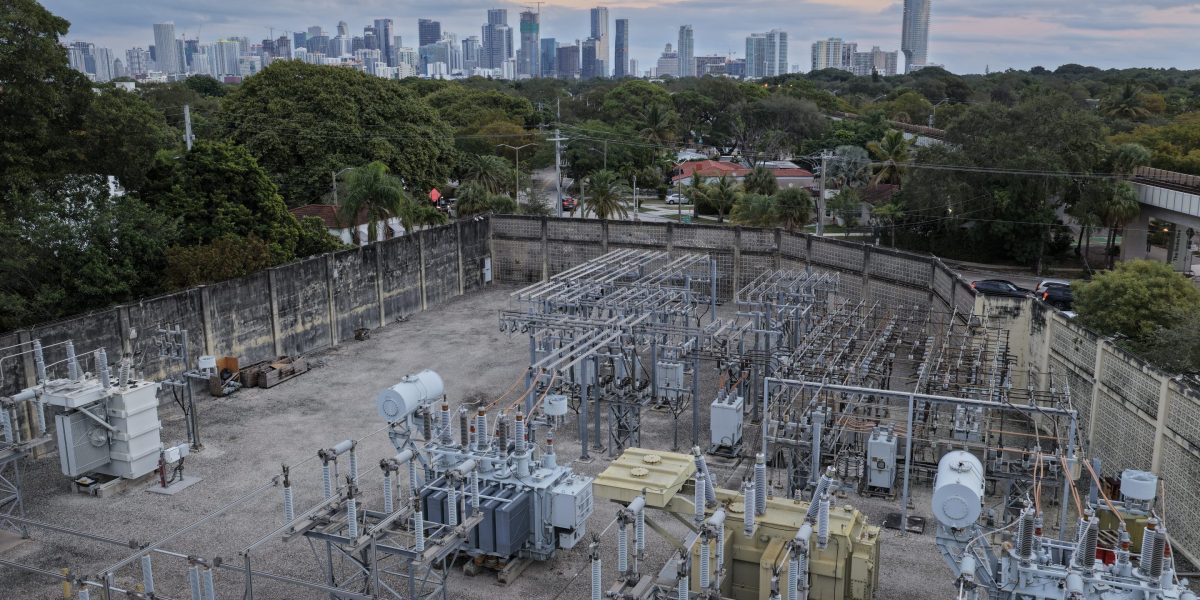
US President Donald Trump is calling for an emergency wholesale electricity auction that, his administration says, will force technology companies to pay for the new power they need to run massive AI data centers under construction across the country.

The truth is Amazon.com Inc., Microsoft Corp., Alphabet Inc., Meta Platforms Inc., OpenAI and all the other major tech firms behind the AI data center boom are more than happy to shell out for more electricity generation. And they have been.  

“They have no shortage of money,” said Bloomberg Intelligence analyst Anurag Rana of the tech giants powering the global artificial intelligence race. “They really don’t have a problem with funding this thing.” Amazon, Microsoft, Alphabet and Meta collectively spend hundreds of billions of dollars on capital investments annually, far exceeding the budgets of the entire utility segment.

Data center developers have in fact already said they’d like to buy electricity off the nation’s power grids as opposed to signing contracts directly with power generators. That’s because grid rates can be cheaper, grids are equipped with backup resources and such systems can help stabilize supplies during extreme weather events. Hyperscalers have also been signing contracts to help bring back nuclear or build new nuclear.

Either way, the reality is tech companies have been trying to secure power from every source they can find — both on and off the grids — with data center power demand set to triple by 2035. 

Read More: AI Data Center Energy Needs Are Straining Global Power Systems

“We agree data centers should pay their own way,” a Google spokesperson told Bloomberg. “For us, it is table stakes. When built responsibly, data centers can provide long-term, reliable demand that stimulates new investments in energy production and transmission in a way that helps all consumers.”

In calling for an auction, Trump may be solving a public relations problem for tech companies, according to analysts. The industry and their power suppliers have drawn criticism over rising electricity bills and the potential environmental impacts of new plants. An auction like the one Trump’s proposing would allow them to circumvent the political headwinds facing individual projects. 

“This could be a more expeditious way to simply address the issue, as opposed to dealing with all this resistance and problems that are associated with it,” said Paul Patterson, a utility analyst at Glenrock Associates LLC. 

Under Trump’s plan, grid operator PJM Interconnection LLC will hold an auction for tech companies to bid on 15-year contracts for new electricity generation capacity. Such contracts are exactly what data center developers are after, offering “more stability, more certainty and more predictability about what the price is going to be,” Patterson said. 


Source link

Continue Reading

Trending

Copyright © Miami Select.