Connect with us

Business

As the Mideast unites around Gaza ceasefire, Iran is at one of its weakest moments since 1979

Published

on


As the Middle East broadly welcomes a ceasefire in the Israel-Hamas war in Gaza, Iran finds itself at one of its weakest moments since its 1979 Islamic Revolution.

Tehran has operated its self-described “Axis of Resistance”over several decades, supporting militant groups and nations allied with it against Israel and the United States. But as Israel bombed the Gaza Strip, it also turned its crosshairs toward top leaders abroad in militant groups like Hamas, Lebanon’s Hezbollah and even the top echelon within Iran’s military and nuclear program — killing many and disrupting their ability to fight back.

As President Donald Trump prepares for a Middle East trip that likely will see him praised by Israel and Arab nations, Iran won’t be at the table as it still struggles to recover from June’s 12-day war.

How Tehran’s theocracy responds in the weeks and months ahead, whether that means lashing out or trying to rebuild its hobbled economy at home, will be crucial.

“Undoubtedly this is a not a proud moment for Iran,” said Ali Vaez, the Iran project director at the International Crisis Group. “Its alliance system in the region is in ruins but it doesn’t mean that the ‘Axis of Resistance’ is no more.”

‘Like a bankrupt gambler’

Iranian state media has sought to describe the Gaza ceasefire as a victory for Hamas, despite the war destroying the Gaza Strip and killing over 67,000 Palestinians, according to Gaza’s Health Ministry, which doesn’t differentiate between civilians and combatants but says around half the dead are women and children.

Iran’s Foreign Ministry welcomed “any decision … that guarantees halting the genocide of Palestinians.” Iranian Foreign Minister Abbas Araghchi reiterated that on Saturday, telling state television that Hamas decided to accept the deal and that Tehran has “always supported any plan, any action that led to the halt of crimes, genocide” by Israel against the people of Gaza.

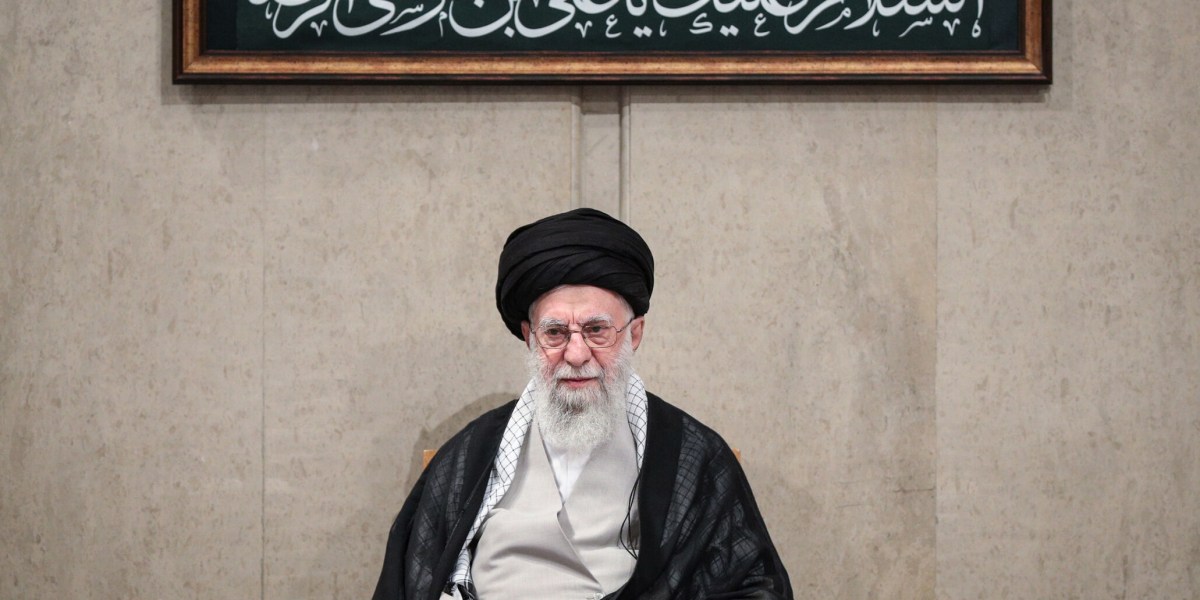
But perhaps more tellingly, an adviser to Iran’s 86-year-old Supreme Leader Ayatollah Ali Khamenei suggested the ceasefire would only lead to conflict elsewhere in the region.

“The start of the ceasefire in Gaza may be the behind-the-scenes end of the ceasefire somewhere else!” Ali Akbar Velayati, an adviser to Khamenei, wrote on X, referencing Hezbollah, Yemen’s Iranian-backed Houthi rebels and Iraq.

The fear of further Israeli strikes, particularly on Iran, remains acute in the public’s mind as much of Iranian air defenses likely were destroyed by Israel in June. Khamenei has not resumed his usual routine of weekly speeches to audiences. Without explanation, Iran avoided holding a major military commemoration marking the end of the Iran-Iraq war in September, which typically sees top officials watch drones and missile launchers parade past them.

Iran’s economy also has suffered under international sanctions and as global energy prices fall.

“Iran has always focused on its interests, we do not have resources anymore, our economy has weakened,” said Tehran-based analyst Saeed Leilaz. “Our support to Hamas was a reaction to U.S. to divert conflicts from our borders.”

Others are less optimistic.

“Iran is like a bankrupt gambler after winning some small money in the first rounds,” said Amir Kazemi, a university student in Tehran. “When Hamas attacked Israel, Iran was happy about it. But now, after the ceasefire, Iran finds nothing in its pocket.”

Mideast looks far different

In the immediate years after Iran’s revolution, its theocratic government sought to export its Shiite revolutionary ideology more widely in the Middle East. That morphed following its devastating 1980s war with Iraq into more of an effort to provide a level of deterrence as Arab nations around it purchased sophisticated American bombs, warplanes and tanks that Tehran couldn’t access due to sanctions.

The U.S. military’s presence across the Persian Gulf also expanded following the 1991 Gulf War, with Arab nations granting basing rights to American forces to Tehran’s constant anger.

The peak of the “Axis of Resistance” came in the chaotic years after the 2003 U.S.-led invasion of Iraq and Yemen’s subsequent collapse into a civil war. Then, it could count on Hezbollah, Syrian autocrat Bashar Assad, the Houthis, Iraqi militant groups and even Hamas — a Sunni militant group.

Today, the Mideast looks far different.

In Syria, rebels overthrew Assad last year, Israeli strikes killed Hezbollah and Hamas’ top leaders, while Iraqi militant groups faded into the background. Yemen’s Houthis, while still capable of launching attacks on Israel and commercial shipping in the Red Sea corridor, find themselves now targeted by increasingly precise Israeli strikes.

And the 12-day war in June left Iran likely no longer enriching uranium for its nuclear program, which the West long has worried could be weaponized.

‘Collapsing regional clout’

Iran, meanwhile, has yet to receive any major support from either China or Russia, despite providing Beijing with likely discounted oil and Moscow with the drones it uses in its war on Ukraine. Tehran has also shied away from confronting women who are increasingly abandoning the hijab, or headscarf, instead executing prisoners it already holds at a rate unseen in decades.

“The ceasefire is reflective of Tehran’s collapsing regional clout following the unraveling of its long-powerful ‘Axis of Resistance’ since 2024,” said Ali Fathollah-Nejad, the director of the Berlin-based Center for Middle East and Global Order. “The ceasefire will free Israeli military capacities that would now be used against Iranian interests — whether in Lebanon against Hezbollah or directly against Iran.”

For his part, Trump seized on Iran accepting the ceasefire as “terrific” news. However, there’s been no move toward renewed public negotiations with Tehran over its nuclear program.

“Time is not on Iran’s side but their problem is no one is really giving them an exit ramp,” Vaez said. But whether Tehran would take the ramp also remains in question as its leaders still debate what turn to now take.

Fortune Global Forum returns Oct. 26–27, 2025 in Riyadh. CEOs and global leaders will gather for a dynamic, invitation-only event shaping the future of business. Apply for an invitation.


Source link

Continue Reading

Business

Arkansas becomes first state to cut ties with PBS, saying $2.5 million membership dues ‘not feasible’

Published

on


The commission that oversees public television in Arkansas voted Thursday to sever ties with PBS, making it the first state to end its contract with the broadcast giant that provides popular television programs such as “Sesame Street,” “Nova” and “Antiques Roadshow.”

The eight-member Arkansas Educational Television Commission, made up entirely of appointees of the governor, announced in a news release Thursday that it planned to disaffiliate from PBS effective July 1, citing annual membership dues of about $2.5 million it described as “not feasible.” The release also cited the unexpected loss of about that same amount of federal funding from the Corporation for Public Broadcasting, which was targeted for closure earlier this year and defunded by Congress.

PBS Arkansas is rebranding itself as Arkansas TV and will provide more local content, the agency’s Executive Director and CEO Carlton Wing said in a statement. Wing, a former Republican state representative, took the helm of the agency in September.

“Public television in Arkansas is not going away,” Wing said. “In fact, we invite you to join our vision for an increased focus on local programming, continuing to safeguard Arkansans in times of emergency and supporting our K-12 educators and students.”

PBS confirmed in an email Thursday that Arkansas is the first state to definitively sever ties with the broadcaster. Alabama considered similar action last month, but opted to continue paying its contract with PBS after public backlash from viewers and donors.

“The commission’s decision to drop PBS membership is a blow to Arkansans who will lose free, over the air access to quality PBS programming they know and love,” a PBS spokesperson wrote in an email to The Associated Press.

The demise of the Corporation for Public Broadcasting, is a direct result of President Donald Trump’s targeting of public media, which he has repeatedly said is spreading political and cultural views antithetical to those the United States should be espousing. The closure is expected to have a profound impact on the journalistic and cultural landscape — in particular, public radio and TV stations in small communities nationwide.

Arkansas House Democratic Leader Rep. Andrew Collins called the demise of PBS in Arkansas sad. “It’s certainly a loss for Arkansas families who value the programming of PBS,” he said.

CPB helps fund both PBS and NPR, but most of its funding is distributed to more than 1,500 local public radio and television stations around the country.


Source link

Continue Reading

Business

Disney plus OpenAI: What could go wrong?

Published

on


Hello, Alexei Oreskovic pitching in for Allie today. Well folks, this week had it all: A new OpenAI model, reports of an upcoming SpaceX IPO, and even a Waymo baby! And to top it all off, OpenAI and Disney announced a surprise partnership that will include a $1 billion investment in OpenAI and enable OpenAI users to create AI-generated videos with Mickey Mouse and hundreds of other Disney characters.

The 3-year deal is a huge win for OpenAI (all the more so given that Disney simultaneously sent a cease-and-desist letter to Google, accusing the internet giant and OpenAI arch-rival of infringing its IP via its AI systems on a “massive scale”). The question is: Why is the Mouse House rolling out the red carpet for the ChatGPT maker? 

You don’t need a lot of imagination to guess the sordid scenarios that await Disney’s family-friendly cast of characters now that the tortured souls of the internet will have carte blanche to feed them into the AI nightmare machine. There will be safeguards in place to prevent Mickey and friends from doing drugs, fornicating, and engaging in other unseemly or illegal behavior, a source told the Wall Street Journal. And I’m sure absolutely no one will figure out how to bypass those guardrails.

Entertainment businesses need to stay ahead of the trends and make sure they’re relevant to the next generation of consumers, of course. So hooking up with OpenAI is an obvious way for a company to stay connected with the kids. But if there’s any company that would seem in less immediate danger of losing the kids, it’s the company with The Lion King, The Little Mermaid, Donald Duck, and Iron Man. 

This will certainly be an interesting adventure to watch. And perhaps Disney’s deal with OpenAI will prove prescient and astute. I just hope Donald can hold his liquor.

See you Monday,

Alexei Oreskovic
X:@lexnfx
Email:
alexei.oreskovic@fortune.com
Submit a deal for the Term Sheet newsletter here.

Joey Abrams curated the deals section of today’s newsletter.Subscribe here.

Venture Deals

Harness, a San Francisco-based AI-powered platform designed to ship code faster, raised $240 million in Series E funding. GoldmanSachs led the round and was joined by IVP, MenloVentures, and UnusualVentures.

Port, a Middletown, Del.-based AI agent designed to handle some software developer tasks, raised $100 million in Series C funding. General Atlantic led the round and was joined by Accel, BessemerVenturePartners, and Team8.

Serval, a San Francisco-based developer of AI agents designed for IT processes, raised $75 million in Series B funding. Sequoia led the round and was joined by Redpoint, Meritech, FirstRound, and others.

Medra, a San Francisco-based AI platform designed to accelerate data generation for scientists, raised $52 million in Series A funding. HunanCapital led the round and was joined by LuxCapital, Neo, NFDG, and others.

RelationalAI, a San Francisco-based enterprise decision intelligence platform, raised $22.5 million in funding from SnowflakeVentures and AT&TVentures.

HavenEnergy, a Los Angeles, Calif.-based solar and home battery tech company, raised $15 million in Series B funding. GiantVentures led the round and was joined by CaliforniaInfrastructureBank, CarnriteVentures, ChaacVentures, ComcastVentures, and LererHippeau.

Neosapience, the San Francisco-based developer of the Typecast platform for creating voice and video content designed to have emotional intelligence, raised $11.5 million in Series C funding. Intervest led the round and was joined by HBInvestment, K2Investment, and BokwangInvestment.

Skydo, a Bangalore, India-based payments platform for global exporters, raised $10 million in Series A funding. SusquehannaAsiaVentureCapital and ElevationCapital.

Subsense, a Palo Alto, Calif.-based developer of non-surgically invasive, nanoparticle-based brain-computer interfaces, raised $10 million in funding from GoldenFalconCapital.

Kilo, a San Francisco-based open source coding agent, raised $8 million in seed funding. CotaCapital led the round and was joined by Breakers, GeneralCatalyst, QuietCapital, and TokyoBlack.

OnMe, a San Francisco-based digital gifting platform, raised $6 million in seed funding. NFX led the round and was joined by existing investors LererHippeau and Focal.

Cyphlens, a New York City-based enterprise security platform, raised $3.8 million in seed funding from SalesforceVentures, MotivateVentures, DCG, ex/ante, and CambrianVentures.

Conveyd, a London, U.K.-based AI conveyancing platform, raised $3.3 million in seed funding. Eka Ventures led the round and was joined by PortfolioVentures and existing investor FoundersFactory and angel investors.

Realm.Security, a Boston, Mass.-based security data pipeline platform, raised $2 million in funding from PresidioVentures.

Private Equity

LongRidgeEquityPartners acquired a majority stake in OnCorpsAI, a Boston, Mass.-based agentic AI platform designed for fund operations, for $55 million.

Aretum, a portfolio company of RenovusCapitalPartners, acquired VeteransEngineering, a Rockville, M.D.-based IT modernization, cybersecurity, and cloud architecture company for mission-critical government programs. Financial terms were not disclosed.

Rentsync, backed by SilversmithCapitalPartners, acquired Spacelist, a Vancouver, Canada-based real estate listing marketplace. Financial terms were not disclosed.

Exits

PerimeterSolutions agreed to acquire MedicalManufacturingTechnologies, a Charlotte, N.C.-based provider of medical manufacturing solutions, from ArclineInvestmentManagement for $685 million.

ExperiGreenLawnCare, backed by WindPointPartners, acquired TurfMastersBrand, a Roswell, Ga.-based lawn care company, from CenterOakPartners. Financial terms were not disclosed.

Funds + Funds of Funds

SwishVentures, a Tel Aviv, Israel-based venture capital firm, raised $100 million for a new fund focused on companies in cybersecurity, infrastructure, and AI.

People

CoreInnovationCapital, a Los Angeles, Calif.-based venture capital firm, hired Michael J. Hsu as venture partner. He most recently served as Comptroller of the Currency.



Source link

Continue Reading

Business

Retail investors drive stocks to a pre-Christmas all-time high—and Wall Street eyes a moment to sell

Published

on


S&P 500 futures ticked downward 0.22% this morning, an indicator that some traders decided overnight to lock in their gains from yesterday’s close, when the index reached a new all-time high of 6,901. The peak was entirely predictable, given that U.S. Federal Reserve chairman Jerome Powell delivered a new dose of liquidity, as expected, via Wednesday’s 0.25% interest rate cut.

Nasdaq 100 futures were down 0.51% this morning, premarket, as traders picked winners and losers in the tech sector. Oracle lost another 1% overnight. It’s down more than 9% over the last five sessions after reporting revenue below expectations and capital expenditure above expectations. Alphabet (Google) by contrast was up 0.26% in overnight trading.

The bigger picture is the fact that the S&P 500 has now risen 17.33% year to date.

The trigger for that came from Powell telegraphing 175 basis points of cuts since last year. But the markets have also been driven by retail investors—individuals, as opposed to financial institutions—buying into exchange-traded funds and individual tech stocks, according to Arun Jain and his colleagues at JPMorgan.

In the week up to December 10, retail investors ploughed $7.8 billion into stocks, above the $6.3 billion weekly average. “Retail investors continued to favor ETFs (+$6.3B) over Single Stocks (+$1.5B),” they told clients in a note seen by Fortune.

“2025 is set to be a record year for retail traders in terms of flows (tracking at ~1.9x the 5y avg), 53% above the levels seen last year and 14% above the previous peak during the retail mania of 2021,” they said.

Retail investors probably did very well in the markets this year because they tended to buy the dips—there was a 38% gain between the market’s April low and yesterday—they bought ETFs, and they bought gold (up 65% year to date), the JPM team said.

Retail trading volume has doubled since 2010, according to the Financial Times, and individual investors are now more active than mutual funds and hedge funds.

Retail investors are so enthusiastic for risk assets that some people on Wall Street are starting to worry about it. The Bank of International Settlements—a sort of bank for central banks—published a paper recently arguing that retail traders now represent the dumb money in the market.

“Retail investors continued to pour money into U.S. equity funds, even as institutional investors gradually withdrew,” the bank wrote. “Appetite for precious metals may underscore market participants seeking at least some safe asset exposure in the event that things turn sour. But part of the surge can also be traced to investors trying to take advantage of the momentum in search of price appreciation, consistent with elevated risk-taking.”

Michael Hartnett and his colleagues at Bank of America see it as as sell-signal. Their “Bull & Bear Indicator”—a gauge that measures “investor fear and greed” from technical market data such as fund flows—now stands at 7.8, just below the “extreme bullishness” level that suggests it might be a good time to cash out:

Here’s a snapshot of the markets ahead of the opening bell in New York this morning:

  • S&P 500 futures were down 0.22% this morning. The last session closed up 0.21% to hit a new record high of 6,901. 
  • STOXX Europe 600 was up 0.37% in early trading. 
  • The U.K.’s FTSE 100 was up 0.38% in early trading. 
  • Japan’s Nikkei 225 was up 1.37%. 
  • China’s CSI 300 was up 0.63%. 
  • The South Korea KOSPI was up 1.38%. 
  • India’s NIFTY 50 was up 0.51%. 
  • Bitcoin went to $92K.
Join us at the Fortune Workplace Innovation Summit May 19–20, 2026, in Atlanta. The next era of workplace innovation is here—and the old playbook is being rewritten. At this exclusive, high-energy event, the world’s most innovative leaders will convene to explore how AI, humanity, and strategy converge to redefine, again, the future of work. Register now.


Source link

Continue Reading

Trending

Copyright © Miami Select.