Connect with us

Business

As millions of Gen Zers face unemployment, McDonald’s CEO dishes out some tough love career advice for navigating the market: ‘You’ve got to make things happen for yourself’

Published

on


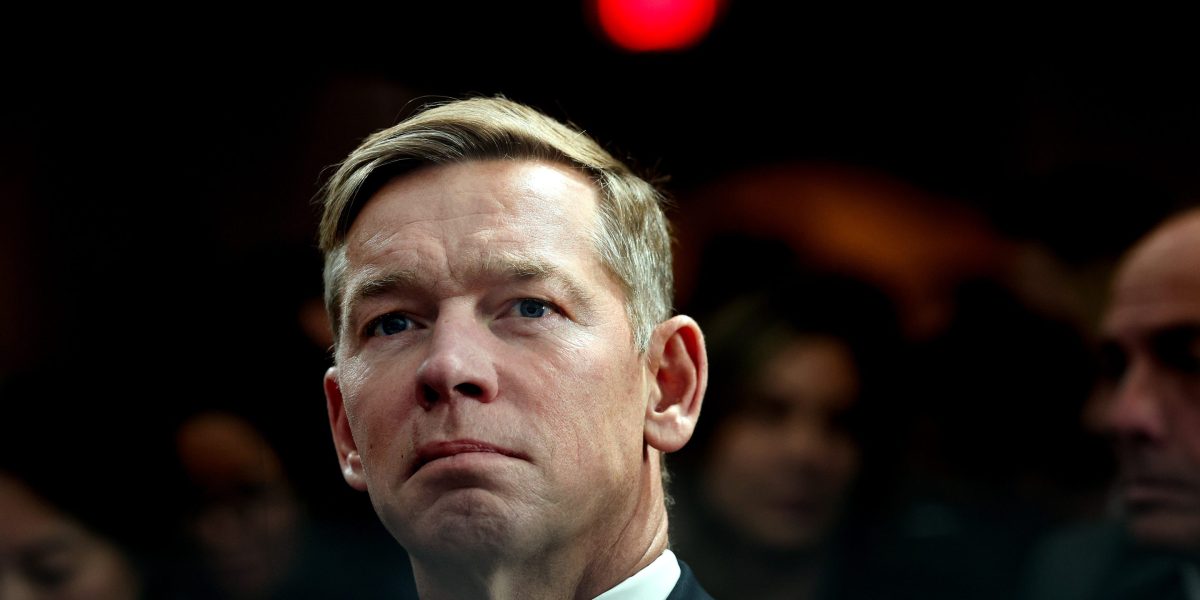
Instead, the 57-year-old executive is offering some blunt advice for aspiring young professionals: whether the market is hot or cold, no one is going to give you a handout. Your career is yours to build, and the onus is on you to make it happen.

“Remember, nobody cares about your career as much as you do,” Kempczinski said in a recent Instagram video. “You’ve got to own it, you’ve got to make things happen for yourself.”

At a time when many young workers are grasping at their networks for a leg up, the risks of falling behind are real: millions of young people are now classified as NEET—not in employment, education, or training. Against that backdrop, Kempczinski warned there’s no guarantee anyone will always have your back—or ensure you reach your career goals. 

Kempczinski knows firsthand that careers rarely unfold as planned. He once dreamed of becoming a professional soccer player, not a CEO. When it became clear early on that his athletic capability wasn’t up to star-level, he took his future into his own hands: turning lessons learned from washing dishes at 16 at First Watch into a three-decade-long career across companies like Procter & Gamble and PepsiCo before he was tapped to lead McDonald’s in 2019.

Keeping an open mind could be a career changer

Instead of expecting stability, one of the biggest paths to long-term success is embracing the chaos with curiosity—and a willingness to say yes when opportunities arise, according to Kempczinski.

“ To be a yes person is way better than to be a no person,” he told LinkedIn CEO Ryan Roslansky. “So as those career twists and turns happen, the more that you’re seen as someone who’s willing to say yes and to go do something, it just means you’re gonna get that next call.”

For Loreal’s Chief Human Resource Officer Stephanie Kramer, saying yes to things—even if they were unglamorous and “junior” looking, like grabbing coffee—was pivotal to her success.

“At the beginning of my career, I often credit it with the ability to say yes to the very, very little things,” Kramer recently told Fortune. “Who’s going to make the copies and going to get the coffee? Me. Who is going to be there early to set up the meeting? Me. Who is going to go watch which door consumers go in to determine what the best bay or window is for Saks Fifth Avenue that we want to have? Me.”

And the benefits of keeping an open mind early on may be more relevant now than ever, as opportunities have become slimmer for recent graduates. 

In the U.K., more than 1.2 million applications were submitted for just under 17,000 open graduate roles in 2023 and 2024, according to the Institute of Student Employers. And back stateside, lawmakers have warned that joblessness among recent graduates could hit 25% in the next two to three years as AI reshapes entry-level work.

Fortune reached out to Kempczinski for further comment.

The endless pursuit of knowledge—no matter what life throws at you

The emphasis on staying curious—even when plans change—is a theme echoed by other top executives.

Bank of America CEO Brian Moynihan has long credited asking questions and continuously learning as central to both the bank’s success and his own decade-plus tenure at the helm of a Fortune 500 company.

“You lose your curiosity, and you are on your way out of this company,” Moynihan told Fortune in 2017.

He echoed that message just last week, saying his top leadership advice remains simple: “You have to keep learning, you have to be curious, you have to read a lot,” he told The Master Investor podcast.

That mindset has also shaped the unconventional career path of Life360 CEO Lauren Antonoff. 

She once planned to become a civil rights lawyer, but an unexpected curiosity sparked by her first MacBook in college pulled her toward technology. She ultimately climbed the corporate ladder in tech—even without finishing her degree.

“I’m a big believer in finding your way in the world,” Antonoff recently told Fortune. “That’s not just about getting a job; if you don’t have a job, start something. If you don’t have a job, go volunteer someplace. In my experience, being active and working on problems that you’re interested in—one thing leads to another.”

This idea that careers aren’t built by waiting for someone to tell you what to do is exactly the message Kempczinski wanted to send to Gen Z. Staying curious and being willing to step through doors before you know exactly where they lead is often the key to long-term success.



Source link

Continue Reading

Business

We ‘don’t have enough manpower’ for the delivery boom, says Singapore-based robotics founder

Published

on


In Singapore’s central business district, delivery robots now pound the pavements alongside smartly-clad businessmen. With two googly, animated eyes and lockers on their back, the robots navigate automatic doors, elevators and turnstiles, delivering packages right to an office’s front door.

These robots are the creation of Singapore-based AI logistics firm QuikBot Technologies. Alan Ng founded QuikBot in 2021, during the COVID-19 pandemic. Restaurants and eateries shuttered as people sheltered in place, yet e-commerce boomed in the pandemic years, causing the demand for delivery services to skyrocket.

Yet Ng observed that there weren’t enough people to get goods where they needed to go. “We simply don’t have enough manpower,” Ng said, particularly in wealthier economies like Singapore, Japan and Korea.

A crucial, yet costly, part of the process is last-mile delivery: Getting a package from a local distribution hub to someone’s home or office. “A driver can take ten minutes to park the car below your building and bring the parcel to you,” he says. “Even with all our tech, we’re still stuck at the last mile.”

QuikBot, for now, has just two delivery robots and a smart locker. Together, they form an ecosystem that automates last-mile delivery in urban environments. Goods are stored in smart lockers, which sit atop a long-distance autonomous robot called the “QuickFox.” Boxes are then transferred onto the QuikCat, a smaller delivery robot that can travel shorter distances to drop off goods at their final destination. Customers will get a text message with a one-time password, which they can use to open the box and collect their parcels.

But Ng says QuikBot isn’t really a robotics company. “We don’t just sell robots. Our job is to help automate buildings,” he explains. “We connect the robot with the building so it can move freely within the space, and then whatever the company wants the robot to do, we can program it to help them with it.”

QuikBot is part of a handful of startups exploring how to make robots work for last-mile delivery. U.S.-based Serve Robotics is developing small vehicles for food delivery, and has signed agreements with both Uber and DoorDash.

The future of delivery

In July, QuikBot announced a partnership with global courier FedEx to roll out autonomous final-mile delivery services in Singapore. The two companies previously ran a successful pilot in two business districts: South Beach Tower and Mapletree Business City.

AI-enabled robots can help delivery firms like FedEx reduce their fleet size and reduce carbon emissions, Ng says, claiming that QuikBot can lead to deliveries that are 30% faster with 20% less emissions.

In 2026, the company will be showcasing their tech at the Singapore Airshow—one of Asia’s largest aerospace and defense exhibitions—for the first time.

Aside from fulfilling e-commerce deliveries, Ng hopes that his tech can be deployed in different spaces, such as in hangars where aircrafts are stored and maintained.

Aerospace workspaces are often large in size, he explains, and technicians may thus have to traverse long distances to obtain tools and spare parts while working to upkeep planes. 

“Our robots help to reduce unnecessary workload, by shortening the distance people have to walk,” Ng says. “Robotic delivery can replace a lot of menial and repetitive work.”

Courtesy of QuikBot Technologies

QuikBot has begun scaling globally, and are currently expanding operations to Japan and the UAE. The company also hopes to enter other cities in the Asia-Pacific region, including Hong Kong, Sydney, Melbourne, Incheon and Seoul, Ng says.

Looking forward, the company also wants to automate other legs of delivery, Ng adds. “Our next step is medium-mile delivery, which can be done with autonomous vehicles.”

Ng, eventually, hopes to tap the public markets. “Hopefully we make it work, and get ourselves listed in NASDAQ or the Hong Kong Stock Exchange by 2030, and become a unicorn.”


Source link

Continue Reading

Business

After Trump used prime-time speech to deny economic reality, his aides reassured him he did great

Published

on


President Donald Trump delivered a politically charged speech Wednesday carried live in prime time on network television, seeking to pin the blame for economic challenges on Democrats while announcing he is sending a $1,776 bonus check to U.S. troops for Christmas.

The remarks came as the nation is preparing to settle down to celebrate the holidays, yet Trump was focused more on divisions within the country than a sense of unity. His speech was a rehash of his recent messaging that has so far been unable to calm public anxiety about the cost of groceries, housing, utilities and other basic goods.

Trump has promised an economic boom, yet inflation has stayed elevated and the job market has weakened sharply in the wake of his import taxes. Trump suggested that his tariffs — which are partly responsible for boosting consumer prices — would fund a new “warrior dividend” for 1.45 million military members, a payment that could ease some of the financial strains for many households. The amount of $1,776 was a reference to next year’s 250th anniversary of the signing of the Declaration of Independence.

“The checks are already on the way,” he said of the expenditure, which would total roughly $2.6 billion.

Presidential addresses to the nation carried on network television are traditionally less partisan than rally speeches, but Trump gave a condensed version of his usual political remarks.

Flanked by two Christmas trees with a portrait of George Washington behind him in the White House’s Diplomatic Reception Room, Trump sought to pin any worries about the economy on his predecessor, Joe Biden.

“Eleven months ago, I inherited a mess, and I’m fixing it,” Trump said. “We’re poised for an economic boom, the likes of which the world has never seen.”

Trump seeking to stop the slump in his approval ratings

His holiday wishes came at a crucial time as he tries to rebuild his steadily eroding popularity. Public polling shows most U.S. adults are frustrated with his handling of the economy as inflation picked up after his tariffs raised prices and hiring slowed.

In 2026, Trump and his party face a referendum on their leadership as the nation heads into the midterm elections that will decide control of the House and the Senate.

The White House remarks were a chance for Trump to try to regain some momentum after Republican losses in this year’s elections raised questions about the durability of his coalition. He openly leaned into the politics despite television networks’ past reluctance to broadcast presidential addresses loaded with campaign-style rhetoric.

For example, in September 2022, networks declined to give the Biden White House a prime-time slot for a speech the then-president gave about democracy because it was viewed as too political.

Trump spoke at a rapid-fire clip with a tone that bordered at times on anger. He responded to the public frustration this year over the economy by making even bolder promises on growth next year, saying that mortgage rates would be coming down and that he “would announce some of the most aggressive housing reform plans in American history.”

Trump brought charts with him to make the case that the economy is on an upward trajectory. He made claims about incomes growing, inflation easing and investment dollars pouring into the country as foreign leaders, he claimed, have assured him that “we’re the hottest country anywhere in the world,” a statement he has frequently repeated at public events.

If the argument seemed familiar, that’s because it has echoes of the case that Biden made about the U.S. economy with little success. He, too, in the face of inflation pointed to the enviable rate of U.S. economic growth compared to other nations.

The public sees the economy differently from Trump

The hard math internalized by the public paints a more complicated picture of an economy that has some stability but few reasons to inspire much public confidence.

The stock market is up, gasoline prices are down and tech companies are placing large bets on the development of artificial intelligence.

But inflation that had been descending after spiking to a four-decade high in 2022 under Biden has reaccelerated after Trump announced his tariffs in April.

The consumer price index is increasing at an annual rate of 3%, up from 2.3% in April.

The affordability squeeze is also coming from a softening job market. Monthly job gains have averaged a paltry 17,000 since April’s “Liberation Day,” when Trump announced import taxes that he later suspended and then readjusted several months later.

The unemployment rate has climbed from 4% in January to 4.6%.

Trump said that investment commitments for new factories will boost manufacturing jobs and that consumer activity will improve dramatically as people receive increased tax refunds next year.

While emphasizing the economy, he also faces challenges on other policy fronts.

Trump’s mass deportations of immigrants have proved unpopular even as he is viewed favorably for halting crossings along the U.S. border with Mexico. The public has generally been unmoved by his globe-trotting efforts to end conflicts and his attacks on suspected drug boats near Venezuela.

Trump sought to blame Democrats for the likely increase in health insurance premiums as the subsidies tied to the 2010 Affordable Care Act are expiring. Democratic lawmakers and some Republicans have sought to address that issue, but Trump has pushed back and suggested instead that payments should go directly to the buyers of health insurance instead of the companies. The president has yet to commit to a specific legislative fix.

After his speech ended and the video was no longer being broadcast, Trump turned to his gathered aides and asked them how his address to the nation went. The aides assured him it was great.

Trump then indicated that White House chief of staff Susie Wiles had told him he needed to address the nation. After some back and forth, he asked Wiles how he had done.

“I told you 20 minutes and you were 20 minutes on the dot,” Wiles said.


Source link

Continue Reading

Business

BP names Meg O’Neill CEO, making her the first-ever woman CEO of a Big Oil giant

Published

on


Embattled BP made a dramatic CEO change Wednesday as it hired Woodside Energy leader Meg O’Neill as the first-ever woman CEO of a Big Oil giant.

O’Neill is a Colorado native and Exxon Mobil veteran who grew Australia’s Woodside into a much bigger global natural gas player with expansions into the U.S. She is taking over the British energy behemoth at a time when it has fallen behind the other global oil and gas supermajors and was even a potential takeover target earlier this year by rival Shell.

Current BP CEO Murray Auchincloss is stepping down immediately on Thursday but will serve in an advisory role through all of 2026, BP announced. Auchincloss was hardly considered the top candidate to lead BP, but the former chief financial officer was thrust into the role in late 2023 when then-CEO Bernard Looney was abruptly forced to resign over relationships with colleagues.

Since then, Auchincloss has led a “hard reset” to cut costs, double down on fossil fuels, and take several steps back from its ambitious renewable energy goals. BP was targeted by activist investor Elliott Investment Management, which took a nearly 5% stake in the company early this year, as the Shell merger rumors escalated.

The writing may have been on the wall for Auchincloss when a new outsider chairman took over in the beginning of October, former CRH building materials leader Albert Manifold. And now there will be an outsider chief executive as well. Auchincloss confirmed as much in a statement: “When Albert became chair, I expressed my openness to step down were an appropriate leader identified who could accelerate delivery of BP’s strategy.”

O’Neill will take over as CEO on April 1. In the meantime, Carol Howle, current executive vice president of supply, trading, and shipping, will serve as interim CEO.

“Following a comprehensive succession planning process, the board believes this transition creates an opportunity to accelerate our strategic vision to become a simpler, leaner, and more profitable company,” Manifold said in a statement. “Progress has been made in recent years, but increased rigor and diligence are required to make the necessary transformative changes to maximize value for our shareholders.”

Translation: Auchincloss was making progress but not doing enough to truly turn the company around.

Manifold said O’Neill has a “proven track record of driving transformation, growth, and disciplined capital allocation [that] makes her the right leader for BP. Her relentless focus on business improvement and financial discipline gives us high confidence in her ability to shape this great company for its next phase of growth and pursue significant strategic and financial opportunities.”

O’Neill worked for more than two decades at Exxon Mobil, serving in various countries around the world and as executive advisor to former CEO Rex Tillerson. She left as a vice president in 2018 to become chief operating officer at Woodside, rising to CEO in 2021 coming out of the pandemic.

“With an extraordinary portfolio of assets, BP has significant potential to reestablish market leadership and grow shareholder value,” O’Neill said in a statement. “I look forward to working with the BP leadership team and colleagues worldwide to accelerate performance, advance safety, drive innovation and sustainability, and do our part to meet the world’s energy needs.”

At Woodside, she led the acquisition of Australia’s BHP Petroleum and, most recently, the purchase of Houston-based natural gas exporter Tellurian last year. Woodside is currently building a $17.5 billion export facility in Louisiana.

Earlier this year, when BP-Shell rumors escalated, Shell in June doubled down on its denials, even invoking a U.K. law that forbade it from bidding on BP for six months. That period expires in just a few days.

It turns out that Shell CEO Wael Sawan nixed any internal talks of buying BP, despite interest from Shell’s M&A team, the Financial Times reported this week. Sawan prefers focusing internally on improving Shell’s operations and financials and making smaller-scale acquisitions. Shell’s M&A chief left the company in September.

For its part, Woodside is naming Liz Westcott, executive vice president and COO Australia, as its interim CEO.


Source link

Continue Reading

Trending

Copyright © Miami Select.