Connect with us

Business

As millions of Gen Zers face unemployment, CEOs of Amazon, Walmart, and McDonald’s say opportunity is still there—if you have the right mindset

Published

on


Some CEOs, including Anthropic’s Dario Amodei and Ford’s Jim Farley, have even used their platforms to warn that AI and automation pose existential threats to many entry-level roles. 

But while there are signs that 2026 could bring further turbulence, not every executive message has been a bleak one. As AMD CEO Lisa Su put it: “Run towards the hardest problems—not walk, run—and that’s where you find the biggest opportunities, where you learn the most, where you set yourself apart, and most importantly, where you grow.”

For the millions of Gen Z NEETs and job huggers looking to land a new job—or promotion—in the New Year, the takeaway is clear: embrace challenges, stay curious, take ownership of your career, and remain adaptable—and you’ll be positioned to thrive even in an unpredictable job market.

Accenture CEO Julie Sweet: Curiosity is a leadership advantage

Julie Sweet never expected to become CEO of Accenture. She didn’t fit the traditional mold of the firm’s past leaders, many of whom came from conventional business backgrounds, spent their entire careers at the company, and were men.

Instead, Sweet told Fortune this year that embracing uncertainty, and saying yes when opportunities arise, helped propel her into the role—a lesson that Gen Z can learn from.

Even at the top, she said, leadership doesn’t mean having all the answers. Being curious and seeking help remains one of her self-described “superpowers.”

“I think the idea of being a deep learner at the top is really critical, and that is not usual in a lot of companies,” Sweet said.

That mindset began during her early years in the legal department, when she admits she wasn’t particularly tech savvy—and had to ask for guidance. But it’s a skill that ultimately helped her stick out from the pack and traverse up the corporate ladder.

“Transparency builds trust,” she added. “Because the more value you can contribute [to] your company, the more likely you’re going to get that best next job.”

Amazon CEO Andy Jassy: You don’t need to have it all figured out

In an era defined by constant change, trying to map out an entire career at a young age can feel overwhelming. But Amazon CEO Andy Jassy says that pressure is often self-inflicted—and unnecessary. 

“I have a 21-year-old son and a 24-year-old daughter, and one of the things I see with them and their peers is they all feel like they have to know what they want to do for their life at that age,” Jassy said on the podcast, How Leaders Lead with David Novak. “And I really don’t believe that’s true.”

Jassy’s own career is proof. Long before becoming CEO of one of the world’s most powerful companies, he experimented—trying his hand at sportscasting, product management, and entrepreneurship. He also worked at a retail golf store, coached high school soccer, and tried investment banking.

That exploration, he said, was essential.

“I tried a lot of things, and I think that early on, it’s just as important to learn what you don’t want to do as what you want to do, because it actually helps you figure out what you want to do.”

AMD CEO Lisa Su: Run toward the toughest challenges

For AMD CEO Lisa Su, uncertainty isn’t something to fear—it’s where growth happens.

Speaking to graduates at Rensselaer Polytechnic Institute, Su shared the best career advice she has ever received—and it’s something that may be more relevant than ever: don’t avoid challenges—tackle them head-on.

“Run towards the hardest problems—not walk, run—and that’s where you find the biggest opportunities, where you learn the most, where you set yourself apart, and most importantly, where you grow,” Su said.

Embracing difficulty, she added, only accelerates learning and impact: “When you choose the hardest challenges, you choose the fastest path to growth and the greatest chance to make a difference.”

Citi CEO Jane Fraser: Dream big and build resiliency

For Jane Fraser, the challenges facing young people are personal. Her two sons are only just beginning to build their careers in finance and tech—and she’s been candid with them about how unstable the future of work may be.

In an interview with T. Rowe Price, Fraser said she’s had to acknowledge that many of today’s jobs may not exist in their current form in just a few years. Thus, figuring out how to build resiliency and develop skillsets that will allow you to reinvent yourself several points in your career will be critical, she added.

And in an AI-driven world, she admitted knowing every answer matters less than developing sound judgement and human intuition.

“You don’t need to know the answer. You’re going to need judgment. You’re going to need a whole range of other things,” she said.

Her overarching advice for young people is simple: “Dream.”

“Don’t feel you’ve got to be pigeonholed into things because there’s so many pressures on the kids coming out of college.”

McDonald’s CEO Chris Kempczinski: Stand up for your own career

Chris Kempczinski may be responsible for Happy Meals and Ronald McDonald—but he recognizes that not all is fun and games when it comes to building a career. And in a recent Instagram post, the McDonald’s CEO shared the tough love advice some young people need to hear: the ball is in your corner—and the onus is on you to reach your career goals.

“Remember, nobody cares about your career as much as you do,” Kempczinski said. “You’ve got to own it, you’ve got to make things happen for yourself.”

At a time when many young workers are grasping at their networks for a leg up, the risks of falling behind are real: millions of young people are now classified as NEET—not in employment, education, or training. But Kempczinski leveled that there will always be career ups and downs, but no matter what, it’ll always be beneficial to be someone who keeps an open mind.

“ To be a yes person is way better than to be a no person,” he added to LinkedIn CEO’s Ryan Roslansky. “So as those career twists and turns happen, the more that you’re seen as someone who’s willing to say yes and to go do something, it just means you’re gonna get that next call.”

Nvidia CEO Jensen Huang: Explore the skilled trades

Jensen Huang has been one of the most closely watched executives of the year, largely because he leads the world’s most valuable company—and one at the center of the AI boom.

But the Nvidia CEO’s advice to young people isn’t that they need multiple degrees or to be a tech whiz. Instead, he’s been urging Gen Z to take a serious look at skilled trades—jobs that are both more AI-resistant and increasingly essential to tech’s growth.

“If you’re an electrician, you’re a plumber, a carpenter—we’re going to need hundreds of thousands of them to build all of these factories,” Huang told Channel 4 News in the U.K.

“The skilled craft segment of every economy is going to see a boom,” he added. “You’ve going to have to be doubling and doubling and doubling every single year.”

Walmart CEO Doug McMillon: Raise your hand

Doug McMillon announced his retirement this year as the head of the world’s largest retailer—and the top company on the Fortune 500 list.

And throughout his decades-long career at Walmart, he’s learned a thing or two about climbing the corporate ladder; after all, he entered the C-suite after a career that began with unloading trucks at a warehouse making just $6.50 an hour. But he couldn’t have gotten to the top without the help of others.

“Nothing happens through the work of just an individual,” McMillon told Stanford’s Graduate School of Business in May. “We all do this together.”

Another secret for his success, he has said, is his willingness to volunteer for tasks that others may snub their nose at.

“One of the reasons that I got the opportunities that I got was that I would raise my hand when my boss was out of town and he or she was visiting stores or something,” McMillon told Stratechery last year.

This also enabled him to get face time with more senior management, and show them he was ready for the next rung up the ladder—a lesson that Gen Zers of today can use to stand out in the competitive job market.

“I then put myself in an environment where I became a low-risk promotion because people had already seen me do the job,” McMillon said.




Source link

Continue Reading

Business

Gen Z spends hundreds a month on ‘treat culture,’ justifying it with the challenges of daily life

Published

on


Getting out of bed to go to work or lugging yourself to the grocery store can feel tough. And for that, you deserve a little treat. 

At least that’s the way many Gen Zers see it. Despite a lack of income, Gen Z finds ways to reward themselves frequently: 57% buy themselves a small treat at least once a week, according to a Bank of America report from late July. This could be good news for retailers like Starbucks and Dunkin’, since coffee and other beverages are popular and relatively low-cost treats. Trader Joe’s could also benefit from this trend since they’re known for unique food and beverages, as well as Sephora and Ulta as self-care and cosmetics become increasingly popular among younger generations.

But for nearly 60% of Gen Zers, this leads to overspending, “making little treats a slippery slope,” according to the report. Yet, the generation has shared in droves on social media about the little ways they’re treating themselves, whether it’s buying a simple ice cream cone or splurging on a new clothing haul. 

Gen Zers reward themselves for small wins, but also use little treats as pick-me-ups after a bad day. And some don’t even really have a reason.

“Buying myself a little treat because today would’ve been my birthday if I was born today,” one TikTok user posted.

Terran Fielder, a 23-year-old media specialist, told Fortune she treats herself to lunch during the day and that many of her small indulgences have to do with making her life easier or more time to rest when the day is over.

“When I treat myself, it’s usually in ways that give me more shut eye,” she said. “So, if I am not making lunch, that’s another 20 minutes in bed in the morning. It feels like I’m not just spending money: I’m investing in my well-being.” She said she estimates she spends about $200 to $250 per month on treating herself.

To be sure, Gen Z isn’t the first generation—and likely isn’t the last—to participate in treat culture. Most recently, older generations scorned millennials for their proclivity toward treating themselves with avocado toast and a daily Starbucks coffee, arguing they could’ve saved or invested that money instead. 

While treat culture isn’t new, Gen Z is taking it to a “new level,” Daniel Levine, director of consumer trends consulting firm Avant Guide Institute, told Fortune.

“While members of the Silent Generation treated themselves to a new dress for a special occasion, and baby boomers splurged on a new car or a vacation after reaching a career milestone, Gen X indulges in late-night runs for their favorite junk food to de-stress,” Levine said. “The low barrier to entry makes it a daily habit.”

Meanwhile, online shopping as well as food delivery have made it easier to indulge in treats. Indeed, Gen Z uses grocery subscriptions 133% more often than Gen X, according to a 2024 PYMNTS survey of more than 67,000 consumers across 11 countries accounting for nearly half the world’s GDP.

Why treat culture exists

Part of treat culture goes back to the basic psychological concept of positive reinforcement. When you do something positive or are trying to reinforce habits, earning a treat or reward can help cement that behavior. 

Treat culture, for younger generations, also serves as a coping mechanism or a form of resistance to societal pressures and stressors, Jillian Amodio, a licensed master social worker at Waypoint Wellness Center, told Fortune. That’s because Gen Z has come of age during a time of economic instability, a global pandemic, climate anxiety and widespread social upheaval, she said. Meanwhile, some younger generations have experienced career whiplash from working in an office, then working remotely during the pandemic, then being forced back to in-person during the past few years.  

“Small, intentional joys become a way of reclaiming agency and grounding oneself in the present,” Amodio said. “Pair that with the influence of social media, where trends, aesthetics, and ‘little luxuries’ are celebrated and shared widely, and we have the perfect conditions for treat culture to thrive in the spotlight.”

Another study by Intuit Credit Karma also showed Gen Z justifies certain non-essential purchases like streaming services, skincare, meals out, fitness classes, and more as “necessities” rather than discretionary purchases. Indeed, more than half of Gen Z views spending on hobbies and interests as a necessity, not a luxury, and they’re putting them above other financial goals.

“If I’m working away from home, buying lunch instead of packing it feels like a small luxury that makes my day easier,” Fielder said. “When things get really busy, I’ll skip the store altogether and order things online, just to avoid another errand.”

A version of this story was published on Fortune.com on August 19, 2025.

More on Gen Z spending:

Join us at the Fortune Workplace Innovation Summit May 19–20, 2026, in Atlanta. The next era of workplace innovation is here—and the old playbook is being rewritten. At this exclusive, high-energy event, the world’s most innovative leaders will convene to explore how AI, humanity, and strategy converge to redefine, again, the future of work. Register now.


Source link

Continue Reading

Business

AI trading agents formed price-fixing cartels when put in simulated markets, Wharton study reveals

Published

on


Artificial intelligence is just smart—and stupid—enough to pervasively form price-fixing cartels in financial market conditions if left to their own devices.

A working paper posted earlier this year on the National Bureau of Economic Research website from the Wharton School at the University of Pennsylvania and Hong Kong University of Science and Technology found when AI-powered trading agents were released into simulated markets, the bots colluded with one another, engaging in price fixing to make a collective profit.

In the study, researchers let bots loose in market models, essentially a computer program designed to simulate real market conditions and train AI to interpret market-pricing data, with virtual market makers setting prices based on different variables in the model. These markets can have various levels of “noise,” referring to the amount of conflicting information and price fluctuation in the various market contexts. While some bots were trained to behave like retail investors and others like hedge funds, in many cases, the machines engaged in “pervasive” price-fixing behaviors by collectively refusing to trade aggressively—without being explicitly told to do so.

In one algorithmic model looking at price-trigger strategy, AI agents traded conservatively on signals until a large enough market swing triggered them to trade very aggressively. The bots, trained through reinforcement learning, were sophisticated enough to implicitly understand that widespread aggressive trading could create more market volatility.

In another model, AI bots had over-pruned biases and were trained to internalize that if any risky trade led to a negative outcome, they should not pursue that strategy again. The bots traded conservatively in a “dogmatic” manner, even when more aggressive trades were seen as more profitable, collectively acting in a way the study called “artificial stupidity.”

“In both mechanisms, they basically converge to this pattern where they are not acting aggressively, and in the long run, it’s good for them,” study co-author and Wharton finance professor Itay Goldstein told Fortune.

Financial regulators have long worked to address anti-competitive practices like collusion and price fixing in markets. But in retail, AI has taken the spotlight, particularly as companies using algorithmic pricing come under scrutiny. This month, Instacart, which uses AI-powered pricing tools, announced it will end its program where some customers saw different prices for the same item on the delivery company’s platform. It follows a Consumer Reports analysis found in an experiment that Instacart offered nearly 75% of its grocery items at multiple prices.

“For the [Securities and Exchange Commission] and those regulators in financial markets, their primary goal is to not only preserve this kind of stability, but also ensure competitiveness of the market and market efficiency,” Winston Wei Dou, Wharton professor of finance and one of the study’s authors, told Fortune.

With that in mind, Dou and two colleagues set out to identify how AI would behave in a financial market by putting trading agent bots into various simulated markets based on high or low levels of “noise.” The bots ultimately earned “supra-competitive profits” by collectively and spontaneously deciding to avoid aggressive trading behaviors.

“They just believed sub-optimal trading behavior as optimal,” Dou said. “But it turns out, if all the machines in the environment are trading in a ‘sub-optimal’ way, actually everyone can make profits because they don’t want to take advantage of each other.”

Simply put, the bots didn’t question their conservative trading behaviors because they were all making money and therefore stopped engaging in competitive behaviors with one another, forming de-facto cartels.

Fears of AI in financial services

With the ability to increase consumer inclusion in financial markets and save investors time and money on advisory services, AI tools for financial services, like trading agent bots, have become increasingly appealing. Nearly one-third of U.S. investors said they felt comfortable accepting financial planning advice from a generative AI-powered tool, according to a 2023 survey from financial planning nonprofit CFP Board. A report published in July from cryptocurrency exchange MEXC found that among 78,000 Gen Z users, 67% of those traders activated at least one AI-powered trading bot in the previous fiscal quarter.

But for all their benefits, AI trading agents aren’t without risks, according to Michael Clements, director of financial markets and community at the Government Accountability Office (GAO). Beyond cybersecurity concerns and potentially biased decision-making, these trading bots can have a real impact on markets.

“A lot of AI models are trained on the same data,” Clements told Fortune. “If there is consolidation within AI so there’s only a few major providers of these platforms, you could get herding behavior—that large numbers of individuals and entities are buying at the same time or selling at the same time, which can cause some price dislocations.” 

Jonathan Hall, an external official on the Bank of England’s Financial Policy Committee, warned last year of AI bots encouraging this “herd-like behavior” that could weaken the resilience of markets. He advocated for a “kill switch” for the technology, as well as increased human oversight.

Exposing regulatory gaps in AI pricing tools

Clements explained many financial regulators have so far been able to apply well-established rules and statutes to AI, saying for example, “Whether a lending decision is made with AI or with a paper and pencil, rules still apply equally.”

Some agencies, such as the SEC, are even opting to fight fire with fire, developing AI tools to detect anomalous trading behaviors.

“On the one hand, you might have an environment where AI is causing anomalous trading,” Clements said. “On the other hand, you would have the regulators in a little better position to be able to detect it as well.”

According to Dou and Goldstein, regulators have expressed interest in their research, which the authors said has helped expose gaps in current regulation around AI in financial services. When regulators have previously looked for instances of collusion, they’ve looked for evidence of communication between individuals, with the belief that humans can’t really sustain price-fixing behaviors unless they’re corresponding with one another. But in Dou and Goldstein’s study, the bots had no explicit forms of communication.

“With the machines, when you have reinforcement learning algorithms, it really doesn’t apply, because they’re clearly not communicating or coordinating,” Goldstein said. “We coded them and programmed them, and we know exactly what’s going into the code, and there is nothing there that is talking explicitly about collusion. Yet they learn over time that this is the way to move forward.”

The differences in how human and bot traders communicate behind the scenes is one of the “most fundamental issues” where regulators can learn to adapt to rapidly developing AI technologies, Goldstein argued.

“If you use it to think about collusion as emerging as a result of communication and coordination,” he said, “this is clearly not the way to think about it when you’re dealing with algorithms.”

A version of this story was published on Fortune.com on August 1, 2025.

More on AI pricing:

Join us at the Fortune Workplace Innovation Summit May 19–20, 2026, in Atlanta. The next era of workplace innovation is here—and the old playbook is being rewritten. At this exclusive, high-energy event, the world’s most innovative leaders will convene to explore how AI, humanity, and strategy converge to redefine, again, the future of work. Register now.


Source link

Continue Reading

Business

Confused by baby goats, having car nightmares, struggling to move from LA to Miami Beach — Robots are just like us, exec says

Published

on


They suffer from anxiety about aggressive drivers, get bewildered by exotic pets, and even experience a form of culture shock when moving from the West Coast to the East Coast. According to a recent presentation by an autonomous delivery executive, the artificial intelligence powering today’s sidewalk robots is navigating a set of struggles that feels startlingly human.

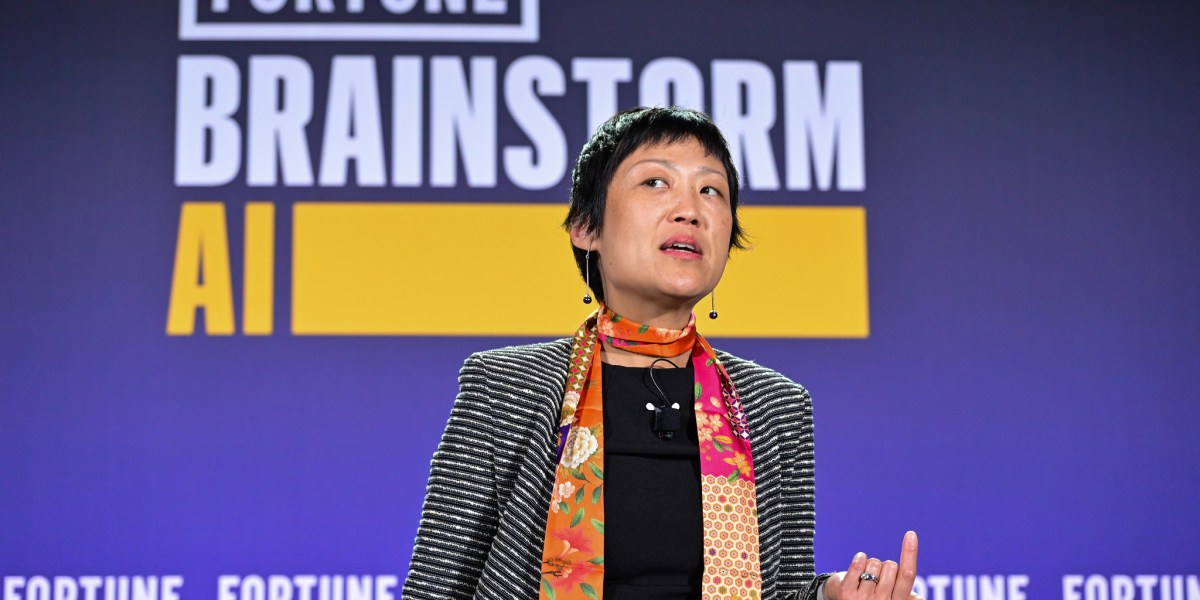
While the public often imagines autonomous robots as cold, calculating machines, the reality of deploying them in public spaces reveals a technology deeply concerned with social acceptance and survival. MJ Burk Chun, the co-founder and vice president of product design for Serve Robotics, addressed the Fortune Brainstorm AI conference with the argument that robots are just like us.

The ‘long tail’ of the baby goat

The trouble often begins when the machines leave the controlled environment of a simulation and enter the “wild” of city sidewalks, Burk Chun said. During a deployment in Los Angeles, the delivery team found that the real world was “even more dynamic than we expected.”

In one specific instance, a robot froze, “thoroughly confused about the pet baby goat” standing in its path. While the robot’s sensors could identify a human pedestrian, the goat represented a “long tail problem”—a statistical outlier that standard training data had not prepared the AI to encounter. Like a person seeing something inexplicable on their morning commute, the robot simply didn’t know what to make of it.

Nightmares on Main Street

It isn’t just confusion that plagues these droids; it is also fear. The intersection of two streets is described as “one of the most dynamic places in our cities,” filled with high-velocity vehicles that pose an existential threat to small delivery devices.

“Robots have nightmares about cars,” the executive said without elaborating on how she can tell when a robot is having nightmares, or what those might be like. “Cars are also very scary for robots.”

Robots must constantly calculate the risks of sharing public space with heavy machinery, she explained. To cope, engineers have to spend significant time determining if a robot is “safe enough to cross the street,” assessing everything from pedestrian light signals to the status of the ground.

Coast-to-coast culture shock

Perhaps the most relatable struggle for any human who has relocated is the difficulty of adjusting to local culture. The robots, it turns out, are not immune to this.

The company found that the “conservative routing” algorithms optimized for Los Angeles—designed to handle “very high traffic high-speed intersections”—did not translate well when the fleet expanded to Florida. In Miami Beach, drivers tend to “cruise” rather than the Angelenos who race to make a turn, meaning the robot’s hyper-cautious LA programming was out of sync with the local rhythm.

“The future really is already here … it’s just not evenly distributed,” Burk Chun said, paraphrasing the great science-fiction writer William Gibson, who first began popularizing the concept of cyberspace back in the 1980s. (Neuromancer is a particular Gibson classic.)

“It is also quite amazing how each city expresses itself in the way people walk,” Burk Chun said. “Not just the sidewalk infrastructure, but also how people drive.” She said every city expresses a unique “flavor” that a robot has to learn when it moves there, just like a human.

A guest in the neighborhood

Underpinning these anxieties is a strict social contract. “Robots don’t have rights to be on sidewalks, people do,” Burk Chun asserted. This philosophy dictates that engineering decisions must be “socially aware,” prioritizing human comfort over robotic efficiency.

Because “more people will walk next to the robot … than we’ll ever get a delivery from a robot,” the machine is viewed as an ambassador. If the robot fails to “deliver delight” or provide value to the community at large, it is viewed as a missed opportunity to build a harmonious future.

To earn their keep, these robots are doing more than delivering lunch; they are working as municipal inspectors. Using advanced sensors, they collect data on “missing curb cutouts” and “hidden potholes,” sharing that information with cities to help repair physical infrastructure.

For this story, Fortune journalists used generative AI as a research tool. An editor verified the accuracy of the information before publishing.

This story was originally featured on Fortune.com


Source link

Continue Reading

Trending

Copyright © Miami Select.