Connect with us

Politics

As hurricane season collides with immigration agenda, fears increase for those without legal status
Published

on


If a major hurricane approaches Central Florida this season, Maria knows it’s dangerous to stay inside her wooden, trailer-like home. In past storms, she evacuated to her sister’s sturdier house. If she couldn’t get there, a shelter set up at the local high school served as a refuge if needed.

But with accelerating detentions and deportations of immigrants across her community of Apopka, 20 miles (32 kilometers) northwest of Orlando, Maria, an agricultural worker from Mexico without permanent U.S. legal status, doesn’t know if those options are safe. All risk encountering immigration enforcement agents.

“They can go where they want,” said Maria, 50, who insisted The Associated Press not use her last name for fear of detention. “There is no limit.”

Natural disasters have long posed singular risks for people in the United States without permanent legal status. But with the arrival of peak Atlantic hurricane season, immigrants and their advocates say President Donald Trump’s robust immigration enforcement agenda has increased the danger.

Places considered neutral spaces by immigrants such as schools, hospitals and emergency management agencies are now suspect, and advocates say agreements by local law enforcement to collaborate with U.S. Immigration and Customs Enforcement make them more vulnerable and compel a choice between being physically safe and avoiding detention.

“Am I going to risk the storm or risk endangering my family at the shelter?” said Dominique O’Connor, an organizer at the Farmworker Association of Florida. “You’re going to meet enforcement either way.”

For O’Connor and for many immigrants, it’s about storms. But people without permanent legal status could face these decisions anywhere that extreme heat, wildfires or other severe weather could necessitate evacuating, getting supplies or even seeking medical care.

Federal and state agencies have said little on whether immigration enforcement would be suspended in a disaster. It wouldn’t make much difference to Maria: “With all we’ve lived, we’ve lost trust.”

New policies deepen concerns

Efforts by Trump’s Republican administration to exponentially expand immigration enforcement capacity mean many of the agencies active in disaster response are increasingly entangled in immigration enforcement.

Since January, hundreds of law enforcement agencies have signed 287(g) agreements, allowing them to perform certain immigration enforcement actions. Most of the agreements are in hurricane-prone Florida and Texas.

Florida’s Division of Emergency Management oversees building the state’s new detention facilities, like the one called “Alligator Alcatraz” in the Everglades. Federal Emergency Management Agency funds are being used to build additional detention centers around the country, and the Department of Homeland Security temporarily reassigned some FEMA staff to assist ICE.

The National Guard, often seen passing out food and water after disasters, has been activated to support U.S. Customs and Border Protection operations and help at detention centers.

These dual roles can make for an intimidating scene during a disaster. After floods in July, more than 2,100 personnel from 20 state agencies aided the far-reaching response effort in Central Texas, along with CBP officers. Police controlled entry into hard-hit areas. Texas Department of Public Safety and private security officers staffed entrances to disaster recovery centers set up by FEMA.

That unsettled even families with permanent legal status, said Rae Cardenas, Executive Director of Doyle Community Center in Kerrville, Texas. Cardenas helped coordinate with the Mexican Consulate in San Antonio to replace documents for people who lived behind police checkpoints.

“Some families are afraid to go get their mail because their legal documents were washed away,” Cardenas said.

In Florida, these policies could make people unwilling to drive evacuation roads. Traffic stops are a frequent tool of detention, and Florida passed a law in February criminalizing entry into the state by those without legal status, though a Judge temporarily blocked it.

There may be fewer places to evacuate now that public shelters, often guarded by police or requiring ID to enter, are no longer considered “protected areas” by DHS. The agency in January rescinded a policy of President Joe Biden, a Democrat, to avoid enforcement in places like schools, medical facilities and emergency response sites.

The fears extend even into disaster recovery. On top of meeting law enforcement at FEMA recovery centers, mixed-status households that qualify for help from the agency might hesitate to apply for fear of their information being accessed by other agencies, said Esmeralda Ledezma, communications associate with the Houston-based nonprofit Woori Juntos. “Even if you have the right to federal aid, you’re afraid to be punished for it,” Ledezma said.

In past emergencies, DHS has put out messaging stating it would suspend immigration enforcement. The agency’s policy now is unclear.

DHS Assistant Secretary Tricia McLaughlin said in an email that CBP had not issued any guidance “because there have been no natural disasters affecting border enforcement.” She did not address what directions were given during CBP’s activation in the Texas floods or whether ICE would be active during a disaster.

Florida’s Division of Emergency Management did not respond to questions related to its policies toward people without legal status. Texas’ Division of Emergency Management referred The Associated Press to Republican Gov. Greg Abbott’s office, which did not respond.

Building local resilience is a priority

In spite of the crackdown, local officials in some hurricane-prone areas are expanding outreach to immigrant populations. “We are trying to move forward with business as usual,” said Gracia Fernandez, language access coordinator for Alachua County in Central Florida.

The county launched a program last year to translate and distribute emergency communications in Spanish, Haitian Creole and other languages. Now staffers want to spread the word that county shelters won’t require IDs, but since they’re public spaces, Fernandez acknowledged there’s not much they can do if ICE comes.

“There is still a risk,” she said. “But we will try our best to help people feel safe.”

As immigrant communities are pushed deeper into the shadows, more responsibility falls on nonprofits, and communities themselves, to keep each other safe.

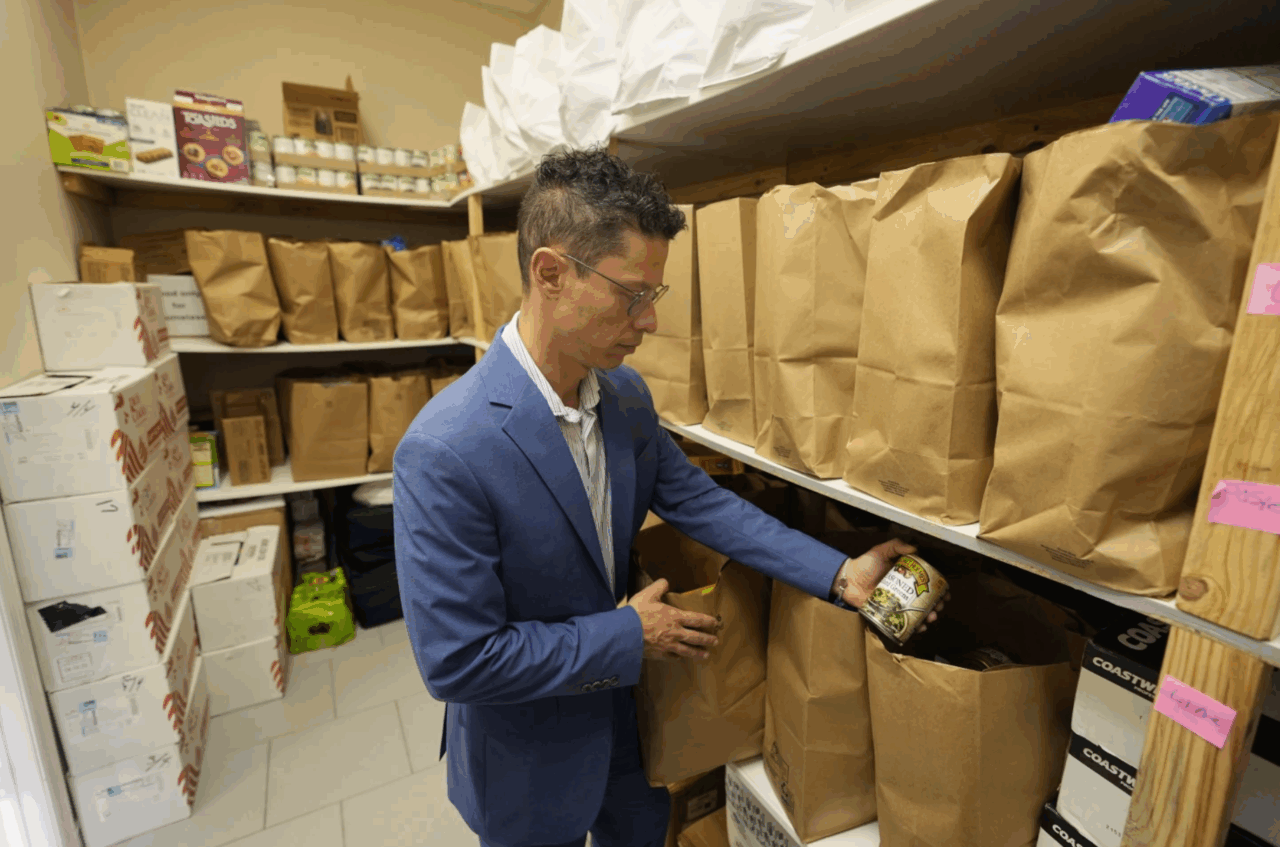
Hope Community Center in Apopka has pushed local officials to commit to not requiring IDs at shelters and sandbag distribution points. During an evacuation, the facility becomes an alternative shelter and a command center, from which staffers translate and send out emergency communications in multiple languages. For those who won’t leave their homes, staffers do door-to-door wellness checks, delivering food and water.

“It’s a very grassroots, underground operation,” said Felipe Sousa Lazaballet, the center’s Executive Director.

Preparing the community is challenging when it’s consumed by the daily crises wrought by detentions and deportations, Sousa Lazaballet said.

“All of us are in triage mode,” he said. “Every day there is an emergency, so the community is not necessarily thinking about hurricane season yet. That’s why we have to have a plan.”

___

Republished with permission of The Associated Press.


Post Views: 0


Source link

Continue Reading

Politics

Debbie Wasserman Schultz language protecting Everglades from pipeline fastrack rejected in committee

Published

on


Florida Democrats say an amendment shot down by the U.S. House Rules Committee could have protected the Everglades from energy exploration.

U.S. Rep. Debbie Wasserman Schultz, a Weston Democrat, pushed for a change in language in the Improving Interagency Coordination for Pipeline Reviews Act (HR 3668) during Committee proceedings. That bill, filed by U.S. Rep. Richard Hudson, a North Carolina Republican, would expedite review of natural gas or liquified gas pipelines by the Federal Energy Regulatory Commission (FERC).

Wasserman Schultz’s amendment to the bill would have excluded the Everglades and other Florida navigable waters from that change, still requiring extensive review to put a pipeline through Florida’s largest national park. However, the Rules Committee did not allow the amendment to come to a vote.

“While we spend billions to restore the Everglades, House Republicans voted to pollute it,” Wasserman Schultz posted on social media.

She said the amendment was worked on with the support of most Democrats in Florida’s congressional delegation, including U.S. Reps. Kathy Castor, Lois Frankel, Darren Soto and Frederica Wilson. Wasserman Schultz is the Democratic co-chair of the congressional delegation.

The proposed change “tried to exempt the Everglades from this dirty water bill, but House Republicans rejected it,” Wasserman Schultz said.

Republicans characterized the legislation differently, with some members from Florida.

U.S. Rep. Cory Mills, a New Smyrna Beach Republican, said he supported advancing the bill from the Committee to the floor.

“I voted to support HR 3668, the Improving Interagency Coordination for Pipeline Reviews Act, to cut red tape and speed up approvals for natural gas pipelines and LNG terminals,” he posted. “This bill puts FERC in charge of NEPA (National Environmental Policy Act) reviews, sets strict timelines, improves agency coordination and strengthens pipeline security. This is how we lower energy costs and boost American energy independence.”

FERC is responsible for reviewing and issuing permits for new or expanded gas lines. The legislation, as written, would shift oversight responsibilities from state governments to the agency and eliminate the need for state certifications.


Source link

Continue Reading

Politics

Sheila Cherfilus-McCormick is fundraising off of charges she stole $5M from FEMA

Published

on


Democratic U.S. Rep. Sheila Cherfilus-McCormick is staying true to the old maxim, “Never let a crisis go to waste.”

This week, her re-election campaign sent texts to voters imploring them to donate to help her in “fighting back” against what she calls a “politically motivated” attack against her.

She’s referring, of course, to federal charges filed in November accusing her of stealing $5 million in Federal Emergency Management Agency (FEMA) funds to bankroll her 2021 congressional campaign.

“2 weeks ago, I took a stand and voted to demand transparency, truth and accountability from our leaders. The next day, the attacks began. An indictment was filed. This was not random. This was politically motivated retaliation,” the text said.

“But this isn’t about silencing one person. It’s about sending a clear message to anyone who dares to challenge powerful interests: ‘Fall in line — or pay the price. Well, I’m fighting back — but I need you with me. DONATE NOW.”

The text then links to a donations page that, among other things, says, “She voted for the truth. They answered with retaliation.”

The fundraising text.

A perusal of Cherfilus-McCormick’s votes from around two weeks back reveals what she is likely referring to: “yesvotes on measures concerning the release of files connected to convicted sex offender Jeffrey Epstein.

Notably, none of the 426 other members of the House who voted to release the Epstein files were federally indicted for embezzling COVID funds in recent weeks.

The grand jury indictment against Cherfilus-McCormick, announced Nov. 19, alleges she and her brother secured funding intended for a COVID vaccine distribution program, but when overpayments were made, she rerouted the money through several accounts that later donated to her campaign.

U.S. Attorney General Pam Bondi described the alleged act as “a particularly selfish, cynical crime.”

Cherfilus-McCormick, 46, has maintained and reiterated that she is innocent of wrongdoing, calling the charges “unjust” and “baseless.”

“The timing alone is curious and clearly meant to distract from far more pressing national issues,” she said a day after the indictment was announced, noting that she has “fully cooperated” with a yearslong investigation into the matter. “I look forward to my day in court. Until then, I will continue fighting for my constituents.”

The fundraising site.

Should Cherfilus-McCormick be found guilty of all counts in the indictment, she could face up to 53 years in prison.

Cherfilus-McCormick isn’t the only federal lawmaker from Florida to fundraise off of her legal travails. Last year, following a House Ethics Committee report that there was “substantial evidence” he paid for sex, including with a 17-year-old, former U.S. Rep. Matt Gaetz sent out a fundraising plea citing his troubles.

“I need your help,” Gaetz, a Republican, said in an email through his political committee last December. “I’ve fought for you in Congress for eight years against the worst of the Radical Left and Uniparty. Now, they’re seeking their revenge.”

Gaetz, who resigned the month before, called the scrutiny over his alleged impropriety a “witch hunt.”

Former Republican U.S. Rep. George Santos of Long Island used the exact phrase to describe the fraud and money-laundering charges he faced in May 2023, about seven months before his peers in the House expelled him.

Republican U.S. Rep. Greg Steube introduced a resolution last month to expel Cherfilus-McCormick. Other than its referral to the Ethics Committee, no action has been taken on the bill.

Cherfilus-McCormick represents Florida’s 20th Congressional District, which spans parts of Broward and Palm Beach counties. She faces Primary challenges from Dale Holness and Elijah Manley, the latter of whom she is suing for defamation over the FEMA funds issue.

Republicans Sendra Dorce and Rodenay Joseph are also running in the district, which leans heavily Democratic.

Florida Politics contacted Cherfilus-McCormick’s Communications Director, Kailyn McBride, seeking comment about the Congresswoman’s texts, but received no response.

___

Jacob Ogles contributed to this report.


Source link

Continue Reading

Politics

PFAS water contamination has met its match

Published

on


Toxic PFAS “forever chemicals” are found in nearly half of all U.S. drinking water. These harmful chemicals are linked to cancer, developmental issues, and immune system damage. They enter our water systems through industrial discharges, firefighting foams, and landfill runoff. Once present, they are nearly impossible to remove using traditional methods.

For years, families, utilities, and local governments have faced a difficult choice: accept unsafe water or pay for costly, slow, and incomplete cleanup methods.

After 10 years of research and development, Eco World Water has the solution.

At Eco World Water, we have completed four months of rigorous pilot testing with an independent laboratory, under protocols reviewed by the Florida Department of Environmental Protection. The verified lab results confirm that our system can reduce PFAS to non-detectable levels in a safe, reliable, and quick manner. More importantly, the system produces clean, safe water in minutes, not days.

For a national problem needing a scalable solution, this is a breakthrough with transformative potential.

Per- and polyfluoroalkyl substances (PFAS) earned the nickname “forever chemicals” for a good reason. They persist in the environment for decades, are resistant to conventional treatment, and pose serious risks to public health. That is why our verified results are so significant.

For too long, PFAS have been viewed as an unsolvable challenge. We can now say with confidence: problem solved. Our system demonstrates that communities don’t have to accept “forever chemicals” as a fact of life. PFAS-free water is not theoretical. It’s operational.

Just as important, Eco World Water’s patented, modular technology is a complete, all-in-one system built for permanent installation. It takes up significantly less space than traditional wastewater treatment systems and can be scaled to meet the needs of communities, large or small. Its modular design also enables a version that fits inside a shipping container, ideal for rapid deployment to disaster relief zones or remote locations where clean water is urgently needed.

The system turns raw wastewater into water that meets drinking quality standards, not just removing PFAS, but also eliminating a wide range of harmful contaminants like heavy metals, pharmaceuticals, and pathogens. It’s fast, compact, and easy to operate, bringing clean water where it’s needed most, without the delays or complexity of traditional systems.

This is the result of more than 10 years of focused research and development. Eco World Water’s mission is simple: give every community access to clean, safe, and affordable water. With these latest independent lab-verified results, we are delivering on that mission.

This progress comes at a crucial moment in the quest for clean water.

States across the country are preparing for more demanding PFAS standards and increased federal oversight. Billions of dollars in federal infrastructure funding are available to support water system upgrades. Yet many communities still lack tools that can meet those expectations. Our technology can adapt to the needs of each site and provides a clear, cost-effective path toward compliance with new federal mandates.

Families deserve water they can trust. Local governments deserve options that don’t strain their budgets. Communities deserve solutions that meet the urgency of the clean water moment.

Eco World Water is ready to deliver.

After decades of frustration and uncertainty, we now have a verified solution. Water with undetectable PFAS levels is not just an aspiration. It’s a proven, tested reality.

___

Steve Adelstein is the Executive Chair of Eco World Water.


Source link

Continue Reading

Trending

Copyright © Miami Select.